Buyer Fit Snapshot
| Best fit | Mailers with Branded Stickers projects where brand print, material claims, artwork control, MOQ, and repeat-order consistency need to be specified before quoting. |
|---|---|
| Quote inputs | Share finished size, material target, print colors, finish, packing count, annual reorder estimate, ship-to region, and any compliance wording. |
| Proofing check | Approve dieline scale, logo placement, barcode or warning zones, color tolerance, closure strength, and carton packing before bulk production. |
| Main risk | Vague material claims, crowded artwork, missing packing details, or unclear freight terms can make a low unit price expensive after revisions. |
Fast answer: Mailers with Branded Stickers: Material, Adhesive, Artwork, and MOQ should be specified like a repeatable production item. The safest quote records material, print method, finish, artwork proof, packing count, and reorder notes in one written spec.
Production checks before approval
Compare the actual filled-product size with the drawing, then confirm tolerance on folds, seals, hang holes, label areas, and retail display edges. Reserve space for logos, QR codes, warning copy, and material claims before decorative graphics fill the panel.
Quote comparison points
Review material grade, print process, finish, sampling route, tooling charges, carton quantity, and freight assumptions side by side. A quote is only useful when the supplier can repeat the same color, closure quality, and packing count on the next order.
Mailers With Branded Stickers: A Practical Packaging Guide
A plain poly mailer can feel finished the moment a well-placed sticker lands on it, and mailers with branded stickers are often the easiest way to get there without committing to a full custom print run. On the shipping side, the pouch still behaves like a simple, dependable mailer. On the customer side, it reads like packaging with intent, something chosen on purpose instead of pulled from the nearest carton stack.
That distinction carries real weight. A sticker can make a basic mailer feel deliberate the second it is picked up, especially when size, finish, and placement are working together instead of fighting each other. Small runs, seasonal launches, preorder programs, and brands that want a cleaner presentation without sinking money into inventory all benefit from mailers with branded stickers because the format gives you control without forcing a huge commitment.
The practical appeal is bigger than decoration. A sticker can work as a seal, a logo plate, a campaign marker, a QR code landing point, or a seasonal cue, and each job changes the way the package feels in hand. A sticker that is too large, too glossy, or too weak on adhesion can make a shipment look rushed. The right one can lift even a standard poly mailer into something that feels carefully packed.
This guide focuses on buying, setup, and real use rather than trend language. The goal is to show where mailers with branded stickers work well, where they break down, what they usually cost, and how to launch them without guesswork. If you want a broader view of how these fit into a packaging system, the Custom Packaging Products page is a useful place to compare formats, and the Case Studies section can help your team picture the finished result before you place an order.
Mailers with branded stickers: a practical first look
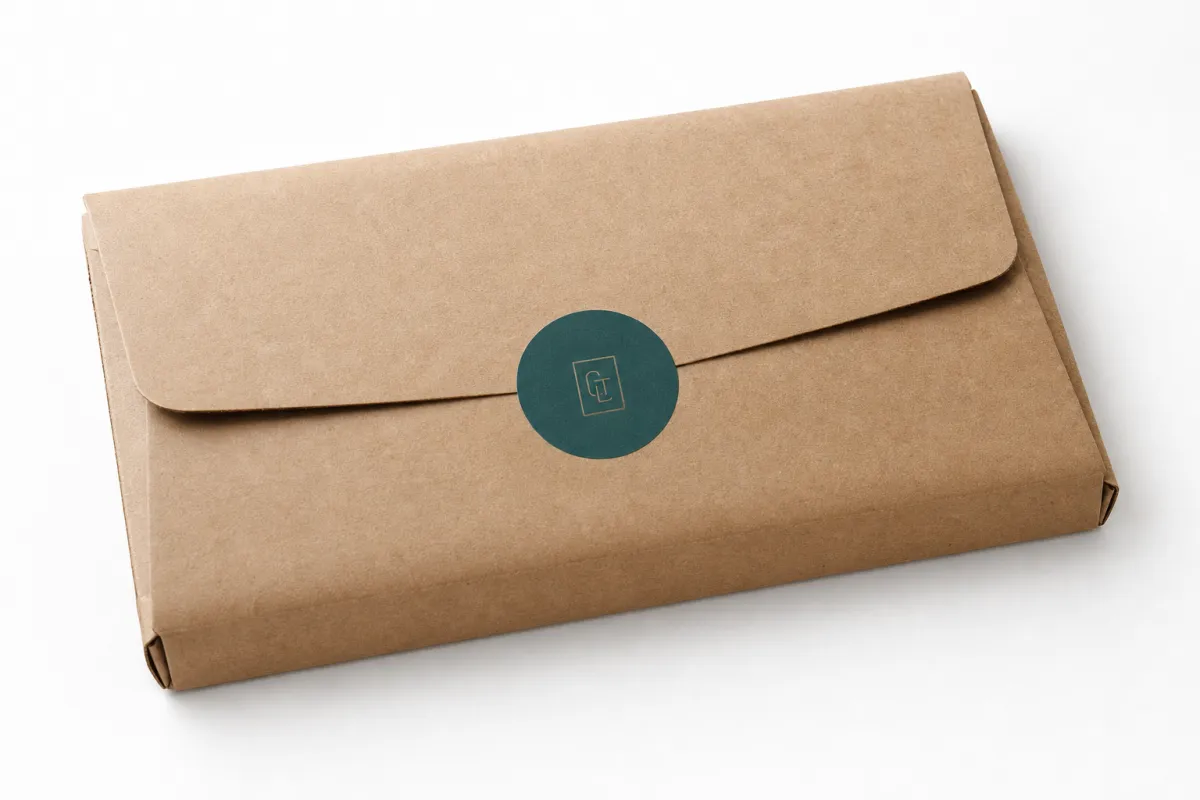
At the most basic level, mailers with branded stickers means starting with a standard poly mailer or shipping pouch and adding a custom sticker as the brand layer. The sticker might go on the flap, across the seal area, on the front face, or on an insert card tucked inside the mailer. The shell stays simple and affordable, while the brand impression comes from the sticker instead of the mailer body itself.
That matters because not every brand needs a fully printed mailer on day one, and not every operation should pay for one. A limited run, a holiday drop, a logo test, or a business with a wide product mix can all benefit from mailers with branded stickers because the outer packaging stays flexible while the presentation still feels deliberate. If one campaign calls for a gold foil seal and the next needs a matte black label, you are changing a small component rather than writing off a pallet of printed stock. That alone can save a lot of headaches.
From a packaging buyer's point of view, the draw is control. A plain 10 x 13 inch poly mailer may cost only about $0.10-$0.22 per unit at moderate volume, while a sticker may add $0.03-$0.12 depending on size, material, and finish. That sits very differently from a custom printed mailer run that may not feel price-friendly until you are ordering 1,000 to 5,000 pieces or more. For many brands, mailers with branded stickers are the middle ground between plain shipping and fully custom packaging.
A good sticker does more than decorate a package. It gives the shipping pouch a point of identity, and that point is often what customers remember when they first pick up the order.
Sticker-based branding also gives teams room to test. You can compare two mailer colors, two sticker sizes, or two finish options without filling a warehouse with dead inventory. If the artwork changes mid-season, you are reordering stickers instead of writing off mailers. That flexibility is one reason mailers with branded stickers show up so often in apparel, beauty, accessories, subscription kits, and small-batch ecommerce.
The method works best when people treat it like a system. A mark on a slick white pouch will not behave the same way as a seal sticker on a soft-touch black mailer. The package surface, the adhesive, the artwork scale, and the packing workflow all shape the result. When those pieces fit together, mailers with branded stickers can look more expensive than they are.
How mailers with branded stickers work on plain poly mailers
The workflow is simple enough, but the details matter. You choose the mailer, decide where the sticker should sit, and match the sticker style to the job. Some teams use mailers with branded stickers as a tamper seal across the flap. Others place the sticker on the front face so it is visible before the package is opened. A third group uses a sticker on the insert card or thank-you note, which works well when the outer mailer needs to stay plain for cost or operational reasons.
Placement changes the customer experience. A flap sticker signals closure and security. A front-face sticker carries more of the visual branding load. An insert-card sticker can hold campaign messaging, care instructions, or QR code traffic to a landing page. The strongest mailers with branded stickers setups usually give one sticker job the lead role and keep the rest of the package calmer, because too many signals can feel crowded instead of polished.
Adhesion is where many teams get surprised. Poly film is smooth, but that does not mean every sticker will bond well. Surface energy, slip additives, humidity, dust, and even how long the material has sat in a cold warehouse can affect performance. A glossy sticker on a very slick mailer may look great, then start lifting at the corners after handling or transit. For that reason, mailers with branded stickers should always be tested on the actual mailer surface, not just on a sample sheet or a design mockup.
To make the sticker pull its weight, brands often assign it one of a few jobs:
- Seal verification - a sticker bridges the flap and gives a clean closure point.
- Logo display - the sticker carries the main mark when the mailer itself is plain.
- Campaign messaging - a seasonal message, drop name, or promo code can live on the outer package.
- QR code support - the sticker can drive buyers to care instructions, reorder pages, or social links.
- Limited-edition branding - a small batch can get a distinct look without changing the whole mailer inventory.
One reason this approach feels premium is that the sticker acts as a finishing layer. The package moves from generic shipping pouch to something that looks assembled with intention. That is why mailers with branded stickers can outperform more expensive packaging that is poorly coordinated. A basic mailer with the right sticker, applied cleanly and consistently, often reads better than a costly format with awkward brand treatment.
If your team wants a more formal validation mindset, the packaging industry often looks to distribution testing groups such as ISTA for drop, vibration, and handling guidance. You do not need a full lab program for every order, but a short real-world shipping test is a smart habit, especially when mailers with branded stickers are supposed to hold a seal together through ordinary courier handling.
For brands building a broader identity system, the sticker often works best when it sits alongside a consistent insert card, branded tissue, or a related label format. That is where Custom Labels & Tags can become useful, because the outer mailer and the inner presentation pieces begin speaking the same visual language.
Mailers with branded stickers: cost, pricing, and MOQ basics
Cost is where mailers with branded stickers usually shine. A plain poly mailer is inexpensive to source, and a custom sticker keeps the branding spend separate from the shipping shell. That split gives you more flexibility than a fully printed mailer, especially if your artwork changes often or your order volume is still shifting.
Sticker pricing depends on size, material, finish, print coverage, adhesive quality, and the way the job is packed for fulfillment. A simple 2 x 3 inch paper sticker might land around $0.03-$0.08 each at a few thousand pieces. A film-based BOPP sticker or vinyl-style label may run $0.05-$0.12 or more depending on shape and finish. Add metallic ink, embossing, or heavy laminate protection, and the price climbs from there. That is still often a modest spend compared with printed packaging, which is why mailers with branded stickers stay attractive for small and midsize brands.
Minimum order quantity matters too. Some sticker runs can start at 250 or 500 pieces for digitally printed work, while mailers may start closer to 1,000 or even 5,000 depending on the vendor, size, and film construction. That means a brand can test the branding concept with much less exposure. If the design changes, you have not committed to a giant inventory stack of the wrong thing. For mailers with branded stickers, that lower barrier to entry is one of the strongest arguments for the format.
| Option | Typical unit cost at moderate volume | Best use case | Watch-outs |
|---|---|---|---|
| Plain poly mailer + paper sticker | $0.13-$0.30 combined | Low-cost branding, short campaigns, light handling | Less moisture resistance, weaker on very slick films |
| Plain poly mailer + BOPP film sticker | $0.15-$0.34 combined | Better durability, brighter retail feel, more handling tolerance | Slightly higher cost, gloss can be too reflective for some art |
| Plain poly mailer + vinyl-style label | $0.18-$0.40 combined | Heavy handling, premium seal look, moisture-prone routes | Usually overkill for simple apparel shipping |
| Printed poly mailer | $0.18-$0.40+ | High-volume programs with stable artwork | Higher MOQ, less flexibility, more inventory risk |
That table is not a universal quote because quantity, film thickness, and print coverage can move the numbers quite a bit. A 2.5 mil mailer in a standard size behaves differently than a thicker, more puncture-resistant pouch, and a full-bleed sticker uses more material than a simple one-color logo seal. Even so, for many buyers, mailers with branded stickers sit in the sweet spot between presentation and spend.
There are also hidden costs that do not show up on the first line of a quote. Proofing time, extra samples, spoilage, misapplied pieces, and the labor needed to stick labels onto every pack can matter more than people expect. If one person can apply 250 stickers per hour and the design calls for careful flap alignment, that labor should be counted. The same is true if you need to reorder because the first size choice was too small or the color contrast was off. A clean sticker program can still be economical, but only if the team tracks the full process around mailers with branded stickers, not just the print invoice.
If you are comparing outer packaging options side by side, it helps to look at a broader catalog too. The Custom Poly Mailers page is useful if you want to judge the point where full printing starts making sense versus staying with plain stock and branded stickers.
Mailers with branded stickers: process, timeline, and production steps
A good production run starts with a short, clear brief. Define the mailer size, the shipment weight, the sticker purpose, and the visual role it needs to play. If the label is sealing the flap, the dimensions must account for the overlap. If it sits on the front face, the art should be scaled for the viewing distance of a doorstep or packing bench. The cleanest mailers with branded stickers programs usually begin with those functional decisions before anybody opens design software.
From there, the process usually looks like this:
- Confirm the mailer size, film thickness, color, and seal style.
- Approve the sticker artwork, die shape, and finish.
- Review a digital proof for bleed, safe area, and barcode or QR clarity.
- Request a physical sample if the brand wants to verify the look in hand.
- Lock the production quantity and packing format.
- Schedule shipment so the mailers and stickers arrive close together.
Timelines are usually faster than people expect for sticker work and a bit slower for mailers, though the exact pace depends on the supplier. A simple sticker order might be ready in 5-8 business days after proof approval. Standard poly mailers can take 10-15 business days, while Custom Printed Pouches often run 15-25 business days or more. If the order includes a sample review, a specialty finish, or rush shipping, the schedule stretches. For that reason, mailers with branded stickers should be planned around the slowest part of the chain, not the quickest.
A small sample run pays for itself quickly. Print a dozen stickers, apply them to the actual mailer, pack a few test orders, and ship them through normal carrier channels. That kind of test catches more problems than a mockup on screen ever will. You can see whether the edge lifts, whether the color clashes with the mailer, whether the sticker lines up under pressure, and whether the package still looks strong after handling. The strongest mailers with branded stickers programs are built on proof like that, not assumptions.
Another useful habit is to set a packing standard. If the sticker must sit exactly 1/2 inch from the flap fold, write that down. If the team should press the seal for three seconds after placement, define it. If misaligned labels must be reworked rather than shipped, make that rule clear. Small process controls like these matter because branding consistency is what makes mailers with branded stickers look professional across a full batch, not just on the first few packs.
Packaging teams that use paper inserts, care cards, or thank-you cards can also ask whether the paper stock is FSC-certified. That is not mandatory, but it helps when your brand communicates sustainability and wants the paperwork to match the message. For reference language and chain-of-custody basics, FSC is the right authority to check.
How to choose the right mailer, sticker, and finish
The right choice depends on what you are shipping and how the package will be handled. Lightweight apparel, soft goods, and accessories usually do fine in standard poly mailers, while heavier or more delicate items may need thicker film, extra cushioning, or a more puncture-resistant pouch. Mailers with branded stickers can work across all of those categories, but the sticker should reflect the shipping reality rather than the mood board.
Choose the mailer for the product first
If you are packing a tee shirt or a folded hoodie, a 2.5 mil poly mailer is often enough. Beauty items and accessories may still use a standard pouch, but if the product can scratch, leak, or shift in transit, the packaging spec should be stronger. In those cases, the mailer itself needs to do more of the protection work, while the sticker stays focused on presentation. That balance keeps mailers with branded stickers from becoming fragile or overdesigned.
Match the sticker material to the surface
Paper stickers are fine for many dry, low-abrasion shipments, but film-based labels usually hold up better on slick poly mailers. BOPP tends to be a strong everyday choice because it resists moisture well and prints cleanly. Vinyl-style labels can be a good fit when the package will see more handling or when the brand wants a thick, premium feel. If the sticker is sealing the flap, adhesion matters more than ornament, which is why mailers with branded stickers should be tested against the exact mailer surface and not a generic sample card.
Choose finish with intent
Gloss finish gives a bright, retail-like pop. Matte finish feels more restrained and can hide fingerprints better. Soft-touch can feel elevated, but it is not always the right answer if the branding needs to be obvious from across a desk. Metallic accents can work well for a drop or limited edition, though they should be used carefully because too much shine can make a package feel noisy instead of premium. Finish is not an afterthought in mailers with branded stickers; it changes how the whole package reads.
Size matters just as much. Oversized stickers can crowd a small 6 x 9 mailer, while tiny logos can disappear on a larger 12 x 15 or 14.5 x 19 pouch. The best rule is simple: the sticker should be readable at the distance it will actually be seen. If the package is handled at a packing bench, it should be obvious at arm's length. If the package lands on a doorstep, it should still be legible in a quick glance. That is why mailers with branded stickers work best when the design is scaled for reality rather than only for the screen.
Design also needs to support the customer journey. A logo alone may be enough for a seal, but a campaign sticker can do more. It can carry a drop name, a thank-you note, a QR code, or a subtle seasonal message. A clean, well-placed sticker can start the unboxing moment before the customer opens the mailer. If your brand wants a broader visual system, browsing the Case Studies area can help you compare how different brands use outer packaging, inserts, and label formats together.
The Institute of Packaging Professionals at packaging.org is also a useful reference point for teams that want a wider packaging education source, especially if they are comparing packaging formats beyond the mailer itself. That matters because mailers with branded stickers are often the first step into a larger packaging program, not the final one.
Common mistakes with mailers and branded stickers
The first mistake is weak adhesion. People assume a sticker will stay put because the mailer looks smooth, but smooth does not always mean adhesive-friendly. Dust, oil from hands, folding stress, and highly flexible film can all create lifting at the corners. If the sticker is supposed to seal the flap, the problem becomes more serious. A loose seal is not just ugly; it can undercut the function of mailers with branded stickers entirely.
The second mistake is artwork that is too detailed for the sticker size. Thin lines, tiny type, and complex gradients often look fine on a mockup and then flatten out in production. A logo that needs a magnifying glass is not helping the package. For most shipping use, strong contrast and clear shapes do more work than fine decoration. Good mailers with branded stickers do not depend on microscopic details to feel premium.
The third mistake is inconsistent placement. When one pack has the seal sticker high on the flap, the next sits slightly crooked, and the third lands too close to the edge, the brand starts to look unorganized even if the print quality is excellent. Packing teams should have a simple visual guide or placement jig if the volume justifies it. Consistency is a big part of why mailers with branded stickers can feel like a real shipping system rather than a craft project.
The fourth mistake is a color mismatch between the mailer and the sticker. A pale label on a pale pouch can vanish. A bright accent on a muted mailer can look accidental if the rest of the palette does not support it. The package should be viewed as one composition. If the outer mailer is charcoal, cream, or kraft-toned, the sticker should support that base rather than fight it. The visual relationship is part of what gives mailers with branded stickers their polish.
The fifth mistake is skipping the real shipping test. A sticker that looks perfect on a flat desk can still scuff, crease, or peel after handling, carton stacking, or temperature changes. A quick test through actual courier movement is worth far more than a screen rendering. If you are serious about mailers with branded stickers, ship a few sample packs, inspect them on arrival, and adjust before you scale.
Some teams also overbrand the package. A logo sticker, a printed exterior, a warning label, a promo badge, and a thank-you card can all live in one shipment, but that does not mean they should all shout at once. The strongest mailers with branded stickers usually keep one element dominant and let the rest support it.
Expert tips and next steps for mailers with branded stickers
If you want the cleanest result, start small. Pick one mailer size, one sticker finish, and one placement. Run that combination through real packing labor and real shipping. The point is not to prove the concept in theory; it is to see whether the package looks good, travels well, and can be applied at a speed your team can actually maintain. That is the smartest way to launch mailers with branded stickers without creating unnecessary rework.
Build a simple packing standard as soon as the format works. Write down the placement measurement, the pressure needed for adhesion, the approval photo angle, and the rework rule for misaligned labels. Even a one-page guide can save a lot of inconsistency once different people begin packing orders. Mailers with branded stickers gain value when the process is repeatable, because repeatability is what makes the branding look intentional every time.
Order a few sample combinations before buying at scale. Test the mailer in its actual color, the sticker in its actual finish, and the full kit with the product inside. If you use a black mailer with a glossy white seal, for example, make sure the contrast is strong enough under warehouse lighting and on camera, because many customers will first see the package in a phone photo. A sample sheet on a desk is not the same as mailers with branded stickers on a live shipping table.
- Track packing speed for one hour and note how many stickers can be applied cleanly.
- Inspect 10 shipped samples for scuffing, corner lift, and color shift.
- Compare two sticker finishes side by side under the same light.
- Document the best version with bench photos and unboxing photos.
- Reorder only after you know the exact size, finish, and placement that work.
That documentation step may feel small, yet it prevents drift later. A photo from the packing bench can save a size mistake on the next order. A customer-facing unboxing photo can show whether the sticker is doing enough visual work. If you need broader packaging support as the program grows, the Custom Labels & Tags category can complement the mailer, and the larger Custom Packaging Products catalog can help you map the next stage of the rollout.
My honest advice is simple: do not wait for a perfect packaging system before you begin. Start with the smallest run that gives you real shipping data, then tighten the spec after you see how the pouch, adhesive, and artwork behave together. For many brands, mailers with branded stickers are the fastest way to move from plain shipping to a package that feels thought-through, and that is exactly why the format keeps working. Keep the first version practical, keep the artwork readable, and keep a few samples on hand so you can check wear after transit instead of guessing.
Do mailers with branded stickers hold up during shipping?
Yes, they usually do if the adhesive is matched to the poly surface and the sticker is applied to a clean, dry area. A real shipping test is the best check because bending, friction, and temperature swings can affect performance more than a spec sheet suggests. For rougher routes, choose a stronger film sticker and avoid seams or folds that can lift the edge.
Are mailers with branded stickers cheaper than printed mailers?
Usually yes at low to moderate volumes because you are paying for a sticker rather than a fully custom printed pouch. They also reduce risk because you can change the branding without replacing your whole mailer inventory. If your volume gets very high and the artwork rarely changes, printed mailers can become more efficient.
What sticker material works best on poly mailers?
A film-based sticker often performs better than basic paper when the surface is slick or the package sees a lot of handling. Gloss and matte finishes are both common; the right choice depends on whether you want a bright retail look or a softer premium feel. Always test the exact material on the exact mailer color before ordering a large run of mailers with branded stickers.
How many branded stickers should I order for my mailers?
Order based on weekly packing volume plus a cushion for spoilage, rework, and growth. If the sticker also seals the mailer, count one per shipment; if it is purely decorative, factor in extras for damaged pieces or presentation samples. Many brands benefit from a small pilot order first, then a larger reorder once the placement and sizing are confirmed for mailers with branded stickers.
How long does the mailers with branded stickers process take?
Timeline depends on artwork approval, proofing, production queue, and shipping transit for both the mailers and the stickers. The fastest path is usually a simple design with quick proof approval and a standard material selection. Plan extra time if you need custom sizing, specialty finishes, or a sample review before production, because the strongest mailers with branded stickers programs are the ones that allow enough room for testing instead of rushing the first run.

