Buyer Fit Snapshot
| Best fit | Poly Mailers With Branded Labels projects where brand print, material claims, artwork control, MOQ, and repeat-order consistency need to be specified before quoting. |
|---|---|
| Quote inputs | Share finished size, material target, print colors, finish, packing count, annual reorder estimate, ship-to region, and any compliance wording. |
| Proofing check | Approve dieline scale, logo placement, barcode or warning zones, color tolerance, closure strength, and carton packing before bulk production. |
| Main risk | Vague material claims, crowded artwork, missing packing details, or unclear freight terms can make a low unit price expensive after revisions. |
Fast answer: Poly Mailers With Branded Labels: What Actually Works should be specified like a repeatable production item. The safest quote records material, print method, finish, artwork proof, packing count, and reorder notes in one written spec.
Production checks before approval
Compare the actual filled-product size with the drawing, then confirm tolerance on folds, seals, hang holes, label areas, and retail display edges. Reserve space for logos, QR codes, warning copy, and material claims before decorative graphics fill the panel.
Quote comparison points
Review material grade, print process, finish, sampling route, tooling charges, carton quantity, and freight assumptions side by side. A quote is only useful when the supplier can repeat the same color, closure quality, and packing count on the next order.
Poly Mailers with Branded labels do something oddly powerful: they make a shipment feel deliberate. A plain mailer can be perfectly functional, but the minute a well-sized label lands on the front panel, the package starts telling a different story. It feels considered. It feels like someone made choices on purpose. For a lot of small brands, that is the first packaging move that makes the operation look bigger than it is.
The setup sounds almost too simple. One mailer, one label, one application step. The catch is that packaging rarely fails because of the concept. It fails because the details drift: label size, surface texture, adhesive strength, packing sequence, storage conditions, even warehouse humidity. Poly mailers with branded labels only look polished when the whole system behaves like a system.
Brands usually choose this route for a reason that has nothing to do with trendiness. Artwork changes. Launch dates move. Inventory turns faster than the packaging budget. A beauty brand might need a different look for every seasonal collection. An apparel label may want to test a new logo before committing to a full run. Poly mailers with branded labels solve that middle ground between plain shipping and full custom print.
From the buyer side, the logic is practical. Keep the mailer neutral, make the label carry the identity, and make the two pieces look like they were planned together from the start. That is the difference between poly mailers with branded labels that feel intentional and the version that looks like somebody found a label printer five minutes before pickup. I have seen both. The second one is usually cheaper only on paper.
Poly Mailers With Branded Labels: The Fastest Way to Look Custom
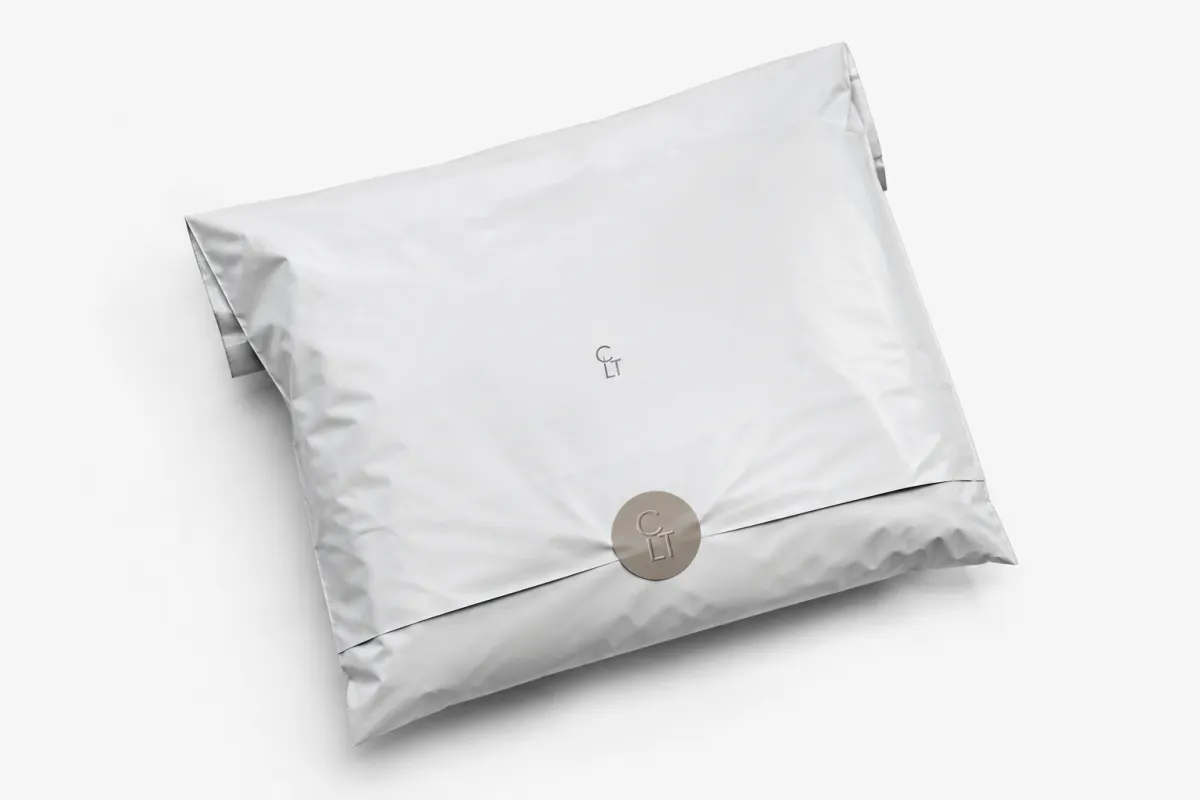
Poly mailers with branded labels split the job cleanly. The mailer protects the product. The label carries the brand. That separation matters because it lets you use a standard shipping bag without paying for full exterior print across the entire surface.
For small and mid-size businesses, that flexibility is a real advantage. A holiday design can be swapped without scrapping a warehouse of old stock. A creator collab can get its own packaging moment without disrupting the base mailer. A product refresh can go live label-first while the rest of the packaging stays stable. Poly mailers with branded labels give teams room to move when the calendar gets messy, which, frankly, is most of the time.
The customer never sees the approval rounds, the spec sheet, or the mild panic when a proof arrives with the logo too close to the fold. They see a parcel that feels finished. And if the label is sized properly and applied with care, poly mailers with branded labels can look better than a rushed custom mailer that photographed well but arrived looking cheap. Packaging has to survive transit, not just the mockup stage.
The system only works if the weakest part is still decent. A pressure-sensitive label on a smooth bag is one thing. A dusty mailer, adhesive that softens in humidity, and a crooked placement is another. Poly mailers with branded labels should read as deliberate. The fastest way to lose that effect is to assume every label stock behaves the same way on every surface. It doesn’t.
The best fit is usually a brand that wants a branded exterior but is not ready for full custom coverage yet. Think of poly mailers with branded labels like a tailored jacket over a plain shirt. The structure does the heavy lifting. The label just has to land cleanly and stay put.
“If the label lifts before the parcel leaves the building, the packaging was never really finished.”
If you are building a larger packaging system, it helps to see where labels, mailers, inserts, and finishing pieces fit together. Browse Custom Packaging Products for a wider view of the options. If you are still choosing the outer bag itself, Custom Poly Mailers is the right place to compare base mailer styles before adding branded labels.
How Poly Mailers With Branded Labels Work
The workflow behind poly mailers with branded labels is straightforward, but the order matters more than most teams expect. Start with the mailer size and fold style. Build the label around the actual visible area on that mailer, not around a generic rectangle in a design file. Print on the right stock. Then apply the label after packing, once the bag is sealed and the outside is no longer being handled or adjusted.
That last step gets skipped more often than it should. A label applied while the package is still moving through the line can wrinkle, shift, or catch on another carton. The result is a package that looks half-finished before it even reaches the carrier. Poly mailers with branded labels only look sharp when the application happens at the right moment in the packing flow.
Label material changes the impression immediately. Paper labels are common and affordable, which is fine for light-duty shipping. Film and vinyl hold up better against scuffs and moisture, so they make more sense when parcels are likely to get knocked around. Thermal labels are fast, but they usually read as functional rather than premium. If the goal is poly mailers with branded labels that feel refined, a matte or semi-gloss pressure-sensitive stock usually works better.
Placement matters almost as much as the artwork. A centered label reads clearly from the doorstep and on camera. A smaller corner placement can feel restrained if the logo is strong and the layout is clean. Crooked placement makes poly mailers with branded labels feel accidental, especially when the label is small or the mailer also carries shipping information nearby. A little off can be charming; obviously off is just sloppy.
Surface compatibility is the quiet deal-breaker. Smooth finishes hold labels more reliably than dusty, soft, or heavily textured surfaces. Cold storage, heat, and humidity all affect adhesion in different ways. If your warehouse changes with the season, test the pair first instead of assuming the label will behave the same in July and January.
The customer experience stays simple on the outside and useful underneath. The parcel still ships like a lightweight mailer, but the label gives the order a branded handshake before the package is opened. That is why poly mailers with branded labels often feel more finished than plain mailers even when the hard costs stay modest.
A useful comparison is the one packaging teams make between the seal and the container itself. The label does not need to do everything. It just needs to be legible, clean, and in step with the rest of the packout. That is the sweet spot for poly mailers with branded labels.
If you need the branding piece itself, Custom Labels & Tags is a good starting point. If you want a clearer view of how packaging decisions shape perception, skim Case Studies and compare how different brands use neutral base materials with strong finishing details.
For transit-performance references, ISTA is the standard place to look when you want to test more than appearance. If paper sourcing matters to your brand, FSC is the baseline many teams use for responsible fiber claims.
Poly Mailers With Branded Labels: Cost, Pricing, and MOQ
Cost is where poly mailers with branded labels usually beat custom-printed mailers at lower and mid-range volumes. You are buying a standard mailer and a separate label run, which avoids the heavier setup cost tied to full custom print. That gives brands room to adjust order volume without carrying a mountain of packaging inventory.
Pricing depends on several concrete variables: label size, print method, finish, adhesive quality, and order quantity. Labor matters too. If the team spends extra time on every package, the savings can shrink fast. That is why poly mailers with branded labels should be evaluated on total landed cost, not just the label invoice. A cheap-looking line item can hide an expensive workflow.
MOQ is another reason brands choose this route. Many label suppliers accept smaller runs, while Custom Poly Mailers often come with a larger minimum. For teams still validating demand, poly mailers with branded labels keep the packaging flexible without locking cash into a giant one-time order. That flexibility has value even when the per-unit price is not the lowest on paper.
The tradeoff is clear. Labels cost less upfront, but they add labor. Printed mailers cost more upfront, but they save time once volume is stable and artwork changes are rare. If one SKU ships all year with very little variation, printed packaging can win on efficiency. If the brand still changes artwork, colorways, or campaign timing, poly mailers with branded labels usually make more sense. That is the part people miss when they compare only the invoice.
| Packaging Option | Typical Unit Cost at 5,000 Pieces | Setup and MOQ | Lead Time | Best Fit |
|---|---|---|---|---|
| Blank poly mailer + branded label | $0.18-$0.42 total, depending on label size and finish | Lower MOQ, label supplier often more flexible | Usually 7-15 business days after proof approval | Brands testing designs or changing artwork often |
| Custom-printed poly mailer | $0.16-$0.38, depending on print coverage and film spec | Higher MOQ, often 3,000-10,000+ | Often 15-25 business days after proof approval | Stable packaging programs with steady volume |
| Premium mailer + label system | $0.24-$0.55 total, depending on materials and finish | Moderate MOQ, more flexible sourcing | Usually 10-18 business days after proof approval | Brands that care about presentation and transit durability |
A practical buying rule holds up well here: if your volume still moves around, start with poly mailers with branded labels. If shipments are steady and predictable, compare the long-term economics of printing straight onto the mailer. Run the math with labor included. Teams that skip that step often end up paying for the expensive answer after the order has already landed.
If you want to compare base packaging options before committing, start with Custom Poly Mailers and add labels where needed. If you are still broadening the packaging line, Custom Packaging Products gives a broader view of what can be combined without overcomplicating the packout.
Production Steps, Timeline, and Lead Time
The production path for poly mailers with branded labels is shorter than a full custom-packaging cycle, but it still has a sequence. It starts with a brief: mailer size, label dimensions, quantity, finish, color target, and target ship date. After that comes artwork, proofing, print approval, production, packing, and final shipment to your warehouse or fulfillment partner.
Design approval is usually the bottleneck. Once the proof is signed off, printing labels is often the fast part. Freight or courier time can take longer than people expect, which is why teams that focus only on print time often get frustrated. Poly mailers with branded labels can save days or even weeks versus larger custom-packaging jobs, but only if the artwork is ready and the spec is clean.
A realistic lead time for a label run often lands around 7-15 business days after proof approval, while a custom printed mailer may take 15-25 business days or more depending on complexity. If you need poly mailers with branded labels for a product drop, launch, or promo push, the buffer is not optional. Add a few days for inspection, because the first batch is where sizing errors and placement issues usually show up.
That buffer matters because a packaging file can look fine on screen and still fail in production. A label that is 10 mm too large can crowd the fold. A matte finish can look elegant in design review and still read too dull on a dark mailer. Poly mailers with branded labels are more forgiving than full print, but they are not immune to production mistakes.
Here is the rollout sequence that usually saves the most trouble:
- Confirm the mailer size and closure style.
- Mock up the label on the actual mailer, not only in the design file.
- Approve a printed proof and check color, crop, and edge margins.
- Run a pilot batch of a few dozen pieces.
- Inspect after handling, stacking, and a short transit test.
- Scale to the full order only after the first batch holds up.
If your fulfillment partner applies the labels, give them a clear position guide and note whether the mailer folds slightly to one side. A shift of a centimeter can make the branding feel off-center. Tiny details like that separate polished poly mailers with branded labels from packages that look rushed.
Planning works better when poly mailers with branded labels are treated as a system rather than a one-off purchase. The materials, the application step, and the packing schedule all affect the final look. A short spec sheet saves time: mailer size, label dimensions, finish, quantity, ship date, and who applies the label.
Key Factors That Decide Whether the Labels Look Good
Label size is the first decision that can make or break poly mailers with branded labels. Too small and the branding disappears across the room. Too large and it dominates the front panel. The right size depends on the mailer dimensions, the shape of the logo, and how much empty space the design needs to breathe. A wide logo can carry a wider label. A small icon needs a different treatment.
Finish changes the tone quickly. Matte usually feels softer and more restrained. Gloss catches the light and can read better on camera. Metallic and clear stocks can work too, but only when the design is simple enough to survive glare and reflection. If the goal is premium without flash, poly mailers with branded labels usually look best with a matte or semi-gloss finish. No need to make the package shout if the brand voice does not.
Adhesion deserves more attention than it gets. Strong adhesive matters because flexible packaging moves, compresses, and sometimes heats up in transit. Cheap adhesive can lift at the corners or bubble when the surface is dusty. If a supplier can show peel data or point to ASTM D3330-style testing for pressure-sensitive materials, that tells you more than a polished sample and a vague promise.
Readability is the next filter. The logo should be clear at arm’s length. Tiny legal copy does not belong on the main face of the label unless the layout has room for it. Poly mailers with branded labels work best when the design is quick to read. People do not stop on the doorstep to study kerning. They decide whether the package feels intentional. That decision happens fast, usually in one glance.
Consistency is the detail many brands underweight. The same mailer size, the same label position, and the same fold method make the shipment feel controlled. Random spacing makes even a strong design feel messy. That is why poly mailers with branded labels often look better in a repeatable system than they do in a one-off sample.
- Good pairing: smooth white mailer + matte label + centered logo.
- Decent pairing: metallic mailer + simple brand mark + small label.
- Risky pairing: textured mailer + oversized label + low-contrast text.
Transit testing is worth the effort if parcels move through rough handling. Compare a few sealed samples under the kind of movement and compression your carrier network creates. If your team wants a reference point, ISTA protocols are where many packaging programs begin. That is not overkill. It keeps poly mailers with branded labels from looking great in a mockup and disappointing after a week in transit.
The final factor is restraint. A label does not need to say everything. In practice, that usually backfires. The strongest poly mailers with branded labels are often the simplest ones: clear logo, balanced margins, clean finish, and one idea that carries the design instead of three ideas competing for attention.
Common Mistakes With Poly Mailers With Branded Labels
The biggest mistake is testing the file instead of the package. A design can look right on a screen and still fail on the actual mailer because the proportions, the surface, or the adhesive were never checked together. That is how poly mailers with branded labels shift from a smart shortcut to an expensive lesson.
Another common issue is applying the label too early. If the package still needs handling, resealing, or stacking, the branding can wrinkle before it leaves the building. The label belongs near the end of the packout, not at the start just because someone wants to get ahead. Poly mailers with branded labels work best as the final exterior step.
Low-resolution artwork causes its own damage. Plenty of teams spend real money on a label and still send a fuzzy logo file with cramped type. That never looks premium. It looks cheap. Customers notice. If the brand mark is blurry or the spacing is crowded, poly mailers with branded labels lose the point of existing in the first place.
Supply mismatch creates the same problem from the other side. A flimsy mailer with a beautiful label feels off. A premium mailer with a weak label feels worse. The two parts need to match in tone. If one side is weak, poly mailers with branded labels reveal the mismatch faster than a plain package would.
Skipping the pilot run is the mistake that costs real money. Without a test batch, you do not know how quickly the team can apply labels, whether the placement holds, or how the package looks after actual shipping. Brands usually discover those problems after ordering too much material. Not a fun discovery. Not a cheap one either.
Before approving a full job, run through a short checklist:
- Check label size against the actual mailer, not just the mockup.
- Inspect the adhesive on the real surface and in normal room conditions.
- Confirm the design reads at arm’s length.
- Test the package after handling, stacking, and a short transit cycle.
- Make sure every packer uses the same placement guide.
Some brands also overlook the overlap between branding and sustainability. If material claims matter, check the substrate specs and sourcing notes before printing. Packaging can be branded without becoming wasteful. That balance is easier to manage when the system stays simple, which is one reason poly mailers with branded labels remain popular.
Expert Tips and Next Steps for a Clean Rollout
Start with a small test batch. For poly mailers with branded labels, that is the smartest move and the one that keeps a desk sample from being mistaken for a real-world test. Apply the labels under normal packing conditions, then inspect the results after handling and shipping. If the label curls, scratches, or lands awkwardly, fix it before you scale.
Standardize the application step. Mark the position, give the pack team a simple visual guide, and keep the process the same every time. Consistency is what makes poly mailers with branded labels feel premium. Random placement does the opposite. Packaging still rewards discipline more than it rewards expensive software.
Choose the material pairing with intention. A soft-touch label can work well with a smooth mailer. A gloss label may fit better when the design is bold and contrast-driven. Do not force a premium look onto a base that feels cheap. If the materials fight each other, poly mailers with branded labels look confused instead of polished.
Plan for seasonal changes and campaign swaps. If you run promotions, collaborations, or frequent artwork updates, keep the mailer neutral and rotate the label artwork. That is much easier than redoing the whole package every time a new idea gets approved. For many brands, poly mailers with branded labels are the cleanest way to stay flexible without losing visual consistency.
Before you place a full order, build a simple spec sheet. Include mailer size, label dimensions, finish, quantity, adhesive type, ship date, and whether you need hand application or machine compatibility. Then request quotes from suppliers and compare total landed cost. That is the unglamorous part, but it is the part that keeps poly mailers with branded labels from becoming a budget surprise.
If you are still defining the broader packaging mix, review Custom Labels & Tags alongside your outer packaging choice. If you want to see how different brands handle packaging systems in practice, Case Studies is useful because it shows the tradeoffs in the open. And if you need a full sourcing view, Custom Packaging Products keeps the options in one place.
My practical view is simple: poly mailers with branded labels work best when speed, flexibility, and presentation all matter, but no one wants to lock into a heavy print run. They are not the fanciest option. They are often the smartest one. When the materials are chosen well and the application is disciplined, poly mailers with branded labels can make a small brand look far more established than its order volume suggests.
Are poly mailers with branded labels cheaper than custom-printed mailers?
Usually yes at low to mid volumes, because you avoid the higher setup cost of custom printing. Poly mailers with branded labels can stop being efficient if your team spends too much labor applying labels by hand. The real comparison is total landed cost, not the sticker price of the supplies.
What label material works best for poly mailers with branded labels?
A matte or semi-gloss pressure-sensitive label usually gives the cleanest look for most brands. Film or vinyl makes sense when moisture, scuffing, or rough transit conditions are likely. Paper labels are fine for lighter-duty use, but they wear faster and look less refined on poly mailers with branded labels.
How do I stop labels from peeling off poly mailers?
Use strong adhesive labels made for flexible packaging, not generic office labels. Apply them to a clean, dry surface and press firmly across the full area. If the mailers are glossy, textured, or stored in heat or humidity, test a small batch first before rolling out poly mailers with branded labels at scale.
What size should branded labels be for poly mailers?
Pick a size that leaves breathing room around the edges and keeps the logo readable from arm’s length. Small mailers usually need compact labels, while larger mailers can handle a bigger centered mark. A quick mockup on the actual mailer is the safest way to avoid awkward proportions on poly mailers with branded labels.
Can I use poly mailers with branded labels for a premium unboxing experience?
Yes, if the label, mailer, and packout all look consistent and intentional. The effect works best with clean design, strong placement, and a quality mailer finish. If the label is crooked or the packaging feels flimsy, the premium effect disappears fast, which is why poly mailers with branded labels need a careful rollout.
Bottom line: before you order in volume, build one pilot batch, test the label on the real mailer, and compare the result against your shipping conditions. Poly mailers with branded labels work best when the label stock, adhesive, finish, and application method are all approved together; if one piece is off, the whole package reads that way.


