Buyer Fit Snapshot
| Best fit | Mailing Bags for Retail Stores projects where brand print, material claims, artwork control, MOQ, and repeat-order consistency need to be specified before quoting. |
|---|---|
| Quote inputs | Share finished size, material target, print colors, finish, packing count, annual reorder estimate, ship-to region, and any compliance wording. |
| Proofing check | Approve dieline scale, logo placement, barcode or warning zones, color tolerance, closure strength, and carton packing before bulk production. |
| Main risk | Vague material claims, crowded artwork, missing packing details, or unclear freight terms can make a low unit price expensive after revisions. |
Fast answer: Mailing Bags for Retail Stores: Film, Print, MOQ, and Carton Packing should be specified like a repeatable production item. The safest quote records material, print method, finish, artwork proof, packing count, and reorder notes in one written spec.
Production checks before approval
Compare the actual filled-product size with the drawing, then confirm tolerance on folds, seals, hang holes, label areas, and retail display edges. Reserve space for logos, QR codes, warning copy, and material claims before decorative graphics fill the panel.
Quote comparison points
Review material grade, print process, finish, sampling route, tooling charges, carton quantity, and freight assumptions side by side. A quote is only useful when the supplier can repeat the same color, closure quality, and packing count on the next order.
Mailing Bags for Retail Stores: What to Buy and Why
Mailing bags for retail stores can make the same product feel premium or disposable before the customer even opens it. That is not fluff. It is the part of packaging that affects damage rates, packing speed, shipping cost, and the way your brand shows up on a doorstep.
If you sell apparel, accessories, cosmetics, or other small retail goods, mailing bags for retail stores are usually the first shipping format worth getting right. They look simple. They are not. The difference between a bag that fits cleanly and one that fights the packer every day shows up fast in labor, returns, and complaints.
Mailing Bags for Retail Stores: What They Are and Why They Matter
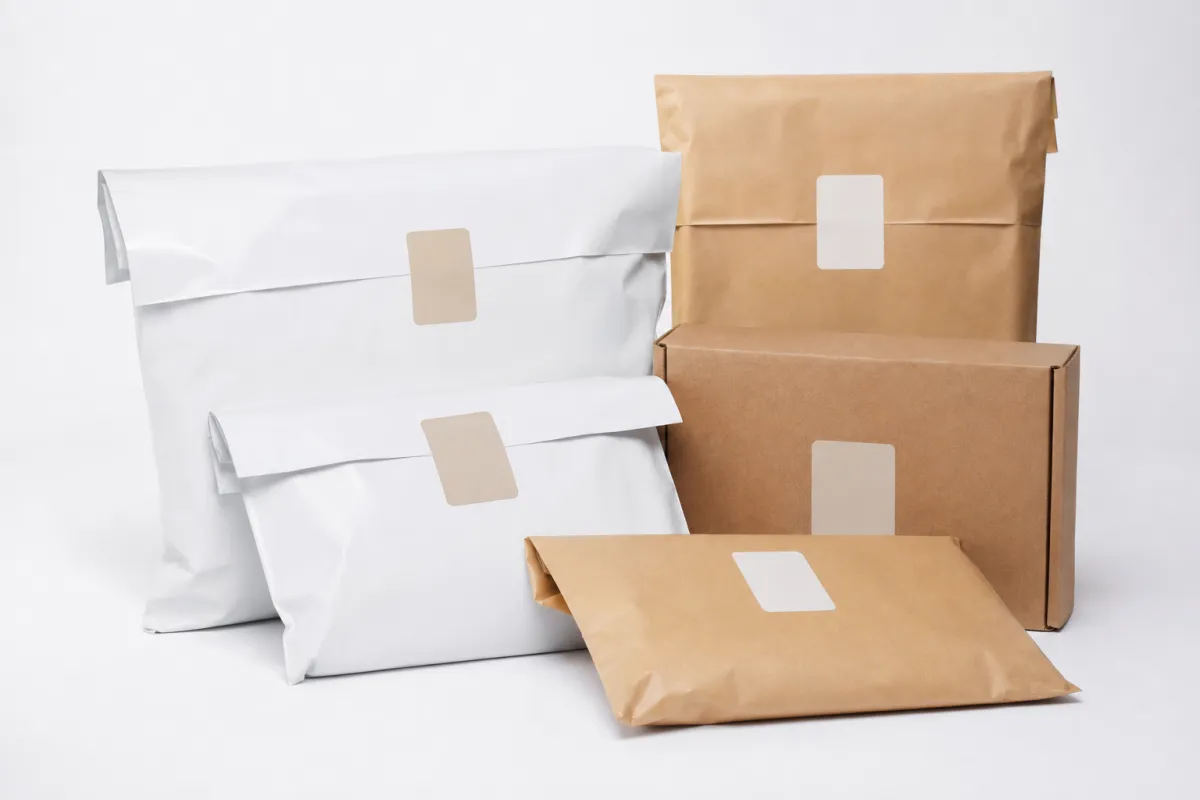
Mailing bags for retail stores are lightweight outer packages used to protect, present, and ship retail products efficiently. Most people treat them like a plain supply item. That is usually how you end up with random packaging that does nothing for the brand and barely survives transit. In practice, mailing bags for retail stores sit right between presentation, protection, and cost control.
The retail reality is simple: a product can leave the shelf looking polished and arrive looking careless if the bag is wrong. A flimsy mailer wrinkles, splits, or looks generic. A better one keeps the item secure, seals cleanly, and gives the customer a more intentional first impression. That matters whether you are shipping one T-shirt or a mixed order of soft goods and small boxed items.
Retail stores care because mailing bags for retail stores affect several pain points at once. They reduce damage claims from scuffs, dirt, and light compression. They help teams pack faster because the right size is easier to load and seal. They also create a cleaner unboxing moment, which matters more than some buyers want to admit. People notice packaging consistency, even if they do not say it out loud.
There is also a brand question hiding underneath the supply question. A Custom Printed Mailer, a stronger adhesive strip, or even a better color choice can make mailing bags for retail stores feel like part of the brand instead of an afterthought. That is why this is not just about buying shipping supplies. It is about choosing a format that fits how your store sells.
Practical rule: if the bag looks cheap, feels weak, or slows the packer down, it is already costing more than the unit price suggests.
For stores that ship soft goods, Custom Poly Mailers are often the first option to review. They are light, compact, and easy to store, which is why mailing bags for retail stores so often start there. The hard part is not finding a mailer. It is finding one that fits the product, the team, and the brand without waste.
I have watched teams spend hours arguing over a few cents on the quote sheet, then blow right past a bag that added ten seconds to every packout. That is how “cheap” packaging gets expensive in a hurry. Packaging should disappear into the workflow, not make a scene.
How Mailing Bags for Retail Stores Protect Products in Transit
Protection starts with the material, but that is only one piece of the job. Mailing bags for retail stores need enough film strength or fiber strength to survive compression, rubbing, and handling through a pretty rough logistics chain. The weak points are usually seams, seals, and corners, not the middle of the bag.
A good mailer resists abrasion during sorting and moving. It does not tear easily along the edges. Its closure holds under pressure, which matters when parcels are stacked in cartons or bins. On paper mailers, the construction needs to stay intact along folds and glued areas. On poly mailers, thickness and seal width matter. For most apparel shipments, 2.5 to 3 mil is a common starting point. Heavier or more frequently compressed items may need 3.5 to 4 mil.
The difference between soft goods and structured goods matters. Mailing bags for retail stores work well for folded apparel, socks, scarves, and light accessories because those products can handle a flexible outer shell. Put a rigid item in the same bag and you may see corner pressure, surface marks, or a crushed box inside the mailer. If the item needs cushioning, a padded mailer or a boxed packout is usually safer.
Moisture resistance is another practical point. Poly mailers handle rain, damp sorting areas, and minor spills much better than untreated paper options. That does not make them waterproof in every condition, because nothing magical lives in packaging, but it does make them far better for protecting retail goods from light exposure during transit. For stores shipping textiles, that protection is often enough.
Bag fit changes how well mailing bags for retail stores perform. Too much extra room lets the product slide around, which raises the chance of seam stress and sloppy presentation. Too little room stretches the seal area and makes closure unreliable. The best fit leaves just enough slack for easy insertion and a clean seal. As a rough rule, the product should sit flat without forcing the bag to bulge at the mouth.
Testing should be physical, not theoretical. Put the actual product inside, seal the bag, shake it, press it, and move it through your normal packing workflow. A bag that survives on a spec sheet is not the same thing as a bag that survives a warehouse table with a tired team and a rush order.
For shipping simulation and pack testing, standards from ISTA are a useful reference point. You do not need a lab coat to learn from them. You do need to stop guessing about whether the mailing bags for retail stores you are buying will hold up under real handling.
Key Factors That Change the Right Mailing Bag Choice
There is no single best option for mailing bags for retail stores. There is only the right fit for a specific product mix, shipping volume, and budget. The first fork in the road is material. Poly mailers are the workhorse option for low-weight retail goods. Padded mailers bring more cushioning for fragile or semi-fragile items. Specialty mailers serve premium brands, heavier items, or stores with stricter presentation goals.
Poly mailers are popular because they are light, compact, and cheap to move around. They also make sense for stores that want printed branding without adding much weight. If your products are mostly soft goods, lightweight poly mailers usually give the best balance of cost and performance. Padded options cost more and take up more storage space, but they reduce risk for items with edges, finishes, or small parts that can scuff easily.
Size is the next big choice. Mailing bags for retail stores should be sized to the product, not to the fantasy version of the product someone hopes will sell someday. Flat items can fit in slimmer mailers. Bulkier folded apparel or mixed SKU packs may need gussets or a wider mouth. Thickness matters too. A thin bag may save pennies, but if it tears on the way out of the pack station, those pennies get laughed at by the refund department.
Closures deserve more attention than they get. A strong adhesive strip with consistent peel-and-stick behavior speeds packing. Weak adhesive forces rework, taping, or double sealing, which is a waste of time. If your team ships high volume, that labor adds up quickly. The same goes for seal width. A narrow seal can work, but a wider seal area usually gives more forgiveness during hectic packing shifts.
Branding is not vanity if the packaging is visible to the customer. Printed logos, color blocks, and a decent matte or gloss finish can make mailing bags for retail stores feel deliberate. This matters most for apparel, beauty, lifestyle goods, and any category where the package is part of the brand story. If the product is priced to feel premium, the bag should not look like it came from a supply catalog that gave up halfway through lunch.
Sustainability claims need care. Recycled content, recyclable structures, and FSC-certified paper can help, but only if the claim matches the actual material and the local waste stream. An eco label that confuses customers is worse than no label at all. For paper-based options, FSC guidance is useful: FSC certification information. For environmental claims and recycling context, the EPA's waste and recycling resources are a sensible reference, but local rules still matter more than any national page.
One more point: store policy and regional preferences matter. Some markets prefer paper over plastic. Some buyers want visible recycled content. Some want the lowest cubic volume possible because freight is punishing. That is why mailing bags for retail stores should be chosen against actual shipping routes, not just a nice-looking catalog photo.
Here is a simple comparison many retail teams can use to narrow the field:
| Option | Best For | Typical Unit Cost | Strengths | Tradeoffs |
|---|---|---|---|---|
| Stock poly mailers | Apparel, socks, accessories | $0.10-$0.22 at 5,000 units | Lightweight, low shipping cost, fast packing | Basic appearance, limited branding |
| Custom printed poly mailers | Branded retail shipments | $0.18-$0.40 at 5,000 units | Brand presence, consistent presentation | Artwork setup, longer lead time |
| Padded mailers | Accessories, fragile small goods | $0.22-$0.55 at 5,000 units | Extra protection, less damage risk | Heavier, bulkier, higher freight cost |
| Paper mailers | Eco-focused retail brands | $0.20-$0.50 at 5,000 units | Paper feel, good shelf appeal, recyclable in some streams | Less moisture resistance, more structure needed |
The table is a starting point, not a verdict. Still, it shows why mailing bags for retail stores should be judged on more than the sticker price. The cheapest bag can be the most expensive one once you count damage, labor, and customer annoyance.
And yes, the “we saved money” spreadsheet does not care that the warehouse team is now babying a flimsy bag like it is made of tissue paper. The customer will care, though. Usually right away.
Mailing Bags for Retail Stores: Cost, Pricing, and Order Size
Mailing bags for retail stores are one of those packaging items where the unit price can trick people into making a bad decision. A bag that costs two cents less is not a win if it tears, slows packing, or makes the brand look cheap. Real cost starts with material thickness, print coverage, bag size, closure type, and whether you are buying stock or fully custom.
For plain stock mailers, small orders can feel inexpensive because there is no artwork setup and the design work is already done. Custom Printed Mailers usually cost more upfront, but the gap closes as volume increases. At around 3,000 to 5,000 units, many stores start seeing better per-unit value, and at 10,000 units or more the economics can improve again if storage space is available. The exact numbers depend on color count, bag size, and whether the run uses one or two print sides. These are ballpark figures, not a quote.
There are hidden costs too. Sampling can cost money, especially if you are comparing multiple materials. Freight matters because mailing bags for retail stores are light but bulky, which means you may pay more for carton space than raw weight. Artwork revisions can delay orders and create extra prepress work. Inventory carrying cost is another quiet one. If you buy six months too much, you are paying to store plastic or paper that is doing nothing.
Here is where buyers get trapped: they look at unit cost and ignore the full workflow. If the cheaper bag adds fifteen seconds of packing time, that adds labor. If it fails more often, that adds replacements and customer service time. If it looks generic, that may reduce repeat orders for brand-sensitive products. The cheapest mailing bags for retail stores are not always the lowest-cost solution.
A cleaner buying model is to compare total value across three buckets:
- Materials: thickness, print quality, seal strength, finish, and fit.
- Operations: packing speed, storage space, and reorder simplicity.
- Customer impact: presentation, perceived quality, and damage risk.
If you ship mostly soft goods, Custom Poly Mailers usually stay near the top of the value list because they are light and efficient. If you need premium presentation, a custom printed option may justify the extra cost. If the product is fragile, padded or paper-lined formats may save more money than they cost.
Most retailers do best with a moderate starting order and a clear reorder point. Do not buy so deep that the bag choice becomes a museum piece. Buying too little can leave you scrambling mid-season, which is how packaging decisions start wrecking simple fulfillment days. Mailing bags for retail stores work best when the buying plan is tied to sales velocity, not guesswork.
Buying range that usually makes sense: test quantities of 500-1,000 units for new specs, then move to 3,000-5,000 once the fit is proven. For established products, 5,000-10,000 units is often where price and storage start to balance out nicely.
Process and Timeline for Ordering Mailing Bags for Retail Stores
The ordering process for mailing bags for retail stores should be boring. Boring is good. It means the dimensions are right, the artwork is approved, and the production team is not sending panicked emails because someone forgot to define the closure style. A clean process usually saves more money than an aggressive negotiation over a few cents per unit.
Start with a needs assessment. List the products you ship most often, their dimensions, weight, and whether they are soft, rigid, or fragile. Then identify how many bag sizes you actually need. Most stores overcomplicate this. They think they need a custom size for everything. Usually they do not. Usually they need two or three well-chosen formats and a clear rule for what goes into each one.
From there, ask for sample sets. Compare plain stock versions against printed versions if branding matters. Check the seal, surface texture, opening speed, and how the bag sits once filled. If the bag is thick enough to slow the packer down, you will feel it immediately. That is a better signal than any product description on a quote sheet.
Timeline depends on complexity. Plain stock mailing bags for retail stores can often move quickly, especially if the size is standard and the material is already in inventory. Custom printed bags take longer because there is artwork review, proof approval, and production scheduling. Special finishes, custom sizing, or complex colors add time. A typical planning window might be one to two weeks for samples, then 12-15 business days from proof approval for production on a standard custom run, though that depends on supplier capacity and order size.
Two things slow projects down more than anything else: late artwork and unclear dimensions. If the artwork arrives in the wrong format, the supplier has to clean it up or send it back. If the dimensions are vague, samples may fit badly and the whole cycle starts over. This is not a packaging mystery. It is a paperwork problem.
Build buffer time into the schedule. Mailing bags for retail stores are not the place to assume a miracle delivery right before a launch or holiday push. Good planning means enough time for samples, corrections, freight, and one unexpected delay that always shows up because packaging likes to remind everyone who is in charge.
Before you place the final order, ask for one last check on these items:
- Exact product dimensions and target bag size.
- Artwork file format, colors, and print coverage.
- Seal type and closure performance.
- Carton quantities, pallet counts, and storage needs.
- Reorder trigger and backup supplier plan.
Step-by-Step Guide to Choosing the Right Mailing Bags
Choosing mailing bags for retail stores gets much easier when you stop shopping from a wish list and start shopping from real product data. First, audit your top sellers. Write down the dimensions, weight, fragility, and packaging format of the products you ship most often. Do not start with the oddball items that sell twice a quarter. Start with what actually moves.
Next, group those products into categories. Soft goods usually fit one family of mailers. Small boxed goods fit another. Fragile items may need extra protection or a different outer format entirely. Once you group them, you can see where one bag size covers multiple SKUs. That is the sweet spot. It reduces inventory clutter and makes training easier.
Now narrow the field to two or three realistic specs. One should be your functional baseline. One should be your better-looking or more durable upgrade. If you are considering printed poly mailers, compare them against a plain stock version and a slightly heavier gauge. The goal is not to find every possible option. The goal is to find the one that solves the actual problem.
Samples matter because paper and plastic behave differently in the hand. A catalog photo will not tell you whether the bag opens quickly, seals properly, or sits flat in a packing drawer. Put the real product inside. Seal it. Move it through your packing workflow. Stack it. Label it. See if the label area wrinkles, if the adhesive grabs cleanly, and if the product moves too much inside the bag.
Here is a simple rollout checklist I recommend for mailing bags for retail stores:
- Confirm top product dimensions and pack weights.
- Select one primary bag size and one backup size.
- Test sealing speed with the actual packing team.
- Check storage space for cartons and pallets.
- Set reorder points before inventory gets low.
- Review any recycling or sustainability claims before print approval.
Once the test order works, move into a controlled rollout. Do not switch every SKU at once unless the team is prepared. A staged launch helps you catch issues before they multiply. That approach is especially useful for mailing bags for retail stores because a small packaging problem can become a big fulfillment headache if the wrong size gets mixed into the wrong aisle or carton location.
The strongest buyers treat the bag like part of the packing system, not a separate purchase. That means storage, label placement, sealing method, and reorder rules all matter. Packaging is rarely just packaging. It is a work process with a label on top.
Common Mistakes Retail Stores Make With Mailing Bags
The first mistake is buying a bag that is too thin for the product. This is the classic false economy. The purchase looks cheap, then the seam fails, the bag splits, or the product shows through in a way the customer does not love. Mailing bags for retail stores need enough material strength for the heaviest normal order, not just the easiest one.
The second mistake is wrong sizing. Too much void space creates movement, wrinkling, and sloppy presentation. Too little space forces the seal to fight the product, and that leads to poor closure or corner pressure. The fix is not guessing harder. The fix is measuring actual products and ordering around the real dimensions.
The third mistake is treating unit price as the only metric. That is a narrow way to buy packaging. A slightly better bag can save labor because it packs faster. It can also reduce claims, which is money. It can improve perception, which is often the reason retail stores go custom in the first place. Mailing bags for retail stores should be compared against total cost, not just invoice cost.
The fourth mistake is skipping sample testing. You would think this one would be extinct by now, but no. Stores still approve bags without checking the seal, the print quality, or the way the material behaves under normal handling. Then the first batch arrives and the adhesive is weak, the color is off, or the finish looks different from the proof. A sample run would have caught that.
The fifth mistake is ignoring the labor side. If the bag is awkward to load, hard to open, or impossible to seal quickly, the team pays for it every day. That cost is hidden because it shows up in seconds, not invoices. Still, those seconds stack up. Mailing bags for retail stores should make the pack station faster, not more complicated.
There is also a branding mistake worth calling out. A store can spend money on beautiful product photography, a polished website, and a nice insert card, then ship everything in a bag that looks like it was bought in panic. Customers notice mismatch. It is not dramatic, but it is real. The packaging should match the price point and brand tone.
Quick correction strategy: if a mailer fails in testing, change one thing at a time. Size, thickness, or closure. Do not change everything at once or you will not know what fixed the problem.
A lot of teams try to solve a packaging problem by making the artwork prettier. That is backwards. If the bag is wrong, a nice print job just creates a prettier problem.
Expert Tips and Next Steps for Mailing Bags for Retail Stores
Here is the approach that usually works best: build a two-tier packaging system. Use one everyday spec for core products and one upgraded option for premium launches, holiday drops, or giftable items. That keeps inventory sane while giving the brand some flexibility. Mailing bags for retail stores do not need to be exotic to work well. They need to be consistent.
Standardize sizes wherever you can. Fewer SKUs means faster packing, simpler storage, and less chance of the wrong bag getting pulled. If three bag sizes cover most orders, do not invent a fourth because someone likes the idea of perfect fit. Perfect fit sounds nice until the warehouse has to manage it.
Ask at least two suppliers for samples. Compare them with actual products, not filler items. Check tear resistance, seal performance, pack speed, and shelf appearance. If the bag is custom printed, review how the logo looks at a glance from three feet away. That is the distance customers usually read packaging at first touch. Mailing bags for retail stores have to work at that distance, not just in a mockup.
Use industry standards as a sanity check. For packaging transport testing, ISTA is a practical reference. For sourcing claims, FSC matters on paper-based products. For environmental claims, the EPA is a useful source for waste and recycling context. None of these will choose the bag for you, but they will keep you honest.
If you want a simple next step, do this:
- Measure your top five products.
- Choose one target bag spec for the majority of orders.
- Request samples from two suppliers.
- Test sealing speed and transit durability.
- Place a small trial order before scaling up.
That sequence is dull, which is exactly why it works. The best mailing bags for retail stores are the ones that disappear into the workflow while still doing a visible job for the brand. If you want packaging that protects the product, keeps shipping costs in line, and makes the customer feel like the order was handled with care, mailing bags for retail stores are worth choosing deliberately instead of treating them like a throwaway supply.
My blunt takeaway: pick one standard mailer for the bulk of your orders, one backup for edge cases, and test both with real products Before You Buy in volume. That one decision saves more mess than any glossy packaging pitch ever will.
What size mailing bags for retail stores should I choose?
Measure your top-selling products first, not the odd items that barely move. Choose a bag that fits with minimal slack but still seals cleanly, and if you ship several SKU sizes, standardize around the smallest number of bag sizes that covers most orders. That keeps mailing bags for retail stores easier to manage and faster to pack.
Are poly mailing bags good for retail stores?
Yes, especially for soft goods like apparel, accessories, and folded textiles. They are lightweight, moisture resistant, and usually cheaper to ship than heavier packaging. They are not the best choice for fragile products that need cushioning, but for many mailing bags for retail stores, poly is the most practical starting point.
How much do mailing bags for retail stores cost?
Cost depends on size, thickness, print complexity, and order volume. Plain stock mailers are usually the lowest-cost option, while custom printed bags cost more upfront but can improve branding. The cheapest bag is not always the cheapest solution if it increases damage, returns, or packing time.
Do branded mailing bags actually help retail stores?
They make the package look intentional instead of generic, which improves first impression right away. Branded bags can also support repeat purchase behavior because the unboxing feels more polished and consistent. They matter most for visually driven brands or stores that want mailing bags for retail stores to feel like part of the product experience.
How do I test mailing bags before buying in bulk?
Put your actual products inside the sample, seal it, and move it through the real packing workflow. Check for tearing, stretching, weak adhesive, and bad fit. Then ship a few test orders so you see how the mailing bags for retail stores perform in transit, not just on the packing table.
Should retail stores choose paper or plastic mailing bags?
Start with the product, then decide. Plastic usually wins for moisture resistance and low weight, while paper can make sense for brands that want a more natural look or have a clear recycling story. The right answer depends on your goods, shipping conditions, and what your customers actually use at home.

