Buyer Fit Snapshot
| Best fit | Mailing Bags for Subscription Boxes projects where brand print, material claims, artwork control, MOQ, and repeat-order consistency need to be specified before quoting. |
|---|---|
| Quote inputs | Share finished size, material target, print colors, finish, packing count, annual reorder estimate, ship-to region, and any compliance wording. |
| Proofing check | Approve dieline scale, logo placement, barcode or warning zones, color tolerance, closure strength, and carton packing before bulk production. |
| Main risk | Vague material claims, crowded artwork, missing packing details, or unclear freight terms can make a low unit price expensive after revisions. |
Fast answer: Mailing Bags for Subscription Boxes: What Actually Works should be specified like a repeatable production item. The safest quote records material, print method, finish, artwork proof, packing count, and reorder notes in one written spec.
Production checks before approval
Compare the actual filled-product size with the drawing, then confirm tolerance on folds, seals, hang holes, label areas, and retail display edges. Reserve space for logos, QR codes, warning copy, and material claims before decorative graphics fill the panel.
Quote comparison points
Review material grade, print process, finish, sampling route, tooling charges, carton quantity, and freight assumptions side by side. A quote is only useful when the supplier can repeat the same color, closure quality, and packing count on the next order.
Mailing Bags for Subscription boxes are rarely the part people get excited about, yet they shape the first physical impression a customer has of the brand. Long before the lid opens or the tissue paper gets folded back, the outer mailer has already done its work: it has protected the contents, lowered shipping weight, and told the customer whether the package was handled with care.
That outer layer carries more responsibility than it looks like it should. A box that arrives scuffed, overfilled, or wrapped in a bag that is clearly too large changes how the whole order feels. A subscription kit might be thoughtfully curated inside, but if the outside looks rushed, the value drops a notch in the customer’s mind. Shipping and Branding are not separate conversations here. They travel together.
Mailing bags for subscription boxes work best when the format matches the product, the packing line, and the budget. A soft-goods subscription has different needs from a rigid premium kit. Flat samples tolerate flexible protection far better than fragile glass or awkward corners. Choose the wrong mailer and the problems show up as damage, wasted postage, slow packing, or all three at once.
If you want the practical version, it is simple enough: the best mailing bags for subscription boxes fit the packed order, hold up in transit, and support the brand without creating extra labor. That sounds straightforward. The buying process rarely is, and anyone who has sat through a packaging review knows why.
Overview: Mailing Bags for Subscription Boxes
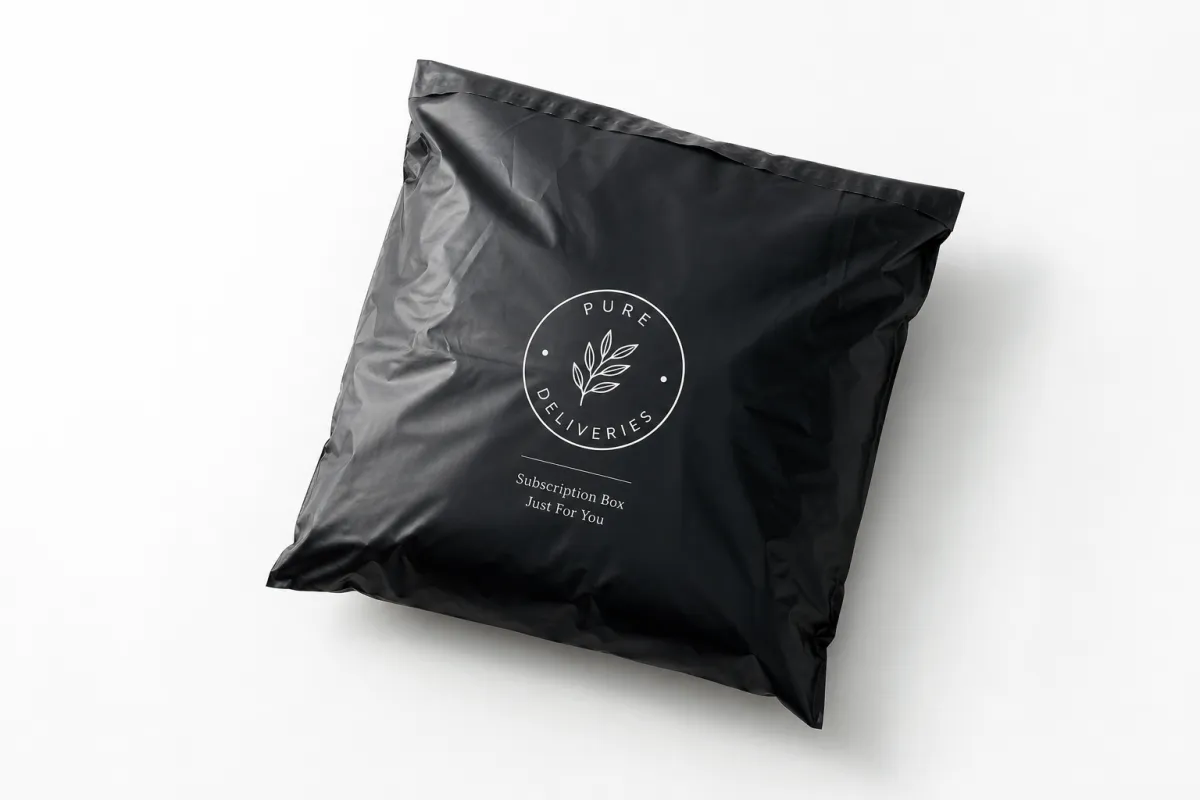
Mailing bags for subscription boxes are flexible outer packs used for curated kits, lightweight retail bundles, apparel, beauty items, sample sets, and flat-format subscription shipments. They are often made from polyethylene film, sometimes with recycled content, and they are chosen because they weigh less than corrugated cartons and use less filler. For the right product mix, that means lower shipping weight, simpler pack-out, and a cleaner workflow on the line.
The effect on perception is larger than many buyers expect. A wrinkled bag, an oversized mailer with too much slack, or a package that looks like it was stuffed in a hurry can make a brand seem less considered, even if the product inside is perfect. Customers usually do not separate packaging issues from brand quality. They remember the package as a whole, and they remember whether it felt thoughtful.
Mailing bags for subscription boxes are not a universal substitute for cartons. They shine when the product is light enough to work with flexible protection and the geometry is manageable. Clothing, soft accessories, sample kits, flat merch, and some small boxed sets are common candidates. Heavy objects, sharp corners, breakable components, and anything with a high chance of puncture usually need more structure than a mailer can reasonably provide.
Buying well usually comes down to five practical variables: size, material thickness, closure strength, branding, and how the bag behaves in the packing process. Miss one of those and the cost tends to reappear somewhere else, often in extra labor, shipping, or avoidable replacements.
Good rule: the cheapest mailing bags for subscription boxes are not the cheapest if they create damaged packs, slow fulfillment, or a customer experience that feels rushed.
How Mailing Bags for Subscription Boxes Work
At a basic level, a mailing bag protects the contents, keeps the order together, and forms a sealed outer layer that can survive sorting, stacking, and the usual abuse that comes with parcel handling. That sounds plain. It is not. A bag that seals correctly and stays intact through transit saves more money than a decorative option that splits at the seam or leaks open after a few bumps.
There are three common ways mailing bags for subscription boxes are used. One approach places the subscription box directly inside the mailer. Another uses the bag as a sleeve around a rigid box for added protection or stronger branding. A third replaces the box entirely for soft or flat products. Each approach changes postage, packing time, and presentation in a different way.
Closure performance matters more than people expect. A weak adhesive strip, a flap that does not align cleanly, or a bag that is packed too tightly can turn a low-cost mailer into a headache for fulfillment and customer service. If the seal opens in transit, the product may still be fine, but the brand now looks careless and the replacement cost still lands on the budget. A good adhesive needs to hold under pressure, vibration, and temperature changes, not just on a calm packing bench.
Flexibility is both the advantage and the drawback of mailing bags for subscription boxes. They pack quickly because there is no rigid folding process, yet that same flexibility means the fit has to be controlled carefully. Too much slack and the order shifts inside the bag. Too little and the seams are stressed. Too thin and a corner, edge, or rough insert can rub through the film.
Branding shows up the moment the customer touches the package. Print area, finish, color, and blank space all shape the perceived value before anyone sees the contents. A matte bag with restrained graphics can feel more premium than a glossy bag crowded with copy. High-coverage print can hide scuffs better, though it also increases cost. There is no clean answer for every program, only the right tradeoff for the audience and the product.
For operations teams, the best mailing bags for subscription boxes are the ones that disappear into the workflow. Easy to open. Easy to load. Easy to seal. Easy to label. That kind of packaging does not brag about itself, and that is usually a strength.
A mailer that fits well prints better than a fancy one that fights the packer.
If you want a broader look at outer packaging options, browse Custom Poly Mailers alongside the rest of the Custom Packaging Products range so you can compare flexibility, structure, and print style in one place.
For brands that want to test durability in a more formal way, ask suppliers whether the spec references common methods such as ISTA shipment simulation or basic film tests like dart impact and tensile strength. Not every supplier will hand over a polished test sheet, but the better ones should understand the language and explain how they verify performance. I have seen plenty of sample packs look polished on a desk and act very differently once they are dropped, stacked, or dragged across a conveyor, so real testing is not optional if the product has any edge-case risk.
Key Factors for Mailing Bags for Subscription Boxes
Bad packaging decisions often start with the wrong filter. Buyers look at price first, then style, then maybe size. That order tends to create avoidable problems. With mailing bags for subscription boxes, fit and protection should lead the conversation because those two factors affect postage, damage risk, and labor more than print does.
Size should usually be the smallest bag that still allows an easy insert, a reliable seal, and enough room for the shipping label without awkward bulging. A bag that is too large wastes material and often pushes the parcel into a more expensive shipping tier. A bag that is too small stresses the seams and slows fulfillment. For many subscription programs, trimming even 1 to 2 inches from the wrong dimension makes a noticeable difference in the pack.
Material and thickness are where the real durability lives. Standard poly mailers are common, but co-extruded films, heavier gauges, and recycled-content films can offer different combinations of puncture resistance, opacity, and feel. As a rough guide, 2.5 to 3 mil often works for light apparel or flat kits, while 3.5 to 4.5 mil fits better when the contents are heavier or the handling is rougher. If the product has sharp corners, test it harder. Film that looks fine in hand can still fail under rubbing.
Protection needs depend on the actual contents. Soft goods can tolerate compression. Cosmetics inside tight secondary packaging may perform well if the seal is strong. Heavier items, mixed kits, and corner-prone products need more caution. If the contents can bend, scuff, shift, or leak, the bag spec should account for that before the first order is placed. That matters even more for mailing bags for subscription boxes that combine several items in one shipment.
Brand presentation is more than decoration. Color coverage, finish, print quality, and messaging all shape perceived value. A simple two-color layout on a matte film can feel more intentional than a loud full-coverage graphic that leaves no visual breathing room. Premium brands usually benefit from cleaner art and a more restrained outer package. Playful brands can push brighter color, though the layout still needs to stay legible and tidy.
Operational fit is where good ideas often lose their charm. A mailer that curls in storage, stacks badly in the warehouse, or requires too much fiddling at the station slows everything down. Mailing bags for subscription boxes should be easy to store, quick to open, and simple to seal in a repeatable motion. Packing teams notice the difference immediately, even if the customer never sees the mechanics.
Sustainability tradeoffs deserve a direct answer. Using less material helps only if the bag still performs. A smaller, stronger mailer can be better than a more eco-friendly option that tears and causes a reship. Recycled-content films, right-sizing, and mono-material structures are all worth comparing, but no packaging should be described as recyclable without checking what the local collection system actually accepts. Customer behavior matters just as much as the material story, and that part gets glossed over way too often.
Paper-based programs can also make sense in the right context. If the outer solution uses paper stock or paper components, an FSC label may be useful. Verify the chain of custody and check which part of the pack is actually certified. See the standard at FSC if you want the source instead of the sales pitch.
The most useful habit is a simple one: test mailing bags for subscription boxes against real packed samples, not just rough dimension guesses. Measure the finished pack, then match the bag to the pack, not the product alone. That saves time, money, and a lot of circular guessing.
Mailing Bags for Subscription Boxes: Cost, Pricing & MOQ
The bag price is only one part of the spend. Freight, storage, print setup, and failures caused by weak seals all shape the real cost of mailing bags for subscription boxes. A quote that looks low on paper can become expensive once rush freight, extra labor, or the cost of a poor fit gets added in. Buyers often focus on unit price. Finance usually looks at landed cost. That second view tends to tell the truer story.
Order volume has a big impact on price. A run of 500 bags is not priced like 5,000 bags, and 50,000 bags can land in a different bracket again. At low volume, setup and material waste are spread across fewer units. At higher volume, the per-unit cost drops, but the buyer needs cash, storage space, and enough confidence in the design to keep it in circulation for a while.
MOQ shapes risk as much as cost. Small runs are useful for testing print quality, seal performance, and customer reaction to the design. The tradeoff is a higher per-unit cost and fewer decoration options. Fully custom production usually asks for a larger commitment. Stock or lightly customized options can be a better fit while the program is still learning what its audience cares about.
Custom printing affects price in predictable ways: number of colors, print coverage, bag size, film thickness, and whether the supplier is printing onto stock film or producing something more specialized. Full-coverage graphics cost more than a logo and a line of copy. Larger bags use more material. Thicker film costs more. None of that is mysterious, though buyers still get caught off guard when the quote moves.
| Option | Typical MOQ | Approx. Unit Price | Best For | Tradeoffs |
|---|---|---|---|---|
| Stock poly mailer | 500-1,000 | $0.08-$0.14 | Fast testing, plain shipping, low-risk flat items | Minimal branding, limited sizing flexibility |
| Custom printed poly mailer | 3,000-5,000 | $0.18-$0.32 | Brand-forward subscription shipments | Higher setup, longer lead time, more cash tied up |
| Recycled-content mailer | 1,000-5,000 | $0.12-$0.24 | Brands balancing cost and material story | Color and finish options can be narrower |
| Compostable mailer | 5,000+ | $0.22-$0.45 | Programs with a clear disposal message and audience fit | Higher cost, disposal claims need careful wording |
Hidden costs are usually where budgets go sideways. Watch for sample fees, plate or setup fees, color matching charges, oversize shipping charges, and rush fees. Watch the softer cost too: extra labor if the bag is awkward to pack. A mailer that saves three cents but slows the line by a few seconds per unit can erase that saving very quickly across a full production run.
Another common mistake is comparing the mailer alone instead of the landed pack. Mailing bags for subscription boxes should be judged against the full shipment. If a better-fitting bag cuts postage by one tier, that can matter more than a small difference in unit price. If a stronger bag reduces damage and reships, the payback can be fast. The lowest quote is not a bargain if it creates complaints.
Ask suppliers to break the quote into pieces: product cost, print cost, freight, and any setup charges. That makes it much easier to compare stock bags with custom printed bags and fully custom runs without getting distracted by a headline number that does not tell the whole story.
Mailing Bags for Subscription Boxes: Process, Timeline & Production Steps
Production usually starts with a spec sheet, then artwork proofing, then sample approval, then manufacturing, packing, and freight. The sequence sounds orderly. The result depends on how clean the inputs are. Mailing bags for subscription boxes move faster when dimensions, print requirements, and target quantity are clear from the start.
Delays usually come from the same predictable places. Measurements are incomplete. Artwork changes after the first proof. Color approvals take longer than expected. Decisions arrive late from people who were not in the earlier conversations. None of that is unusual. It is simply what happens when the process is treated casually. A clean timeline begins with clear information.
Stock runs usually move faster than custom printed mailers because they skip print setup and extended proofing. A straightforward stock order may ship in roughly 5 to 10 business days, depending on inventory and quantity. Custom Printed Mailing Bags for subscription boxes often need about 12 to 18 business days after proof approval, and that is before transit. Overseas production can take longer, especially if freight schedules shift. Lead time and transit time are different things, even when people keep treating them like the same number.
Pre-production samples are worth the time when the design is new, the bag is oversized, or the pack has an odd shape. A physical sample tells you far more than a digital mockup ever will. It shows the seal behavior, the print placement, the label zone, and the feel in hand. Screens are tidy. Bags are less polite.
Seasonal planning matters too. If a subscription box has a launch spike, a holiday surge, or a quarterly theme change, inventory should not be allowed to run thin before reordering begins. Early replenishment creates room for revisions and keeps the team from sending the usual desperate “please rush everything” email, which almost always costs more than expected.
When buyers ask how long mailing bags for subscription boxes take, the honest answer is simple: it depends on whether the bag is stock, lightly customized, or fully custom, and whether the artwork is already final. There is no universal number that covers every program. Approval speed and supplier capacity matter just as much as the factory calendar.
Step-by-Step Guide to Choosing Mailing Bags for Subscription Boxes
Here is the most practical way to choose mailing bags for subscription boxes without overbuying, underbuying, or getting stuck in endless revision cycles.
-
Measure the packed order, not just the product.
Use the finished box, bundle, or wrapped unit. Include the actual outside dimensions after inserts, tissue, labels, or protective layers have been added. A box that measures 10 x 8 x 2 inches on paper may pack differently once the lid, sleeves, or inserts are in place.
-
Define the protection target.
Decide what can break, bend, leak, shift, or scuff during normal transit. A soft apparel subscription needs a different approach from a beauty kit with rigid bottles. If the contents can handle compression, mailing bags for subscription boxes are often a strong fit. If they cannot, rethink the format before anything gets printed.
-
Shortlist materials and thicknesses.
Compare film gauge, opacity, seal style, and any recycled-content claim before getting pulled into graphics. A 3 mil poly mailer can be perfectly right for one program and plainly wrong for another. Start with function, then review decoration choices.
-
Request samples and test the full pack flow.
Do not stop at “looks fine.” Pack the actual product, peel the adhesive strip, close the bag, apply the label, and run a drop or vibration test. If possible, do a basic internal transit check using handling that mirrors the real route. The closer the test is to reality, the fewer unpleasant surprises later.
-
Compare landed cost, not just unit price.
Include freight, storage, expected damage rate, and labor impact. A mailer that costs a little more but packs faster and ships lighter can easily win on total cost. Mailing bags for subscription boxes should be chosen using the full math, not the first line of the quote.
If you want a simple quality checklist, use this:
- Does the bag fit without stretching?
- Does the seal hold after handling?
- Does the label sit flat and readable?
- Does the print still look good after flexing?
- Does the finished pack stay inside the preferred shipping size and weight range?
For brands that want a more technical purchasing process, ask suppliers for basic film data and testing references. ASTM D882 for tensile properties and ASTM D1709 for dart impact are common references in flexible film discussions. You do not need to become a lab technician to buy mailing bags for subscription boxes, but it helps to know whether the bag is being sold on real performance or on a nice-looking sample. I usually tell teams to ask the awkward questions early, because the awkward questions are a lot cheaper before the order lands.
One more practical point: compare two or three sizes, not one. The smallest acceptable size is usually the best starting point because it lowers material use and often improves postage. Still, a slightly larger bag may speed up packing enough to justify the difference. The right answer is the one that performs best in your actual workflow, not the one that sounds neat in theory.
Common Mistakes With Mailing Bags for Subscription Boxes
The biggest mistake is choosing by price alone. That happens constantly. A buyer locks in the cheapest option, then spends the next month dealing with tears, split seams, awkward packing, or a presentation that makes the brand look careless. Mailing bags for subscription boxes do not tolerate corner-cutting very well.
The second mistake is buying the wrong size. Oversized bags create floppy, wasteful packs that look untidy and often cost more to ship. Undersized bags stress the adhesive and make packing painfully slow. Neither outcome is attractive. Both are expensive.
Another common issue is ignoring adhesive quality. If the seal strip is weak or the closure is inconsistent, fulfillment teams end up checking every bag twice. That adds labor and still may not catch every failure. A bag with excellent graphics and a bad seal is just a flashy problem.
Some brands spend heavily on a premium printed exterior without fixing the pack-out underneath. That approach usually backfires. A beautiful mailer cannot hide a sloppy folding process or a product that shifts around inside the bag. If the pack is loose, noisy, or bent out of shape, the customer sees the mess before they notice the print.
People also skip transit testing. They approve a sample on a desk, place the full order, and then act surprised when the first parcel arrives punctured or crushed. A basic drop test or parcel simulation is not optional if the contents are fragile, heavy, or high value. Mailing bags for subscription boxes should be tested the way they will actually travel.
Another trap: using a sustainability claim without checking the disposal path. Recycled content and recyclable materials are useful, but only if the claim is accurate and the customer can reasonably understand it. If the program needs a paper-based route, make sure the source and chain are clear. If it is a film-based mailer, be honest about local recycling realities instead of dressing up the claim and hoping nobody checks.
When buyers avoid these mistakes, mailing bags for subscription boxes become a practical tool instead of a recurring source of friction. That is the goal.
Expert Tips and Next Steps for Mailing Bags for Subscription Boxes
Start with two or three sizes, not one oversized default. That gives you room to see how each option changes labor, appearance, and postage. In many programs, the smallest bag that still seals cleanly becomes the favorite. In others, the middle size wins because it keeps the line moving. Test both against the real pack.
Ask for a quote breakdown before making a decision. A clean quote should separate unit cost, print setup, freight, and any rush charges. If a supplier cannot explain the price structure clearly, that is worth paying attention to. Mailing bags for subscription boxes are easy to misprice when the quote is bundled too aggressively.
Create a short spec sheet and keep it on file. Include bag size, film thickness, seal style, print requirements, color count, and reorder quantity. That single document saves time every time you reorder. It also cuts down on the “we used something similar last time” conversation, which usually means nobody can find the original order details.
Build a pilot run before a full launch if the subscription mix changes by season, tier, or kit type. A pilot shows whether the mailer fits, how the seal behaves, and whether the customer reaction matches the brand goal. If the box changes often, small test runs are cheap insurance.
Set a reorder trigger based on actual usage, not hope or guesswork. If you burn through 3,000 bags every six weeks, do not wait until the last pallet is nearly empty before placing the next order. A little inventory discipline keeps the entire process calmer.
One last point: when you evaluate mailing bags for subscription boxes, do not get distracted by the prettiest sample on the table. Pick the bag that fits, seals, ships, and holds up in real handling. That is the one customers trust, packers can live with, and finance stops questioning. Mailing bags for subscription boxes work best when they are boring in the right places and sharp where customers actually notice.
FAQ
What size mailing bags do subscription boxes usually need?
Measure the packed box, not the product alone, then add just enough room for easy insertion and a clean seal. If the mailer is too large, it wastes postage and looks sloppy; too small, and it stresses seams and slows packing. Order sample sizes first so you can test the actual box, label placement, and sealing speed before buying in bulk.
Are mailing bags for subscription boxes cheaper than cartons?
Usually yes for light, non-fragile orders, because poly mailers weigh less and use less material than corrugated cartons. The real comparison should include freight, packing labor, and damage risk, not just the bag price. If the subscription box is rigid, heavy, or breakable, a carton may still be the cheaper choice once returns and reships are included.
How do I know if my subscription box should ship in a poly mailer?
Check whether the contents can handle compression, sliding, and normal parcel handling without breaking or deforming. Soft goods, flat kits, and lightweight retail bundles are often strong candidates for poly mailers. If the package needs stacking strength or corner protection, test a mailer-plus-box setup before switching formats.
What affects the quote for custom mailing bags for subscription boxes?
Size, film thickness, print coverage, color count, and order volume are the biggest drivers. MOQ, setup fees, and freight can change the landed price more than buyers expect. Ask for a line-by-line quote so you can see the difference between stock bags, printed bags, and fully custom runs.
How long does it take to produce mailing bags for subscription boxes?
Stock bags move faster than custom printed orders because they skip artwork setup and approval steps. Custom production adds proofing, sampling, and manufacturing time, and freight can extend the total timeline. If launch timing matters, order early enough to absorb revisions and transit delays without rushing the job.


