Buyer Fit Snapshot
| Best fit | packaging buyers who need clearer specs, stronger internal paths, and repeatable quote decisions where brand print, material, artwork control, and repeat-order consistency matter. |
|---|---|
| Quote inputs | Share finished size, material target, print colors, finish, packing count, annual reorder estimate, and delivery region. |
| Proofing check | Approve dieline scale, logo placement, barcode or warning zones, color tolerance, and any recyclable or compostable wording before bulk production. |
| Main risk | Vague material claims, crowded artwork, or missing packing details can create delays even when the unit price looks attractive. |
Fast answer: Mailing Bags for Subscription Kits: Practical Choices should be specified like a repeatable production item. The safest quote includes material, print method, finish, artwork proof, carton packing, and reorder notes in one written spec.
What to confirm before approving the packaging proof
Check the product dimensions against the actual filled item, not only the sales mockup. Ask for tolerance on folds, seals, hang holes, label areas, and retail display edges. If the package carries a logo, QR code, warning copy, or legal claim, reserve that space before decorative graphics fill the panel.
How to compare quotes without losing quality
Compare board or film grade, print process, finish, sampling route, tooling charges, carton quantity, and freight assumptions side by side. A lower quote is only useful if the supplier can repeat the same color, closure quality, and packing count on the next order.
The first thing many customers touch is not the product inside the parcel; it is the outer wrap, and that makes Mailing Bags for Subscription kits a bigger branding and operations decision than most teams expect. A good mailer protects the contents, keeps pack-out moving, and sets the tone before the seal is even broken.
That is why mailing bags for subscription kits deserve a real spec review instead of a quick color choice. The right bag has to balance fit, film strength, closure performance, print quality, and carrier handling, all while keeping labor low enough that the fulfillment line does not bog down. If that sounds like a lot to ask from one bag, well, it kinda is.
Mailing Bags for Subscription Kits: What They Are
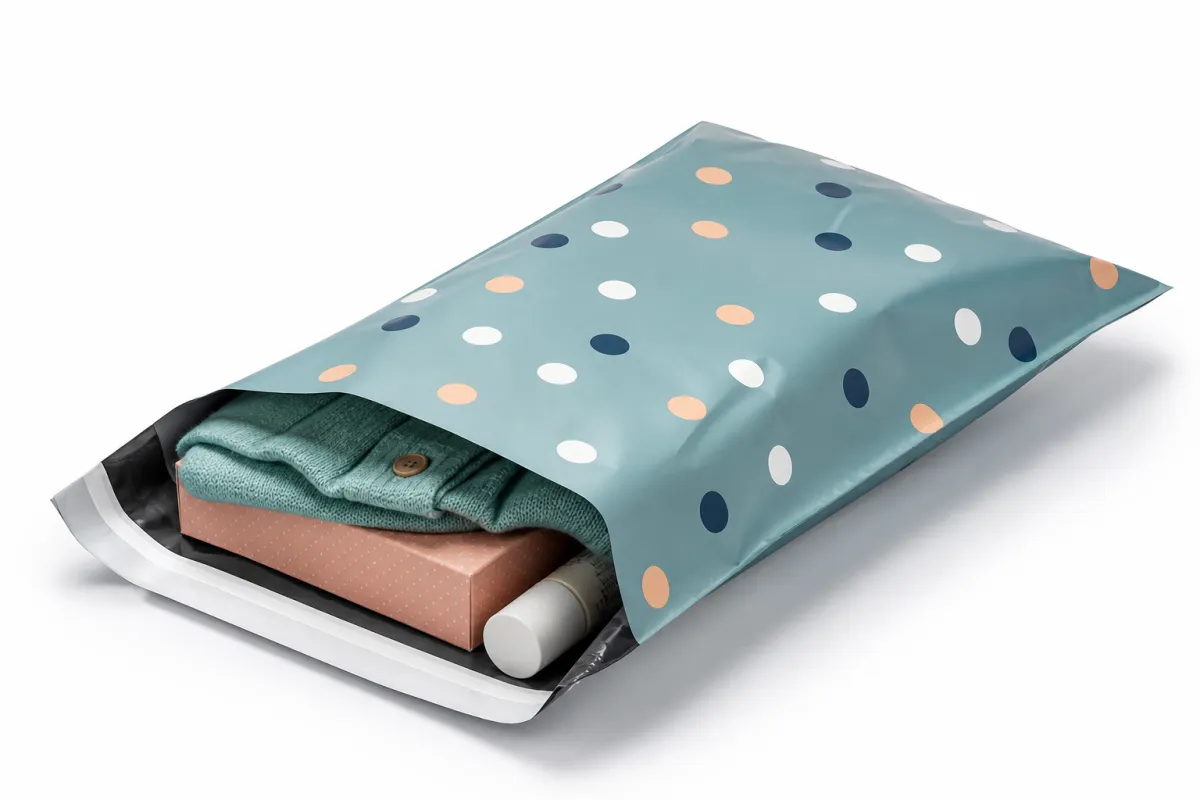
At the simplest level, mailing bags for subscription kits are lightweight outer shipping packages designed to hold a curated set of products through picking, kitting, sealing, and carrier handling. They are usually smaller and less expensive to ship than corrugated mailers, and they are faster to close on a busy line, which is why so many subscription brands start there.
The tactile piece matters more than people usually admit. The mailer is often the first brand moment, long before the box or product is revealed. If the film feels flimsy, wrinkles badly, or tears while being loaded, that impression travels straight to the customer, even if the contents inside are excellent. Once that happens, it is hard to undo.
Three broad types show up again and again. Simple shipping mailers are usually plain stock poly bags with a closure strip; Branded Poly Mailers add custom print, color, or finish; and specialty barrier bags are built for contents that need better protection from moisture, odor transfer, or puncture. The differences may look modest on paper, yet they change pack-out speed and customer perception in practical ways.
For a buyer, the decision usually comes down to five factors: protection, branding, speed, cost, and fulfillment fit. Mailing bags for subscription kits have to work across all five, because a beautiful mailer that jams the line is a poor choice, just as a cheap bag that saves a penny but creates returns is a poor choice.
Subscription programs also vary a lot by contents. Apparel kits need different stretch and tear behavior than beauty kits, and a mixed-media bundle with cards, bottles, and accessories may need a deeper gusset or a heavier film. That is why mailing bags for subscription kits are rarely a one-spec-fits-all purchase.
"A mailer that saves two seconds per pack-out can matter more than one that looks fancy but fights the line."
In packaging terms, the outer bag should support the experience, not dominate it. That is the basic mindset shift. Mailing bags for subscription kits are not just a shipping cost line; they are part of the product system.
I have watched teams spend weeks debating print finish and then discover the actual problem was a half-inch of extra slack that made every packer fight the seal. That sort of thing happens more than people think.
How Mailing Bags for Subscription Kits Work
The pack-out flow usually starts with kitting, where the subscription contents are assembled in a tray, bin, or work cell. After that, the load is moved into mailing bags for subscription kits, the closure is applied, the label is placed, and the finished unit is sorted into carrier totes or outbound pallets. Each motion sounds simple, but the bag has to cooperate at every step.
Bag size is one of the biggest practical variables. Too much empty space inside the bag and the contents can shift, corner-load the seal, or arrive with a sloppy presentation. Too little room and the operator has to force the kit into the bag, which can stress seams, slow the line, and create seal failures. The best fit is tight enough to control movement, but not so tight that it makes loading awkward.
Closures matter more than many teams expect. A clean adhesive strip needs the right peel strength so it closes quickly, but not so aggressively that operators fight it. Tear strips help the customer open the package cleanly, while dual adhesive strips can support returnable or re-closeable formats. For mailing bags for subscription kits, the closure is part of the user experience and the warehouse workflow at the same time.
The material choice also changes depending on the contents. Apparel can tolerate a fairly standard poly mailer, while paper goods may need extra stiffness to avoid bending. Cosmetics and liquids often call for better puncture resistance and a more reliable seal. Accessories with sharp edges, such as metal clips or small tools, are where a heavier-gauge film or a co-extruded structure earns its keep.
If you want a useful benchmark for common custom shipping formats, our Custom Poly Mailers page is a practical place to compare print coverage, sizing, and finish options before you settle on a spec.
Moisture protection is another quiet advantage. A poly mailer can shield the contents from light rain, splash exposure, and dust better than many open-top or paper-based solutions. It is not a waterproof drum, of course, but for mailing bags for subscription kits that move through hubs, vans, and porch drops, that barrier can prevent a lot of avoidable complaints.
Transit testing is worth the time if the kit has any real risk of damage. The International Safe Transit Association explains package testing and performance checks on its site, including how designs are evaluated under simulated shipping conditions: ISTA transit testing guidance. A bag can look great in a sample photo and still fail a real route if the closure, thickness, or seam design is off.
Choosing Mailing Bags for Subscription Kits: Key Factors
Material is the first filter. Standard poly is often the lowest-cost option and works well for lightweight contents with smooth edges. Co-extruded poly adds toughness by combining layers, which can improve puncture resistance and tear behavior. Recycled-content options are increasingly common, and heavier-gauge films are often the smart choice when the kit includes denser or sharper items. For mailing bags for subscription kits, the material has to match the actual abuse profile, not the hoped-for one.
Gauge matters because it tells you something about how the film behaves under stress. A 2.5 mil bag may be fine for soft goods or paper goods, while a 3 mil or 4 mil structure can be a better fit for mixed media, sample sets, or kits with hard edges. More thickness is not automatically better. Higher gauge can increase cost and stiffness, so the right answer depends on the product and the shipping lane.
Sizing strategy should start with the finished packed kit, not the loose parts. Stack height, inserts, tissue, cards, and protective filler all change the footprint. A measured assembly sample is far more useful than a guessed dimension on a spreadsheet. Mailing bags for subscription kits should allow a clean seal with enough headroom for the contents to lay flat without wandering around inside the bag.
Branding is where a lot of teams get emotionally attached, and I understand why. Color, logo placement, opacity, and print coverage all affect how the package feels before it is opened. A crisp two-color print on a matte bag can look cleaner than a loud full-coverage design if the brand is aiming for restraint. A bright, high-opacity bag can hide the contents and build anticipation. The right answer depends on the brand story and the shipping route.
There is also a sustainability layer that should be handled honestly. Recycled-content films and paper-based inserts can help reduce virgin material use, but the bag still has to perform. A lower-impact spec that tears, leaks, or fails to seal is not a better package. If paper components are part of the kit, FSC-certified materials are worth checking, and the Forest Stewardship Council explains certification standards here: FSC certification.
Performance needs to include more than just puncture resistance. Tamper evidence, moisture resistance, label adhesion, and return handling all matter. Some subscription brands use a second adhesive strip for returns, while others print a clear opening instruction or tamper message on the flap. Mailing bags for subscription kits can support a lower-friction customer journey if the closure design is thought through early.
Here is a simple way to think about the selection process:
- Standard poly for light, uniform contents and tight cost control.
- Co-extruded poly for better toughness and better resistance to splitting.
- Recycled-content film for sustainability goals that still require shipping performance.
- Heavier-gauge film for mixed kits, sharper edges, or rougher carrier routes.
- Specialty barrier structures for items that need stronger moisture or odor control.
If the kit is apparel-heavy, the design conversation often looks different from beauty or food-adjacent bundles. Apparel can tolerate a flatter mailer and a softer finish, while cosmetics or paper-bound collections may need more structure. For mailing bags for subscription kits, the best spec is usually the one that matches the product mix with the fewest extra motions on the line.
And if you are not sure the sample is actually right, trust the awkward test, not the pretty one. Put the actual contents in, close it with the hands your team will use, and see whether the bag behaves without a fight.
Mailing Bags for Subscription Kits: Cost and Pricing Factors
Cost starts with the obvious inputs: size, film thickness, print complexity, and order volume. A plain stock bag is usually the cheapest path, while a fully custom-printed bag with multiple colors, custom sizing, and special film options will move higher. For mailing bags for subscription kits, the price difference can be meaningful, but the real question is what the bag saves or costs elsewhere in the operation.
In moderate volume, plain poly mailers may land somewhere around $0.08-$0.18 per unit, while custom-printed options often sit more like $0.16-$0.40 per unit, depending on size, ink coverage, and material spec. Heavier or specialty structures can go beyond that. Those numbers are not universal, but they are a useful working range when a buyer is sketching out a budget.
Minimum order quantity changes the math quickly. A larger run usually lowers the unit price, because setup costs are spread over more pieces, but the buyer needs enough storage space and enough certainty in the forecast to avoid dead inventory. For mailing bags for subscription kits, a slightly higher order can be a smart move if the usage rate is stable and the design is unlikely to change for several cycles.
Hidden costs are where people get surprised. Artwork setup, plate charges, prepress adjustments, proofing fees, freight, and the cost of testing all need to be counted. Some print methods reduce or eliminate plates, while others still need them, and that can change the economics a lot. I have seen teams focus only on the bag quote and miss the freight bill, which is not a pleasant moment once the cartons land.
The table below gives a practical comparison of common options for mailing bags for subscription kits:
| Option | Typical Use | Relative Unit Cost | Strengths | Watchouts |
|---|---|---|---|---|
| Stock poly mailer | Light apparel, simple kits, pilot runs | Low | Fast sourcing, low cash outlay, easy reorders | Limited branding, less differentiation |
| Custom-printed poly mailer | Retail-facing subscription shipments | Medium | Brand recognition, cleaner unboxing, stronger shelf presence in transit | Artwork approval and lead time matter more |
| Recycled-content mailer | Brands with sustainability targets | Medium | Better alignment with material goals, good customer messaging | Performance must be verified, not assumed |
| Heavier-gauge or co-extruded mailer | Sharp edges, mixed-media kits, rough routes | Medium to High | Better puncture resistance, stronger film feel | Can add cost and stiffness if over-specified |
That cost picture changes again once labor is counted. A mailer that closes cleanly in one motion may save seconds on every kit, which matters in a weekly subscription operation. Multiply that by thousands of units and the bag choice starts to influence throughput, not just packaging spend.
There is also brand value to consider, and that value is real even if it is harder to put into a spreadsheet. A polished exterior can reduce the need for extra inserts or outer wraps, and it can make the shipment feel intentional before the customer gets to the actual product. Mailing bags for subscription kits are often the first brand impression that survives the trip from warehouse to doorstep.
One more point: total cost is not the same as the lowest quote. If a cheaper bag leads to more damage, more repacks, or more customer service tickets, it is not cheaper. That is why mailing bags for subscription kits should be evaluated as a combination of unit cost, labor cost, and risk cost.
Mailing Bags for Subscription Kits: Process, Timeline, and Lead Time
The process usually begins with a spec sheet or dieline review. That document should include finished dimensions, material type, print area, closure style, and any special requirements such as tear features or dual adhesive strips. For mailing bags for subscription kits, a clear spec at the start saves a lot of back-and-forth later.
From there, the supplier prepares a proof or sample. This is the point where artwork placement, color expectations, opacity, and closure alignment can be checked before the full run. A physical sample is much more valuable than a digital mockup if the product inside has unusual stack height or a rough surface. I always recommend checking the sample with the actual contents, because a bag that looks right when empty can behave very differently when loaded.
Typical lead times vary. Stock items may ship quickly, while partially customized versions often need a few weeks, and fully custom Printed Mailing Bags for subscription kits can require longer depending on artwork approval, material sourcing, and production queue. A realistic window for custom work is often 12-20 business days after proof approval, though demand spikes and special films can extend that.
Delays tend to come from a few predictable places. Artwork revisions are one. Color matching can be another, especially if the brand has strict standards for dark backgrounds or metallic effects. Material availability can also affect the schedule, and larger runs may require more coordination for freight booking and receiving. The best timeline is the one that includes room for one round of proofing, one round of hands-on sample checking, and a little buffer before launch.
A practical project schedule often looks like this:
- Measure the finished packed kit and confirm the target closure style.
- Request two or three sample structures for mailing bags for subscription kits.
- Review artwork, print coverage, and label placement.
- Test the sample with real contents and real pack-out motions.
- Approve the final proof only after the seal, fit, and handling feel correct.
- Schedule receiving so inventory lands before the launch date, not after it.
Fulfillment testing is the part many teams skip, and it is often the part that exposes the real risks. A bag might look fine in a clean conference room, then snag on a table edge, trap air, or cause a label to wrinkle once the line starts moving at normal speed. Mailing bags for subscription kits should always be checked in the same environment where they will actually be used.
It also helps to think about the kit mix early. If the subscription includes apparel one month, stationery the next, and cosmetics later, the bag spec may need enough range to handle all three. Some programs settle on one standard bag and use filler or internal inserts to normalize the pack, while others keep multiple bag SKUs on hand. Both approaches can work; the better choice depends on volume and operational discipline.
Lead time planning is not just about the supplier. Internal approvals, finance sign-off, artwork review, and inbound storage all affect readiness. If the first shipment of mailing bags for subscription kits arrives late, the packing schedule can slide even when production is on time. That is why the best launch plans include both supplier timing and warehouse timing.
Common Mistakes With Mailing Bags for Subscription Kits
The biggest mistake is size selection that starts with a guess instead of a measured sample. Too-small mailing bags for subscription kits create stress on the seal, while too-large bags leave the contents sliding around and make the package look underfilled. Both problems are avoidable if the finished kit is measured in its sealed, real-world form.
Another common error is treating appearance as more important than durability. A glossy printed bag may look excellent on a screen, but if the route includes high humidity, rough sorting, or lots of corner pressure, the wrong film will show the weakness quickly. Mailing bags for subscription kits need to survive the shipping network first and impress second.
Weak adhesive is a sneaky problem. If the closure strip does not hold cleanly, operators may press harder, rework the bag, or add tape, and that wastes labor while making the package feel less polished. Poor print legibility creates a different issue, because low-contrast logos or muddy colors can make a brand look smaller than it is. Opacity also matters, especially if the contents should not be visible through the film.
Skipping fulfillment trials is a costly shortcut. A real trial will reveal whether the bag loads cleanly, whether the label sticks well, whether the opening direction makes sense, and whether staff need two hands or one. Mailing bags for subscription kits should be tested under actual production conditions, because that is where friction shows up.
There is also a tendency to underthink the shipping lane. A kit moving through gentle local delivery is not the same as one that passes through multiple hubs and longer line-haul routes. Materials that work beautifully for short regional shipments can become marginal under repeated compression, vibration, or handling. A bit of extra film strength can prevent a lot of headaches later.
For sustainability-minded brands, another mistake is choosing recycled-content materials without checking performance. Recycled film can be a strong option, but it still needs to meet the route requirements. If the bag fails early, the replacement shipment and the wasted product are worse for both cost and material use. Mailing bags for subscription kits should be evaluated as a whole system, not as a single line item.
Finally, teams sometimes forget the receiving side. Storage space, carton counts, and bag nesting behavior all matter in the warehouse. A bulky bag can take more room than expected, and if the on-hand inventory is awkward to store, it slows everything down. That is another reason mailing bags for subscription kits should be chosen with both design and operations in mind.
Expert Tips and Next Steps for Mailing Bags for Subscription Kits
My first recommendation is simple: sample with the real contents, not just with air. Put the actual kit into the bag, close it, label it, stack it, and move it the way a packer would. That is the only honest way to judge mailing bags for subscription kits, because the load behavior changes once product weight and shape are involved.
Next, pressure test the closure and the corners. Press the seal, pull on the flap, and make sure the seam does not split when the bag is handled roughly. If the kit includes hard parts, check the corner stress points carefully. A stronger film, wider seam, or different closure profile may cost a little more, but it can pay for itself by reducing damage and repacks.
Label adhesion deserves its own test. A smooth poly surface usually accepts labels well, but certain coatings, textures, or recycled-content films can behave differently. If the label lifts, wrinkles, or slides, the package is harder to scan and harder to sort. Mailing bags for subscription kits should be validated with the actual label stock the warehouse will use.
Building a short approval checklist is one of the best things a team can do. Include finished dimensions, film type, print color targets, closure style, expected shipping method, reorder point, and storage requirements. That checklist makes it easier to compare options side by side and stops the process from drifting into opinion-based decisions. For mailing bags for subscription kits, a few pages of structure can save a lot of emergency emails later.
Here is a practical way to move forward without overcomplicating the purchase:
- Measure the finished packed kit and record the largest and smallest load cases.
- Request two or three material options for mailing bags for subscription kits.
- Compare plain stock, custom print, and recycled-content pricing on the same size.
- Test the seal, label, and handling with real contents before any full commitment.
- Set a reorder point early so stock does not run out mid-cycle.
If the kit is still in development, ask for samples that reflect the real route, not just a clean tabletop test. If the shipment is going direct-to-consumer, the unboxing impression matters more than if it is headed to a retail shelf. If the shipment is heavy or irregular, spend more time on gauge and seam performance. Mailing bags for subscription kits should be chosen by use case, not by habit.
The cleanest next step is a small, real-world qualification run: choose two bag structures, pack them with actual kit contents, run them through the normal label and sealing workflow, and inspect them after they have been stacked, handled, and moved through the same path as a launch batch. That one test usually tells you more than a stack of spec sheets ever will.
One last thought: a polished outer package can support retention, but only if it holds up under actual shipping conditions. That balance between presentation and protection is where the best mailing bags for subscription kits earn their place. Get the fit right, make the closure dependable, and choose the material for the route you actually ship, not the route you hope to ship.
Frequently Asked Questions
What size mailing bags for subscription kits should I choose?
Measure the finished packed kit, not the loose components, because inserts, stack height, and product compression all affect the final footprint. Leave just enough room for a clean seal without creating excess empty space that can shift in transit. A sample size test with real contents is the safest way to confirm mailing bags for subscription kits before a full order.
Are custom mailing bags for subscription kits worth the cost?
They are usually worth it when repeat recognition, brand presentation, or a cleaner unboxing experience matters to retention. Custom print can also reduce the need for extra branded inserts or secondary packaging layers. The value is strongest when mailing bags for subscription kits travel directly to the customer and are seen before the package is opened.
What material works best for mailing bags for subscription kits?
Standard poly works well for many lightweight kits, while thicker or co-extruded films are better for sharper edges and better puncture resistance. If moisture protection matters, choose a material with reliable barrier performance and a strong sealed closure. For sustainability goals, recycled-content options can work well if they still meet the shipping requirements for mailing bags for subscription kits.
How long does it take to produce mailing bags for subscription kits?
Lead time depends on whether the bag is stock, partially customized, or fully custom printed. Artwork approval, sampling, and material availability are the biggest schedule variables. It is smart to build in extra time for proofing and a small test run so mailing bags for subscription kits are ready before launch.
What are the most common mistakes when ordering mailing bags for subscription kits?
Choosing the wrong size, underestimating shipping abuse, and skipping fulfillment testing are the biggest problems. Another common mistake is focusing only on price instead of total shipping performance and labor savings. Always verify fit, seal strength, and print quality with real kit contents before scaling up mailing bags for subscription kits.

