Matte laminated paper Bags Bulk Order: pricing and specs becomes a clearer decision once you separate appearance from performance. Matte reduces glare, hides handling marks better than gloss, and keeps print looking controlled after cartons, transit, and shelf handling. That makes it a practical premium finish, not just a visual preference.
For buyers, the real question is whether the bag still looks good and holds up after shipping, stacking, and customer carry-out. A well-built matte bag often fits boutiques, cosmetics, gift packaging, corporate events, and retail promotions because it stays composed under normal use. The point is not just to look premium in a sample room, but to keep that look through production and delivery.
Matte hides the ugly stuff. Gloss shows it off.
Why matte finish is the safer premium look in bulk
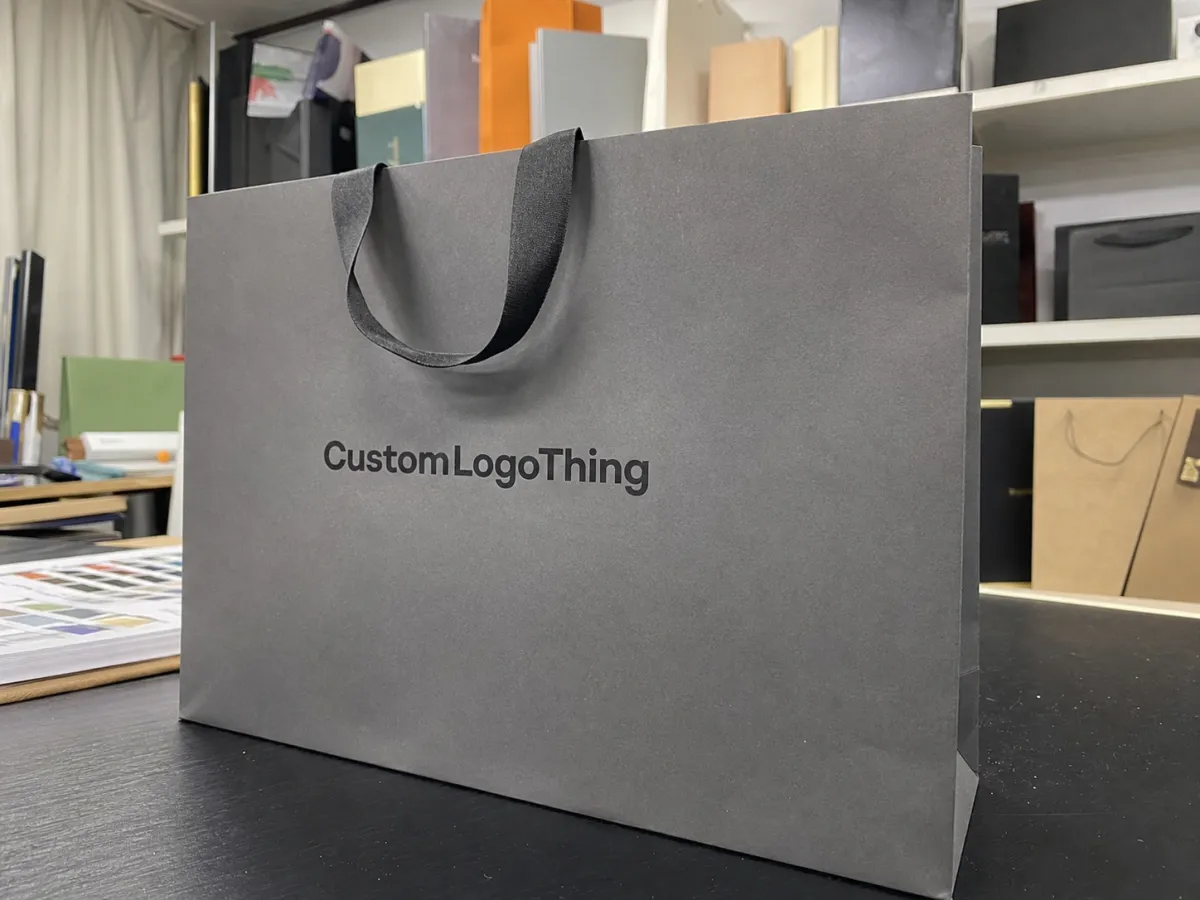
Matte lamination is both a visual and handling choice. The low-reflection surface makes logos easier to read under bright lighting and gives the bag a calmer, more deliberate look. It also reduces small scuffs that become obvious when the bag moves through packing, transport, and store replenishment.
That matters more at volume. A single sample can look perfect on a table, while a pallet of bags has a harder life. Corners rub, cartons get compressed, and handles shift in packing. Matte usually survives that process with fewer visible marks.
It also suits categories where the packaging supports the brand experience: candle brands, skincare, fashion retail, and event programs often get more value from a restrained finish than from a louder one. If the brand is minimal or design-led, matte usually fits naturally. If the brand is more vibrant, the print needs enough contrast so the artwork does not look flat.
For repeat programs, finish choice matters beyond the first shipment. A softer surface can provide a little more forgiveness during storage and transit, which helps when cartons sit before use. That is a practical advantage for bulk ordering, especially when the buyer wants the same result every time.
Paper stock, lamination, and reinforcements that change performance
The build matters as much as the artwork. Matte laminated bags can use different paper weights, film thicknesses, and reinforcement methods, and each one changes how the bag behaves in real use.
Start with paper stock. For many retail orders, buyers compare 170gsm to 250gsm art paper or coated board, then choose based on product weight and brand position. Lighter board can work for small gifts, but heavier stock is usually the safer choice for boxed cosmetics, apparel, or reusable bags because it holds shape better and feels more substantial in hand.
The lamination layer is the next decision. Standard matte film gives a soft finish and basic protection, while a thicker film can improve scuff resistance. Too much film can make the bag feel plasticky and add cost without improving performance enough to justify it. The right balance depends on artwork coverage, storage conditions, and how rough the bag handling will be.
Reinforcement details often determine whether the bag performs well or fails early. Top folds, bottom inserts, side gussets, and handle patches all affect load stability. A good print job means little if the bottom bows out or the handle patch tears after a second use. Buyers often notice that only after the sample stage, when production bags face real-world loading.
If you want a shipping benchmark, packaging standards such as those from ISTA are a useful reference. Paper bags do not need lab-grade abuse testing in every case, but they should be designed for compression, stacking, and handling. A bag that only looks good before transit is not ready for a bulk order.
- 170gsm-210gsm board suits lighter gifts and lower carry weight.
- 230gsm-250gsm board is safer for apparel, cosmetics kits, and repeat use.
- Matte film reduces glare and visible handling marks.
- Reinforced bottoms and top folds improve load stability and carton survival.
- Handle patches matter more than many buyers expect, especially on rope and ribbon styles.
Print style should match the surface. Matte finishes make bold logos, crisp type, and generous negative space look strong. Full-bleed artwork can work too, but it needs careful file prep and color control. Foil and spot UV are still options, though they should be used with restraint. On matte, a little contrast goes a long way.
If sustainability is part of the brief, ask for the full material stack before approval. The FSC label is only meaningful when the paper source is documented. The same is true for adhesives, liners, and any extra coating that affects recyclability. That is a paperwork issue as much as a material one.
Sizes, handle styles, and load limits to lock in
Bag sizing should start with the product, not with a generic quote. Measure the item first, then allow room for tissue, inserts, or a folding margin if needed. A bag that is too tight looks cheap. One that is too large wastes paper and freight volume.
A practical sizing check covers width, gusset depth, and height. For small cosmetic sets, the gusset may be modest. For apparel, folded garments, or boxed sets, gusset depth becomes more important because it determines how well the bag sits flat and how it feels in the hand.
Handle choice changes both comfort and cost. Cotton rope feels upscale and carries well. Ribbon is elegant, but not always the strongest option for heavier fills. Twisted paper is economical and common in high-volume retail. Die-cut handles keep the look clean and can be efficient, though they need proper reinforcement if the contents are heavy. Reinforced paper handles often sit in the middle for buyers who want a tidy look without rope-handle pricing.
| Handle style | Best for | Typical strength | Cost impact |
|---|---|---|---|
| Cotton rope | Boutique, cosmetics, gift sets | Medium to high | Higher |
| Ribbon | Luxury gifting, event packaging | Medium | Higher |
| Twisted paper | Retail promos, larger volume programs | Medium | Lower |
| Die-cut | Light gifts, takeout-style retail use | Low to medium | Lower |
| Reinforced paper handle | Balanced cost and appearance | Medium to high | Moderate |
Load limits should be discussed plainly, not with vague marketing language. A bag for one skincare box is not the same as a bag for folded knitwear or a multi-item gift kit. If the bottom board is too light or the handle patch is undersized, failure shows up in use, not in the sample room.
Sample fitting is worth the time. Put the actual product in the bag, close it, lift it, carry it, and stack a few finished cartons. That catches the annoying issues early: too much slack at the top, a handle that digs in, side bulge, or a gusset that collapses before the bag is full.
Matte laminated paper bags bulk order: pricing, MOQ, and unit cost
Pricing starts with the basics: size, paper weight, print coverage, handle type, lamination thickness, and any extra finish work. Add foil, embossing, debossing, or spot UV and the quote changes quickly. Every added step creates more labor, more setup, and more inspection.
For custom runs, quantity has the biggest effect on unit cost. Setup and plate costs get spread across more bags as volume rises, so the per-bag price drops faster than many buyers expect between a test order and a true bulk order. A larger run can look very different from a proof run, even when the visual spec is nearly the same.
MOQ is usually tied to print complexity and production setup, not a random factory preference. A simple single-color logo on a standard size can often start lower than a full-bleed design with foil and custom inserts. The more steps in the build, the more volume the supplier needs to keep the run efficient.
| Build type | Typical MOQ | Approx. unit cost at 5,000 pcs | Notes |
|---|---|---|---|
| Simple matte bag, twisted paper handle | 500-1,000 pcs | $0.28-$0.45 | Good for clean logo work and lighter fills |
| Matte bag, rope handle, 1-2 color print | 1,000 pcs+ | $0.42-$0.78 | Balanced choice for retail and gifting |
| Matte bag, foil or spot UV, reinforced structure | 1,000-3,000 pcs+ | $0.65-$1.20 | Higher decoration, more setup, more inspection |
Those ranges are typical factory-style figures before freight, and they move with paper grade, size, and finish level. A larger bag with rich coverage costs more than a compact bag with a restrained logo. Shipping matters too. Air freight can make a clean production quote look awkward fast, while sea freight only works when the timeline leaves enough room for transit.
The most useful pricing exercise is tiered quoting. Ask for 1,000, 3,000, 5,000, and 10,000 pieces. That shows where the setup cost starts to pay back the extra cash outlay. If the price gap between tiers is small, there is no reason to overbuy just to reach a better unit number.
Unit cost also misses hidden costs if the bags sit in storage too long, require extra repacking, or arrive with corner wear that creates rejects. A slightly higher quote can still be the better decision if it includes stronger packing, clearer approvals, or lower damage risk.
Production steps and lead time for custom orders
A clean order follows a predictable sequence: quote, dieline, artwork placement, proof approval, then sample or pre-production check, mass production, carton packing, and shipping. Skip a step and the schedule gets messy.
Realistic timing helps. A digital proof often takes 24-48 hours once the specs are clear. Sample production commonly takes about 5-7 business days. Mass production is often in the 15-25 business day range after approval, depending on finish complexity and factory queue. Freight time is separate and can be the longest part of the process.
What slows things down? Missing artwork, late feedback on proofs, custom inserts, and decorative finishes that need extra inspection. Tight timelines also get derailed when the buyer ignores transit time. Packaging does not teleport, and freight schedules do not adjust for launch calendars.
If the bags are tied to a seasonal rollout, event, store opening, or product launch, build in buffer time. A week of slack beats a last-minute scramble. If the schedule is tight, simplify the spec first. Drop extra embellishment before you try to compress the production window. A cleaner build is easier to approve, easier to inspect, and easier to reorder later.
What makes a supplier reliable for repeat bag programs
Repeat business depends on repeatability. The artwork should print the same way next time, not only close enough. Color drift, handle inconsistency, and poor carton packing create more work than many buyers expect, especially when stores need a reorder that matches the original run.
Quality control is where reliability becomes visible. Handle pull testing, glue-line checks, carton count verification, and corner protection inside the shipper cartons all matter. A bag can look perfect in isolation and still fail in transit if the packing method is weak.
Communication matters just as much as material choice. One person or one team should own specs, proofing, and revisions from start to finish. Fewer handoffs usually mean fewer errors. Fewer errors mean fewer surprise changes six weeks later, when the buyer is trying to match a reordered bag to a previous run.
For recurring programs, the supplier should keep approved specs on file so the buyer does not have to rebuild the order from scratch every time. That saves time on reorders and makes brand consistency easier to maintain across seasons, store openings, and promotional cycles. It also reduces the risk of a small change slipping in unnoticed.
The hidden cost in packaging sourcing is often administrative, not material. A low quote loses its appeal if the second order needs new artwork checks, new dielines, and new color approvals because the first run was not documented properly. The best supplier is not always the cheapest one. It is the one that can repeat the same result without improvising.
Next steps to quote, proof, and place the run
If you want a useful quote, send the dimensions, quantity target, handle preference, artwork file, finish requirements, delivery address, and target date. The more specific the brief, the less guesswork in the response.
Ask for tiered pricing at several quantities so you can compare the jump from one run size to the next. That lets you see setup cost, unit cost, and shipping impact together. A buyer who only looks at one quantity is making a partial decision.
Before production starts, approve the proof and confirm the carton pack count, overrun or underrun tolerance, and shipping method. If those details are not pinned down, someone will later claim they were understood. They were not. Put them in writing.
- Send exact bag dimensions instead of product names alone.
- Specify the finish so matte does not become a guess.
- Confirm the handle style and any reinforcement requirement.
- Request multiple quantity quotes to find the real price break.
- Approve the proof before production starts.
If you are buying through a repeat packaging program, keep a clear record of the approved spec and reorder timing. That is how a matte Laminated Paper Bags bulk order becomes a controlled supply item instead of a one-off headache. Lock the spec, approve the proof, and move only when the numbers make sense.
What is the usual MOQ for matte laminated paper bags bulk order projects?
MOQ usually depends on bag size, print complexity, and handle choice rather than one fixed number. Simple builds often start lower than heavily finished bags with foil, embossing, or custom inserts. Ask for a tiered quote so you can see where the price becomes efficient enough to justify a larger run.
How much does matte lamination add to paper bag unit cost?
Matte lamination adds cost compared with uncoated paper because it adds material and an extra production step. The biggest cost drivers are size, paper weight, print coverage, handle style, and decorative finishes. The per-bag price usually improves fast as quantity rises, so small runs and true bulk runs should not be compared directly.
How long does a matte laminated paper bag order take after artwork approval?
A typical workflow is 24-48 hours for proofing, 5-7 business days for sampling, and 15-25 business days for mass production. Shipping time is separate and can change a lot depending on air, sea, and destination. Rush jobs cost more because they compress proofing, production, and freight into a tighter window.
Can matte laminated paper bags be recycled?
Recyclability depends on local rules and how the bag is built, especially if paper is paired with film, foil, or heavy adhesives. If sustainability is a priority, ask for the simplest structure that still protects the print and product. It is smarter to confirm the material mix before production than to guess after delivery.
What artwork works best on matte laminated paper bags?
Bold logos, clean type, and high-contrast layouts usually read best on matte surfaces. Provide vector files, keep important details away from folds, and leave safe margins near the handle and bottom area. Thin lines and low-contrast pastel art can work, but they need careful proofing because matte lamination softens the overall look.

