Clear Zipper Bags Bulk Order: Request Pricing & Specs
Planning a clear zipper bags bulk order? Compare size, thickness, closure style, MOQ, and Lead Time before you commit to a price that looks good only on paper.
A clear zipper Bags Bulk Order can reduce packaging cost, but only when the bag spec matches the product and the packing process. The savings come from less wasted film, fewer repacks, and a cleaner carton pack, not just from a lower quote.
The common mistake is to compare the unit price alone. A bag that seals cleanly, fits the item, and moves quickly on the line can cost less overall than a cheaper pouch that creates handling problems or returns. Buyers usually feel that difference after the first production run.
A low quote stops being low if the zipper fails, the film scratches, or the bag size forces hand-repacking.
Why a bulk order lowers unit cost
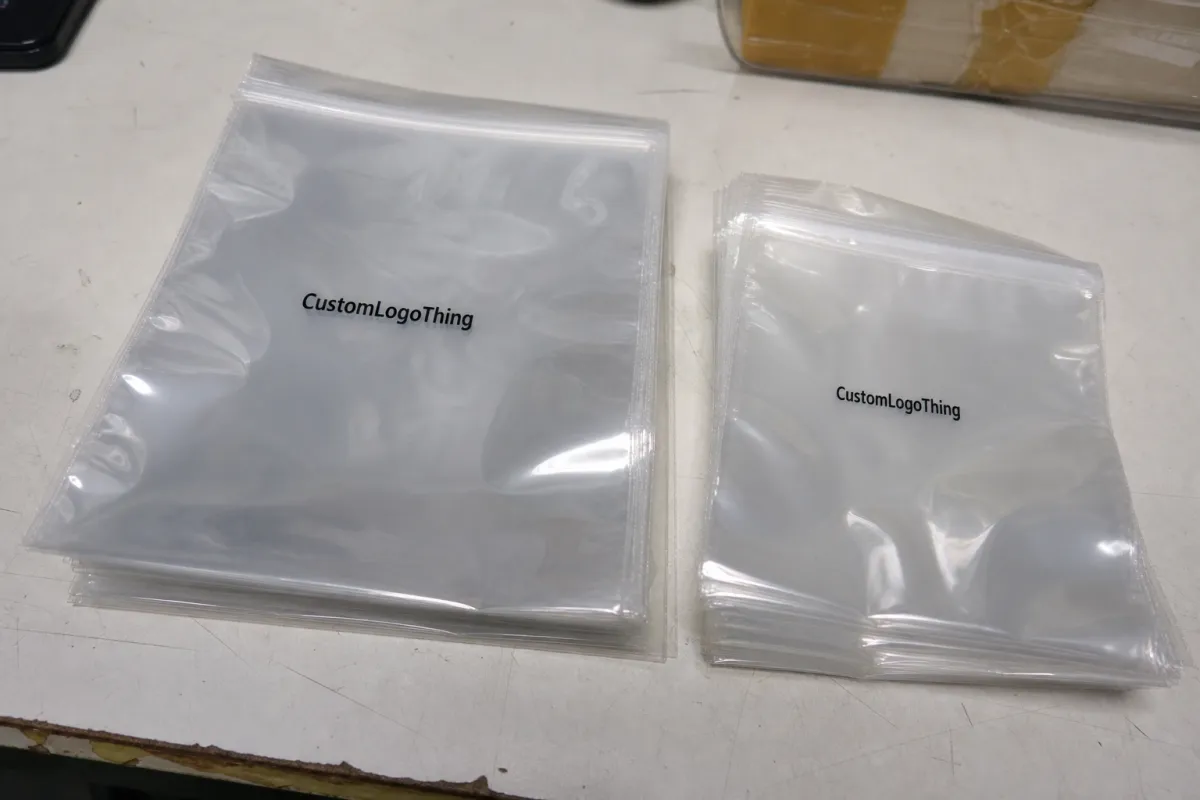
Volume lowers cost because the factory spreads film conversion, zipper application, cutting, inspection, and carton packing across more units. A 2,000-piece run and a 10,000-piece run can sit in very different price bands even before printing or special finishing is added.
Standardization also reduces operational cost. One approved bag size means fewer SKUs, fewer picking mistakes, and less time spent checking the right pouch at pack-out. For retail kits, samples, accessories, and small components, consistent clear bags also make the line look organized rather than improvised.
- Less waste: the right dimensions reduce empty headspace and oversized cartons.
- Faster packing: workers are not forcing products into the wrong pouch.
- Cleaner presentation: consistent bags make the contents easier to trust.
- Better visibility: buyers can inspect color, count, and condition without opening the pack.
That visibility is practical as well as visual. Clear packaging helps confirm the product, the quantity, and the condition at receiving. For a B2B order, that can prevent a back-and-forth before the shipment is even booked.
Which bag construction fits the product
Start with the item, not the catalog. Flat clear zipper bags suit small parts, samples, accessories, and garments that lie evenly. Gusseted styles add depth for bulkier contents. Heavier or reinforced structures are better for sharp edges, denser items, or products that will be opened and closed often.
Fit testing matters more than a theoretical size chart. Put the actual item in the bag, close the zipper a few times, and check the corners after compression. If the product catches on the seal, the pouch is too tight. If it slides around too freely, the presentation will look loose and the carton will carry extra air.
Closure choices that affect handling
Press-to-close zippers are usually the most economical option and work well for storage, retail, and short-term handling. Slider closures cost more but are easier to open and close when access is frequent. Tamper-evident styles add a visible opening point where access control matters.
The closure changes line speed as much as convenience. A stiff or misaligned zipper can slow packing when workers are sealing bags by the hundred. That problem often shows up only after a production run starts.
Retail details that change the purchase decision
Hang holes, euro slots, writable panels, frosted sections, and extra-clear film affect how the package performs on shelf. A hang hole supports peg display. A writable panel helps with SKU marks or batch notes. Frosted film can cut glare under strong lighting, though it also softens the view of the product.
These details look minor on a spec sheet and become obvious in-store. A bag can be technically correct and still be wrong for the environment it will live in.
Thickness, zipper style, and size specs that change performance
Thickness is usually measured in mils. A 2 mil film often works for light accessories or sample packets. A 3 mil to 4 mil bag is more common for products with edges, repeated handling, or longer shipping chains. Heavier gauges add material cost, but they can lower damage risk and returns.
Size is where quotes often become misleading. Ask for usable interior dimensions, not just outer measurements. The zipper area, weld lines, and any gusset depth reduce the real opening and the effective inside space. A bag listed as 4 x 6 inches may not function like a true 4 x 6 pouch once the closure is counted.
Clarity and finish matter too. Ultra-clear film shows the product best, which is usually the right choice for retail, resale, and inspection-heavy packing. Matte or frosted finishes reduce glare and fingerprints, but they also mute the contents. That trade-off is useful in some settings and wrong in others.
For transport-sensitive orders, ask about seal strength, zipper alignment, bottom weld quality, and puncture resistance. If the bags will move through parcel networks, a drop and vibration check aligned with ISTA testing standards can expose weak points before a full run is approved. Finding that problem in sampling is cheaper than finding it after cartons have shipped.
Zipper smoothness also matters. A stiff or uneven closure slows packing, especially if workers are sealing bags in high volume. The bag may look fine in a photo and still be frustrating in use.
Cost, pricing, MOQ, and quote variables buyers should compare
Pricing starts with film gauge and bag size, then moves through closure type, print requirements, carton pack, and labeling. A stock clear zipper bag with no print will usually cost less than a custom size with multiple colors, a hang hole, or retail labeling. Freight can change the picture quickly, so a low factory price is not always a low landed cost.
| Option | Best for | Typical MOQ | Typical unit price | Trade-off |
|---|---|---|---|---|
| Stock flat zipper bag, unprinted | Small parts, samples, fast replenishment | 500-2,000 pcs | $0.04-$0.10 | Lowest cost, limited branding control |
| Custom size, clear film, unprinted | Products with exact fit requirements | 2,000-5,000 pcs | $0.08-$0.16 | Better fit, higher setup sensitivity |
| Custom printed zipper bag | Retail, branded kits, repeat SKUs | 5,000-10,000 pcs | $0.18-$0.35 | Stronger branding, longer proofing cycle |
| Heavier gusseted or slider closure bag | Bulkier items, frequent open-close use | 5,000 pcs and up | $0.22-$0.55 | More protection, more material cost |
Those figures are working ranges, not promises. They help frame the conversation so the quote is compared against the right baseline. Ask for tiered pricing at two or three quantity levels. Sometimes the jump from 5,000 to 10,000 pieces is small enough that the larger run makes sense. Other times the lower MOQ is the smarter choice because demand is still uncertain.
Compare landed cost, not just unit price. Sample charges, freight, duties, carton configuration, and label application can move the total by a meaningful amount. A quote that looks low until shipping is added is not really low. Buyers who separate the bag price from the landed number usually make better decisions.
Lead time also affects cost. A slower planned shipment may be cheaper than an expedited air move. In a bulk program, time is part of the spec.
Process, timeline, and production steps from quote to freight
A clean production schedule starts with a clean spec sheet. The normal sequence is quote review, sample approval, artwork or label confirmation, production scheduling, inspection, packing, and freight booking. If dimensions are clear and the artwork is simple, the process moves quickly. If the buyer keeps changing the size or delaying proof approval, the schedule slips before the factory starts converting film.
- Confirm the product dimensions, thickness, closure type, and finish.
- Review a sample or drawing and resolve fit questions early.
- Approve artwork, labeling, or print placement.
- Lock the quantity, carton pack, and delivery destination.
- Schedule production and define inspection requirements.
- Book freight and confirm the arrival window.
Sample lead time is usually separate from mass-production lead time. A sample may take several business days, while a full run can often finish in roughly 12-15 business days after proof approval, depending on quantity and factory load. Shipping adds another layer. Air freight cuts transit time but raises cost quickly. Ocean or ground freight is more economical, but it needs more planning and a wider buffer.
Most delays come from ordinary issues: missing dimensions, slow proof approval, unclear quantity targets, or an order that was never fully defined. A buyer who sends a complete brief usually gets a cleaner quote and a more reliable production slot.
The fastest order is the one that does not need to be re-quoted after the first sample arrives.
Print options, labeling, and retail-ready finishing choices
Branding on clear zipper bags does not need to be crowded. Logos, product names, SKU codes, handling notes, and warning text can usually be printed on one or both sides, depending on bag structure and display needs. For most retail packs, a centered logo and a clean label zone work better than a dense graphic.
Direct print or applied labels?
Short runs, seasonal promotions, and product lines with frequent SKU changes often do better with labels or insert cards than with direct print. Labels can be updated quickly and avoid the risk of obsolete inventory. A printed bag is harder to retire once the artwork changes.
Direct print makes more sense when the design is stable and the order volume is high enough to justify setup. Each added color, side, or finishing step adds proofing and inspection work. If the order includes paper header cards or inserts, ask whether FSC-certified paper is available so the paper component is easier to document and verify.
Consistency is where packaging starts to influence sales. A straight label, a repeatable logo position, and an uncluttered panel make the product look easier to trust. A slightly cheaper bag with uneven print placement often loses that comparison.
Labels also let one base bag serve several SKUs without tying up cash in multiple printed versions. That is a useful compromise when the product line is still moving.
How to compare suppliers on consistency, compliance, and service
Do not judge a supplier by the sample alone. Judge the run. The real question is whether the second, third, and tenth thousand bags still match the first. Film clarity, zipper alignment, seal strength, and carton counts need to stay steady across the order.
Ask for the documents that reduce uncertainty. At minimum, request material specifications, basic test data, and a written policy for defects or shortages. If the bags will touch food, cosmetics, or other regulated products, confirm the relevant compliance statement before approval. If shipping damage matters, ask how the supplier handles transit testing, claims, and replacement decisions.
- Spec confirmation: do they restate dimensions, gauge, closure, and finish in writing?
- Problem response: do they flag issues early, or only after you ask twice?
- Substitution control: will they change film or zipper components without approval?
- Traceability: can they tie cartons back to a production lot if something goes wrong?
Communication is often the fastest proxy for operational discipline. If the first reply is clear and specific, the production file is probably organized. If the answers stay broad and indirect, expect more rework later. The lowest price is not the lowest cost if the bags arrive off spec and force a second purchase.
Also ask about inspection checkpoints. A factory that checks film clarity, dimensions, seal quality, and count accuracy before packing is easier to work with than one that only checks the finished carton.
What to prepare before you request a bulk quote
If you want an accurate quote, send a spec sheet instead of a loose inquiry. Define the product type, interior dimensions, target thickness, finish, closure style, print needs, sample request, and arrival date. The more complete the brief, the less back-and-forth you will need and the faster the quote becomes usable.
Here is the information that saves the most time:
- Product size: use usable interior dimensions, not only the outside measurement.
- Bag construction: flat, gusseted, slider, or tamper-evident.
- Film target: light-duty or heavier gauge based on handling and shipping.
- Branding: print, label, insert card, or no decoration at all.
- Destination: zip code, pallet need, and freight preference.
- Volume plan: one-time order or repeat schedule.
Ask for tiered pricing at two or three quantity levels, then compare landed cost rather than only unit price. That is the cleanest way to see whether it makes sense to move up in volume or stay with a smaller test run. It also helps you set a reorder point before inventory gets tight.
Pack-out details matter too. The same bag can quote differently depending on whether cartons are loose-packed, inner-bagged, poly-wrapped, or palletized. Those choices influence freight, damage risk, and warehouse handling.
Keep the fit rules, MOQ expectations, and lead-time questions in your procurement notes. Clear specs create clearer numbers. That is the real advantage of planning a bulk order well: fewer revisions, better pricing comparisons, and less waste in the first production cycle.
How do I size a clear zipper bags bulk order correctly?
Measure the product first, then add room for loading and the zipper area so the usable interior space still fits the item. If the product has corners, inserts, or accessories, test-fit a sample before final production. Also confirm whether the supplier lists outer dimensions or usable inner dimensions, because that difference changes fit more than most buyers expect.
What thickness should I choose for clear zipper bags in bulk?
Use thinner film for light, flexible items and thicker film for heavier, sharper, or higher-value products that need more protection. If the bag will be handled often, shipped loose, or opened repeatedly, a sturdier gauge usually lowers damage risk. A sample pack is the best way to compare stiffness, sealing, and visibility together.
Can I order clear zipper bags with custom printing?
Yes. Confirm the print area, color count, and whether you need logos, SKUs, warnings, or full-panel branding. Artwork proofing usually adds time, especially if the print requires a new setup or a specific color match. If the design changes often, labels or insert cards are often faster and more economical than direct print.
What MOQ should I expect for a clear zipper bags bulk order?
MOQ depends on size, thickness, and whether the order includes custom print or special finishing. Stock sizes usually support lower entry quantities than fully custom bags, so ask for quotes at several volume levels. If you need multiple SKUs, ask whether the supplier can combine quantities to help you reach better pricing.
How long does a clear zipper bags bulk order usually take?
Lead time depends on sample approval, quantity, and whether the order needs custom printing or new tooling. Production is only part of the schedule; freight method and destination can add several days or more. Build in extra time if the bags are tied to a launch, promo, or seasonal restock so the inventory arrives before the deadline.


