Laminated Paper Bags for ecommerce can do something that plain mailers and ordinary kraft bags often struggle with: they give a shipment a more polished first impression while adding a thin layer of surface protection. That does not make them a universal solution. It does mean they can be the right answer for lightweight products that need to arrive looking cared for, not merely carried.
The catch is simple. A good sample can hide weak construction, and a pretty mockup can hide bad pack-out logic. If the handle reinforcement is thin, the gusset is undersized, or the laminate is chosen for appearance instead of handling, the bag may look strong right up until it enters a warehouse, a carton, and a parcel network.
That is why buyers who source these bags well tend to think in systems rather than surfaces. Paper grade, lamination, print coverage, opening width, handle style, and shipping method all affect whether the final bag earns its keep.
Laminated paper bags for ecommerce: what they really solve
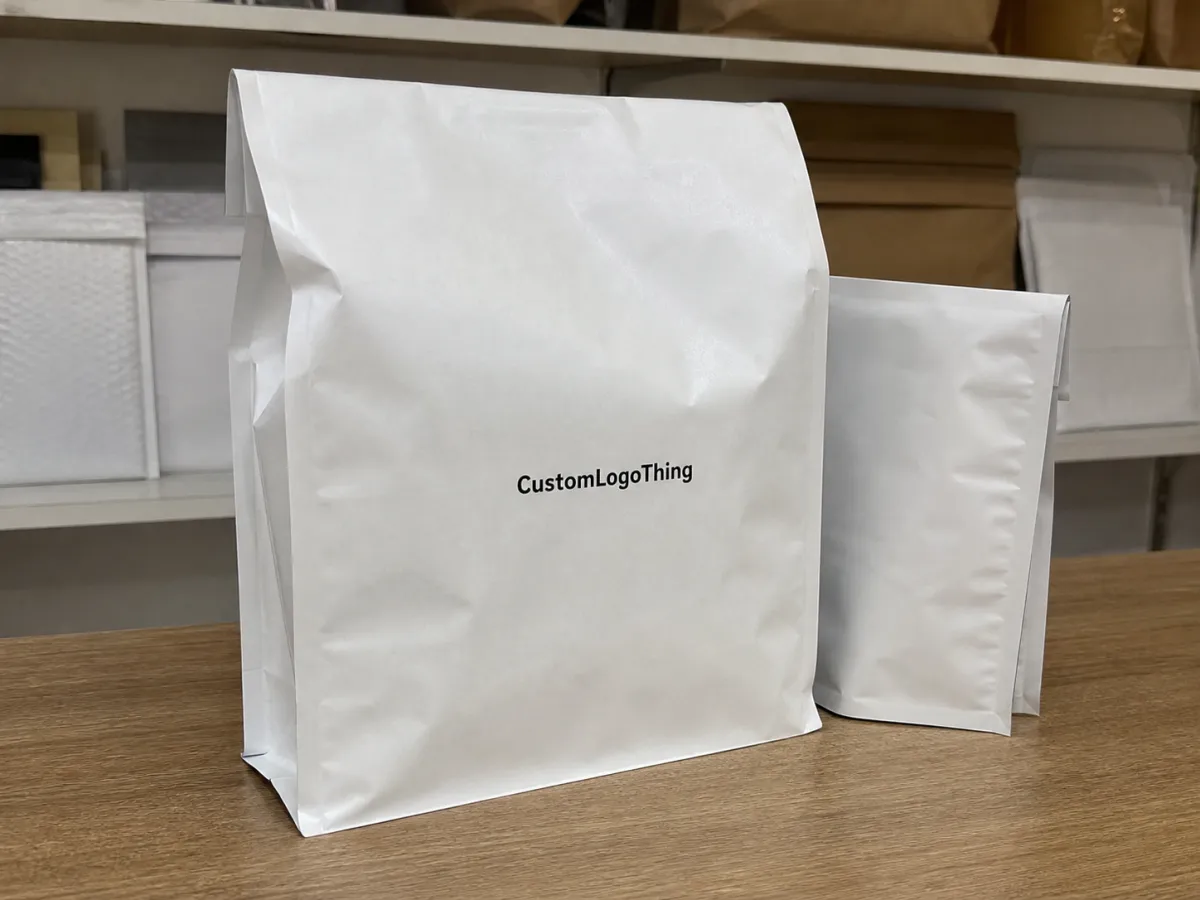
At their best, Laminated Paper Bags for ecommerce solve three practical problems at once. They improve presentation, reduce minor abrasion to the printed surface, and create a package that feels more intentional than an uncoated bag. For apparel, gift sets, beauty accessories, stationery, and small bundled products, that balance can be more useful than a carton that adds weight and cost without adding much brand value.
They are not the right structure for everything. Heavy goods, sharp-edged items, or products with awkward center-of-gravity issues usually belong in a stronger shipper. A laminated bag works best when the product is light to moderate in weight and the customer is likely to judge the package before touching the contents. That is a narrow but important lane.
Think of the bag as a small engineered package, not just printed packaging. If it will be folded, stacked, palletized, and handled by a courier, the design has to account for that path. A stylish bag that creases at the gusset or tears at the handle attachment creates more work than it solves.
There is also a perception difference that buyers sometimes underestimate. A matte or soft-touch finish can make a shipment feel more elevated, while gloss can sharpen color and make graphics read louder. The effect is real, but only if the bag survives handling and opens cleanly every time. Otherwise the finish is a photo opportunity, not a packaging advantage.
How the laminated layer changes strength and appearance
Lamination changes the surface first, then the handling experience. A film layer applied after printing can improve resistance to light scuffing, dust, and occasional moisture contact. It also affects how ink behaves visually. Solid colors tend to look more even, fine typography can appear cleaner, and metallic accents often stand out better against a smoother surface.
The finish choice deserves more attention than many quotes give it. Gloss usually offers the strongest color pop and the lowest finish premium, but it shows fingerprints and scratches more easily. Matte softens glare and often reads as more restrained and premium. Soft-touch adds a velvety handfeel, though it can mark if the carton environment is rough or if bags rub against each other during transit.
| Finish | Visual effect | Handling notes | Typical cost impact |
|---|---|---|---|
| Gloss lamination | Bright, high-contrast, vivid color | Shows fingerprints and abrasion more quickly | Usually the lowest finish premium |
| Matte lamination | Soft sheen, controlled and clean | Hides small handling marks better | Often a modest step up from gloss |
| Soft-touch style lamination | Velvety, tactile, gift-like | Can show rub marks if packing friction is high | Typically the highest finish premium |
Finish does not fix structural weakness. Lamination will not rescue a poor handle bond, an under-specified paper weight, or a gusset that is too shallow for the actual product load. If the filled bag has to carry weight through the handles, the structure must be designed for that load first and decorated second.
One practical way to think about it: the paper gives the bag body, the laminate protects the face, the adhesive keeps the layers together, and the handle reinforcement keeps everything from failing at the lift point. If one of those pieces is weak, the bag does not behave like a premium item for long.
A bag can look premium on a mockup and still fail in the carton. The transit path is where the truth shows up.
For general packaging education, the Packaging Machinery Manufacturers Institute is a useful reference. For parcel handling and distribution testing, ISTA gives teams a better framework than relying on visual inspection alone. That matters any time a package leaves the shelf and enters a shipping network.
Cost and pricing drivers buyers should compare
Unit price matters, but it rarely tells the whole story. For laminated bags, the main cost drivers are paper grade, bag size, laminate type, handle style, print coverage, number of colors, and any special finishing such as spot gloss, foil, embossing, or custom inserts. A simple one-color bag on standard paper can sit in a completely different cost band from a fully decorated premium bag with reinforced handles.
Lower quantities can make pricing look worse than expected. Tooling, proofing, and waste allowance get spread across fewer units, so the per-bag cost climbs quickly. A quote that appears to land around $0.18 to $0.35 per unit for a mid-volume run can move higher once setup, freight, and packing are included. On small custom runs, it is not unusual for the real landed cost to land closer to $0.35 to $0.70 or more, depending on finish and freight distance.
That is why line-item quotes matter. Ask suppliers to separate material, print setup, lamination, converting, packing, and shipping. A supplier who rolls everything into one number may still be competitive, but the comparison becomes much harder when one quote hides freight or another excludes packing labor. Transparent pricing also reveals whether one option is simply under-specified.
Here is a practical comparison buyers often use:
| Option | Best for | Typical price signal | Notes |
|---|---|---|---|
| Uncoated paper bag | Low-touch, short-life use | Lowest | Less surface protection, simpler look |
| Standard laminated bag | Apparel, gifts, kits | Moderate | Good balance of print quality and protection |
| Premium laminated bag with special finish | Launches, luxury, gifting | Highest | Better unboxing impact, tighter process control needed |
There is also a hidden cost lens worth using: labor and rework. If the bag reduces visible scuffing, lowers repacking, or speeds up handling on the packing line, the program may pay back more than the unit price suggests. Teams that only compare packaging line items can miss the expense of damaged presentation and returns.
Specification changes are expensive, too. A last-minute change in handle style or a shift from matte to soft-touch can force new sampling, a new proof cycle, and extra waste. On a small run, that can matter more than a few cents of quoted unit price.
Production steps and turnaround from proof to shipment
The production flow looks simple on a schedule and less simple in real life. A typical order moves through artwork review, dieline confirmation, material selection, proofing, printing, lamination, converting, inspection, and final carton packing. If any stage is still moving because the buyer keeps adjusting dimensions or artwork, the schedule stretches fast.
Most delays come from a few predictable places. First, artwork is submitted with low-resolution images or fonts that were never outlined. Second, dimensions change after the supplier has already priced the bag. Third, the sample is close enough that nobody wants to reject it, but nobody wants to approve it either. That hesitation usually costs days.
Lead time depends on how many processes are stacked into the bag. A plain printed bag with a standard laminate can move relatively quickly. A custom structure with special finishing, tight color targets, or unusual handle reinforcement takes longer. For many custom programs, 12 to 15 business days after proof approval is a realistic planning number before freight is added. Complex work or busy seasons can push that further.
Repeat orders should be managed with the same discipline as first runs. Ask whether the supplier can retain the approved spec, keep the same material source on file, and reorder without reopening every approval step. That is often where the real speed gains happen. A slightly lower quote from a supplier that forces a full reset on every run can become slower and more expensive over time.
For testing, it helps to think beyond a desktop sample. ISTA methods such as 2A or 3A, or ASTM D4169, are useful reference points if you want to model parcel hazards more formally. The exact test depends on the route, product weight, and the kind of handling the package will face. A light ecommerce order does not need the same test program as a heavy multi-unit kit.
Key specs to lock before you request quotes
Pricing gets much cleaner once the spec is fixed. Start with finished dimensions, gusset depth, paper weight or caliper, laminate finish, handle style, reinforcement method, and the expected filled weight. If any of those items are vague, the quote may still be accurate for a different bag than the one you actually need.
Internal space matters more than outside dimensions. A bag can look generous on paper and still be awkward once tissue, inserts, or folded apparel are loaded into it. Narrow openings slow packing, while shallow gussets can make products bulge or distort the panel print. The same problem shows up with boxed items, accessory kits, and products that include cards or protective fillers.
Warehouse conditions matter as well. Humidity can soften paper feel and affect stack stability. Cold storage can change how adhesives behave. High-friction carton packing can scuff softer finishes. If the bag needs to be opened and closed quickly on a line, the mouth width, fold memory, and handle placement matter almost as much as the face print.
A one-page spec sheet can save a lot of time. Include dimensions, material targets, finish, print notes, load expectations, and any handling requirements. It gives suppliers the same frame of reference and reduces the odds that someone prices a sample-friendly shape instead of a production-ready one.
- Finished size: width, height, and gusset depth
- Paper construction: grade, caliper, or gsm target
- Laminate: gloss, matte, or soft-touch style
- Handle: rope, ribbon, paper twist, or die-cut
- Load target: filled product weight plus inserts
- Use environment: humidity, stacking, parcel shipping, or retail pickup
If sustainability claims matter, collect documentation early. The exact film and paper combination determines whether a bag can be presented as recyclable, compostable, or simply fiber-based with a plastic layer. Those are not interchangeable claims, and local recycling rules vary more than most brands expect. The FSC site is useful for understanding certified fiber options and how sourcing claims are usually handled.
Step-by-step sourcing guide for ecommerce teams
Start with the product itself. Measure the item, any inserts, and the amount of clearance needed for safe loading. A folded shirt, a skincare set, and a boxed accessory all need different clearances. If the product is going into another shipper before final delivery, that changes the bag spec again.
Next, decide which construction serves the actual use case. If the item is light and presentation-led, a lighter paper grade with a clean laminate may be enough. If the bag will be lifted repeatedly or carried by hand, handle reinforcement matters more. If the artwork is the visual focus, the finish should support the design instead of dulling it.
After that, send one clean spec sheet to every supplier. Do not let each vendor quote a different assumption set. Compare unit price, MOQ, proof fees, lead time, carton count, and freight together. A quote with a lower per-unit price can still cost more once shipping, packing, and a longer schedule are added in.
Then move to a pilot order. Not a theoretical approval. A real small run with real products, packed the way your team will actually pack them. Inspect the bag after stacking, after carton movement, and after transit. That gives a more honest picture than a flat sample on a table ever will.
- Measure the product and any inserts.
- Choose the bag structure and finish.
- Send one spec sheet to every supplier.
- Compare price, MOQ, lead time, and freight.
- Approve a sample and run a small pilot.
- Test the packed bag in real handling conditions.
If the pilot performs well, lock the spec and standardize as much as possible. A small family of sizes often reduces inventory clutter, simplifies forecasting, and makes reorders easier because the same structure can serve multiple SKUs with small adjustments.
That is usually where Laminated Paper Bags for ecommerce become most effective: not as a one-off luxury item, but as a repeatable structure that fits the product, the warehouse, and the customer experience without constant redesign.
Common mistakes that cause damage, waste, and reorders
The first mistake is choosing the nicest finish before checking whether the bag can actually carry the product. A soft-touch laminate with strong graphics does not help if the handles fail when the bag is lifted from a carton. Premium packaging still has to survive the stress points.
The second mistake is sizing to the outside footprint instead of the usable interior space. That is how products bulge, corners get crushed, and packing slows down. I have seen teams approve a beautiful render and then lose efficiency because the opening was just a little too tight for the real item plus tissue and inserts.
The third mistake is skipping transit-style testing. That is where problems like handle pull, corner wear, print scuffing, or laminate cracking usually appear. A bag can look perfect after converting and still fail after vibration, stacking, and courier handling. Even a simple drop-and-vibe check on a pilot lot can catch expensive issues before rollout.
The fourth mistake is ignoring the fulfillment team. If the bag is hard to open, awkward to stack, or slow to fold, the line pays for that every day. One extra second per unit sounds minor until it is multiplied across thousands of orders. Good packaging should make the operation easier, not only the product look better.
Good packaging should save time as well as protect the brand image. If it only does one of those things, the design still needs work.
Expert tips and next steps for a smarter pilot order
A simple test matrix keeps the pilot honest. Check fit, appearance, handling, and ship durability separately. If the bag looks beautiful but slows pack-out, that is a real problem. If the bag packs quickly but scuffs badly, that is another. A good pilot should prove both the customer-facing finish and the operational side of the structure.
Ask for sample packs, carton counts, and packing recommendations up front. Those details affect warehouse efficiency and freight cost more than they first appear to. A bag shipped in a bad carton count can create more labor than the packaging saves. Small operational details are often where the margin goes.
Standardizing a small size family is often smarter than creating a custom shape for every SKU. It lowers inventory complexity, makes forecast planning easier, and gives your team a repeatable packing method. In many ecommerce programs, that matters more than chasing the lowest possible unit price on a one-off order.
A good order sequence is straightforward: finalize the spec, approve the sample, test the bag with real products, compare final quotes from the same spec, and move from pilot to rollout only after the results hold up. That process is slower than approving a render, but it prevents avoidable reorders.
For teams considering laminated paper bags for ecommerce, the smartest purchase is the one that balances print impact, load-bearing performance, lead time, and packing speed. Get those pieces aligned, and the bag does real work instead of merely looking finished on a screen.
FAQ
Are laminated paper bags for ecommerce recyclable?
Recyclability depends on the paper base, the laminate film, and local recycling rules. A paper bag with a plastic laminate layer may be accepted in some systems and rejected in others. Ask for the full material structure before making a sustainability claim, because the wording needs to match the actual build.
How do I choose the right size for laminated paper bags for ecommerce?
Measure the product, any inserts, and the clearance needed for safe loading, then add room for real pack-out rather than the bare product footprint. Gusset depth and handle placement can affect usable space more than buyers expect. A packed sample with the actual product is the safest way to confirm the size.
What MOQ should I expect for custom laminated paper bag orders?
MOQ depends on size, print setup, finish complexity, and whether the bag needs custom tooling or an unusual construction. Lower quantities and higher decoration levels usually push the minimum higher because setup cost is spread across fewer units. Ask for tiered pricing so you can compare a pilot run against full production.
How long does turnaround usually take for laminated paper bags?
Lead time depends on artwork approval, proofing, print method, and the number of finishing steps. Many custom runs fall in the 12 to 15 business day range after proof approval, but complex specs or busy seasons can extend that. Freight time sits on top of production time, so build that into the schedule early.
What should I test before switching to laminated paper bags for ecommerce?
Test fit, handle strength, corner wear, laminate scuffing, and how the bag behaves after warehouse and transit handling. Use a pilot with actual products instead of blanks, so you can see how the structure performs under real pack-out conditions. Inspect both the customer-facing finish and the packing speed before scaling the design.
If the short version helps: choose laminated paper bags for ecommerce only after the size, load, finish, and ship test all make sense together. That is the difference between packaging that looks good once and packaging that keeps earning its place across repeat orders.

