Buyer Fit Snapshot
| Best fit | Matte Lamination Retail Boxes projects where brand print, material claims, artwork control, MOQ, and repeat-order consistency need to be specified before quoting. |
|---|---|
| Quote inputs | Share finished size, material target, print colors, finish, packing count, annual reorder estimate, ship-to region, and any compliance wording. |
| Proofing check | Approve dieline scale, logo placement, barcode or warning zones, color tolerance, closure strength, and carton packing before bulk production. |
| Main risk | Vague material claims, crowded artwork, missing packing details, or unclear freight terms can make a low unit price expensive after revisions. |
Fast answer: Matte Lamination Retail Boxes: Finish, Cost, and Use should be specified like a repeatable production item. The safest quote records material, print method, finish, artwork proof, packing count, and reorder notes in one written spec.
Production checks before approval
Compare the actual filled-product size with the drawing, then confirm tolerance on folds, seals, hang holes, label areas, and retail display edges. Reserve space for logos, QR codes, warning copy, and material claims before decorative graphics fill the panel.
Quote comparison points
Review material grade, print process, finish, sampling route, tooling charges, carton quantity, and freight assumptions side by side. A quote is only useful when the supplier can repeat the same color, closure quality, and packing count on the next order.
Matte Lamination Retail Boxes: Finish, Cost, and Use starts with a retail truth that never really changes: bright lighting exposes everything. Bad registration. Cheap board. Fingerprints. Corners that folded a little too hard. A box has nowhere to hide under LEDs, and that is exactly why matte lamination retail boxes show up so often on cosmetics, apparel, specialty food, supplements, and gift packaging that wants to feel premium without yelling about it.
For packaging buyers, matte lamination retail boxes sit in the middle of two jobs that usually compete with each other. They need to present the brand well, and they need to survive handling. The finish changes how the carton feels, how it stacks, how it photographs, and how it holds up once a warehouse cart starts bumping into it. Pick the wrong surface and even a good design can start looking noisy or cheap. Pick the right one and the typography looks cleaner, the color reads calmer, and the whole package behaves better in the real world. If you need help sorting structure and finishing options, Custom Packaging Products is a practical place to start.
Matte is not just a style choice. It is control of glare, control of scuff visibility, and control of how the brand behaves under retail lighting.
What Matte Lamination Retail Boxes Do on Shelf
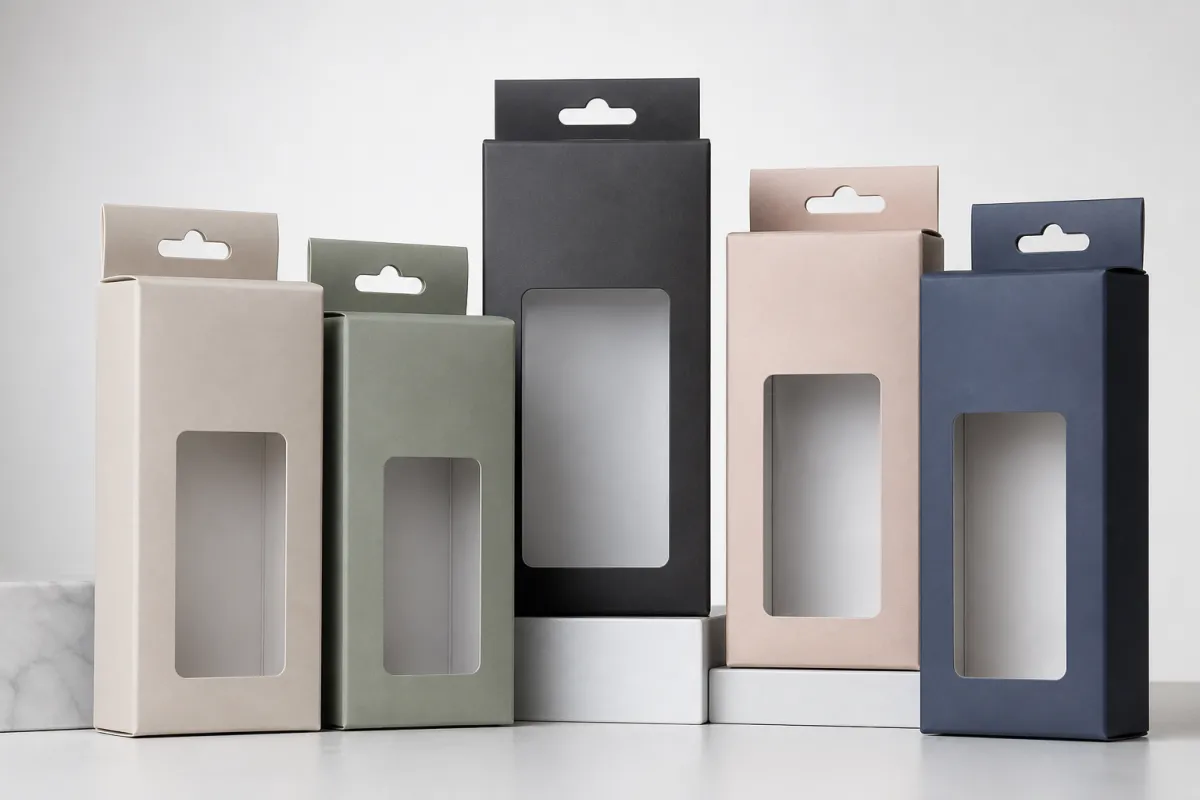
On a crowded shelf, matte lamination retail boxes make a design feel quieter and more deliberate. Quiet is not boring. Quiet can sell. Gloss under strong lighting throws reflections across a logo, a product name, or a face on the front panel, and those reflections compete with the message. Matte lamination retail boxes cut that noise down. The eye goes to the artwork, not the glare. That is a big reason premium cosmetics and skincare brands rely on matte so heavily. The package reads as composed instead of flashy, and that restraint does a lot of heavy lifting.
Matte lamination is a thin protective film applied after printing. The film sits over the ink layer, which helps shield the carton from abrasion, fingerprints, and the light rubbing that happens during packing, palletizing, and shelf restocking. It is not armor. It will not make a carton bulletproof, and anyone promising that is selling fantasy with a print order attached. It does add a useful layer of defense. Buyers sometimes assume matte lamination retail boxes are only about appearance. They are not. The finish changes how the box survives the trip from press to display.
The softer surface also shifts the visual temperature of the printed piece. Color can feel deeper and more grounded, especially on dark palettes, muted neutrals, and photographic art. Typography often looks cleaner because the eye is not fighting reflections. Matte lamination retail boxes fit brands that want a calmer luxury signal rather than a loud promotional one. That is why they show up on hair tools, candles, nutraceuticals, gift sets, and boutique apparel packaging where the unboxing moment matters as much as the shelf moment.
There is a tradeoff, of course. Matte reduces sparkle. If a brand depends on bright energy, the finish can feel too restrained. Still, many teams prefer that restraint because it supports a premium position better than a shiny surface does. A package is not just a wrapper. It is a sales tool, a storage object, and a little billboard that gets touched by strangers all day. Matte lamination retail boxes help that tool communicate precision instead of noise. From a buyer's point of view, the real question is not whether matte looks nice. It is whether matte supports the story the product is trying to tell.
Think about reading distance. At arm's length, matte lamination retail boxes can make hierarchy easier to follow. Across an aisle, they can calm a shelf line that would otherwise feel busy. In ecommerce imagery, they usually photograph with less hot spotting, which matters if the same box appears in ads, marketplace listings, or social posts. That consistency across channels is one reason brands keep coming back to matte even when gloss or UV coating looks more dramatic on a sample sheet.
I have seen more than one buyer fall in love with a shiny comp, only to regret it when the real shelves went under harsh store lights. The box was not bad. It just was not built for the environment. That distinction matters. Matte lamination retail boxes are a good fit when the brief asks for calm, control, and a cleaner read from a distance.
For a lot of projects, the better question is not, "Do we want matte?" It is, "Do we want the box to feel soft, refined, and steady enough to let the product take the lead?" If the answer is yes, matte lamination retail boxes usually belong near the top of the list.
How Matte Lamination Retail Boxes Are Made
The production stack for matte lamination retail boxes is straightforward, but every step matters. It usually starts with printed board, often SBS, C1S, CCNB, or rigid paperboard depending on the structure. Once the ink has cured or dried enough for finishing, the lamination film is applied. After that, the sheets move through trimming, die cutting, scoring, folding, and gluing. Each stage changes the final carton. If the board is not compatible with the finish or the folds are too tight for the construction, a clean print can still turn into a weak box. Packaging loves to punish small mistakes. Charming, I know.
There are two common surface styles. Standard matte gives you a low-sheen, smooth finish that cuts glare and adds protection. Soft-touch matte adds a more velvety surface that feels almost suede-like in the hand. Soft-touch is popular for cosmetics, electronics accessories, and gift packaging because it creates a tactile moment people remember. Matte lamination retail boxes with soft-touch can feel especially premium, but the film and handling usually cost more, and the surface can show certain marks differently than standard matte.
The lamination sits on top of the ink layer, which is why abrasion resistance improves. That matters on dark solids, dense photography, and high-coverage designs where scuffing would be obvious without the film. It matters even more if the box goes through repeated handling at fulfillment centers, store stockrooms, or return operations. I have watched buyers focus only on shelf appearance and then get surprised by shipping damage. Matte lamination retail boxes need to be evaluated as a production system, not as a decorative add-on after the artwork is already approved.
Compatibility checks are worth the time before a run starts. Heavy ink coverage, foil stamping, embossing, and spot UV all change how the carton behaves. A press sheet that looks great uncoated may not behave the same once the film goes on. Tight folds and deep scores can crack if the substrate is too stiff or the fold area carries too much ink. That is where a proper dieline review helps. It gives the printer, designer, and buyer one shared map before money gets spent on the full production run.
For brands that want a more detailed material conversation, it helps to compare matte lamination retail boxes against UV coating or uncoated cartons early in the project. UV coating can be brighter and more reflective, while matte lamination aims for restraint and surface protection. Neither option is automatically better. They are tools. The right one depends on the brand voice, the board stock, and the handling risk. If the spec is still being refined, the broader range of Custom Packaging Products can help you compare structures and finishes side by side.
The best production partners also look at the print method, because litho, digital, and offset each interact differently with finishing. That is not a small detail. Matte lamination retail boxes can only perform as well as the print beneath them, and the print has to be stable enough to accept the film cleanly. Good production planning cuts down surprises. Packaging has enough surprises already.
Key Factors That Affect Matte Lamination Retail Boxes
Board grade is one of the biggest variables. A 16pt or 18pt paperboard can feel very different from a 24pt rigid setup, even before the finish goes on. Thickness shapes stiffness, fold memory, and that first impression a buyer gets when they pick up the box. Matte lamination retail boxes on a heavier board often feel more substantial, while lighter boards may need tighter quality control to avoid corner wear or weak panel recovery after folding. For shelf packaging, that tactile cue matters. Customers rarely say it out loud, but they notice.
Print coverage matters just as much. Dark blues, blacks, and rich solids show handling marks more easily than pale, airy artwork. That does not mean matte is a bad choice for those designs. It means the designer and buyer need to understand the risk. Matte lamination retail boxes with full-bleed black artwork should be checked for edge wear, corner rub, and fingerprints under real store lighting. A subtle metallic ink, a textured paper choice, or a controlled use of spot UV can solve a visibility problem without dragging the whole design in a different direction.
Box style matters too. Tuck end cartons, sleeves, mailers, and rigid structures all respond differently to lamination and die cutting. A folding carton with many panels and narrow flaps can show stress differently than a sleeve, while a rigid setup may tolerate more embellishment but cost more to make and ship. Matte lamination retail boxes should not be chosen only on finish preference. The structure, the fill method, and the shipping environment all shape how the finish performs after production.
Handling conditions are easy to overlook. A box that sits in a boutique display case is not the same as one that moves through warehouse racks, e-commerce fulfillment lines, or store replenishment carts. Friction against other cartons, compression in secondary packaging, and repeated human contact all create wear. I usually tell buyers to picture the roughest 10 percent of the journey, not the smoothest 90 percent. That mindset leads to better specs. Matte lamination retail boxes should be selected for the real handling load, not the ideal one.
The finish also affects photography. Standard matte and soft-touch matte both photograph differently, especially under softbox lighting or the phone cameras used for content creation. Matte lamination retail boxes usually reduce hot spots and help tonal gradients read more evenly, but they can also flatten a design if the art depends on shine for contrast. That is why sample photography is worth doing before launch. If the same box needs to work on shelf and in a product listing, the finish has to perform in both places.
For sustainability-conscious brands, board sourcing should be part of the conversation too. Responsible fiber sourcing can matter as much as the finish, and organizations such as FSC set clear expectations for certified materials. Lamination does not erase the need for responsible sourcing, and it is better to talk honestly about tradeoffs than pretend every finish is equally light on resources. Matte lamination retail boxes can fit into a thoughtful packaging strategy, but the material story should still be clear.
One more practical point: if the box uses embossing or foil stamping, the tactile and visual balance needs to be planned early. A heavy embossed mark under matte can look elegant, while an overworked panel can start to feel crowded. Matte lamination retail boxes often do best when the finish supports one strong focal point instead of fighting with a pile of effects.
Matte Lamination Retail Boxes: Cost and Pricing Factors
Pricing for matte lamination retail boxes usually comes down to five things: size, board grade, print complexity, finish choice, and quantity. The larger the run, the more the setup cost gets spread out, which lowers the unit price. That is why a 10,000-piece order often looks very different from a 1,000-piece pilot run. Buyers looking only at the per-unit number can miss the real reason behind the quote. Tooling, setup, waste allowance, and finishing time all sit behind the scenes.
As a practical range, standard matte lamination retail boxes on a medium-volume folding carton run might land around $0.18-$0.45 per unit, depending on size, coverage, and board. Soft-touch matte usually sits higher because the film itself and the handling can cost more, often around $0.24-$0.60 per unit on similar volumes. Those figures are not fixed. They move with the spec, the region, and the current supply chain. A rigid box or a heavily embellished carton will leave those ranges quickly. Still, they are useful for early planning because they keep the discussion grounded.
Here is a simple comparison that buyers often find useful:
| Finish Option | Look and Feel | Typical Use | Approximate Cost Impact |
|---|---|---|---|
| Standard matte lamination | Low sheen, smooth, clean reading under retail lights | Apparel, supplements, specialty food, general retail cartons | Low to moderate; often the most efficient premium finish |
| Soft-touch matte | Velvety, tactile, more premium in the hand | Beauty, electronics accessories, gift packaging, luxury sets | Moderate to higher; film and handling costs are usually higher |
| Gloss lamination | Bright, reflective, energetic | Promotional cartons, high-color brands, retail items needing pop | Often similar to matte, but depends on the sheet size and coverage |
| Matte plus spot UV | Mixed finish with selective shine on logos or imagery | Premium branding, cosmetics, and high-contrast retail boxes | Higher; adds a second finishing step and tighter alignment needs |
Add-ons can move the number quickly. Foil stamping, embossing, custom inserts, specialty inks, and spot UV all add labor or tooling. A good spec sheet keeps the pricing conversation honest because it lets suppliers quote the same project, not four slightly different versions of it. If you compare one matte lamination Retail Boxes Quote against another without matching the dieline, board, and finish details, the lower quote may simply be a lighter spec.
Lead time affects value too. The cheapest quote is not always the smartest one if it creates stress because it assumes a schedule with no room for proofing or revisions. Matte lamination retail boxes should be priced against the full launch plan, including sample review, freight, and retailer checks. A box that arrives too late costs more than a slightly higher unit price that fits the calendar.
For brands placing a larger order, ask for line-item clarity. Separate print, lamination, die cutting, folding, gluing, and freight where possible. That gives you a clean way to compare standard matte against other options without guessing. It also makes it easier to decide whether the premium for soft-touch is justified by the product position. Sometimes it is. Sometimes standard matte lamination retail boxes are enough, and the extra spend belongs somewhere else in the launch.
Step-by-Step Timeline for Matte Lamination Retail Boxes
A clean timeline starts with discovery. Before artwork gets polished, the team should confirm product dimensions, fill method, display needs, shipping constraints, and whether the box will live mainly in retail, ecommerce, or both. That early information shapes the structure. Matte lamination retail boxes only work well if the board, size, and construction fit the product they need to carry. A beautiful box that is a little too loose or a little too tight will create problems later.
Next comes the dieline and design approval. This is where barcode placement, panel hierarchy, logo placement, and any finish-safe zones need attention. If you plan to use foil stamping, embossing, or spot UV, the artwork should already account for those effects. Skipping that step can create registration issues or make the finish feel crowded. Matte lamination retail boxes benefit from disciplined artwork because the finish makes the design feel cleaner, which means spacing mistakes are easier to spot too.
Proofing is the stage that saves the most money. A digital proof helps verify layout, copy, and panel orientation. A physical sample or press proof matters more if the launch is high stakes, the color has to be exact, or the tactile feel matters a lot. Matte lamination retail boxes can shift the perceived depth of color, so approving an unlaminated proof and expecting the final piece to look identical is a common mistake. The lamination changes the optics. That is not a flaw. It is part of the finish.
Once production starts, the sequence usually moves through printing, curing or drying, lamination, die cutting, scoring, folding, gluing, inspection, packing, and freight. Each stage adds calendar time. A simple run may move in 12-15 business days from proof approval, but specialty finishes, large quantities, or a busy plant schedule can stretch that. If a buyer has retailer dates, warehouse booking windows, or promotional deadlines, the margin for delay gets thin fast.
Outside testing standards can help frame the project. Many brands ask for transit performance that aligns with ISTA-style distribution testing, and the industry has good guidance available through the International Safe Transit Association. If the box needs to survive stacked freight, corner drops, or repeated vibration, test that before launch instead of after complaints start. Matte lamination retail boxes are not just a brand asset. They are also a shipping object.
A realistic schedule also leaves room for revisions. If a barcode needs to move, a finish-safe zone needs to be widened, or a buyer requests a shade adjustment, the calendar should not collapse. In practice, the best matte lamination retail boxes projects are the ones where the launch date is built around the packaging process, not the other way around. That sounds obvious. Teams still miss it all the time.
Here is the rough order I would expect on a well-managed project:
- Confirm dimensions, fill method, and display goals.
- Approve the dieline and artwork map.
- Review a digital proof and, if needed, a physical sample.
- Run print, lamination, die cutting, and finishing.
- Inspect, pack, and allow for freight and receiving.
That sequence may look simple, but each step protects the final result. Matte lamination retail boxes reward careful planning because the finish makes both the strengths and the weaknesses more visible.
Common Mistakes With Matte Lamination Retail Boxes
The first mistake is treating matte as the default for every premium product. That is too broad. Some brands need brightness, sparkle, or a more promotional look, and gloss or UV coating may fit that goal better. Matte lamination retail boxes work best when the brand wants control, elegance, and a less reflective surface. If the product needs energy and high contrast, a matte finish may dull the message instead of improving it. Good packaging is not about following a finish trend. It is about matching the brand voice.
The second mistake is ignoring scuff risk on dark artwork. Matte does not erase wear. It hides some glare and gives useful protection, but heavily handled cartons can still show rubbing, especially on corners, edges, and large dark panels. If the substrate is weak or the ink coverage is heavy, matte lamination retail boxes may still show marks under certain lighting. That is why samples matter. A buyer should test the box in the conditions it will actually face, not only under a studio lamp.
The third mistake is skipping compatibility checks when combining matte with other decoration methods. Foil stamping, embossing, and spot UV can all look excellent with matte, but they need to be planned together. A deeply embossed logo might crack if the board is too brittle. A spot UV varnish might register poorly if the print and die lines are not calibrated. Matte lamination retail boxes can look polished, but only if the finishing stack is balanced. More effects do not automatically make a better carton.
The fourth mistake is approving color from an unlaminated proof and assuming the final box will match exactly. The matte film changes contrast, depth, and reflectivity. It may make a color look richer in one area and flatter in another, depending on the artwork and lighting. That is why a physical sample is so useful. Matte lamination retail boxes often look a little more refined than the raw proof, but that improvement can also reveal whether typography weight, image density, or background tone needs adjustment.
The fifth mistake is underestimating lead time. Sample approval, freight booking, retailer compliance, and artwork changes are often the slowest part of the schedule. A plant can print a box, but it cannot fix a rushed decision made three days before launch. For matte lamination retail boxes, the safer path is to build buffer time into the plan from the start. That buffer is not waste. It is insurance against late changes.
There is one more practical issue buyers miss: over-designing the panel. Matte lamination retail boxes usually look strongest when the design hierarchy is clear. Too many badges, too many type sizes, and too many conflicting visual cues can make a calm finish feel cluttered. A matte surface will not hide a busy layout. It will expose it. That is why simple, disciplined artwork often performs better than a crowded one.
Expert Tips and Next Steps for Matte Lamination Retail Boxes
Ask for a sample board with your exact artwork, finish, and substrate. That one step answers a lot of questions quickly. You can judge color depth, glare, hand-feel, and edge performance in real lighting instead of guessing from a screen. Matte lamination retail boxes are easier to approve when the sample is treated like a working prototype, not a novelty piece. Put it on the shelf, hold it near the lighting you expect in store, and see whether the hierarchy still reads cleanly.
Test the box in the same conditions it will face in transit, on shelf, and during unboxing. A carton can look perfect on a sample table and still scuff badly in a fulfillment lane. If the design includes a folded flap, a tuck end, or a high-friction sleeve, rub and corner tests are worth the effort. This is where the logic behind matte lamination retail boxes becomes practical: the finish should protect the box while also supporting the brand story. If it only does one of those jobs, the spec is incomplete.
Build a proper spec sheet before you request pricing. Include board stock, dimensions, print sides, coating, film type, finish options, inserts, and embellishments. The more specific the brief, the cleaner the quote comparison. That also makes it easier to judge whether you really need soft-touch or whether standard matte is enough. Many matte lamination retail boxes projects do not need every premium effect available. A restrained package with the right structure often feels better than an overworked one.
Compare finish options side by side. Put standard matte, soft-touch matte, and a gloss or spot UV alternative on the table, then look at them under the same light. For some brands, the extra cost of soft-touch is worth it because the tactile cue supports premium positioning. For others, standard matte is the smarter choice because it keeps the look refined without pushing the budget too far. This kind of comparison keeps matte lamination retail boxes grounded in business reality, not just taste.
As you make the final call, remember the standards and expectations around packaging quality. Industry groups like packaging.org are useful for staying current on materials, sustainability, and structural thinking, while transport testing guidance from ISTA helps connect the finish choice to shipment performance. Good packaging decisions usually sit at the intersection of design, operations, and supply chain behavior. Matte lamination retail boxes are no exception.
My practical checklist is simple: confirm the product fit, Choose the Right board, decide whether standard matte or soft-touch is the better match, test the artwork under real light, and set the timeline before the launch calendar gets tight. If you do those five things well, matte lamination retail boxes can deliver a premium look without creating production headaches. If you skip them, the finish can still look good, but the package may not do its job as reliably.
For buyers comparing finishes now, the cleanest next step is to request samples through Custom Packaging Products and compare them with your own artwork, not generic art. That is the fastest way to see whether the design needs more sheen, more texture, or simply a better-built matte surface.
Done well, matte lamination retail boxes give you control over glare, handling wear, and brand perception in one move. Done carelessly, they can flatten a design or add cost without adding value. The difference usually comes down to planning, testing, and a clear-eyed view of how the package will live in the real market. If the product deserves a calm, premium presentation, matte lamination retail boxes are often the right answer. If you want the fastest actionable move, start with one sample board, one print condition, and one real lighting test. That tells you more than a spreadsheet ever will.
Frequently Asked Questions
Are matte lamination retail boxes better than gloss for luxury products?
Often yes, especially if the brand wants a quieter, more tactile, and more refined look. Matte lamination retail boxes reduce glare and help fingerprints stay less visible, which is useful under bright retail lights. Gloss can still be the better fit for energetic branding or highly saturated artwork, so the finish should match the product story rather than the idea of luxury alone.
Do matte lamination retail boxes scratch easily?
The lamination adds protection, but it is not scratch-proof. Dark, heavily handled cartons can still show wear at corners and along edges. Soft-touch and standard matte both benefit from careful board selection, clean die cutting, and smart post-press handling. If the launch matters, sample the exact spec and test it before approving a full run of matte lamination retail boxes.
How much do matte lamination retail boxes cost per unit?
Cost depends on box size, board stock, print coverage, finish choice, and quantity. As the run gets larger, setup costs spread out and the unit price usually drops. Standard matte lamination retail boxes are often less expensive than soft-touch versions, while foil stamping, embossing, and spot UV can raise the price quickly. The best comparison is always between matching spec sheets.
How long do matte lamination retail boxes take to produce?
Simple projects can move fairly quickly, but proofing, sample approval, and specialty finishing add time. A typical schedule may include design approval, print, lamination, die cutting, folding, gluing, inspection, and freight. Matte lamination retail boxes need buffer time if the launch depends on retailer approval or if artwork is still changing, because the finish itself can influence the final look.
Can I print bold colors on matte lamination retail boxes?
Yes. Matte lamination retail boxes can make bold colors feel deeper and more controlled rather than overly shiny. Strong contrast, accurate color management, and the right board help the artwork stay sharp after lamination. A printed sample is the best way to see how the finish changes color depth under real light, especially if the design uses dark solids or photography.


