Buyer Fit Snapshot
| Best fit | Printed Paper Labels for Boxes projects where brand print, material claims, artwork control, MOQ, and repeat-order consistency need to be specified before quoting. |
|---|---|
| Quote inputs | Share finished size, material target, print colors, finish, packing count, annual reorder estimate, ship-to region, and any compliance wording. |
| Proofing check | Approve dieline scale, logo placement, barcode or warning zones, color tolerance, closure strength, and carton packing before bulk production. |
| Main risk | Vague material claims, crowded artwork, missing packing details, or unclear freight terms can make a low unit price expensive after revisions. |
Fast answer: Printed Paper Labels for Boxes: Design, Cost, and Use should be specified like a repeatable production item. The safest quote records material, print method, finish, artwork proof, packing count, and reorder notes in one written spec.
Production checks before approval
Compare the actual filled-product size with the drawing, then confirm tolerance on folds, seals, hang holes, label areas, and retail display edges. Reserve space for logos, QR codes, warning copy, and material claims before decorative graphics fill the panel.
Quote comparison points
Review material grade, print process, finish, sampling route, tooling charges, carton quantity, and freight assumptions side by side. A quote is only useful when the supplier can repeat the same color, closure quality, and packing count on the next order.
Printed Paper Labels for Boxes: Design, Cost, and Use
Printed paper Labels for Boxes can make a plain corrugated shipper look finished, retail-ready, and intentional. Pick the wrong label, though, and the box starts looking like a rushed afterthought. Too thin. Too shiny. Wrong adhesive. Suddenly the carton is doing its best impression of a budget mistake.
That is the real reason printed paper labels for boxes matter. They handle branding, product details, shipping marks, batch codes, and light compliance copy without forcing a full carton reprint. They also give packaging teams room to move when artwork changes, volumes stay modest, or the box program needs to stay flexible. If you care about presentation, application speed, and total landed cost, labels usually give you more control than people expect.
I have seen teams spend weeks arguing over a box print decision that a label could have solved in two days. That does not mean labels are magic. It means the smarter choice is often the simpler one, and people get weird about that for no good reason.
Printed Paper Labels for Boxes: What They Are and Why They Matter
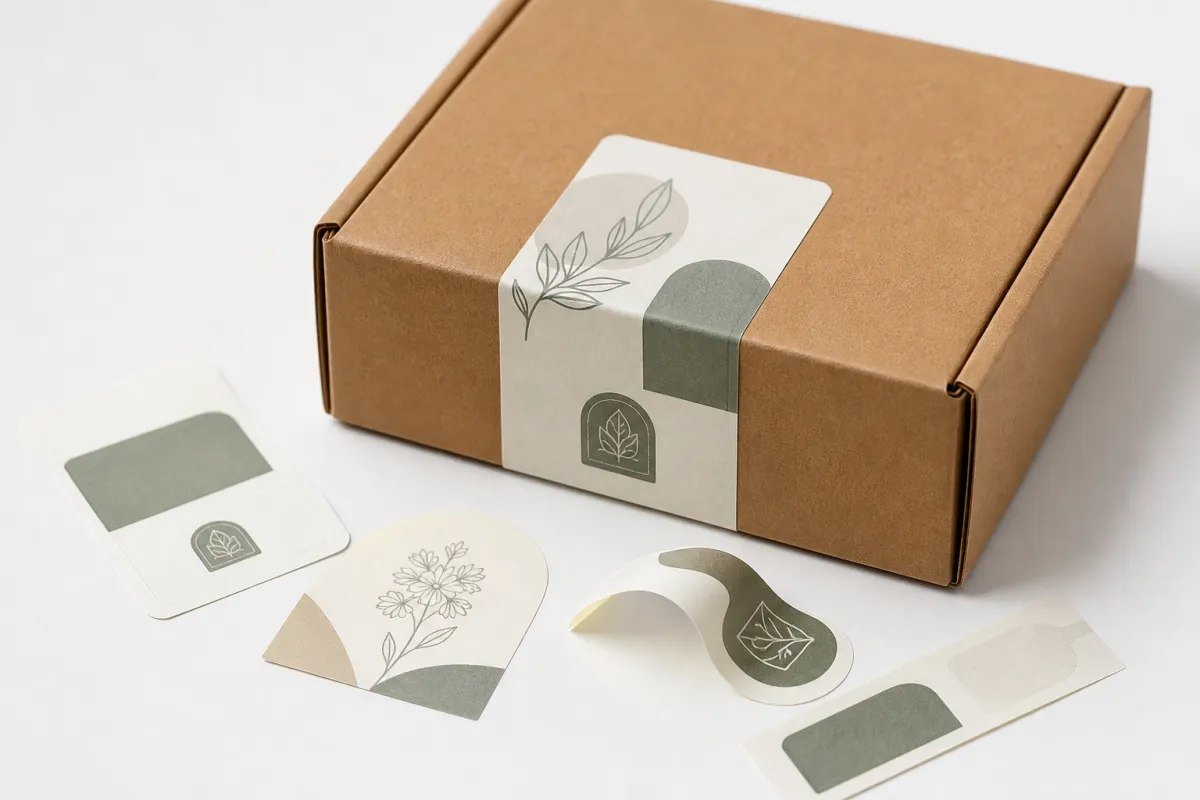
Printed paper labels for boxes are paper-based labels used on cartons, cases, mailers, and display boxes for identification, branding, and handling instructions. They sit on kraft liner, white corrugate, folding cartons, and coated shipper surfaces, and they do a lot of work for a small piece of material. One label can carry a logo, SKU, barcode, lot number, recycling symbol, country-of-origin note, or a blunt little instruction like “Fragile” or “Store Upright.”
Why choose paper instead of printing the box itself? Cost and flexibility, mostly. Printed paper labels for boxes make sense when artwork changes often, when the run is too small to justify a custom printed carton, or when the brand wants a warmer, more natural look than film tends to give. Paper prints cleanly. Type stays crisp. Edges stay readable. On kraft boxes and recycled boards, that honesty matters. Nobody wants a package that looks like it tried too hard.
Not every label has the same job. Some printed paper labels for boxes are purely decorative. Others sit inside an operation where scanability and traceability matter a lot more than aesthetics. A boutique mailer, a warehouse case, a cosmetics carton, and a food pack-out line all ask different things from the same basic label. A sample that looks great in a PDF but peels on the second truck ride is still a bad label. Pretty does not count if it fails in the real world.
Branding plays a bigger role than teams often admit. A good label can make a stock carton feel like it belongs in a premium program. A weak one makes the whole box look improvised. Printed paper labels for boxes often become the first detail people notice, even though they are only one layer in the packaging stack.
“If it looks perfect on screen and falls apart on the carton, the line will expose it fast.”
For brands that need carton supply and labeling help in the same program, it helps to look at the system together. You can pair labels with Custom Packaging Products for a coordinated box setup, or use Custom Labels & Tags when the box should stay simple and the label carries the visual load.
How Printed Paper Labels for Boxes Are Made and Applied
The production flow for printed paper labels for boxes is simple on paper and very practical on the floor. It starts with artwork setup, then stock selection, print method, converting, finishing, and application. Every step changes the result. Crowded art, weak stock, or the wrong adhesive can turn a nice-looking label into a problem nobody wants to own.
Most jobs begin with the face stock. Paper labels can use matte, semi-gloss, or coated facestocks, and each one changes the look and performance. The adhesive side matters just as much. Pressure-sensitive labels are common because they are easy to apply and do not demand much setup. Wet-glue labels still make sense in high-speed packaging operations, where the label is part of the line and the adhesive sits in a separate process. Neither system wins every job. Packaging is rude like that.
Application method changes the outcome too. Hand labeling works for tiny runs or mixed box sizes, but it depends on trained operators and decent surface consistency. Semi-automatic equipment improves placement and reduces fatigue, especially when the same label format runs across several carton styles. Inline systems move fastest, but they also demand tighter control over box dimensions, label cut accuracy, and timing. Once humidity, vibration, or dust shows up, application becomes part of the spec instead of an afterthought.
Surface prep deserves more respect than it usually gets. Dusty corrugate, textured kraft, and coated cartons behave differently. A paper label that sticks well to a smooth folding carton may lift at the edge on rough kraft if the adhesive never fully wets out. Wipe-downs, de-dusting, and a few basic process checks often solve problems people blame on the label itself. A lot of “label failures” are really surface failures with better PR.
For teams that want a clearer view of the common constructions, the comparison below helps.
| Label Type | Best Use | Typical Strength | Typical Cost Profile |
|---|---|---|---|
| Pressure-sensitive paper labels | Branding, SKU labels, short and mid-size box runs | Easy application, clean print, flexible sizing | Moderate; lower setup, higher small-run unit price |
| Wet-glue paper labels | High-speed lines and repeat packaging operations | Good line efficiency, dependable placement | Efficient at scale, but needs compatible equipment |
| Coated paper labels | Retail-forward cartons, higher visual impact | Sharper graphics, stronger color contrast | Slightly higher material cost, more premium feel |
Packaging teams usually choose among these based on carton type, SKU count, and how soon the boxes need to ship. Printed paper labels for boxes are useful because they let you control those variables without redesigning the entire pack. That flexibility is the point.
Key Design, Material, and Adhesive Factors
The best printed paper labels for boxes start with the right material. Face stock weight, brightness, coating, and finish all shape how the label feels in hand and how it reads from a distance. A 60- to 80-pound paper facestock works well for many carton labels, but the right spec depends on the box surface and how the label will be handled. Want a natural, craft-like look? An uncoated stock on kraft board can be perfect. Want sharper retail presentation? A brighter coated sheet usually gives the logo more punch.
Adhesive selection matters just as much. The best adhesive for printed paper labels for boxes depends on carton texture, storage temperature, moisture exposure, and how quickly the box moves after labeling. A pressure-sensitive adhesive that holds in a dry room may underperform in a cold dock or on a carton with heavy paper dust. If the boxes sit for hours before shipment, initial tack matters. If they move right away, immediate bond matters even more. There is no universal winner, so sample testing is part of the job, not a bonus round.
Design has to work as a physical object, not just a graphic file. Font size should stay readable at normal handling distance. Contrast should stay strong enough for scanners, warehouse staff, and customer-facing use. Barcode placement should avoid seams, folds, and panel edges. Open space is not wasted space. On printed paper labels for boxes, it keeps the design calm and makes the carton feel deliberate. Overcrowded labels look busy and tend to print badly once the artwork gets forced into the margins.
Finishing choices matter more than many buyers expect. Matte finishes cut glare and support a softer, more natural brand feel. Gloss can make color pop, but it also shows scuffs and fingerprints faster. Varnish adds a useful layer of protection without pushing the label into a fully coated look. Specialty coatings make sense only when the label needs extra moisture resistance, rub resistance, or better handling in transit. If the box will be touched a lot, choose the finish for wear first and beauty second.
For teams watching fiber sourcing and sustainability claims, it helps to look for paper options that align with recognized forestry standards such as FSC. That does not make a label sustainable by magic. It does give the material a documented sourcing path buyers and auditors can actually use.
A practical design checklist for printed paper labels for boxes usually looks like this:
- Panel fit: leave margin so the label never crosses a crease or seam.
- Color contrast: keep type and barcode elements easy to scan under warehouse lighting.
- Copy length: use short, direct wording whenever possible.
- Finish choice: match glare level to handling and brand feel.
- Adhesive match: test on the exact carton stock, not just a generic sample.
Used well, printed paper labels for boxes do more than identify a carton. They improve the perceived value of the package, support operational control, and keep teams from over-specifying the box itself. Smart packaging often starts with the simplest surface that still communicates clearly.
Cost and Pricing Factors for Printed Paper Labels for Boxes
Pricing for printed paper labels for boxes usually comes down to size, quantity, stock type, finish, die-cut shape, color count, and setup complexity. Small runs almost always carry a higher unit cost because the setup work gets spread across fewer pieces. Larger runs bring the per-label price down, especially when the artwork stays stable and the label size does not keep changing. That holds true for shipping cartons, retail boxes, and internal case marking.
As a rough reference point, many custom paper labels in modest quantities may land somewhere around $0.08 to $0.25 per label, depending on dimensions, print coverage, and finish. A simple one-color label on standard stock usually sits near the lower end. A larger, full-bleed label with special coating or stronger adhesive moves upward. In a high-volume box program, the unit cost can drop further, but only when the spec stays consistent and the press setup stays efficient.
The hidden costs matter. Proofing, custom dies, unusual adhesives, and freight can move the landed price more than buyers expect. A label that looks cheap on the quote sheet can get expensive if the carton line needs rework, if the adhesive fails in storage, or if application slows production by even a few seconds per box. Good buying looks past print price and asks what happens to the whole packaging process once the labels show up.
Value is where the useful conversation starts. The cheapest label is not always the best label for the job. If a slightly better stock improves edge retention, reduces waste, and keeps the box looking clean through transit, the higher unit price may save money overall. On the flip side, over-specifying finish and adhesive for a box that only travels a few miles adds cost without much return. Printed paper labels for boxes work best when the spec matches the real use case, not some imaginary disaster scene.
In practice, pricing discussions usually land on a few tradeoffs:
- Short runs: lower commitment, higher unit price.
- Long runs: better unit economics, more inventory planning.
- Premium finishes: stronger shelf presence, higher material cost.
- Special adhesives: better surface match, more formulation cost.
- Speed of application: a better label can reduce labor cost even if it costs more to print.
That is why many packaging buyers compare printed paper labels for boxes against the full cost of carton printing, labor, storage, and rework rather than against label price alone. It is a cleaner way to buy. It also cuts down on surprises once production starts.
One more practical point: if your packaging team is juggling price targets and frequent art updates, get the spec locked before the first purchase order. Repeated changes to size or finish will make quotes bounce around, and nobody enjoys explaining that to finance. Been there. Not fun.
Step-by-Step Guide and Timeline for Printed Paper Labels for Boxes
The easiest way to keep printed paper labels for boxes on schedule is to treat them like a packaging component, not a side task. Start with the use case. Is the label branding only, or does it need to carry SKU data, shipping information, and batch coding? That one answer shapes the rest of the project. A retail-forward label needs a different layout than a warehouse case label. A label that gets scanned in receiving needs different spacing than one that only needs to look polished.
Once the use case is clear, gather the artwork and define the box panel size. Measure the usable flat area. Check folds and flaps. Confirm whether the box changes by size or SKU. Then move into material selection: face stock, adhesive, finish, and any temperature or humidity requirements. At that point, a physical sample matters more than a long email thread. It shows whether the carton and the label actually belong in the same room.
Production timing depends on complexity. Simple printed paper labels for boxes can often go from proof approval to ship-ready in about 5 to 10 business days. More specialized jobs with Custom Die Cuts, premium coatings, or unusual adhesives often need 12 to 15 business days or more. Multi-SKU runs usually take longer because every label has to be checked for copy, barcode placement, and panel fit. Speed matters less than clean approval. Nobody wants a fast mistake.
For testing, many teams use package-performance thinking similar to the transit testing standards from groups such as ISTA. That does not mean every label job needs formal lab work. It does mean the sample should face real handling: carton rubbing, temperature swings, and a few hours of storage before anyone signs off. A label that survives digital review but fails on the actual box is still a failed label.
A solid workflow for printed paper labels for boxes usually looks like this:
- Define the box type, surface, and label purpose.
- Measure the available panel and confirm clear space around seams.
- Choose stock, adhesive, and finish based on the carton and environment.
- Review a proof for text, barcode, and layout accuracy.
- Request a sample or short production test on the actual box.
- Approve the final version and lock the reorder spec.
- Schedule reorders before inventory gets tight.
The last step gets ignored more than it should. Seasonal programs, product launches, and promo packs can burn through label inventory fast. If the reprint window is too short, a box program that looked organized turns into a rush job with higher costs and messy consistency. Printed paper labels for boxes work best when they are planned as a repeatable component with a clear reorder point.
For buyers managing multiple packaging components, it helps to keep the label spec, carton spec, and art files tied together. That reduces confusion when one box platform supports several products or markets. It also makes it easier to update one variable without breaking the rest of the pack.
Common Mistakes to Avoid with Printed Paper Labels for Boxes
The most common failure is choosing a label stock that does not match the carton surface. On paper, the label may look fine. On the box, edge lift starts at the corners, or the adhesive never really settles into the texture. That happens a lot on rough kraft corrugate, recycled liners, or cartons with surface dust. If the board is abrasive or uneven, printed paper labels for boxes need an adhesive and facestock that can live with that reality.
Another mistake is trying to cram too much into too little space. Tiny copy, low-contrast colors, and packed layouts make labels harder to read and harder to print consistently. Barcodes are especially sensitive. Put a barcode too close to a fold and the scanner sees a broken pattern, then the label becomes more trouble than it is worth. The fix is usually boring and effective: give the layout room and prioritize the information people actually need to see or scan.
Environmental conditions cause more problems than many teams expect. Heat can soften adhesives. Cold can slow bond formation. Humidity changes both the paper surface and the carton board. Dust and handling during transit can wear the edges before the box is even opened. A label that behaves nicely in a clean sample room may act very differently on a dock, in a warehouse, or on a truck route with temperature swings. That is why printed paper labels for boxes should be tested under real conditions, not just admired on a monitor.
Skipping a physical sample is another classic mistake. A digital proof can show color, position, and text, but it cannot show how the paper feels, how the adhesive grabs the carton, or whether the finish scuffs too easily. Sample approval is where expensive surprises get avoided. A small test run can reveal edge lift, misalignment, or barcode trouble before they turn into a production headache.
Over-ordering a premium spec for a box that does not need it is another trap. A gloss finish may look impressive, but if the box lives in a warehouse and not on a shelf, that extra cost may buy very little. Same with heavy adhesive systems. If the label gets applied and shipped immediately, the added strength may be pointless. Good packaging work stays practical. It respects how the box is actually used.
If you want a quick checklist before signing off on printed paper labels for boxes, use this:
- Does the label fit the actual flat panel?
- Will the adhesive hold on the exact carton surface?
- Can the barcode scan after application?
- Does the finish suit handling and brand presentation?
- Have you tested one physical sample on the real box?
Those five questions catch a surprising number of problems before they reach production.
Expert Tips and Next Steps for Printed Paper Labels for Boxes
If I had to narrow the whole decision down to one habit, it would be this: start with the box, not the label. Measure the panel. Note the surface texture. Decide whether the label needs to sell the product, support operations, or do both. Printed paper labels for boxes work best when they are built around that first physical reality. Everything else follows from there.
Keep the artwork simple enough that the important elements have breathing room. A logo, a short line of copy, and a readable barcode usually beat a crowded design that tries to say everything at once. On printed paper labels for boxes, white space is not wasted space. It is what makes the carton look deliberate instead of improvised. That matters even more when the boxes vary in size and the same label system has to cover several SKUs.
Ask for a material sample before you commit to volume. Then test it the way the box will actually live: on the carton, in the warehouse, and under the handling you expect from your own operation or your distributor's. Check adhesion after a few hours, not just right after application. Look at the corners. Scan the barcode. Rub a thumb across the finish. These are small checks, but they tell you whether the label is fit for real use.
For buyers comparing options, think in landed cost terms instead of sticker price alone. Compare stock, adhesive, finish, setup, freight, and application time together. If you are also sourcing cartons or other printed components, pairing labels with Custom Packaging Products can simplify the artwork and ordering process. If the box already exists and only needs identification or branding, Custom Labels & Tags may be the cleaner route.
The biggest payoff from printed paper labels for boxes is not just a lower-cost alternative to direct printing. It is control. You can change a design faster, shift volumes without overcommitting, and keep the package looking polished without redesigning the entire carton. Choose the Right stock, the right adhesive, and the right finish, and printed paper labels for boxes can make a very ordinary box feel finished, reliable, and ready for customers. Before you order, compare stock, adhesive, and landed cost carefully, because that is usually where the best printed paper labels for boxes prove their value.
That is the takeaway: pick the label based on the box surface, the handling path, and the real cost of running the line. If those three line up, the labels do their job. If they do not, the pretty proof is just paper.
FAQ
What are printed paper labels for boxes used for in packaging?
They are used for branding, product identification, shipping details, batch codes, and simple compliance or handling information. They also help plain cartons look more polished without moving to a fully printed box structure.
Are printed paper labels for boxes better than direct box printing?
Printed paper labels for boxes are often better for shorter runs, frequent artwork changes, and packaging programs that need flexibility. Direct printing can work better at very high volumes, but labels usually give more control over timing, proofing, and design updates.
Which adhesive works best for printed paper labels for boxes?
The best adhesive depends on the carton surface, storage conditions, and how quickly the box will be handled after labeling. Pressure-sensitive adhesives are common for simple application, while wet-glue systems can fit high-speed packaging lines.
How much do printed paper labels for boxes cost?
Cost depends on size, quantity, stock, finish, print colors, die shape, and any special adhesive or proofing needs. The unit price usually drops as quantity rises, but the best value also depends on how well the label performs on the box.
How do I choose the right size and finish for printed paper labels for boxes?
Measure the available panel on the box and leave enough margin so the label does not wrap over folds, seams, or edges. Choose the finish based on brand feel and handling needs, with matte for a softer look and gloss or coated finishes for stronger visual punch.