For a matte Zipper Bags Bulk Order, buyers usually want three outcomes at once: a cleaner shelf look, dependable resealability, and a bag that still feels substantial after handling, packing, and shipping. That is a practical packaging brief, not a branding fantasy. Matte finishes help because they soften glare, hide scuffs better than high-gloss film, and make printed logos easier to read under retail lighting.
From a purchasing standpoint, consistency is where the value shows up. If you are packing sample kits, snacks, powders, accessories, or small parts, matte zipper bags help standardize presentation across product lines while also making replenishment easier. The product inside may be excellent, but if the bag feels too thin, too slippery, or too transparent, perceived value drops fast. Material structure matters just as much as the finish.
That is especially true in bulk buying. Once the size, finish, zipper type, and artwork are standardized, reorders are simpler, pricing is more stable, and inventory planning becomes less chaotic. The package can start doing more of the selling work instead of fighting the product.
Why matte zipper bags work when presentation and freshness both matter
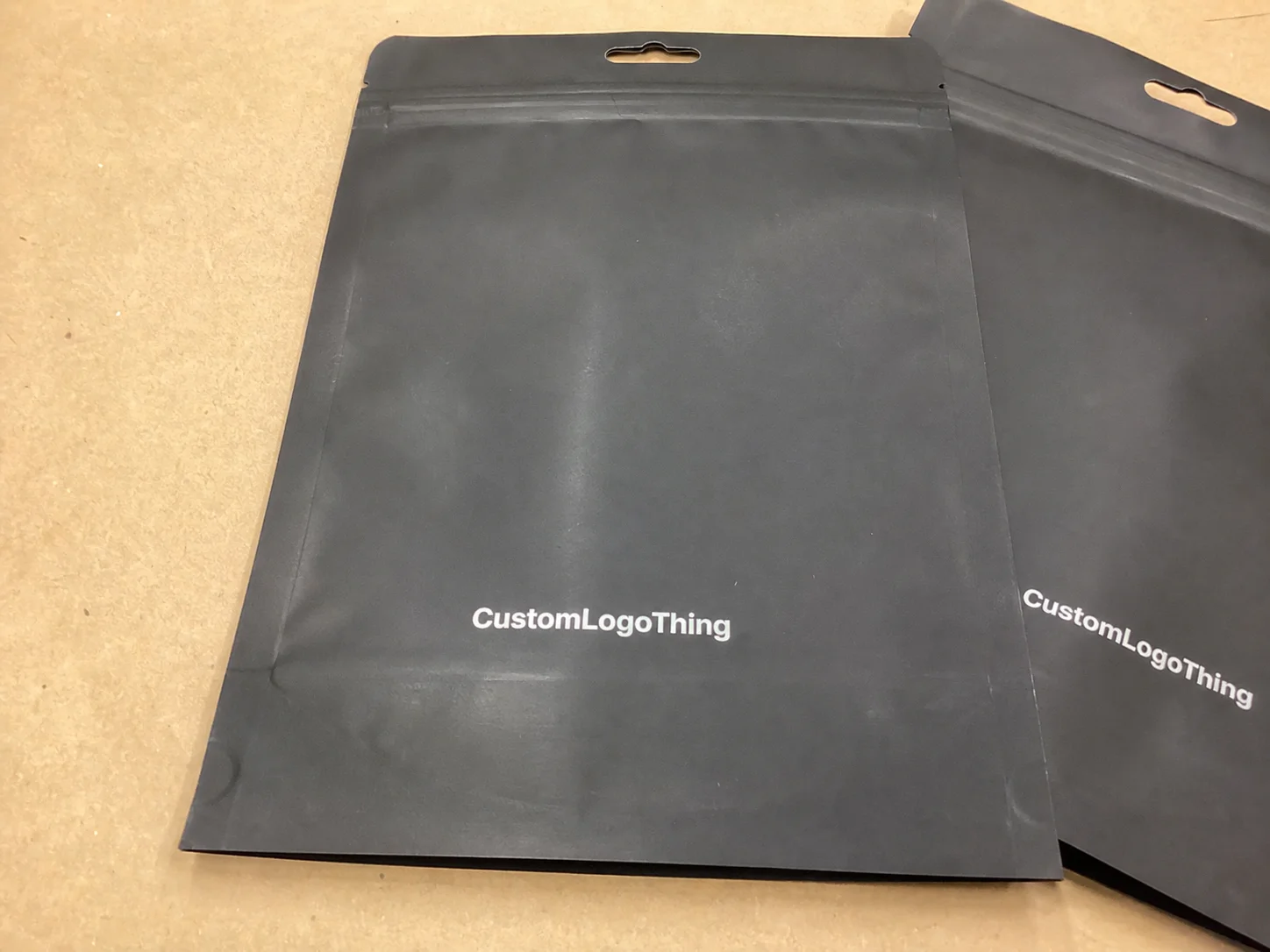
Matte packaging has more controlled visual behavior than glossy film. It reduces reflection, so colors and text are easier to read on a store shelf or in a shipping box opened under bright warehouse lights. It also tends to mask minor handling marks better, which matters when bags are being packed, counted, and shipped in large volumes.
The zipper closure is the other half of the equation. Buyers choose resealable bags for products that are opened more than once, especially when freshness, dust protection, or portion control matters. Snacks, protein powders, dried ingredients, promotional sample kits, small hardware, cosmetics, and accessory items all benefit from a closure that lets the end user open, close, and store the product again without tape or another container.
One common mistake is selecting a bag that looks premium in a mockup but does not perform well in real use. A bag can have a beautiful print layout and still disappoint if the film is too soft for the fill weight, if the zipper line is hard to close, or if the material is so clear that the contents make the pack look unfinished. Matte zipper bags solve part of that problem by improving the perceived structure of the pack while keeping the format simple and functional.
For brands that reorder often, the matte surface can also hide the small marks that appear during transit and warehouse handling. That is not a decorative detail. It affects how the product looks when the first box is opened and when the last bags are pulled from inventory months later.
“A good matte bag should look composed in hand, not just in a mockup. The finish, zipper, and film structure all have to work together once the product is actually inside.”
Product details: materials, zipper styles, and matte surface options
Most matte zipper bags are built from flexible film structures selected for a balance of seal performance, stiffness, and print quality. Common constructions include PE for simpler flexible applications, PET/PE laminations when extra stiffness and a sharper printed appearance are needed, and multi-layer films when the product calls for better puncture resistance or more controlled barrier properties. The right choice depends on what is going inside the bag and how the final pack needs to behave in distribution.
Zipper style matters too. Standard press-to-close zippers are common because they are cost-effective and familiar to most users. Slide zippers can make opening and closing easier for certain retail products, while more specialized closure styles may be used if the package needs extra security or child-resistant behavior. Not every format suits every product, so the closure should be matched to the use case instead of chosen only for appearance.
On the surface side, there are usually a few finish directions. A full matte film gives the whole bag a soft, low-reflection look. Soft-touch style finishes add a more velvety hand-feel, which can raise the perceived quality of the pack, though it may also increase cost. Some buyers prefer matte print areas on a more neutral base so logos and product names stand out without overcomplicating the structure.
Printing can be applied on one side or both sides, depending on the marketing needs and the space available for regulatory or product information. Dark matte films often benefit from white ink underprint because it improves contrast and keeps the logo from disappearing into the background. With detailed artwork, ink density needs attention; large solid areas can look elegant on matte film, but very thin type or low-contrast colors can become harder to read if the artwork is not prepared with the substrate in mind.
Typical applications include:
- Retail snacks and dry goods
- Promotional kits and event samples
- E-commerce fulfillment for small accessories
- Small parts and hardware grouping
- Consumables that need resealability and dust protection
Specifications that affect fit, seal strength, and shelf performance
Before placing an order, buyers should confirm the specs that actually control performance, not just the visuals. The most important ones are bag width, bag height, gusset depth if the bag needs to stand or expand, film thickness, zipper width, and the exact position of the top seal. These details determine whether the package fills properly and whether it closes cleanly once the product is inside.
Thickness is one of those details that sounds simple but changes everything in practice. A thinner film may be fine for light promotional items, but heavier powders, parts with edges, or products shipped through rougher fulfillment channels need more resistance to puncture and seam stress. Buyers often ask for a “premium feel,” and thickness is one of the main drivers of that feeling, along with surface finish and zipper behavior.
Barrier needs should be matched to the product. Some items only need basic dust protection, while others need moisture resistance or aroma retention to keep product quality stable through shipping and storage. A matte zipper bag is not automatically a high-barrier package; the film structure must be chosen for the actual contents. If you are packing food, supplements, or scented items, ask about the barrier properties before assuming the bag will perform like a foil laminate or a specialty high-barrier pouch.
One of the best habits in custom packaging is requesting a dieline or a sample dimension sheet. That helps confirm the usable fill area, the headspace above the product, and the way the bag will look once sealed. Too much empty space makes the package look underfilled. Too little space creates stress on the seams and can interfere with the zipper line. Either problem can be avoided if the dimensions are checked early.
For artwork, ask about these print details:
- Spot colors for controlled brand matching
- Full-color process when artwork uses gradients or photography
- White ink underprint for dark films or stronger contrast
- Safe zones so text and logos do not run into seals or zipper areas
On a commercial run, even a small adjustment in seal location can change how the product packs on the line. That is why the proof stage matters. If a supplier understands flexible packaging, they will ask the right questions before production instead of waiting to discover the issue after the first run.
For standards-minded buyers, it also helps to think in terms of handling and shipment, not just appearance. Packaging that will move through distribution should be considered against common transit expectations, and many teams use test references such as ISTA transport testing guidance or broader packaging performance standards when evaluating pack integrity.
Matte zipper bags bulk order: cost, pricing, and MOQ basics
The price of a matte Zipper Bags Bulk Order depends on a handful of real variables: material type, film thickness, bag size, zipper style, print coverage, finish complexity, and quantity. Once those are set, the unit price becomes much easier to predict. If one of those variables changes, especially size or print method, the cost can move enough to affect the whole budget.
Higher quantities usually lower the unit cost because setup, plate, cylinder, and production expenses are spread over more bags. That does not mean every large order is cheap; it means the curve generally improves as the run increases. Buyers should ask for a price break at two or three different quantities so they can see where the best value sits relative to inventory needs.
MOQ, or minimum order quantity, is tied to the size and print method more often than buyers expect. A simple unprinted matte pouch may have a much lower minimum than a custom-printed bag with multiple colors and a specialty finish. Larger bags also tend to need higher minimums because they use more material and take up more production capacity. If a supplier gives you a minimum, ask whether it applies to the artwork version, the size, or the finish category.
In practice, matte finish pricing usually sits above a basic clear PE pouch and below more complex premium structures that use heavy lamination, special coatings, or extra decoration. The exact difference depends on the order profile, but the cost jump is often easier to absorb when the packaging is part of a repeat program rather than a one-off launch.
To compare options clearly, request a quote that breaks out the following:
- Per-unit price
- Setup charges
- Sample or proof costs
- Shipping estimate
- Plate or cylinder inclusion
| Option | Typical use | Cost tendency | Best for |
|---|---|---|---|
| Simple PE matte zipper bag | Lightweight retail or storage items | Lower | Basic branding and repeat reorders |
| PET/PE matte laminated bag | Stiffer presentation and better print appearance | Moderate | Retail products with stronger shelf presence |
| Multi-layer custom pouch with special finish | Products needing stronger barrier or premium look | Higher | Specialty items, premium kits, or demanding shipping |
There are straightforward ways to control cost without weakening the package. Standardizing one or two sizes usually helps. Limiting ink colors can reduce production complexity. A cleaner artwork layout can keep the bag looking premium while avoiding extra cost from dense coverage or unnecessary effects. For many programs, that is the best balance of appearance and unit economics.
Price ranges can vary widely, so buyers should be cautious about comparing only the lowest number. A quote that looks cheaper may exclude tooling, sampling, or freight. Another may include better film, tighter tolerance control, or a finish that holds up better under handling. The real comparison is total landed cost and how much risk sits inside the order.
If your buying team wants broader purchasing support, our Wholesale Programs page is a good place to start reviewing order structure and repeat-run planning.
Production steps, lead time, and approval checkpoints
A clean production process usually starts with inquiry, followed by spec confirmation, artwork review, digital proofing, sample or preproduction approval, and then mass production. That sequence sounds basic, but every step protects the buyer from a preventable mistake. The more clearly you define the bag size, film, zipper type, and artwork upfront, the less likely it is that approval will stall later.
Lead time depends on a few practical factors: print complexity, order quantity, special finishes, tooling requirements, and how quickly approvals are returned. A straightforward repeat run is naturally faster than a fresh custom build with dense artwork or a finish that requires additional setup. In many custom packaging programs, timing should be split into three pieces: proof time, manufacturing time, and freight time.
The most common causes of delay are not mysterious. Unclear artwork files create back-and-forth. Changes after proof approval restart parts of the process. Incorrect dimensions or zipper placement can require a revised sample. Buyers who move fastest usually have their specs organized before they ask for pricing, which lets the supplier quote accurately and avoid revisions.
Before approval, check these items carefully:
- Dimensions and fill capacity
- Seal quality and zipper placement
- Logo spelling, artwork scale, and text clarity
- Color expectations and matte surface appearance
- Whether the bag opens and reseals properly with the actual product inside
Quality control should also cover print registration, surface consistency, and closure function. On a matte film, small variations in sheen can be visible if the lighting is strong or the production lot changes. A good supplier will check those details before shipment, not after the bags are already in transit.
For teams that want to keep packaging aligned with environmental or supply-chain priorities, it is also reasonable to ask about material sourcing and compliance references. If sustainability claims are part of the brief, look for supporting documentation rather than broad marketing language. Organizations such as FSC can be relevant where fiber-based components are involved, and packaging buyers should always verify what applies to the exact build.
One more practical point: if your product has any sensitivity to moisture, aroma loss, or oxygen exposure, make sure the supplier explains the limits of the film instead of assuming the matte look implies premium barrier performance. Finish and barrier are not the same thing. That distinction prevents a lot of expensive misunderstandings.
How to choose a supplier for consistent quality and repeat orders
A supplier for custom matte zipper packaging should be judged on repeatability, not just on a polished mockup. The real test is whether they can hold consistent thickness, zipper performance, and matte appearance across reorders. If the first run looks good but the second run shifts in shade, feel, or closure behavior, the packaging system is not stable enough for a growing product line.
Ask for sample packs, production photos, and spec sheets. Those are more useful than a pretty rendering because they show how the bag is actually built and how the finish looks under real light. A supplier who is comfortable sharing specifications is usually easier to work with when the order scales or the artwork changes later.
Communication on tolerances matters more than many buyers realize. No flexible package is perfectly identical bag to bag, especially with matte films and printed surfaces, but the acceptable variation should be defined clearly. Color matching, zipper alignment, seam width, and surface finish all need to be discussed early so nobody is surprised when the shipment arrives.
Good packaging partners also help prevent rework. They should be willing to advise on practical dimensions, point out artwork that will not print cleanly, and confirm whether a requested structure is manufacturable at the target quantity. That sort of input is where packaging expertise really shows up, because it saves time, protects budget, and keeps the bag aligned with how the product is packed and sold.
Another useful check is whether the supplier can support reorders without forcing you to rebuild the file package from scratch every time. If they keep records of the approved size, film structure, zipper spec, and print layout, repeat ordering becomes much easier. That matters far more than a flashy sales presentation.
If you are comparing ordering options, review our FAQ alongside the quote request so the same technical questions do not have to be answered twice.
Next steps to place a smarter order without delays
Before you request pricing, gather the essentials: target bag size, product weight, finish preference, zipper style, artwork files, and expected quantity. That one step makes the rest of the process much cleaner, because the quote can be tied to a real build instead of a rough idea. If you already have two likely sizes, ask for both. The cost difference is often small enough to justify choosing the better fit and less headspace.
It also helps to ask for a sample or digital proof before approving production. A proof is where you confirm logo placement, color balance, and the relationship between the matte surface and the printed area. A sample is even better when the product is sensitive to fit, since it confirms zipper action and pack-out performance with the actual contents.
Confirm the timing in a way that separates production from freight. A bag can be finished on schedule and still arrive later than expected if shipping is not planned correctly. Retail programs, warehouse receiving, and promotional launches all benefit from knowing whether the order will move by air, sea, or another freight method.
For buyers ready to proceed, the cleanest path is simple: send the spec sheet, confirm the artwork, choose the finish, and request pricing for your matte Zipper Bags Bulk order with a second size option if needed. That gives you a better read on unit cost, proofing time, and production requirements before anything starts moving.
When the details are organized up front, custom matte zipper packaging is a straightforward buy. The bag looks better, handles better, and supports repeat sales or repeat storage more reliably, which is exactly what most programs need.
FAQ
What is the best material for matte zipper bags bulk order projects?
Choose the material based on product weight, barrier needs, and print goals. PE works well for simpler flexible bags, while PET/PE laminations can improve stiffness and print appearance. Ask for a sample to check feel, zipper action, and overall pack-out fit before committing.
How do I estimate the right MOQ for custom matte zipper bags?
MOQ usually depends on size, print method, and finish complexity. Larger custom bags or multi-color print jobs often require higher minimums than simpler runs. Request a quote for your target quantity and an alternate quantity to compare price breaks.
Can matte zipper bags be printed with a logo on both sides?
Yes, many matte zipper bags can be printed on one or both sides. Double-sided printing may affect cost, setup, and lead time, so confirm artwork coverage early. Use white ink underprint if you need brighter logo contrast on darker film.
What should I check before approving a sample or proof?
Verify dimensions, zipper placement, seam quality, and fill capacity. Check logo placement, spelling, color accuracy, and whether the matte finish matches the intended look. Confirm that the bag opens and reseals smoothly with your actual product inside.
How long does production usually take after artwork approval?
Timing depends on order size, print complexity, and whether special finishes or tooling are required. The clock usually starts after final proof approval, not when the first inquiry is sent. Ask for separate estimates for production time and shipping time so you can plan inventory properly.


