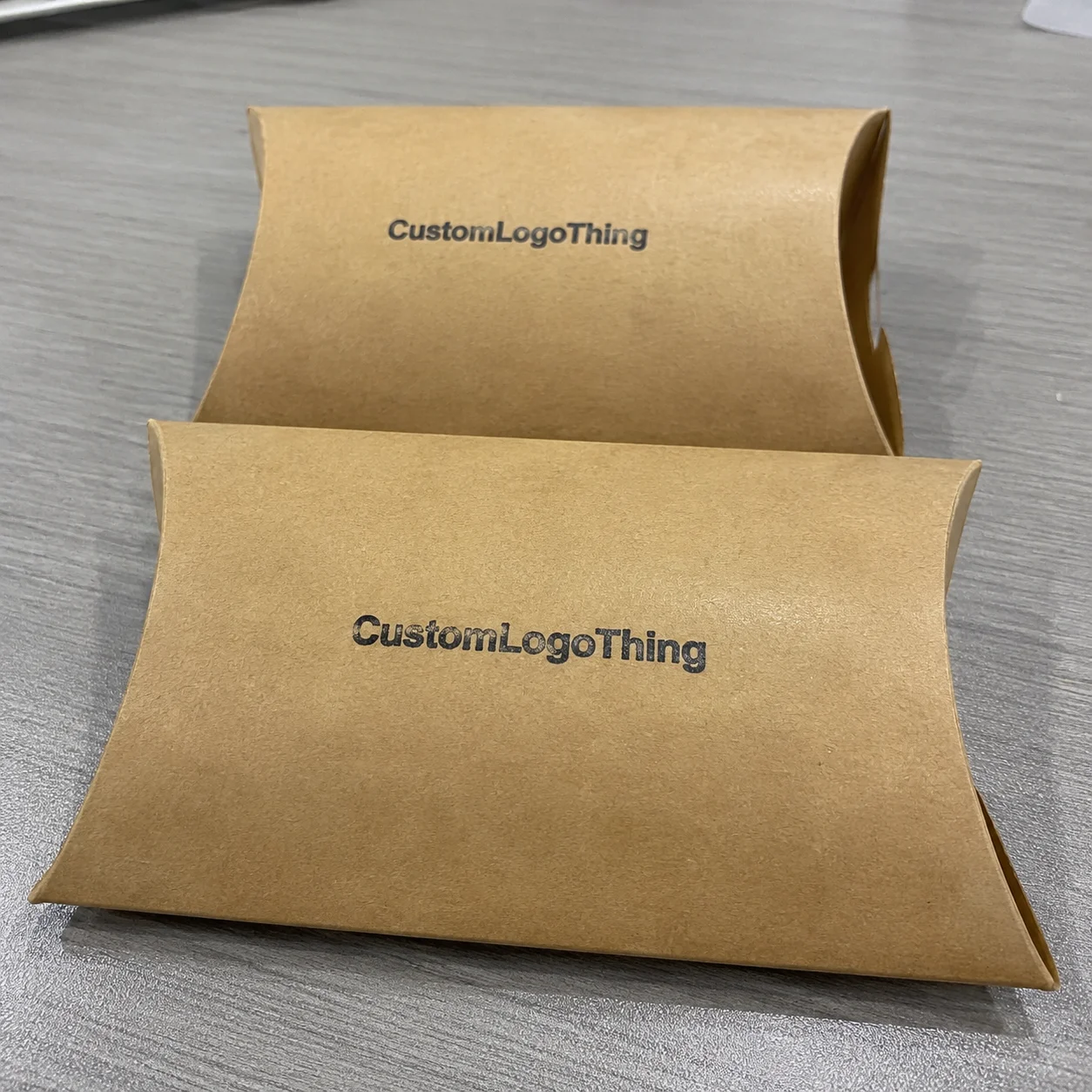
Matte zipper bags for breweries bulk pricing: what actually drives cost, shelf life, and shelf appeal
If you are comparing Matte Zipper Bags for breweries bulk pricing, the real decision is rarely just about print cost. Buyers are usually balancing three things at once: how the pouch looks under retail lighting, how well it protects the product, and whether the unit price leaves enough room for margin after freight, setup, and spoilage risk are counted.
That balance matters more in brewery channels than it does in a lot of other retail categories. Taprooms are busy. Shelves sit under mixed lighting. Bags get touched, stacked, handed across counters, and shoved into car cupholders or tote bags. A finish that looks polished on a screen can behave very differently after a week on a shelf. Matte tends to hold up better visually because it cuts glare and hides handling marks that glossy film tends to expose immediately.
For products like snack mixes, coffee collabs, spice rubs, limited-release candy, and small merch add-ons, the pouch often has to do the selling before anyone reads the ingredient panel. That puts pressure on the structure, the finish, and the artwork. A brewery packaging buyer does not need a theory lesson. They need a bag that closes properly, prints cleanly, and reorders without forcing the team to renegotiate every run.
A pouch that looks premium but fails in production is expensive in a different way. The true cost shows up as wasted inventory, delayed launches, and awkward conversations about why the “cheaper” option was not actually cheaper.
Why matte finish wins on crowded brewery shelves
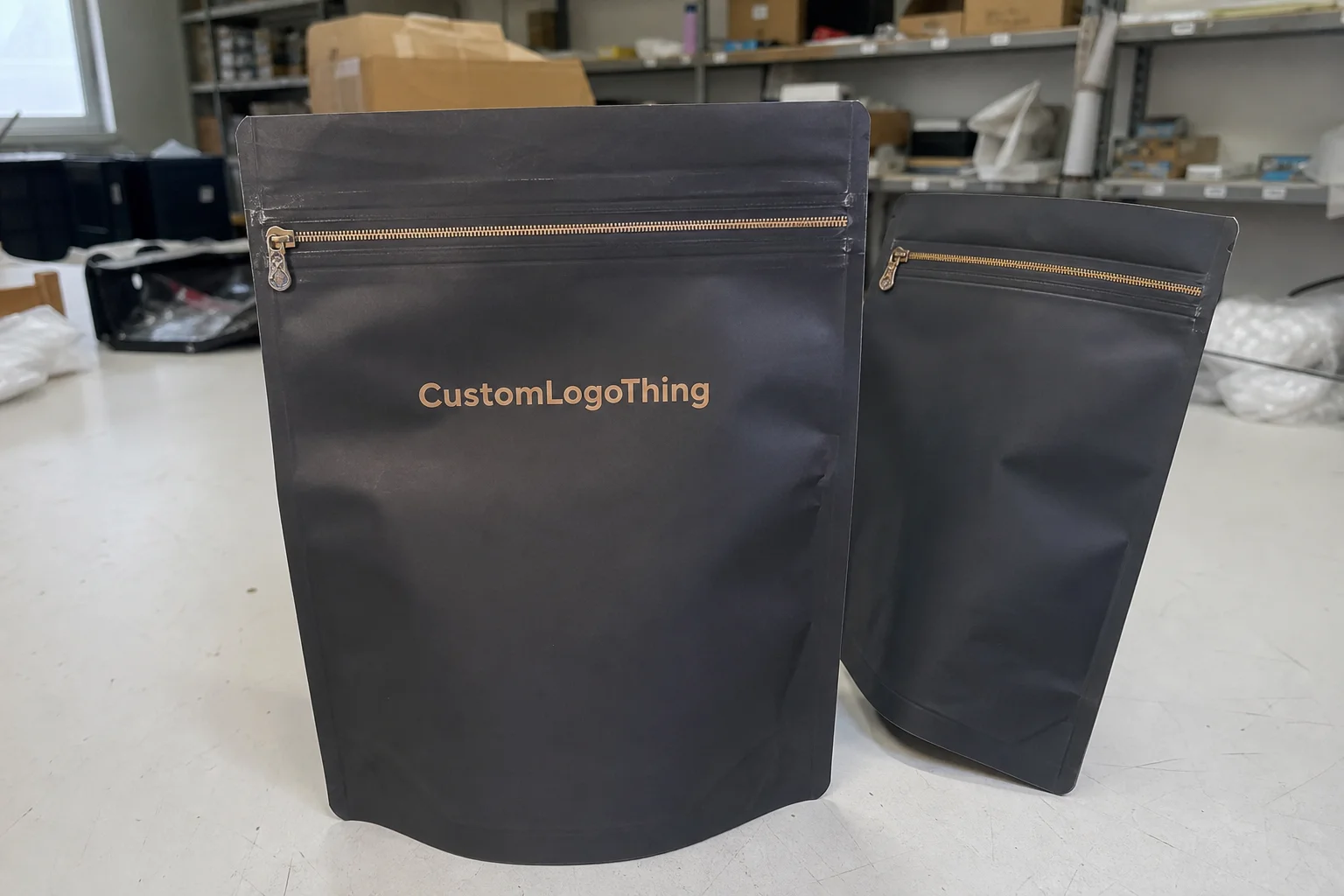
Matte has a practical advantage in the brewery environment because it reduces glare in mixed light. Taprooms often combine warm bar lighting, daylight from windows, and spot lighting over displays. Gloss amplifies all of that. Matte softens it. The logo stays readable from a few feet away, and the pouch does not compete with reflections from glassware, chrome fixtures, or reflective countertops.
There is also the handling factor. Brewery packaging is handled by staff, customers, distribution teams, and often a few too many people who do not care about presentation. Matte surfaces tend to disguise minor scuffs and fingerprints better than gloss. That does not make them indestructible. It just means the bag can stay sellable longer before it starts looking tired.
The choice is not only visual. Matte finishes can also support a more restrained, premium tone that fits specialty retail better than a high-shine pouch. That matters when the same SKU might be sold in a taproom, a pop-up market, and a local grocery account. One finish has to survive all three contexts without looking out of place in any of them.
There is a tradeoff, and it should be stated plainly. Matte lamination, matte BOPP, or a matte-coated print layer can add cost compared with a plain gloss build. The increase is often modest on larger runs and more noticeable on short runs. If the pouch is doing real brand work, the premium can be justified. If the product is low value and the bag is mostly a utility item, a full matte build may not be the best spend.
For buyers who reorder through Wholesale Programs, consistency is where matte often pays back. The same finish across SKUs gives the line a coherent retail presence, and repeat orders usually become easier to forecast once the structure is locked in.
Bag structures, barrier layers, and zipper options that matter
Not every pouch structure fits brewery retail well. The format has to match the product, the fill weight, and the way it will sit on a shelf or hang on a display. Stand-up pouches are common because they are easy to fill and present well. Flat-bottom bags offer a wider footprint and a more premium look. Side-gusset bags are efficient in shipping and can work well for larger-volume dry goods. Smaller zipper pouches are often better for lightweight items or secondary retail packaging.
Material selection is where many buyers either overbuild or underbuild. PET/PE laminates are common because they balance print performance, sealability, and price. Matte BOPP laminates are widely used for retail pouches because they give a clean surface for graphics with a softer visual finish. Foil barrier structures are a better fit when the contents are sensitive to oxygen, moisture, or light. Clear-window versions can help if the product itself is part of the sale, but a window reduces printable area and can slightly change barrier performance.
Zipper choice matters more than it looks on a spec sheet. Standard press-to-close zippers are fine for repeat opening. Some items need a stronger closure because customers will open and close the bag many times before it is empty. Tear notches help with first-open behavior and reduce the chance that people damage the seal trying to get in. Hang holes or euro slots matter if the bags will live on peg displays or merch racks.
The product should drive the barrier, not the artwork. A coffee collab, a spice blend, or a snack with oils will have different shelf-life requirements than a dry, low-risk item. The inner layer and barrier spec should be chosen with that in mind. If the wrong film is used, the pouch can look right and still underperform. That is the worst kind of packaging mistake because it is invisible at first.
For brands with a tighter packaging family, it is often smarter to standardize the structure and vary only the artwork or fill weight. That keeps the line easier to manage, simplifies reorder planning, and reduces the chance that one SKU drifts into a custom spec nobody wants to repeat.
What to ask before you lock the structure
Ask how long the product needs to stay fresh, whether it will be opened repeatedly, and how it will be stored before sale. Those three answers usually narrow the material choice faster than a stack of subjective comments about “premium feel.”
If the product is food-contact or shelf-stable retail, confirm barcode placement, ingredient panel requirements, recycling marks, and any retailer-specific packaging rules. Fixing that after the proof cycle is slower and more expensive than getting it right in the first round.
Specifications breweries should lock down before requesting quotes
A usable quote depends on usable specs. If the dimensions are approximate, the fill weight is guessed, and the artwork is still changing, the number you get back will be vague too. Vendors can work with incomplete information, but the estimate is only a rough placeholder until the details are firm.
Start with the basics: pouch width, gusset depth, height, target fill weight, pouch style, zipper type, and finish. Then add print sides, whether a clear window is needed, whether the bag requires a hang hole, and whether there are any special requirements for the seal area. If several SKUs share the same structure, say so. Shared tooling lowers setup burden and improves the economics of the run.
Artwork quality matters more than most buyers expect. Vector files are better than flattened images. Small type needs extra attention. Reverse text on a matte background should be checked carefully because low-contrast details can disappear more quickly than they would on a glossy surface. This is not a design preference issue. It is a readability issue.
Fit testing should not be skipped. A pouch can be the right nominal size and still fail in practice if the product stacks oddly, the headspace is too tight, or the seal area is too close to the fill line. The bag should close cleanly, stand upright without strain, and survive being packed into cartons without creasing the closure.
If the SKU carries ingredient text, nutrition information, or regulatory copy, leave room for that before the design is approved. A strong visual concept is not useful if there is nowhere to put the legal text. That problem gets expensive later because it usually forces a redesign after the bag structure has already been selected.
For teams still comparing formats, a lower-risk first step is often to review wholesale options and compare a standard build against a custom one before committing to a more complicated spec. That usually reveals where the extra cost is coming from and whether it is actually justified.
Matte zipper bags for breweries bulk pricing, MOQ, and unit-cost breaks
This is where the buying decision becomes concrete. Matte Zipper Bags for Breweries bulk pricing is shaped by size, structure, print coverage, zipper style, barrier layer, and the amount of setup needed before the line runs. A 4 x 6 pouch with simple one-color artwork is not the same production job as a 9 x 12 foil pouch with full-coverage graphics and a custom zipper. Treating those as interchangeable is how buyers end up with misleading comparisons.
The logic is straightforward. Fixed costs like prepress, plates, proofing, and setup are spread across more units as the run gets larger. That is why cost per piece usually falls as quantity increases. MOQ matters because it defines where that drop begins. A quote can look low on paper and still become expensive once tooling, freight, sample charges, and finish upgrades are added back in.
These ranges are not exact market prices. They are practical planning brackets that help a brewery buyer judge whether a quote is in the right neighborhood.
| Option | Typical MOQ | Estimated unit cost | Best use | Notes |
|---|---|---|---|---|
| Matte stand-up pouch, 1-2 spot colors | 3,000-5,000 pcs | $0.18-$0.32 | Small retail snacks, merch add-ons, limited drops | Lower tooling burden, good shelf presence, useful for testing demand |
| Matte BOPP laminated pouch with zipper | 5,000-10,000 pcs | $0.14-$0.26 | Coffee collabs, snack mixes, medium-volume taproom retail | Balanced print quality and appearance, common choice for repeat runs |
| Foil barrier matte pouch with zipper | 10,000-20,000 pcs | $0.16-$0.30 | Light- and oxygen-sensitive products | Higher material cost, stronger protection, often worth it for premium SKUs |
| Custom flat-bottom matte pouch | 10,000+ pcs | $0.22-$0.40 | Premium retail display, distributor-facing SKUs | More assembly complexity, stronger shelf impact, better for higher-margin products |
MOQ is not just a supplier preference. It reflects how packaging production works. Lower quantities are useful for pilot runs, seasonal flavors, or short taproom-only launches, but the unit price usually goes up. Larger runs usually unlock better bulk pricing because the setup burden gets diluted across more bags.
Compare quotes only on matched specs. Same size, same zipper, same barrier, same finish, same print coverage. If one supplier is quoting a lighter film or skipping a finish step, the lower price is not a better deal. It is a different product. That distinction matters more than buyers often admit, especially once a reorder is due and the first run has already set expectations.
There are also costs that tend to hide in the fine print: samples, tooling, plate charges, freight, customs or duties on imported goods, storage if the bags arrive before the SKU launches, and revision fees if artwork changes after approval. None of those are unusual. They are just easy to miss when the quoted unit price is the first number people see.
A practical way to compare value is to ask for two versions of the same quote: a minimum viable build and an upgraded barrier or finish version. That gives a cleaner read on whether the improvement is worth the spend. If the end goal is bulk pricing, the cheapest quote is not always the best one. The lowest-risk quote is the one that matches the product, the timeline, and the channel.
Repeat buyers usually see the biggest benefit once the spec is stabilized. That is when the real bulk economics start to show up: fewer proof cycles, fewer surprises, and less variation from one run to the next. If the bag becomes part of a recurring seasonal program, a well-defined wholesale path matters more than chasing a new design every quarter.
Production steps, timeline, and lead-time expectations
A credible packaging partner should be able to map the job from quote to delivery without hiding the weak points. The process is usually the same: spec review, quote confirmation, artwork proof, dieline check, prepress, production, QC, packing, and shipment. Delays usually happen in the handoffs between those steps, not in the steps themselves.
Once proof approval is complete, standard custom runs tend to move faster. More complex builds take longer. Custom structures, heavy color matching, specialty finishes, and unusual zipper configurations all add checks before production can start. That is normal, not a red flag. The red flag is pretending those elements do not affect the schedule.
The most common lead-time problems are missing artwork, vague dimensions, slow proof feedback, and last-minute material changes. Buyers sometimes keep options open too long, then wonder why the order is stalled. Manufacturing does not reward indecision. It rewards clear inputs and fast signoff.
To reduce lead time, send final dimensions and artwork together. Keep the SKU list tight. If there will be multiple variants, approve one core structure first and only change the art where necessary. Avoid redesigning the pouch once the run is in motion unless there is a real production issue. Cosmetic changes late in the process are a reliable way to add time without adding value.
For transit-sensitive orders, ask whether the packed cartons have been checked against common shipping stress points. ISTA publishes widely used package transit test standards for drop, vibration, and compression testing. See ISTA if you need a reference framework. That kind of check matters more when the order is going into a distributor network or a retail system that is not gentle with freight.
Typical lead times vary with complexity, but the pattern is consistent. Simple stock-based or semi-custom runs can move relatively fast once artwork is approved. Fully custom builds, high-barrier structures, and multiple proof rounds take longer. The honest answer from a supplier should include both a best-case and a realistic window.
What a brewery buyer should expect from a packaging partner
A packaging partner should do more than mirror the spec back at you. The better ones push on the weak points. If the product does not need a foil barrier, they should say that. If the artwork will lose contrast on a matte surface, they should say that too. Quiet approval is cheap at the quoting stage and expensive after production starts.
Repeat orders are where a partner proves whether they are useful or merely responsive. Once the structure is set, reorder speed usually improves and cost stability gets better. That matters for breweries that run seasonal drops, distro resets, and taproom exclusives on overlapping schedules. Packaging should support the release calendar, not become the thing that slows it down.
Quality control should be described in plain language. Buyers should ask how the supplier checks seal integrity, zipper function, print registration, material consistency, and carton counts. If the answer is vague, the process is probably vague too. A good supplier should be able to explain what gets checked, when it gets checked, and what happens if a defect is found.
That is also where the real value of a long-term packaging relationship shows up. Once the bag family is standardized, the team spends less time re-approving the same details. The art stays cleaner. The proofs get faster. The reorder path becomes predictable. In a category where launch timing matters, predictability is often more valuable than a small difference in unit price.
The best supplier relationships protect margin without creating drama. That means practical recommendations, stable specs, and QC that catches problems before they leave the plant.
If paper-based components are part of the program, some buyers also look at sourcing standards for cartons, inserts, or display materials. In those cases, FSC is the label most people recognize. It is not relevant to every pouch, but if outer packaging or secondary materials are part of the brand story, that decision should be made early rather than attached later as an afterthought.
Strong packaging partners also understand that brewery launches tend to move on fixed retail dates. That means they should be able to give straight answers about feasibility, not just optimistic quotes. The goal is not to sound helpful. The goal is to keep the job from slipping.
What to send for an accurate bulk quote
If you want a quote that can actually be used for buying, send the essentials in one message. Include pouch dimensions, target fill weight, product type, print count, matte finish preference, zipper style, quantity, and shipping destination. If you already have a dieline or a previous pouch spec, include that as well. Every missing variable slows the estimate down or makes it less reliable.
It also helps to say whether the order is for a launch, a seasonal refresh, or a reorder. Those are different purchasing situations. A launch may justify a slightly more premium structure if the brand is still being tested. A reorder should usually stay close to the proven spec unless there is a measurable reason to change it.
If the design uses small type, dense legal copy, or a dark matte background, ask for a proof and sample plan before approval. Clean digital art does not guarantee clean print. Real film, real ink, and real handling expose weaknesses quickly. The contrast that looked fine on a monitor can disappear once the pouch is printed and stacked on a shelf.
For multi-SKU programs, one core structure with artwork changes only where necessary is usually the most efficient path. It keeps the brand family coherent and reduces the number of variables the production team has to manage. It also makes warehousing and replenishment easier because the carton footprint and packout logic stay consistent.
The fastest way to get a sensible bulk quote is to give the supplier enough information to rule things out. A strong quote should be able to show at least one lower-cost build and one upgraded barrier or finish option. That makes the tradeoff visible. It also keeps the conversation anchored in actual production choices instead of vague preferences. For breweries comparing matte zipper Bags for Breweries Bulk Pricing, that clarity is usually worth more than another round of “premium” adjectives.
FAQ
What is the usual MOQ for matte zipper bags for breweries?
MOQ depends on bag size, print complexity, and whether the pouch is stock-based or fully custom. Simple matte pouches can start at lower quantities, while custom-printed high-barrier bags usually need larger runs before the pricing makes sense.
Do matte zipper bags hold up better than gloss for brewery packaging?
In most retail environments, yes. Matte hides fingerprints, handling marks, and shelf scuffs better than gloss. Gloss can make colors pop more, but it also shows wear faster and tends to look more uneven after repeated handling.
How does bulk pricing change as the order quantity increases?
Unit cost usually drops as setup and production overhead are spread across more bags. The biggest savings tend to appear when the order moves into a higher quantity tier with the same size, material, zipper, and print coverage.
Can you print detailed logos and small type on matte zipper bags?
Yes, but the artwork needs to be prepared correctly. Vector files, strong contrast, and reasonable type sizes matter more on matte surfaces because low-contrast details can disappear faster than they would on a glossy pouch.
How long does production usually take after proof approval?
Lead time depends on structure and complexity. Standard custom runs are faster once proofs are approved and specs are locked. Fully custom builds, specialty finishes, and multiple revision rounds add time.
What should I ask a supplier before placing a brewery pouch order?
Ask about barrier performance, zipper function, sample policy, QC checks, freight terms, and whether the quote includes tooling or setup charges. Those answers tell you more about the real cost than the unit price alone.