The Matte Bag Problem Buyers Usually Notice Too Late
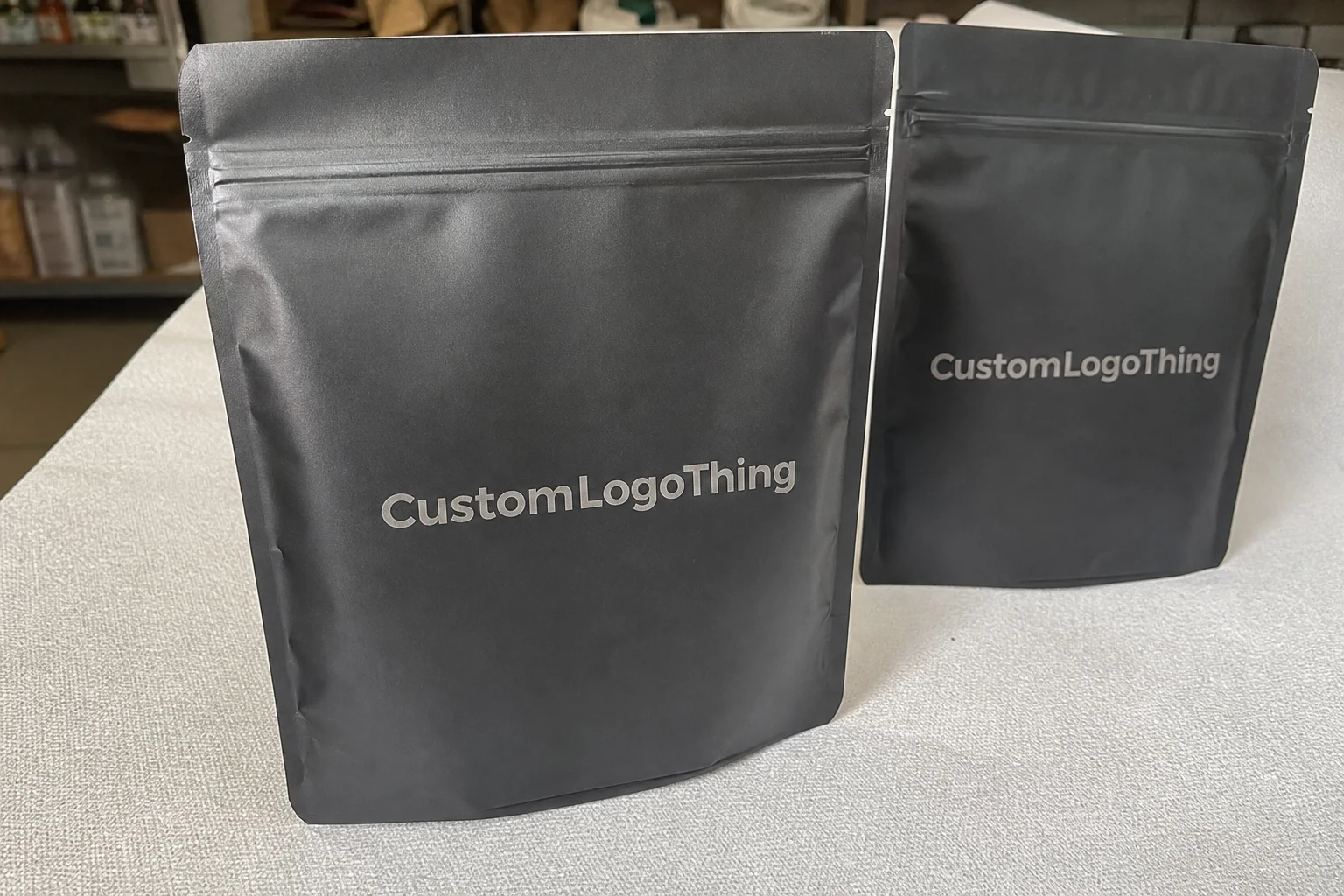
A matte pouch can look expensive in a mockup and still behave like a bad decision once product goes inside it. Buyers trying to Get Matte Zipper Bags Unit low moq quote guide clarity need more than a nice render. They need size, material, finish, zipper, print method, MOQ, and freight assumptions locked down before any unit price means anything.
The usual mess is predictable. A brand approves a beautiful sample, then the first order arrives and the bags scuff, the zipper feels flimsy, the bottom gusset leans, or the “low MOQ” quote suddenly grows teeth after setup and shipping are added. Pretty packaging helps. Surprise invoices do not.
Matte zipper bags work well for snacks, supplements, coffee, cosmetics, pet treats, powders, refill products, and small dry goods because they solve several packaging problems at once. They create shelf presence, provide a large printable panel, reseal after opening, ship flatter than rigid containers, and support fill weights from small 20g sample packs to 1kg refill pouches.
Here is the buying truth people learn too late: matte finish is not one product. A 100-micron matte stand-up pouch with PET/VMPET/PE barrier is not the same as a thinner matte BOPP/CPP snack pouch. Soft-touch laminate is not the same as matte varnish. A powder-resistant zipper is not a basic press-to-close zipper with a better attitude. Same visual direction. Different bag.
This guide is for buyers ready to request pricing, not anyone collecting mood boards like packaging confetti. The goal is simple: prepare a quote request a supplier can price accurately, compare responses without getting distracted by fake-low unit costs, and avoid the classic “cheap quote, expensive problem” routine.
Buyer rule: if the bag must protect product, survive shipping, scan at retail, and look premium, quote the structure first and the decoration second. A perfect matte look on the wrong laminate is still the wrong bag.
Matte Zipper Bag Options That Affect Performance
Matte zipper bags come in more formats than most first-time buyers expect. The common choices include flat zipper bags, stand-up zipper pouches, three-side seal bags, bottom gusset pouches, side gusset bags, and hang-hole retail bags. Each format changes fill volume, shelf presentation, carton packing efficiency, and cost per piece.
Stand-up zipper pouches are the default for many snacks, supplements, coffee, powdered drink mixes, and pet treats because the bottom gusset gives the pouch retail presence. Flat zipper bags work for light refills, sample packs, small accessories, and products that hang from peg hooks. Side gusset bags make sense for larger coffee, pet food, and bulk refill formats where squared shelf shape matters more than a wide front panel.
The finish itself has choices. You can use full matte film, matte varnish over printed artwork, soft-touch matte, spot gloss over matte, or kraft-look matte laminates. Soft-touch feels premium, but it can show fingerprints and scuffs more easily. Spot gloss over matte makes logos and product names pop, but it adds process control and sometimes setup charges. Yes, the fancy detail has a bill attached. Shocking.
Zipper choice matters more than the mockup suggests. A standard press-to-close zipper is fine for many snacks and dry goods. A wide-track zipper gives a stronger hand feel for heavier fills. Powder-resistant zippers help with protein powder, collagen, baking mixes, powdered drink blends, and other fine products that can clog a standard track. Child-resistant zippers may be required for regulated categories depending on market, contents, and claims.
Barrier requirements should be decided from the product backward. Dry crackers need different protection than coffee, oily granola, gummies, supplements, cosmetics, or cannabis-adjacent products. Oxygen, moisture, light, aroma retention, grease resistance, and puncture resistance all matter. A common food pouch structure might use PET for print stability, metallized PET or foil for barrier, and PE for sealing. Recyclable or mono-material PE options are available in some constructions, but they may carry tradeoffs in stiffness, barrier, print appearance, or sealing behavior.
For food, supplements, and personal care, ask for food-grade material documentation appropriate for your selling market. Some buyers also request BPA-free statements, recyclable material options, FSC-certified paper components for labels or cartons, or transit testing aligned with ASTM or ISTA handling expectations. For broader packaging references, the Packaging Association is useful, and distribution testing information is available through ISTA.
Do not choose the thinnest matte film just to shave one or two cents off the unit cost if your product has sharp edges, high oil content, heavy fill weight, or a long shelf-life target. Cheap film loves embarrassing people in transit. Send the product type, fill weight, shelf-life target, storage conditions, and retail channel before finalizing material.
Specifications to Confirm Before Any Custom Bag Quote
A quote is only as accurate as the specifications behind it. If you send “need matte zipper bags, low MOQ, good price,” you are not requesting a quote. You are inviting someone to guess with confidence.
Start with the basics: bag size, usable fill volume, product weight, film thickness, material structure, zipper type, gusset style, corner shape, tear notch, hang hole, valve, window, print coverage, and quantity per design. For coffee, add valve requirements. For peg display, add hang-hole style and reinforcement expectations. For powders, state whether zipper clogging is a concern.
Outside dimensions are not the same as usable fill space. A pouch listed as 6 x 9 inches loses internal room to side seals, bottom seal, zipper placement, and gusset fold. Confirm width, height, bottom gusset depth, seal width, and whether the filled bag must stand upright with the actual product weight. A 250g coffee pouch and a 250g powdered supplement pouch do not always fill the same way because density changes volume.
Artwork details also affect pricing. Suppliers need to know the number of colors, whether the design is full coverage, whether white ink is needed under print, whether Pantone matching is required, where matte and gloss areas sit, where the barcode goes, and whether nutrition panels or warning icons are final. Bleed margins and dielines matter. Low-resolution artwork is not a design style; it is a production delay.
Printing method drives both MOQ and cost per piece. Digital printing suits lower MOQs, multiple SKUs, short launches, and seasonal packaging because it avoids traditional plate or cylinder costs. Flexographic and rotogravure printing usually fit larger runs because tooling fees are spread across more bags, often improving bulk pricing once order volume is stable.
| Print Method | Typical MOQ Range | Best Fit | Cost Tradeoff |
|---|---|---|---|
| Digital printing | About 500 to 2,000 pieces per design | Launches, multiple SKUs, test runs | Higher unit cost, lower setup burden |
| Flexographic printing | Often 5,000 to 10,000 pieces per design | Repeat products and mid-volume runs | Better cost per piece after setup charges |
| Rotogravure printing | Often 10,000+ pieces per design | Large retail or distributor orders | Strong print quality, higher cylinder costs |
Samples should be chosen based on risk. Blank size samples help test fit, fill volume, and stand-up performance. Printed samples confirm color, artwork position, and finish. Production samples confirm the actual material and manufacturing setup. If a supplier quotes without asking these details, the quote is probably a placeholder. Placeholders are cute until procurement starts comparing fake numbers.
Prepare one spec sheet per SKU, especially if flavors, sizes, or designs vary. “Same bag, different artwork” can still change setup, proofing, packing, and final unit cost.
Get Matte Zipper Bags Unit Low MOQ Quote Guide Pricing Factors
MOQ is where packaging dreams meet cash flow. Low MOQ custom matte zipper bags may start around 500 to 2,000 pieces per design with digital printing, depending on size, material, and finish. Plate-based printing often starts around 5,000 to 10,000 pieces per design. Specialty films, valves, complex laminates, child-resistant zippers, unusual dimensions, or heavy-duty structures can push minimums higher.
Unit cost ranges vary heavily, so treat these as planning ranges, not gospel. Small digital matte zipper bag runs may land roughly from $0.35 to $1.50+ per bag, depending on dimensions, material structure, print coverage, zipper type, and quantity. Larger runs can drop meaningfully, sometimes into the $0.12 to $0.45 range for simpler structures and higher volumes, but setup charges, plate fees, cylinder costs, sampling, and freight can change the landed number.
The quote drivers are predictable: bag dimensions, film layers, thickness, print method, number of SKUs, matte finish type, zipper type, valve, window, compliance testing, sample needs, packing method, and shipping terms. A 100g snack pouch with matte varnish is not priced like a 1kg protein pouch with a powder-resistant zipper and high-barrier laminate.
Low MOQ costs more per unit because setup labor, machine time, file handling, material waste, proofing, and QC do not vanish because a buyer wants a tiny test run. Machines are rude like that. Digital printing reduces the pain, but it does not erase production economics.
Low MOQ makes sense for product launches, market testing, seasonal SKUs, influencer drops, small-batch food brands, and packaging redesign trials. It protects cash flow and reduces the risk of sitting on 20,000 outdated bags after a formula, barcode, claim, or flavor name changes.
Larger MOQ makes sense for stable repeat products, retail programs, distributor orders, subscription refills, and brands that need a lower landed cost per filled unit. If product velocity is proven, buying more can improve margin. If the product is still guessing its way through the market, low MOQ may be the smarter spend.
For the cleanest comparison, ask for three tiers: low MOQ launch run, mid-volume reorder run, and best-value bulk run. That structure shows whether ordering more actually saves enough to justify the cash, storage space, and risk of obsolete packaging.
Production Steps, Lead Time, and Turnaround Expectations
A normal custom matte zipper bag order follows a sequence: quote request, spec review, artwork check, material confirmation, sample approval if needed, invoice or deposit, print setup, production, quality inspection, packing, and shipping. Skip steps and you do not save time. You usually move the problem to a more expensive part of the order.
If specifications are complete, quote review often takes 1 to 3 business days. Artwork proofing can take 1 to 5 business days, depending on file quality and revision speed. Sampling may add 7 to 15 business days. Production commonly takes 10 to 25 business days after approval, depending on quantity, material, print method, and factory schedule.
Urgent orders are possible in some cases, but not magic. Rush timelines work best with standard sizes, existing materials, digital printing, clean artwork files, and no exotic finish requests. If a buyer wants custom sizing, specialty barrier, spot gloss, a valve, five SKUs, and approval by Friday, the calendar may develop an attitude.
Delays usually happen in boring places: vague dimensions, missing dielines, low-resolution logos, late compliance text, barcode changes, undecided finish, missing nutrition panels, and payment delays. Most of these are preventable. Approve size and material before obsessing over the final Pantone shade. A perfect color on the wrong structure is still wrong.
Freight timing should be separated from production timing. Air freight is faster and pricier, often used for launch deadlines or smaller carton counts. Ocean, ground, or consolidated freight is slower but usually cheaper for larger orders. Landed cost should include product cost, tooling fees, setup charges, freight, duties, and destination handling fees where applicable.
For custom printed low MOQ orders, plan packaging at least 4 to 8 weeks before launch if sampling is involved. If size, artwork, and material are already approved, the timeline can be tighter. Not always. But tighter.
How to Compare Supplier Quotes Without Getting Burned
Compare landed cost, not just unit cost. The lowest ex-factory quote can become the most expensive option after setup charges, sample fees, plate costs, freight, duties, bank fees, rework, or packaging failure. A cheap quote that omits half the costs is not a bargain. It is accounting theater.
Every serious quote should show quantity, unit price, setup cost, plate or digital setup details, material structure, thickness, bag size, print method, finish, zipper type, sample cost, production lead time, shipping estimate, and validity period. If food contact is involved, ask what documentation is available. If retail is involved, ask about barcode position, scanability, carton packing, and label panel readability.
Red flags are easy to spot once you know them: no material structure listed, no artwork review, suspiciously low MOQ for complex laminated bags, vague lead time, no proofing process, no sample option, and no confirmation of food-safe requirements. If a supplier says every bag can be done at any quantity with any structure for almost no setup cost, enjoy the fantasy. Then ask for the actual spec sheet.
Ask whether the MOQ and quote are per design, per size, or total combined quantity. This catches a lot of nonsense early. Five flavors at 1,000 pieces each may be treated very differently from one design at 5,000 pieces, especially under flexographic or rotogravure production.
SKU strategy affects pricing. Digital printing can often group multiple designs efficiently when size, material, and finish stay the same. Plate-based production usually prices each design separately because each design needs its own setup. That can mean separate tooling fees, separate proofing, and different cost per piece by design.
Ask for a good-better-best quote. One option might be a low MOQ digital run at 1,000 pieces per design. The next might be a 5,000-piece reorder with better unit cost. The third might be bulk pricing for a stable repeat order. That gives purchasing a real decision instead of one lonely number pretending to be strategy.
If you already know your size and target quantity, send the details through Contact Us. If you are still sorting basic order questions, the FAQ is a practical starting point.
Quality Checks for Matte Finish, Zippers, and Seals
Before approving full production, inspect the details that affect the finished bag: matte surface consistency, scuff resistance, print registration, color accuracy, zipper closure strength, tear notch function, seal integrity, gusset shape, and stand-up performance. Matte packaging should look controlled, not dusty, scratched, or uneven under normal handling.
Fill testing should use the actual product weight. Not paper towels. Not rice. Not whatever random office prop is nearby. Real product behaves differently. Powders settle into corners, oily snacks stress seals, coffee releases aroma, sharp products can puncture thin film, and heavy fills can make weak gussets collapse.
Zippers deserve extra attention. Powders can clog standard zippers. Oily or sticky products can make resealing inconsistent. Heavy products may need a stronger zipper track, thicker laminate, or wider seals. If the consumer opens the pouch three times and the zipper quits, the package has failed even if the first impression looked expensive.
Check barcode scanability and retail compliance before printing thousands of bags. Nobody enjoys explaining to a retailer why the barcode looks premium but scans like a brick. Confirm quiet zones, contrast, size, and placement against the final matte finish, especially if the design uses dark backgrounds or spot effects.
Some tolerance is normal. Minor color variation can happen between digital proofs, printed samples, and production, especially across different materials and finishes. Pantone matching on matte film will not always look identical to a coated paper swatch or a backlit screen. Screens lie for a living.
A practical QC process includes reviewing the pre-production proof, approving a physical sample when timing allows, requesting production photos, checking carton labels, and inspecting delivered cartons quickly. Paying slightly more for the right material and inspection process is usually cheaper than repacking product after zipper failure or seal leaks.
Next Steps to Request a Clean Matte Zipper Bag Quote
A clean quote starts with a clean quote packet. Send bag size, target quantity, number of designs, product type, fill weight, preferred material or barrier need, finish preference, zipper type, artwork file, delivery location, and target in-hand date. If you do not know the technical material structure, say what the bag must do: block moisture, protect aroma, handle oily snacks, resist punctures, or survive freezer storage.
Photos help. Send current packaging, competitor packaging, shelf references, or sample pouch photos if you do not know the technical terms. Factories can work with clear references. Mind reading remains unavailable.
Ask for three pricing tiers: a low MOQ launch run, a middle-volume reorder run, and a best-value bulk run. This shows the tradeoff between cash flow and unit cost. A 1,000-piece run may protect your launch budget, while a 5,000-piece run may lower cost per piece enough to improve margin. The right answer depends on sales velocity, storage space, artwork stability, and product shelf life.
Also confirm whether you need blank test bags, printed prototypes, or full production first. Blank samples are faster and useful for fill testing. Printed prototypes are better for color, finish, and retail review. Full production should happen after the size, structure, artwork, and compliance text are locked.
To Get Matte Zipper bags unit low moq quote guide support, keep the request specific: dimensions, structure needs, quantity tiers, artwork status, delivery location, and in-hand date. A supplier can price a real bag. Nobody can accurately price a vibe.
FAQ
What is the lowest MOQ for custom matte zipper bags?
Low MOQ custom matte zipper bags often start around 500 to 2,000 pieces per design for digital printing, depending on size, material, and finish. Plate-based printing usually starts higher, often around 5,000 to 10,000 pieces per design, but it can reduce unit cost on repeat or larger orders. Specialty barrier films, valves, child-resistant zippers, or unusual sizes can increase MOQ because materials and setup are less standard.
How do I get a unit cost quote for matte zipper bags?
Send bag dimensions, quantity, number of designs, product type, fill weight, material needs, zipper style, finish, artwork status, and delivery location. Ask whether pricing includes setup charges, samples, plate fees, packing, and freight. Otherwise you are comparing half-quotes, which is procurement cosplay. Request two or three quantity tiers so you can see where the unit cost drops enough to justify ordering more.
Are matte zipper bags more expensive than glossy zipper bags?
Matte bags can cost slightly more when they require matte varnish, soft-touch film, specialty laminate, or extra surface treatment. The price gap is usually modest on larger runs but more noticeable on low MOQ orders because setup and material handling are spread across fewer pieces. A standard matte laminate or digital matte finish is usually the most budget-friendly way to get the look without overbuilding the bag.
How long does production take for low MOQ matte zipper bags?
A typical low MOQ custom order may take about 10 to 25 business days for production after proof approval, depending on print method and complexity. Sampling can add 7 to 15 business days if a physical sample is needed before production. Shipping time depends on method and destination, so always separate production lead time from transit time when planning a launch.
Can I order multiple designs under one low MOQ quote?
Sometimes, especially with digital printing, multiple designs can be grouped more efficiently if the bag size, material, and finish stay the same. For plate-based printing, each design may need separate setup or plates, so the MOQ and setup cost may apply per design. If you have several flavors or SKUs, ask for a combined digital quote and a larger-run production quote to compare the real economics.


