Why Matte Zipper Bags Can Look Cheap or Premium
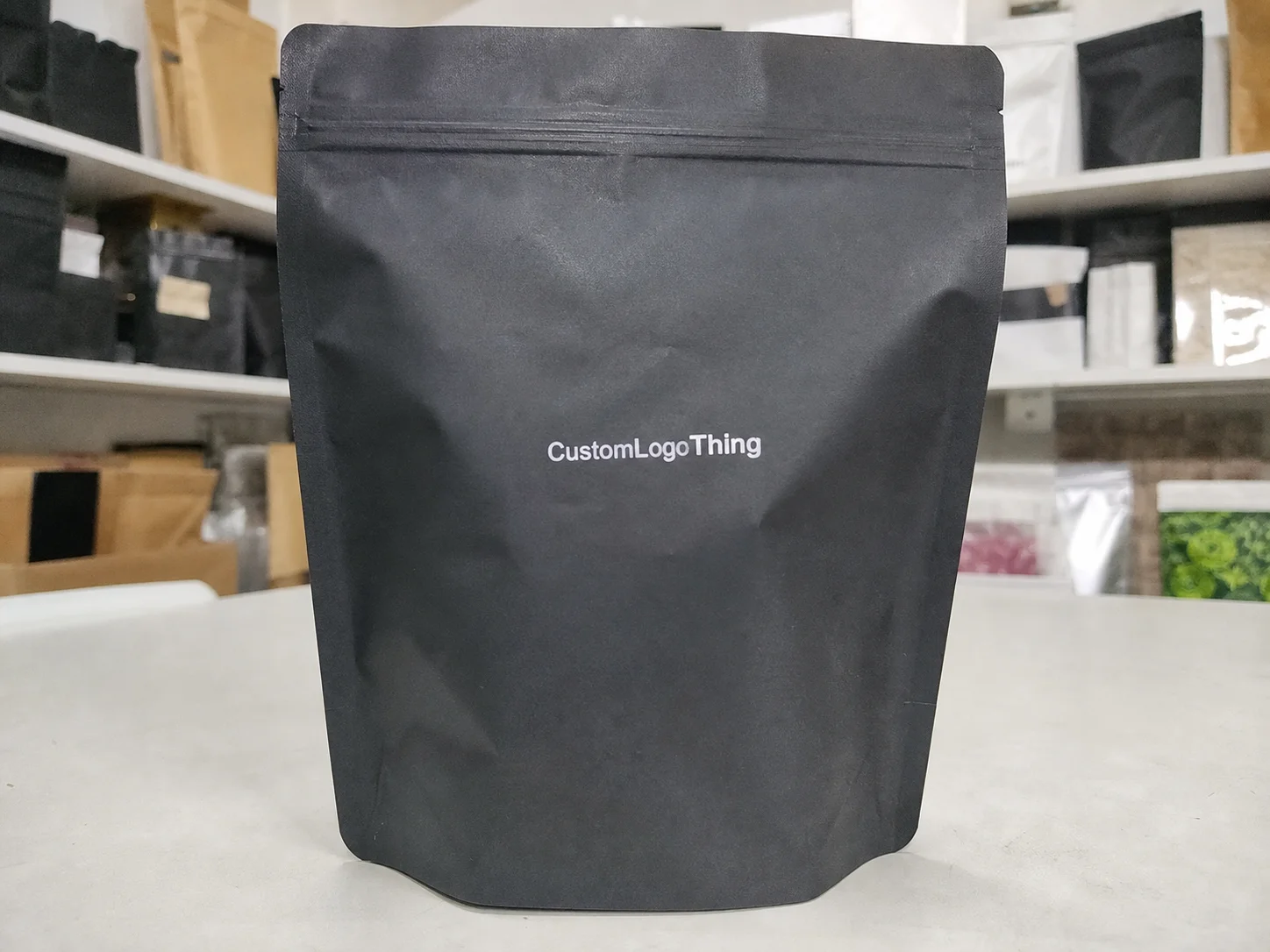
Two Matte Zipper Bags can look nearly identical in a product photo. One may land at $0.18 per usable bag. The other may land closer to $0.42 once freight, duties, setup charges, rejected pieces, and carton handling are included. That spread is not unusual.
Buyers searching for a Get Matte Zipper bags unit landed cost guide answer usually need more than a factory piece price. They need a number they can use before approving artwork, launching a product, or comparing domestic and overseas options. The number has to survive real production details. Annoying, but necessary.
Matte Zipper Bags are popular for dry foods, supplements, cosmetics, pet treats, apparel accessories, sample kits, and subscription box items because they give a soft retail finish without giving up resealability. A well-specified pouch stands cleanly, keeps contents organized after opening, and gives the brand a full front and back print area. Useful packaging. Not magic.
The most common mistake is comparing only the quoted cost per piece. That number is thin unless you also know the material structure, zipper profile, print method, carton pack count, shipping mode, customs duty, inspection plan, and final delivery point. A $0.15 pouch can become more expensive than a $0.20 pouch if it ships inefficiently, needs air freight, fails quality checks, or arrives with too many unusable bags.
Practical rule: do not approve a custom pouch quote until production price, tooling fees, freight assumptions, duty treatment, carton details, and usable delivered quantity appear in the same cost view.
This guide is a working buyer’s outline. Use it to ask sharper quote questions, avoid missing charges, and choose a matte zipper bag specification that matches product weight, barrier needs, filling method, and shelf presentation.
Matte Zipper Bags Unit Landed Cost Basics
A matte zipper bag is usually a laminated flexible pouch with a press-to-close zipper and a heat-sealable inner layer. Common formats include stand-up pouches with a bottom gusset, flat zipper pouches for lighter contents, and three-side-seal zipper bags used for samples, accessories, and some hand-filled products.
To price one properly, separate the pouch into cost layers. The first layer is film: PET, PE, BOPP, nylon, metallized film, foil, or another laminate combination. The second is decoration: digital print, flexographic print, rotogravure print, matte varnish, spot gloss, or soft-touch coating. The third is converting: zipper insertion, tear notch, hang hole, rounded corners, side seals, bottom gusset, and packing.
Landed cost adds the unglamorous part. Cartons. Export packing. Freight. Customs duty. Taxes. Warehouse receiving. Local delivery. Inspection. Retained samples. Any unusable overage.
If 10,000 bags are ordered but 150 are used for samples, destructive testing, retained QC records, or rejected pieces, the honest unit cost should be calculated against the usable delivered bags. Not the invoice quantity. Accounting may prefer the prettier number. Operations will not.
Matte finish choices also change cost and performance. Matte BOPP can be economical for some dry-goods structures. Matte PET is common where stiffness, print clarity, and scuff resistance matter. A soft-touch matte varnish gives a smoother hand feel, but it can show abrasion during parcel handling and may raise the reject risk if expectations are not set early. Spot matte and spot gloss effects can look sharp, but they require tighter print registration and clearer proof approval.
Zippers are not all the same. A light press-to-close zipper may work for 25 g of candy samples. A 500 g pet treat pouch needs stronger closure strength, more headspace planning, and a seal area that keeps crumbs out of the zipper track. Child-resistant zipper styles, where required by product category and regulation, add cost and should be tested with the actual fill weight and opening pattern.
Think in usable units. A 10,000-piece MOQ can look efficient until a tall, low-density pouch ships mostly air inside each carton. Carton dimensions, pieces per carton, and pallet utilization can move the landed number more than buyers expect.
Film, Barrier, and Print Specifications That Drive Price
Film structure drives both performance and price. A basic PET/PE laminate may suit dry accessories, stationery kits, single-use samples, or short-life dry goods. PET/VMPET/PE adds a metallized barrier layer for better light and oxygen protection. Nylon blends can help with puncture resistance where sharper products, frozen handling, or heavier fills are involved. Foil-based structures raise barrier performance further, but they also affect flexibility, recyclability claims, and price.
Matte appearance is only one layer of the specification. Buyers still need to define thickness, sealant layer, oxygen transmission expectations, moisture vapor resistance, puncture resistance, and food-contact suitability. For food and supplement packaging, ask for applicable material compliance documentation and migration suitability for the intended product type. For broader packaging education and industry references, the Packaging Association is a useful authority site.
Before requesting pricing, prepare the basics: pouch width, height, bottom gusset, zipper location, target fill weight, product density, artwork coverage, number of SKUs, storage conditions, and filling method. A 6 x 9 inch stand-up pouch with a 3 inch bottom gusset behaves very differently from a 5 x 8 inch flat zipper pouch, even if both are described as “medium matte bags” in a casual email.
| Specification Choice | Common Use | Cost Impact | Buyer Watchout |
|---|---|---|---|
| PET/PE matte laminate | Dry goods, accessories, samples | Usually lower to mid-range | May not provide enough oxygen or light barrier for sensitive products |
| PET/VMPET/PE matte laminate | Coffee samples, treats, powders, supplements | Mid-range to higher | Metallized layer can limit window options and affect sustainability claims |
| Nylon blend laminate | Heavier fills or puncture-risk products | Higher than basic structures | Overbuilding can raise unit cost without adding value |
| Soft-touch matte varnish | Premium retail cosmetics and boutique goods | Adds finish cost | Scuff testing matters for e-commerce and parcel shipping |
Printing method changes the economics quickly. Digital printing often works well for smaller runs, launch quantities, and multiple artwork versions because setup is lighter and SKU flexibility is better. Flexographic or rotogravure printing can reduce unit cost at higher quantities, but plates, cylinders, color matching, and scheduling add lead time and upfront charges.
Matte bags show color differently than gloss bags. Matte film and matte varnish scatter light, which can soften deep blacks, muted earth tones, and fine gradients. A screen proof is useful for layout. It cannot fully prove film texture, opacity, print density, or scuff behavior.
If brand color is strict, request a physical drawdown, press proof, or production sample where practical. Also confirm how the supplier will judge color: Pantone reference, approved sample, Delta E tolerance, or visual standard under specific lighting. “Make it match the PDF” is not a specification. It is a future argument.
Compliance should be discussed early for food, supplements, cosmetics, cannabis-adjacent products where legal, child-related goods, and pet products. The right package depends on the regulatory and handling environment, not only the look of the pouch.
Pricing, MOQ, and Unit Cost Variables Buyers Should Expect
No honest supplier can give one universal price for matte zipper bags. Final unit cost depends on pouch size, film structure, order quantity, print method, number of artwork versions, finish, zipper type, shipping method, and delivery point. A small digitally printed pouch might quote around $0.25 to $0.55 per piece at lower quantities. A larger barrier stand-up pouch may run higher once freight and duty are included.
Higher-volume plate-based runs can bring the piece price down, but tooling fees and setup charges must be spread across enough units to make sense. A buyer ordering four SKUs at 2,500 pieces each may not get the same economics as one SKU at 10,000 pieces, even if the total order quantity looks identical. Setup time still exists. Plate or cylinder charges still exist. Changeovers still exist. Shocking, I know.
MOQ is usually driven by film roll yield, printing setup, lamination efficiency, and converting machine setup time. It is not just a salesperson being difficult. A supplier may need enough printed web to run lamination and pouch converting without wasting half the roll during setup, especially on custom laminates, wide pouches, or specialty finishes.
The cleanest way to build a usable unit landed cost is to request several quantity tiers. Ask for trial, standard, and growth-volume pricing, such as 2,500, 5,000, 10,000, and 25,000 pieces if those quantities fit your sales plan. The price break may not appear where you expect. Sometimes the jump from 5,000 to 10,000 pieces is meaningful, while 10,000 to 15,000 barely moves because the same setup and freight pattern still applies.
Ask for line items separately. Production unit price, tooling fees, sample charges, carton count, estimated carton dimensions, gross weight, freight estimate, duty assumptions, local delivery, rush charges, and split-shipment fees should not be buried in one vague total. Bulk pricing is useful only if you can see what changes at each tier.
Landed cost math is plain: total paid cost divided by usable delivered bags. If a 10,000-piece order costs $2,900 all-in, but 200 bags are used for samples, retained records, testing, and defects, the usable quantity is 9,800. The working unit landed cost is $2,900 divided by 9,800, or about $0.296 per usable bag.
Some upgrades save money indirectly. A thicker barrier structure may raise the piece price but reduce product damage, flavor loss, returns, or shelf-life risk. A smaller gusset may reduce film use but slow hand filling or cause poor shelf stance. Buyers should avoid chasing the lowest pouch price until product fit, seal performance, and carton efficiency have been tested.
Production Process and Lead Time From Artwork to Delivery
A normal custom matte zipper bag order moves through specification review, dieline confirmation, artwork preflight, proof approval, material sourcing, printing, lamination, curing, pouch converting, quality inspection, carton packing, and freight release. Each step protects the final result. Skip one, and the risk does not disappear. It just moves downstream.
Laminated matte zipper bags need scheduling discipline because ink, adhesive, and laminate layers may need curing time before converting. Heavy ink coverage, metallized barrier films, and multi-layer laminates can require additional handling time before the web is stable enough to slit, fold, insert zippers, and seal into finished pouches.
Proofing has limits, so choose the proof that answers the right question. A digital PDF proof checks layout, dieline placement, barcode position, zipper clearance, and regulatory copy. Color references guide expectation, especially if Pantone targets are used. Pre-production samples confirm size and structure. Physical samples with actual product confirm fill weight, settling, headspace, zipper closure, and shelf fit.
Typical timelines vary. Artwork review and sampling may take several business days to a few weeks, depending on whether the structure already exists. Production can take several weeks after proof approval, especially for plate-based printing, lamination, and curing. Ocean freight can add several more weeks. Air freight can reduce calendar time at a sharply higher landed cost.
Rush orders are possible in some cases, but the tradeoff is real. Expedited freight may rescue a launch date and damage the margin. Skipping proofing may save a week and create a full rejected run. Lock the specification before final approval because small changes to zipper position, gusset depth, hang hole, corner radius, or material structure can require a new dieline, revised setup, or updated pricing.
If you are comparing overseas and domestic options, ask each source to quote the same incoterm and delivery point. A quote to port is not the same as a quote to your warehouse dock. A quote without customs duty is not delivered cost. Sounds basic. Still gets missed constantly.
Quality Checks That Protect Your Landed Cost
Quality control is cost control. Failed seals, weak zippers, pinholes, color shifts, incorrect dimensions, and poor carton counts can turn a low unit price into an expensive production problem. A pouch that looks fine empty can fail after filling, compression, heat exposure, or parcel handling.
Buyers should request or confirm checks for dimension tolerance, zipper function, seal integrity, drop or compression handling, print registration, barcode scanning, and carton count verification. For transport performance, many brands reference ISTA procedures because they give a structured way to think about distribution hazards; the International Safe Transit Association publishes widely used packaging test resources.
Product fit testing prevents waste before production scales. Fill the pouch with the actual product weight, not rice, paper, or a guessed substitute unless density is very close. Check settling behavior, headspace, zipper closure, heat-seal area, and whether the bag stands after filling. Powders, granules, gummies, hardware, and pet treats all load a pouch differently.
Seal testing deserves attention. A good pouch needs consistent side seals, bottom seals, and zipper-adjacent seals. Ask how the supplier checks seal strength and leaks, especially for powders, oily products, or heavier fills. If your product contaminates the seal area during filling, you may need more headspace, a wider seal zone, filling adjustments, or a different pouch size.
Color and finish expectations need manufacturing language. Matte film can make color look softer than the same art on gloss film. Matte varnish may shift the perceived black point. Different substrates reflect light differently than a monitor, and a backlit screen proof can make colors appear cleaner than ink on film.
Carton details also affect landed cost. Pieces per carton, carton strength, gross weight, palletization, container utilization, and parcel-forwarding suitability all matter. A weak carton can crush zipper tracks or crease pouch panels. An oversized carton can reduce warehouse efficiency and raise local delivery charges.
Do not ignore count verification. If a carton is short by 2% and nobody catches it until receiving, the unit landed cost changes. If carton labels are unclear, warehouse teams waste time sorting SKUs. That labor may not show up on the packaging invoice, but it still belongs to the total cost of the packaging decision.
Custom Logo Things can review pouch structure, printable area, finish choice, MOQ fit, carton assumptions, and shipping method before an order is placed. The goal is not to make a quote look prettier. The goal is to reduce surprises before money is committed and artwork is released to production.
How to Request a Usable Matte Zipper Bag Quote
To request pricing that is worth using, send exact pouch size, target fill weight, product type, quantity range, artwork files, finish preference, zipper requirements, delivery address, and any compliance or shelf-life requirements. If you do not know the best film structure yet, say that. A practical supplier can price a recommended structure and explain the tradeoff.
Ask for landed cost at multiple quantities and freight methods. A fast replenishment order by air may protect inventory but raise cost per piece. A planned purchase by ocean freight may reduce the landed number, but it requires better forecasting and more storage space. Neither choice is automatically right.
Include operating details that affect the bag. Hand filling needs enough mouth opening and headspace. Machine filling may require tighter tolerances and rollstock compatibility if the format changes. Freezer storage, high-humidity storage, retail peg display, subscription box packing, and e-commerce parcel shipping all influence the right pouch structure.
- Send dimensions: width, height, bottom gusset, zipper position, hang hole needs, and rounded corner preference.
- Share product details: fill weight, density, shelf-life target, storage temperature, and whether food-contact material is needed.
- Clarify artwork: number of SKUs, print coverage, color expectations, barcode placement, and finish preference.
- Request cost detail: production unit price, setup charges, tooling fees, freight, duties, carton count, and local delivery.
- Compare quantities: trial MOQ, standard order, and growth-volume tiers for better bulk pricing decisions.
Custom Logo Things can help review whether a requested pouch is overbuilt, underbuilt, or right-sized for the product. Sometimes the best savings come from reducing excess headspace, consolidating SKUs, or changing print method rather than stripping out useful barrier or zipper quality.
A usable quote should answer a simple question: what will each acceptable bag cost after it reaches the place where you can actually use it? If the quote only answers what the factory charges before freight, duty, inspection, and receiving, it is not a landed cost. It is a starting point.
Gather the exact specs, request a quote that separates production and logistics assumptions, then compare each option against usable delivered quantity. That gives purchasing a working number instead of a tempting price that falls apart later.
Frequently Asked Questions
How do I get a matte zipper bags unit landed cost estimate?
Provide pouch dimensions, material preference, order quantity, number of artwork versions, delivery location, and shipping preference. Ask for production cost, setup charges, carton details, freight, duties, and local delivery to be shown separately. Then divide the total delivered cost by usable bags, not only the factory piece price.
What affects matte zipper bag pricing the most?
The largest drivers are bag size, film structure, thickness, barrier layer, zipper type, print method, quantity, and freight method. Heavy ink coverage, soft-touch finishes, multiple SKUs, and specialty zippers can raise cost. Oversized bags can also increase landed cost because they reduce carton and container efficiency.
What MOQ should I expect for custom matte zipper bags?
MOQ depends on print method, material roll yield, pouch size, and the number of designs in the order. Digital printing may support lower trial quantities, while plate-based printing is usually more efficient at higher volumes. Request pricing at several quantity breaks to see where the unit cost begins to improve.
How long does the matte zipper bag production process take?
Timeline depends on artwork readiness, proof approval, material availability, print method, lamination curing, converting, inspection, and shipping mode. Simple repeat orders are usually faster than first-time custom structures. Ocean freight can reduce cost but adds transit time, while air freight is faster and usually much more expensive.
Can I lower unit landed cost without making the bag feel cheap?
Yes. Start by right-sizing the pouch, matching barrier level to the product, and consolidating SKUs where practical. Keep the matte finish, but review film thickness, gusset depth, carton pack count, and print method for efficiency. Avoid removing functional needs like seal strength or zipper quality, because failures often cost more than the savings.


