OEM Cuffed Beanies Wholesale Pricing for Retail Merch Brands
Beanies are simple to sell and easy to misquote. The finished look hides the real cost drivers: knit density, yarn content, cuff depth, decoration method, finishing, and packing. That is why OEM Cuffed Beanies Wholesale Pricing for retail merch brands should be based on a locked spec sheet, not a rough concept.
Cuffed beanies work well for retail because the cuff creates a stable branding zone and the shape is familiar across winter assortments, campus shops, brewery merch, and short-run capsules. Buyers usually want one style that can hold a logo clearly, repeat across colors, and stay consistent on reorder.
The strongest programs are the least complicated: a yarn choice that matches the price point, a fit that keeps its shape, and decoration that reads cleanly on shelf. Once those pieces are fixed, the rest of the quote becomes much easier to judge. For 2026, oem cuffed beanies wholesale pricing for retail merch brands is also being shaped by recycled yarn demand, tighter retail margins, smaller test buys, and more detailed packaging requirements from distributors.
OEM Cuffed Beanies Wholesale Pricing for Retail Merch Brands
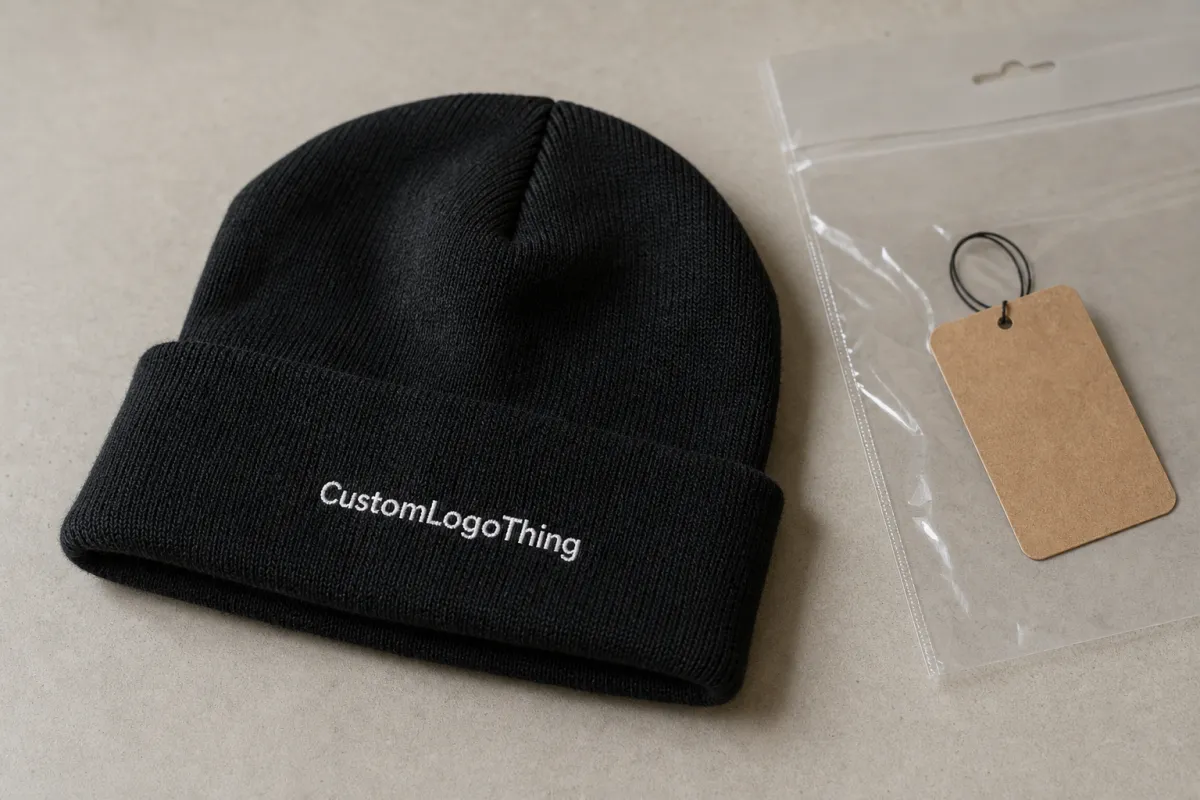
The main cost drivers are construction and finishing. Tighter knits, double-layer builds, wool content, and custom dyeing all raise the price. Standard acrylic is usually the baseline because it is predictable and cost-controlled. Recycled acrylic blends typically cost more, and wool blends move the product into a higher perceived-value band.
Decoration also affects cost, but the body of the hat usually sets the starting point. Two beanies can look almost the same in a sample photo and still price differently once stitch density, yarn source, cuff height, and logo method are written into the spec. Small changes add up quickly.
The cuff is important because it holds the logo in place and keeps the product readable from a distance. A front mark on the cuff is easier to keep consistent than a mark stretched across the crown, and it gives brands room to use the same silhouette across multiple colors or seasons.
In recent merch programs we have reviewed, the best-performing beanies were not the most complex. They had a medium-weight knit, a consistent cuff height, one clear logo treatment, and retail-ready tags that did not slow packing. The weaker programs usually had too many colorways, artwork that was too detailed for the decoration method, or packaging decisions made after sampling.
For merchandising teams, cuffed beanies usually fit these use cases:
- Winter retail drops that need a familiar cold-weather accessory.
- Campus and team programs that depend on repeatable reorders and stable placement.
- Brewery, venue, and lifestyle merch where the beanie should feel branded, not promotional.
- Test assortments used to validate color, fit, and sell-through before scaling.
This style works because it is dependable. If the knit holds shape and the decoration stays clean, the same shape can support multiple seasons without looking dated. That predictability is valuable when the buyer cares about margin as much as appearance.
Fabric, Fit, and Decoration Specs That Affect Sell-Through
Material choice affects both price and shelf appeal. Acrylic is the standard option for many retail programs because it takes color well and holds shape reliably. Recycled acrylic blends usually cost a bit more but help with lower-impact positioning. Wool blends feel warmer and more premium, though they raise expectations for softness and shrink control. Double-layer knits create a fuller hand and a heavier retail feel.
For 2026 buys, more brands are asking for recycled-content yarn, tonal embroidery, heathered neutrals, and earthier seasonal colors instead of only black, navy, and charcoal. Those choices can improve perceived value, but they need practical guardrails. Custom-dyed yarn may require higher minimums, recycled blends can have longer lead times, and heather effects should be approved from a physical sample rather than a screen image.
Fit matters as much as fiber. Cuff depth changes how the logo reads. Too shallow and the branding looks cramped; too deep and the beanie can look bulky. Crown height also changes the silhouette, with taller crowns reading more streetwear and shorter crowns looking more retail-neutral. Stretch recovery is important because a one-size beanie only works if it bounces back after handling.
Before comparing quotes, lock these details:
- Fabric content and whether the build is acrylic, recycled blend, wool blend, or mixed fiber.
- Color count and whether yarn is stock or custom-dyed.
- Decoration area on the cuff, including width, height, and placement limits.
- Construction type such as single-layer, double-layer, or fold-over cuff height.
- Label plan for woven labels, care labels, or side seam branding.
Tighter knits usually look more premium in photos and on shelf, while softer knits need stronger QC because shape drift shows up fast. If the beanie loses structure, the retail effect goes with it.
If you want a reference for how buyers balance cost, texture, and consistency across repeat orders, our Case Studies page shows common tradeoffs. For broader headwear planning, the custom winter hats wholesale guide can help compare cuffed beanies with pom beanies, knit caps, and other cold-weather merch.
OEM Cuffed Beanies Wholesale Pricing, MOQ, and Quote Basics
Wholesale pricing usually improves as quantity rises because setup costs spread out. Many suppliers start around 100 to 300 pieces, with better unit pricing often appearing at 500 pieces and above. For retail merch brands, that is often the difference between a test run and a scalable program.
For 2026, oem cuffed beanies wholesale pricing for retail merch brands is generally higher than bare promotional beanie pricing because retail orders often require tighter measurement control, better decoration alignment, hang tags, barcodes, and carton labeling. The ranges below are directional because yarn content, decoration, packaging, and freight can move the number quickly.
| Quantity | Typical 2026 Unit Price | What Usually Changes |
|---|---|---|
| 100-299 pcs | $5.10-$8.20 | Higher setup share, less efficient yarn use, limited packaging choices |
| 300-499 pcs | $4.40-$6.95 | Better labor spread, more room for label and tag options |
| 500-999 pcs | $3.70-$6.20 | Improved efficiency, better price breaks on decoration and packing |
| 1,000+ pcs | $3.15-$5.40 | Best chance for lower unit cost if the spec stays simple |
A useful quote should show unit price by quantity tier, sample cost, setup fees, packaging charges, freight assumptions, and any extra cost for labels or special packing. If those items are missing, the quote is incomplete.
Branding method matters too. Embroidery usually has the lowest add-on cost because the process is standard and the finish is durable. Woven patches, faux leather patches, silicone patches, and knit-in graphics can look more premium, but they add steps and often need more approvals.
Retail buyers sometimes overdesign small products because they seem easy to customize. For beanies, the cleanest version is often the best version: one strong logo, a stable cuff, and a packaging format that does not add avoidable cost.
Process, Timeline, and Production Steps From Brief to Delivery
The production path should stay simple: send specs and artwork, confirm the quote, review a sample, approve pre-production details, run bulk production, then ship and receive. Problems usually start when buyers skip steps and expect the supplier to infer the rest from a mood board.
Typical timing for 2026 retail programs is straightforward:
- Sampling: usually 5 to 12 days, depending on yarn availability and decoration complexity.
- Bulk production: often 18 to 35 days after approval for standard decorated beanies.
- Freight: add several days more depending on shipping method, lane, and season.
Delays usually come from artwork changes, yarn shortages, slow label approvals, and seasonal congestion. If a launch date is fixed, a realistic production window matters more than the lowest number on paper. Late inventory does not protect margin.
This timing matters most for repeat programs. The first run should be treated as a controlled test. If the fit, color, and decoration work, the reorder should be easy to repeat. If they do not, the issue should be caught before the warehouse is full.
Decoration Options That Hold Up on Retail Shelves
Decoration is what makes a beanie look retail-ready instead of generic. Embroidery is the most common cuff decoration because it is durable, legible, and easy to approve. Woven labels work well for lower-profile branding. Faux leather patches and silicone patches create a more lifestyle look, while knit-in logos work best when the artwork is simple and the planning is tight.
Cuff placement usually gives the best result because it keeps the logo visible without distorting it. A small crown logo can disappear when the knit stretches, but a cuff logo keeps its proportions. The wrong decoration method can make a good beanie look cheap, even if the yarn quality is strong.
Quick comparison:
| Method | Typical 2026 Add-On Cost | Durability | Best Use |
|---|---|---|---|
| Embroidery | $0.45-$1.35 | High | Simple logos, repeat retail programs |
| Woven label | $0.30-$0.90 | High | Clean branding, lower-profile look |
| Faux leather patch | $0.70-$1.65 | Medium to high | Premium lifestyle positioning |
| Silicone patch | $0.80-$1.85 | High | Outdoor, sporty, or modern retail lines |
| Knit-in logo | Varies by spec | High | Bold graphics and structured brand marks |
Ask for wash-test evidence, stitch coverage photos, and edge-finish photos before bulk approval. If the product will move through cartons, warehouse handling, or distribution, packaging should also hold up to real transit stress. Standards from ISTA are useful when you want packaging that survives handling instead of just looking good in a short photo review.
Packaging, Labels, and Barcodes for Store-Ready Delivery
Packaging becomes a cost item quickly. Store-ready beanies often need hang tags, UPC or EAN barcodes, fiber content, country of origin, carton markings, and clear case-packing instructions. If the order is going to a distributor or chain account, those details should be settled before production begins.
Packaging should match the channel. Polybags are the lowest-cost option and usually work for bulk shipping. Branded insert cards and hang tags improve shelf presentation and give more space for product details. If the brand wants a lower-impact paper option, FSC-certified stock can support that claim. For sourcing and chain-of-custody references, FSC is the clearest authority.
A newer option for 2026 assortments is a QR-enabled hang tag that links to care instructions, brand story content, or reorder pages. This can reduce printed copy on the tag while still giving retail customers more context. Keep the QR code secondary, though. The beanie still needs required fiber, origin, and barcode details in a format that works at receiving and checkout.
Case packing matters because receiving time affects the buyer's labor cost. Unit count per carton, master bagging, barcode placement, and carton labeling all influence how quickly the shipment moves through the system. When cartons arrive in the format the retailer expects, the program feels controlled instead of messy.
For brands planning packaging and export-ready specs together, our Wholesale Programs page gives a useful reference point for how those pieces are usually organized.
How to Compare Suppliers Without Paying for Guesswork
The fastest way to compare suppliers is to keep the spec identical: same fiber content, same decoration method, same packaging, same freight assumption, and same payment terms. If those inputs differ, the quotes are not really competing.
The most common trap is the low quote that leaves out setup charges, sample fees, labels, or post-approval changes and adds them later. That is not a saving. It is a delay with a better presentation.
A supplier worth using should be able to show proof points without hesitation:
- Sample photos from the same or a very similar build.
- QC checks for measurements, stitching, placement accuracy, and color consistency.
- Response time on spec questions and artwork revisions.
- Reorder consistency if the style needs to be repeated.
- Retail packing experience with barcodes, carton marks, and mixed-color case packs.
Speed usually follows the brief. The better the specification, the less room there is for assumption, and the fewer surprises show up later in the order. Clear supplier comparisons are especially useful for oem cuffed beanies wholesale pricing for retail merch brands because small spec differences can change both landed cost and shelf presentation.
Next Steps to Sample, Approve, and Place the Order
Before sending a request, gather the logo file, target quantity, preferred decoration, color range, packaging needs, delivery date, and retail channel requirements. That keeps the quote honest by removing the hidden variables that usually get added later.
The order sequence should stay simple: request the quote, approve the sample, confirm the purchase order, and move into bulk production before the season window closes. For retail merch brands, timing matters as much as price. Beanies sell best when weather, calendar, and inventory line up.
A sensible reorder plan starts with a test run. Track sell-through by color, logo placement, packaging format, and size of the initial display. If one version performs better, repeat it and keep a backup colorway ready. That is how a beanie program becomes repeatable instead of speculative.
The real decision is not just the headline number. It is the balance between construction, decoration, packaging, inspection, and timing. Get those pieces aligned, and the quote starts making sense.
What is the usual MOQ for OEM cuffed beanies wholesale orders?
Many suppliers start around 100 to 300 pieces, but pricing usually becomes more efficient at 500 pieces and above. The MOQ can rise if the order uses custom-dyed yarn, multiple colorways, recycled-content yarn, or special packaging.
How does embroidery affect cuffed beanie pricing?
Simple one-location embroidery is usually one of the most cost-effective branding methods. The price climbs when stitch count increases, when the design uses several colors, or when the logo needs multiple placements.
Can cuffed beanies be private labeled for retail merch brands?
Yes. Common private label details include woven labels, printed care labels, hang tags, barcodes, and branded packaging. Those elements should be approved before bulk production so the quote stays accurate.
What turnaround should I expect for wholesale cuffed beanie production in 2026?
Sampling often takes 5 to 12 days, while bulk production usually runs 18 to 35 days after approval. Freight time comes on top of that and can shift based on the shipping lane, customs process, and season.
How do I compare quotes without missing hidden costs?
Ask for unit price by quantity tier, sample cost, setup fees, packaging charges, freight assumptions, label costs, and any inspection fees. If the specs do not match, the quotes are not truly comparable.


