Custom Cuffed Beanies Wholesale Pricing for Buyers
Custom Cuffed Beanies Wholesale Pricing for corporate gift buyers comes down to a few controllable inputs: decoration method, yarn choice, cuff size, packaging, and freight. Compared with many apparel gifts, beanies are easier to quote because they avoid size runs and most exchange problems. Still, the price only stays predictable when the quote separates product cost from setup, samples, and shipping.
Saving a dollar on the unit price means little if the order later picks up hidden setup, freight, or packaging charges.
Why cuffed beanies outperform the usual corporate gift mix
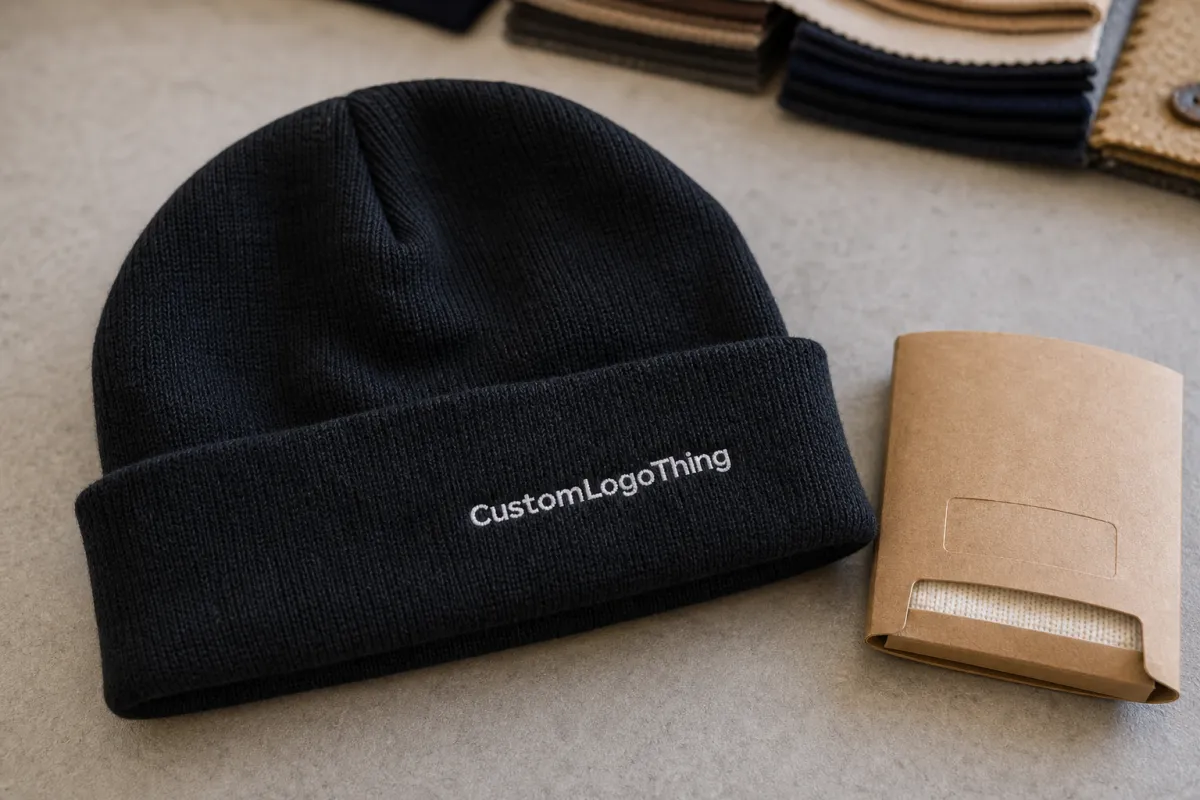
Cuffed beanies work well for corporate gifting because they are useful, compact, and easy to brand. They pack small, fit a broad audience, and give you a visible logo area without turning the whole item into an ad. Unlike many gifts that look good in a deck and then sit unused, a winter beanie tends to get worn.
The cuff matters because it gives the logo a flat, readable surface. That makes embroidery or a patch look cleaner than placing a mark on a slouchy crown. It also helps the item look more intentional in person and on camera, which matters for executive gifts, trade shows, and team kits.
- Employee gifts: one size reduces the return-and-exchange problem.
- Client kits: the item feels useful instead of decorative.
- Event giveaways: compact cartons make bulk distribution easier.
For corporate buyers, the first question should be use case, not decoration style. A field team needs warmth and durability. A client gift needs a cleaner finish. A conference giveaway needs a price point that works at volume. The best spec follows the job.
Logo placement, cuff length, and fit choices
Logo placement affects both appearance and cost. Front cuff embroidery is the simplest and most common option because it is easy to read and usually fast to produce. Woven patches sharpen small details. Leather or faux-leather patches feel more premium. Side labels keep branding subtle. Each option has a different setup path, so the choice should match the timeline and the audience.
Cuff length also changes the result. A taller cuff gives more room for decoration and makes the logo feel anchored. A shorter cuff looks lighter, but it leaves less space for small text or thin outlines. If the artwork is detailed, a narrow cuff can become a design constraint.
Fit should be checked on a real sample, not just a mockup. Most cuffed beanies stretch enough for general corporate use, but the feel varies. Some are snug and close to the head; others have more depth and work better over headphones or under a hood. For client gifts, a cleaner silhouette may look better in hand. For crews and outdoor teams, comfort and coverage matter more than presentation.
Buyers should inspect the full object: rib tension, cuff depth, logo scale, thread finish, and how the hat sits once folded. A mockup can hide weak stitch balance; the sample will not.
Custom cuffed beanies wholesale pricing, MOQ, and quote tiers
Custom Cuffed Beanies Wholesale Pricing for corporate gift buyers is shaped by five factors: construction, yarn, logo method, packaging, and quantity. The cleanest quote separates those items instead of burying them in one number. If setup, samples, and freight are hidden, the order will look cheaper than it is.
Tiered pricing is the fastest way to see whether the quantity break is real. Ask for pricing at 50, 100, 250, and 500 units. That shows whether unit cost drops meaningfully at scale or levels out quickly. On some orders, moving up a tier lowers cost more than simplifying decoration; on others, it does not.
| Decoration method | Typical MOQ | Usual unit price range | Best fit |
|---|---|---|---|
| Embroidery on cuff | 50-100 pcs | $5.25-$9.50 | Simple logos, quick approvals, budget-focused gifting |
| Woven or leather patch | 100-250 pcs | $6.50-$11.25 | Sharper presentation, cleaner detail, premium feel |
| Fully custom knit | 100-300 pcs | $8.50-$15.00 | Color-heavy designs, patterned branding, larger events |
These ranges move with yarn quality and finishing. Basic acrylic with one-color embroidery usually lands lower. Wool blends, specialty yarns, and gift-ready packaging raise the number. Setup fees often run $35-$120. Samples may cost $20-$60. Simple polybags can add only a small amount per unit, while custom boxes or sleeves add more.
Freight is where first-time buyers get surprised. A low unit price can disappear once shipping is added, especially on a tight deadline. Ask for shipping method, carton count, carton dimensions, and whether the quote assumes one delivery or several. If those costs are combined, the quote is not yet useful.
If the beanies will arrive in boxes or sleeves, pair the order with the right Custom Packaging Products so the presentation stays coordinated. For recurring volume programs, the Wholesale Programs page is the best place to compare buying structures and minimums.
Materials, construction, and packaging specs that matter
Acrylic is the budget workhorse because it is consistent, easy to source, and warm enough for most gifting. It also holds color well, which matters when brand standards are strict. Wool blends feel richer and drape better, but they cost more. Recycled yarn can support sustainability goals, though the final finish still depends on the knit quality.
Construction affects both look and durability. Tighter stitch density helps embroidery sit cleanly on the cuff, while loose knits can let thread sink or distort. A firmer rib structure usually holds shape better after wear and packing. The cuff should be wide enough to anchor the logo without making the hat feel bulky.
A practical spec review should cover yarn weight, stretch recovery, seam finish, thread color, label placement, and how the hat rebounds after folding. That is more useful than a polished rendering, which cannot show whether the cuff twists or the patch sits flat.
Packaging should be chosen the same way. Individual polybags are the lowest-cost option and usually fine for internal distribution. Belly bands add structure without much expense. Insert cards help when the order needs a message or care note. Custom boxes make sense for premium gifting, but the size must be correct; oversized boxes look loose, and undersized ones crush the knit.
For recycled paper sleeves or inserts, look for FSC-certified paper sourcing standards. If the order is shipping in cartons or direct-to-recipient kits, ask whether the packed shipment has been built to ISTA transit test methods.
- QC check: confirm logo placement on the cuff before bulk runs start.
- QC check: inspect thread tension on the first production sample, not only the mockup.
- QC check: verify carton counts and label accuracy before shipment.
- QC check: test how the fold holds after handling and packing.
Production steps, proofing, and turnaround
The production flow is usually artwork review, digital proof, sample approval, bulk production, quality control, and shipping. Problems show up when one of those steps is rushed or skipped. A straightforward order with stock yarn and simple embroidery can move in about 10-15 business days after proof approval. More complex projects, including fully custom knits or heavier packaging, often need 3-5 weeks.
Rush work is possible, but only when the spec is simple. One- or two-color embroidery can sometimes be expedited. Add custom labels, specialty packaging, or a multicolor knit pattern, and the timeline becomes fragile. The supplier can move quickly, but the product still has to be knitted, finished, inspected, and packed.
Approval timing is often the hidden delay. Internal teams may take longer to settle the cuff color than the factory needs to produce the sample. The earlier marketing, procurement, and the event lead agree on the spec, the easier the order becomes.
Vector artwork is the best starting point. Clean files speed up proofing and reduce sample errors. Pantone references help, though knitted goods still have practical limits. Yarn color can be close, not exact. That is normal, not a defect.
How to choose the lowest-risk order mix for teams and events
The lowest-risk order is usually the one with the fewest variables. For executives or clients, keep the decoration clean, the palette tight, and the packaging restrained. For work crews, prioritize warmth, durability, and a fit that works over a hood or under headphones. The best spec depends on who will wear it.
Color count is one of the simplest cost controls. One or two brand colors are easier to knit, easier to embroider, and easier to approve. A six-color pattern may look attractive in a rendering, but it often adds complexity without improving usability. The same is true of patch styles: if the logo is small and the timeline is short, simpler usually wins.
For conference mailers or holiday kits, build in a small overage. A buffer of 3% to 7% usually covers last-minute headcount changes or replacements. If the order must split across multiple delivery points, confirm that before approval, not after cartons are closed.
Presentation should support the beanie, not compete with it. A minimal sleeve or box can raise perceived value without turning the order into a packaging exercise. If the beanie is the hero item, keep the packaging quiet enough that the product still feels like the main event.
Common mistakes that inflate unit cost or delay delivery
The fastest way to distort pricing is to keep changing the artwork after proof approval. A moved logo, a new cuff position, or a changed thread color can trigger fresh setup work and push the schedule back.
Too many colors are the next common mistake. More knit colors usually raise complexity. More logo colors can force a different decoration method or increase decoration cost. Buyers sometimes ask for premium specs and a rush timeline at the same time, then wonder why the quote rises. Something has to give.
Packaging is often left until the end. Then the team discovers that gift-ready boxes, branded sleeves, and insert cards all take time and money. If the beanies need to arrive ready for a handoff, say that during quoting. Last-minute packaging changes are usually the most expensive kind because the product, carton count, and schedule are already locked.
Weak internal sign-off is another quiet budget killer. If several people need to approve the cuff color or logo placement, assign one decision-maker to collect feedback and finalize the order. That keeps the calendar from slipping while everyone reviews the same file twice.
Next steps: send logo files, headcount, and ship date
If you need a useful quote, send the practical details first: vector artwork, target quantity, preferred colors, packaging requirements, and the latest acceptable delivery date. Those five items do more for pricing accuracy than a long brand paragraph.
- Quantity tiers: ask for pricing at 50, 100, 250, and 500 units.
- Artwork: send vector files and note whether the logo belongs on the cuff, patch, or side label.
- Brand colors: include Pantone references, but expect knitted color matching to be close rather than exact.
- Packaging: specify polybags, belly bands, insert cards, or custom printed boxes up front.
- Timing: give the latest ship date, not only the date you hope the order arrives.
For executive gifts or high-visibility events, request a sample or pre-production mockup before final approval. A short review now is much cheaper than finding a crooked logo after cartons are already in transit. The most efficient orders are the ones that are fully decided before the factory starts knitting.
Once the order is locked, the pricing becomes more predictable and the risk drops. That is the real value in custom Cuffed Beanies Wholesale Pricing for corporate gift buyers: a product that stays within budget, arrives on time, and looks like the brand intended.
What drives custom cuffed beanies wholesale pricing the most?
Decoration method, yarn type, quantity, and packaging are the main drivers. More knit colors, more logo colors, and premium presentation add cost because they create extra setup or handling.
What MOQ should corporate gift buyers expect for cuffed beanies?
Simple embroidered orders usually start lower than fully custom knit styles. MOQ rises when the order uses specialty yarns, custom color work, or more elaborate packaging.
How long does a custom cuffed beanies order usually take?
Simple stock-based orders can move in roughly 10-15 business days after approval. Custom-knit or heavily packaged orders often need 3-5 weeks, and rush timelines become harder as complexity increases.
Can you match corporate brand colors on cuffed beanies?
Yes, within practical limits. Pantone references help guide the match, but knitted goods rely on yarn availability and dye behavior, so the result is usually close rather than exact.
What artwork do you need before quoting custom cuffed beanies wholesale pricing?
Send vector files when possible, plus logo placement notes, quantity, target delivery date, and packaging requirements. That gives the supplier enough detail to quote accurately instead of filling in the blanks.
For corporate buyers, the cleanest order is usually the simplest one: clear artwork, a realistic timeline, restrained decoration, and packaging decided early. That keeps the budget honest and makes the finished beanies easier to use, easier to approve, and easier to distribute.

