Buyer Fit Snapshot
| Best fit | Offset Printed Cartons Manufacturer projects where brand print, material claims, artwork control, MOQ, and repeat-order consistency need to be specified before quoting. |
|---|---|
| Quote inputs | Share finished size, material target, print colors, finish, packing count, annual reorder estimate, ship-to region, and any compliance wording. |
| Proofing check | Approve dieline scale, logo placement, barcode or warning zones, color tolerance, closure strength, and carton packing before bulk production. |
| Main risk | Vague material claims, crowded artwork, missing packing details, or unclear freight terms can make a low unit price expensive after revisions. |
Fast answer: Offset Printed Cartons Manufacturer: Board, Finish, Dieline, and Unit Cost should be specified like a repeatable production item. The safest quote records material, print method, finish, artwork proof, packing count, and reorder notes in one written spec.
Production checks before approval
Compare the actual filled-product size with the drawing, then confirm tolerance on folds, seals, hang holes, label areas, and retail display edges. Reserve space for logos, QR codes, warning copy, and material claims before decorative graphics fill the panel.
Quote comparison points
Review material grade, print process, finish, sampling route, tooling charges, carton quantity, and freight assumptions side by side. A quote is only useful when the supplier can repeat the same color, closure quality, and packing count on the next order.
Offset Printed Cartons Manufacturer: Branding Guide
An Offset Printed Cartons manufacturer can make a package look expensive before anyone touches the product. That is the job. A carton can look polished on a screen and still fall flat in real life because the color shifts under store lighting, the board feels thin, or the finish dulls the brand story. For brands buying Custom Logo Packaging, the real question is not who can print a box. It is which offset printed cartons manufacturer can turn artwork, structure, and finish into a carton that still looks disciplined after die-cutting, folding, shipping, and handling.
That matters more than most buyers admit. Small misses pile up fast in packaging: a 1 mm registration drift on a tight logo, a dull varnish on a cosmetic carton, or the wrong board for an electronics box can change how the product reads on shelf. I have seen a great design lose half its impact because the substrate and finish were chosen as an afterthought. A strong offset printed cartons manufacturer handles those details before they turn into expensive surprises. If you want more context on how our team thinks about packaging programs, you can review the Manufacturing Capabilities page or read more about About Custom Logo Things.
Offset Printed Cartons Manufacturer: Why Quality Shows Up First
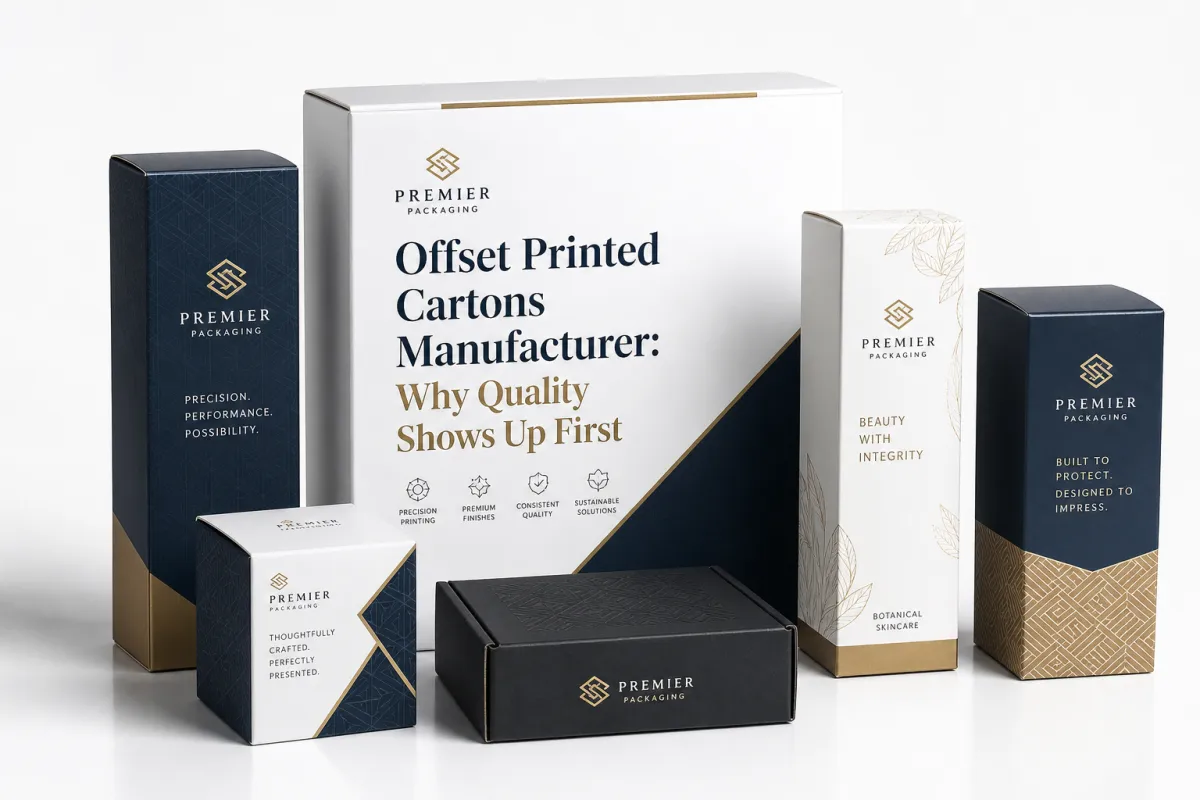
Offset printing is a plate-based process, which sounds technical until you strip it down to the useful part: it transfers ink with very fine control, so type, logos, and line art hold their edges better than they often do in other print methods. That is why an offset printed cartons manufacturer is a common choice for premium retail, beauty, food, electronics, and subscription packaging. If a brand depends on perception, detail stops being decoration and starts being part of the product.
Reality check. A carton may look flawless in a PDF, but if the print density is uneven or the board absorbs ink too quickly, the final result can feel less premium than expected. The difference shows up on shelf. Offset stays popular because it delivers strong carton-to-carton consistency, especially on repeat runs where color drift gets expensive. A good offset printed cartons manufacturer will explain why that consistency matters more than a low quote that only looks attractive on paper.
Offset also gives brands room to use fine typography, controlled gradients, and precise brand colors without the graininess that can show up in other processes. That does not make it the right answer for every order. Digital printing can make sense for short runs, and flexo can be efficient for certain corrugated applications. Once brand detail, color control, and premium shelf presence are part of the brief, an offset printed cartons manufacturer usually has the edge.
A carton does not get judged in a vacuum. It gets judged next to competitors, under bad store lighting, and in a customer's hands. That is where a disciplined offset printed cartons manufacturer earns its keep.
Most buyers underestimate the tradeoff. Offset usually carries more setup work because plates, proofs, and press setup are part of the process. That sounds like a drawback until you look at unit economics on larger runs. Spread those fixed steps across 5,000, 10,000, or 25,000 cartons, and the per-unit cost becomes easier to justify. For repeat packaging programs, that is often the better deal. The smartest offset printed cartons manufacturer will not oversell the process; it will tell you where offset is worth the setup and where it is not.
The rest of the job is about fit. If the board is too light, the carton feels fragile. If the finish is too glossy, the brand can look cheap instead of polished. If the artwork is too dense, some inks can print heavier than intended. These are not cosmetic concerns. They affect how the package performs as a sales tool. Buyers who work regularly with an offset printed cartons manufacturer tend to care about proofing, substrate choice, and finishing details as much as the final artwork itself.
How an Offset Printed Cartons Manufacturer Turns Artwork Into Cartons
The production path is more methodical than many first-time buyers expect. A capable offset printed cartons manufacturer starts with file intake and prepress review, then checks the artwork against the dieline, bleed, safe area, barcode placement, panel sequence, and fold behavior. If the files are weak here, the rest of the job becomes harder. Good manufacturing is often invisible because the problems were removed before the press ever started.
Color separation comes next. Offset generally uses CMYK plus any spot colors that need tighter brand matching. If a logo depends on a specific Pantone value, that should be planned before plates are made, not negotiated after the proof arrives. Varnish, foil, and other finish choices also need early decisions. A thoughtful offset printed cartons manufacturer will push for those details up front because late changes can force new plates, add cost, or move the schedule.
The substrate matters just as much as the ink. SBS board, C1S artboard, kraft, corrugated, and specialty paperboards all read differently once printed. A bright white coated stock usually gives sharper color and cleaner contrast than a natural kraft board, but kraft may be the better brand fit for certain sustainable or rustic products. In other words, the board is not just structure. It changes the visual result. A careful offset printed cartons manufacturer will recommend the stock based on the artwork, the product, and the shelf environment.
Most quality issues start before production, not during it. Tiny fonts can fill in. Gradients can band. Dark solids can show scuffing more easily. Artwork built without the correct dieline can misalign on fold panels or place critical copy too close to the score lines. These are preventable problems. The best offset printed cartons manufacturer asks uncomfortable questions early because those questions save time later.
Finishing choices can change how people read the brand in seconds. Matte coating suggests restraint and control. Gloss coating gives more pop but can also reflect harsh light. Soft-touch lamination feels more tactile and often reads as premium, though it can raise costs. Foil stamping, embossing, and spot UV each add a different visual signal. Used well, they sharpen hierarchy. Used carelessly, they can look busy. A seasoned offset printed cartons manufacturer knows the difference between premium and overworked.
For buyers who want a more complete picture of production capabilities, it helps to compare carton printing with the broader packaging stack. The details in the structure, graphics, and finishing steps all have to work together, which is why our Manufacturing Capabilities overview can be useful during planning. A reliable offset printed cartons manufacturer is rarely just a printer; it is also a production coordinator, a materials advisor, and a quality gatekeeper.
One more thing: if a supplier glosses over prepress checks, that is a warning sign. Real production does not forgive sloppy files. The job might still run, but the fix usually happens in the pressroom, and that is a terrible place to be improvising. A serious offset printed cartons manufacturer will slow the project down just enough to save it later.
What Matters Most When Choosing an Offset Printed Cartons Manufacturer
People often compare vendors by price first, then try to reverse-engineer quality from the quote. That is backwards. A better approach is to evaluate the offset printed cartons manufacturer on the things that actually control the result: print consistency, proofing discipline, structural engineering, finishing options, and quality control. If a supplier cannot explain how it checks those items, the low number is probably hiding a compromise.
Tolerances matter more than buyers think. A tight-register design with a window cutout needs a manufacturer that can hold alignment cleanly. The same is true for cartons that must fit an insert, bottle, device, or retail tray. One millimeter can be the difference between a smooth assembly and a carton that fights the product. A detail-oriented offset printed cartons manufacturer will talk about tolerances before production, not after the problem shows up on the line.
Capabilities should match the product
Not every offset printed cartons manufacturer is built for the same kind of work. Some are stronger on luxury presentation boxes, where coating, foils, and heavy design control matter most. Others are better at food packaging, where material compatibility, regulatory caution, and practical handling take priority. A third group focuses on higher-volume repeat runs with repeatable print conditions. The smartest buyer matches the supplier to the product, not the other way around.
Sustainability also deserves a real look. Recyclable board choices, FSC-certified paper options, low-VOC coatings, and inks that support environmental claims all matter if the brand is making a public statement. Do not assume every carton is automatically recyclable just because it is paper-based. Coatings, laminations, windows, adhesives, and mixed materials can change the end-of-life story. If sustainability is part of the brief, a good offset printed cartons manufacturer should be able to discuss those tradeoffs clearly. Resources such as FSC help buyers understand certification language and what it does, and does not, cover.
Communication quality is a surprisingly reliable indicator of manufacturing quality. A good supplier asks for dielines, barcode specs, target dimensions, finish goals, and shipment assumptions early. It flags risk instead of hiding behind jargon. It gives practical alternatives, not just a price. That is a sign you are dealing with an offset printed cartons manufacturer that understands how packaging behaves in production, in freight, and on shelf.
There is also the question of testing. For shipping and distribution, some cartons need transit validation, especially if the package will move through a long supply chain or contain fragile goods. Industry groups such as ISTA provide testing frameworks that many packaging teams use as a reference point. A thoughtful offset printed cartons manufacturer may not perform every test in-house, but it should know how the carton needs to behave once it leaves the press.
From a packaging buyer's point of view, the best vendor is not always the one with the most options. It is the one that can explain why one board, one coating, and one print process are better for your specific carton. That level of clarity is often the difference between a pretty sample and a reliable program. The right offset printed cartons manufacturer makes the decision easier, not more confusing.
I also like suppliers who can say, "No, that finish will fight your artwork." That kind of honesty saves everyone time. A vendor that agrees to every idea is usually chasing the order, not protecting the package.
Offset Printed Cartons Manufacturer Process and Timeline: From Proof to Shipment
Timelines are usually less about press speed and more about decisions. A project can move quickly once artwork and structure are locked, but the early stages often control the calendar. A realistic offset printed cartons manufacturer will break the process into phases: quoting, dieline confirmation, artwork prep, proofing, plate making, press setup, production, finishing, converting, packing, and freight. Each phase can move at a different speed depending on how complete the buyer's files are.
For simple cartons with approved artwork, lead times can be surprisingly manageable. For more complex work, especially if the order includes foil, embossing, window patching, or specialty boards, the schedule stretches. A common production window for offset cartons is often 12-15 business days after proof approval for straightforward jobs, though that can expand once freight, import timing, or complex finishes are included. A careful offset printed cartons manufacturer will define the timeline by phase so the buyer knows where the bottlenecks are likely to appear.
The proofing stage deserves extra attention. Digital proofs are good for checking content, spelling, and layout. Press proofs are better for color judgment. Sample cartons are essential when fit matters, because a carton that looks right on a monitor can still fail at the fold line or under product weight. If the brand is launching a new SKU, a disciplined offset printed cartons manufacturer should encourage all three checks when the project warrants them.
Order size and geography also matter. Overseas production may lower the unit cost, but it usually adds freight time and more planning around customs and scheduling. Domestic production can shorten transit and make communication easier, though not always at the lowest price. Finishing complexity changes the calendar too. A simple gloss-coated tuck end carton is a different animal from a rigid-looking specialty carton with foil and embossing. The honest answer from an offset printed cartons manufacturer is that timelines depend on the full scope, not the print method alone.
Late artwork changes are among the most common causes of delay. So are missing barcodes, unclear bleeds, and indecision about finish. A buyer may think the job is ready because the main artwork looks finished, but production still needs technical clarity. The best offset printed cartons manufacturer will not start plates until those details are settled. That can feel slow, but it is usually cheaper than fixing a bad run.
One practical habit helps a lot: map the critical path before you approve the project. Which step is waiting on the brand team? Which one depends on sample approval? Which one needs freight booking? Packaging launches slip when everyone assumes the next step is someone else's job. A strong offset printed cartons manufacturer reduces that ambiguity, and a prepared buyer does the same.
Offset Printed Cartons Manufacturer Pricing: What Drives Cost Up or Down
Pricing gets easier to understand once you separate setup costs from run costs. An offset printed cartons manufacturer usually has fixed expenses for plates, proofing, make-ready time, and tooling, plus variable costs tied to board, ink coverage, finishing, and volume. That is why offset can look expensive on a tiny order and efficient on a larger one. You are not just buying cartons. You are buying a production system.
Several variables move the number fast. Carton size matters because larger sheets use more board and can affect imposition efficiency. Print coverage matters because heavy ink areas increase press work and can amplify the need for quality control. Finish matters because coatings, foil, embossing, and lamination all add labor and materials. Structural complexity matters because a carton with multiple folds, inner flaps, or custom inserts takes more converting effort. A transparent offset printed cartons manufacturer should spell these out clearly.
For many buyers, the first surprise is that a premium finish can cost more than the print itself. That is not unusual. Foil stamping, soft-touch lamination, spot UV, and window patching can push the price higher quickly, especially on small runs. If the design uses a lot of special effects, ask for a separate line item on each one. A good offset printed cartons manufacturer will tell you which embellishments create strong shelf value and which ones are just burning margin.
| Packaging Option | Typical Setup Load | Typical Unit Cost at 5,000 Pieces | Best Fit |
|---|---|---|---|
| Simple 2-color carton on C1S board | Low to moderate | $0.18-$0.28 | Straightforward retail, food, or accessory packaging |
| 4-color carton with aqueous coating | Moderate | $0.24-$0.38 | Brand-led packaging that needs stronger shelf presence |
| 4-color carton with soft-touch, foil, or embossing | High | $0.38-$0.72 | Cosmetics, premium gifts, and higher-margin retail goods |
Hidden costs are where bad comparisons start. Plate charges, tooling, freight, warehousing, sampling, and rush fees can change the real total. One quote may include prepress help and sample rounds, while another leaves those items out. A fair comparison for an offset printed cartons manufacturer should look at the total scope, not only the unit price. Ask what is included, what is optional, and what becomes billable if the artwork changes.
Minimum order quantity matters too. The unit cost often improves as quantity rises, but only if the order size makes sense for the product's sales cycle. If a brand expects repeat orders, a larger first run may lower long-term cost. If the SKU is still unproven, smaller batches reduce risk. The right offset printed cartons manufacturer will not force one answer; it will help model the tradeoff.
Here is the part many buyers miss: cheap cartons can be expensive if they damage the brand. A weak board that crushes in transit, a dull finish that looks flat on shelf, or a reprint caused by bad prepress can eat far more money than a slightly higher initial quote. In that sense, the real cost of an offset printed cartons manufacturer is not the invoice total. It is the cost of getting the packaging right the first time.
And yes, sometimes the cheapest option is fine. If the carton is going inside a shipper, has no retail role, and does not carry much brand weight, you do not need to overspend just to feel fancy. Good buying is knowing when not to spend.
Common Mistakes Buyers Make With Offset Printed Cartons
The most expensive mistake is approving artwork before checking the dieline. It sounds basic, but it happens constantly. Copy ends up too close to a fold. The barcode lands on a seam. A logo gets split by the panel structure. Once the design is locked, every correction has a price tag. A careful offset printed cartons manufacturer will insist on structural review before the artwork gets too far along.
Another trap is confusing attractive artwork with production-ready artwork. A design can look beautiful on a flat screen and still cause headaches in print. Heavy solids may show scuffing. Dark backgrounds can expose coating inconsistencies. Tiny serif type can fill in. Metallic effects can change how color reads. A seasoned offset printed cartons manufacturer thinks in terms of press behavior, not just design taste.
Quote comparison creates its own problems. If one supplier includes plates, proofing, and freight while another excludes them, the cheapest number may not be cheapest at all. Buyers sometimes forget to ask whether revision rounds are included, whether samples cost extra, or whether the quote assumes standard board or a premium one. A disciplined offset printed cartons manufacturer should help you compare apples to apples, but the buyer still needs to ask the right questions.
Underordering samples is another common miss. Teams often want to save a few hundred dollars by skipping prototypes or limiting sample checks. Then the full production run exposes a color issue, an alignment problem, or a carton that does not close cleanly. That is a painful trade. If the product launch depends on packaging, sample testing is cheap insurance. The right offset printed cartons manufacturer will treat samples as part of risk management, not as an upsell.
Timeline optimism causes a different kind of damage. The carton is not late because the printer is careless. It is late because the approval loop, shipping plan, or finish decision took longer than expected. Build in review time, contingency time, and freight margin. If the launch date is fixed, that buffer matters. A reliable offset printed cartons manufacturer may still need to be pushed, but it will never be able to compress physics, curing time, or ocean freight.
There is also a common assumption that thicker or shinier always means better. Not always. A luxury carton that feels too glossy can look commercial instead of premium. A recycled-looking kraft board can strengthen brand credibility if the product positioning supports it. The best result comes from matching the carton to the product story, not from spending on every available upgrade. That judgment call is where a good offset printed cartons manufacturer proves its value.
One more mistake shows up with brand teams that change their mind late. A finish that sounded great in the mood board meeting can be a headache once the quote lands. If you keep moving the target, the supplier has to keep revising the tooling and proofs. That slows the job and muddies accountability. Clean decisions save money. Fancy indecision does not.
Expert Tips and Next Steps for Better Results
Start with the product, not the packaging trend. Define the carton dimensions, the target finish, the shelf environment, and the sales channel first. Then ask each offset printed cartons manufacturer to quote against the same specifications. If one quote is based on a different board or a different coating, the comparison is misleading before it even begins.
Ask for a sample pack and review it under the same lighting where the carton will be judged. Store lighting can be unforgiving, and office lighting can hide problems. Put the proof next to the actual product or bottle. Check how the carton holds the item, how the surface reflects light, and whether the brand color still feels right in context. A practical offset printed cartons manufacturer will not mind that level of scrutiny. It expects it.
Set a simple acceptance checklist before full release. Color accuracy, register, fold quality, glue performance, carton-to-product fit, and barcode readability are enough to catch most issues early. If the package will ship through distribution, add transit expectations as well. Standards such as ISTA 3A or ASTM D4169 are often used to think through distribution risk, even if your exact test plan is simpler. A conscientious offset printed cartons manufacturer should be comfortable discussing those checkpoints.
Document what worked on each job. What board felt right? Which coating matched the brand story? Which panel layout made assembly easier? That record pays off on repeat orders because the next quote becomes faster and more accurate. Over time, the buyer learns which details matter most and which ones are noise. That is how a relationship with an offset printed cartons manufacturer becomes more efficient instead of more complicated.
If you are shortlisting suppliers, keep the process tight. Send the same file set to two or three vendors, request the same quantities, and ask each one to flag technical risks before quoting. Pay attention to the quality of the feedback, not just the number at the bottom. A supplier that catches a structural issue early is often worth more than a slightly lower price. That is usually the difference between a purchase order and a packaging program.
Honestly, the best packaging decisions come from disciplined comparison rather than gut feel alone. The right offset printed cartons manufacturer protects the branding, but it also protects the schedule, the budget, and the end user's first impression. If you want a cleaner next step, review About Custom Logo Things, confirm your specs, and ask for quotes that compare the same board, finish, and run size. A thoughtful offset printed cartons manufacturer should make the next move obvious.
Here is the practical takeaway: lock the dieline, board, finish, and quantity before you ask for prices. Do that, and the quote tells the truth. Skip it, and you are guessing with nicer paperwork.
Frequently Asked Questions
What does an offset printed cartons manufacturer do differently from a digital printer?
An offset printed cartons manufacturer uses plates and press setup to achieve sharper detail, stronger consistency, and better color control on larger runs. Digital can be faster for very short jobs, but offset usually wins when premium presentation and repeatability matter most. A good supplier will recommend the process based on quantity, artwork complexity, and the level of color accuracy you need.
How many cartons should I order to make offset printing cost-effective?
The break point depends on size, number of colors, and finish complexity, but offset usually becomes more attractive as quantity rises because setup costs are spread across more units. Ask for tiered pricing at several quantities so you can see where the unit cost drops meaningfully. If you expect a repeat order, a larger first run can reduce your long-term cost.
How long does offset carton production usually take?
Lead time depends on proofing, plate making, finishing complexity, and freight method. Straightforward jobs with approved artwork move faster, while custom structures or premium finishes add time. A reliable offset printed cartons manufacturer should give you a phase-by-phase schedule so you can see where delays are most likely.
What files should I send to an offset printed cartons manufacturer?
Send print-ready artwork, the correct dieline, and any editable source files the supplier requests. Include bleed, safe-area settings, brand colors, barcode requirements, and any structural dimensions that affect fit. If you are unsure, ask for the manufacturer's prepress checklist before you finalize the design.
How do I compare quotes from different manufacturers?
Compare total scope, not just unit price. Board, print, finishing, tooling, proofing, freight, and revision support all matter. Also check whether the quote includes samples and whether the supplier has clearly defined production tolerances. The best quote is often the one with the clearest technical feedback from the offset printed cartons manufacturer.