Buyer Fit Snapshot
| Best fit | Offset Printed Mailing Bags projects where brand print, material claims, artwork control, MOQ, and repeat-order consistency need to be specified before quoting. |
|---|---|
| Quote inputs | Share finished size, material target, print colors, finish, packing count, annual reorder estimate, ship-to region, and any compliance wording. |
| Proofing check | Approve dieline scale, logo placement, barcode or warning zones, color tolerance, closure strength, and carton packing before bulk production. |
| Main risk | Vague material claims, crowded artwork, missing packing details, or unclear freight terms can make a low unit price expensive after revisions. |
Fast answer: Offset Printed Mailing Bags: Film, Print, MOQ, and Carton Packing should be specified like a repeatable production item. The safest quote records material, print method, finish, artwork proof, packing count, and reorder notes in one written spec.
Production checks before approval
Compare the actual filled-product size with the drawing, then confirm tolerance on folds, seals, hang holes, label areas, and retail display edges. Reserve space for logos, QR codes, warning copy, and material claims before decorative graphics fill the panel.
Quote comparison points
Review material grade, print process, finish, sampling route, tooling charges, carton quantity, and freight assumptions side by side. A quote is only useful when the supplier can repeat the same color, closure quality, and packing count on the next order.
A customer sees your mailer before they ever touch the product. If the bag looks thin, fuzzy, or off-color, the brand takes a hit before the box even opens. That is why offset Printed Mailing Bags matter more than many buyers first expect: they turn a basic shipping item into a clean, retail-ready brand touchpoint.
Done well, offset printed mailing bags deliver sharper graphics, steadier color, and a more polished unboxing moment than a plain one-color mailer. Done badly, they become an expensive reminder that packaging is not decoration alone. It still has to ship, seal, and survive rough handling.
In my experience, the real question is not whether the design looks nice on a screen. It is whether the bag prints cleanly on film, holds up in transit, and makes sense at your order volume. That is the business case for offset printed mailing bags, and it is also the part people sometimes skip when they are in a hurry.
What Offset Printed Mailing Bags Are and Why They Stand Out
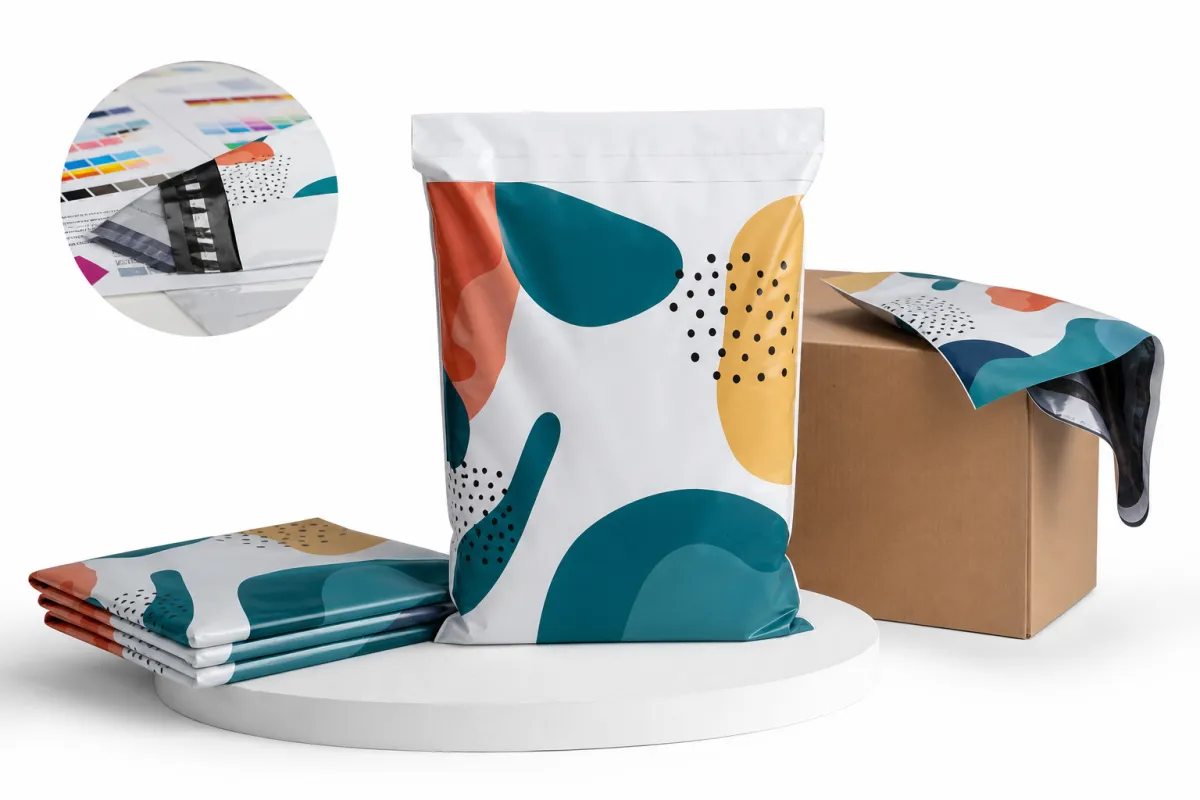
Offset printed mailing bags are Printed Poly Mailers made with offset artwork reproduction so the image comes out crisp, consistent, and repeatable across a run. In plain English, your logo, pattern, and color blocks are transferred with more detail than basic one-color printing. The result usually looks closer to a retail package than a plain shipping bag.
Brands tend to choose offset printed mailing bags for apparel, subscription kits, beauty products, promotional shipments, and direct-to-consumer orders where the package is part of the experience. If the bag is the first thing a customer sees, sloppy print quality is not a small issue. It is the first impression, full stop.
That is the attraction: stronger brand recognition, better image quality, and a more finished presentation. A simple logo can work on a plain mailer, sure. Yet if the brand has spent money on photography, product design, and website polish, a cheap-looking bag can drag the whole thing down. That mismatch is easy to spot and hard to forgive.
"A mailing bag is not just protection. It is a moving billboard that has to survive shipping and still look intentional at the end of the trip."
The tradeoff is equally clear. Offset printed mailing bags usually make the most sense once the volume is high enough to justify setup work, proofing, and plate creation. For tiny runs, the setup cost can be too heavy to ignore. In that case, a simpler print method or a smaller bag spec may be smarter. Nobody loves paying for a process they do not really need.
If you are still deciding on the base construction, it helps to look at the underlying format first. Our Custom Poly Mailers page shows the common structures brands start from before adding print, seal style, and thickness choices.
Most buyers end up choosing offset printed mailing bags because they want a cleaner look without jumping all the way to a full carton. That is common in fashion and beauty, where presentation matters but shipping weight still needs to stay low. It is a practical middle ground, not a vanity purchase. And yes, that middle ground is usually where the budget lives too.
How Offset Printed Mailing Bags Are Produced
The production flow for offset printed mailing bags is usually straightforward once you break it into parts. First comes artwork prep. Then plates or print files are created. Ink is transferred through the offset system onto the substrate. After that, the film is dried or cured, converted into finished mailers, inspected, packed, and shipped.
Offset printing differs from simple flexographic or digital methods because it can reproduce finer detail and smoother color transitions. That matters if the design uses gradients, small typography, photographic elements, or tight brand color matching. The catch is that offset printing brings a more involved setup. Nothing about it is free, and the press will not politely adjust itself because the mockup looked pretty.
Color management is where a lot of projects either stay clean or wander off the rails. With offset printed mailing bags, the printer has to account for how color behaves on plastic film, not just on a monitor. Some jobs need CMYK only. Others need spot colors to keep a logo consistent. If the brand color is sensitive, a Pantone reference or approved physical swatch is better than guessing from a PDF.
The print surface also matters. Some mailing bags need a treated surface or a compatible ink system so the design bonds properly and resists abrasion. A bag that looks fine on the press table can still fail after a few conveyor belts, truck shifts, and warehouse tosses. Packaging is rude like that. It does not care how nice the proof was.
In practice, quality control should happen more than once. A serious run of offset printed mailing bags should include proof review, first-article inspection, rub testing, seal checks, and carton-level inspection before shipment. If the supplier skips those checkpoints, the buyer usually discovers the problem the expensive way.
For transit and handling expectations, it helps to think in standards rather than hope. Many packaging teams use ISTA testing language to pressure-test shipping performance, and the International Safe Transit Association publishes useful guidance at ista.org. That does not guarantee perfection, but it beats crossing your fingers and calling it a process.
If you want a broader view of manufacturing options, finishes, and converting capabilities, our Manufacturing Capabilities page is the cleanest place to start. It helps you see where offset printed mailing bags fit inside the wider production stack.
One thing buyers often miss is how much of the result is decided before ink ever touches film. File prep, line screening, and substrate choice can make a design look rich or kinda muddy, even when the artwork itself is strong. That is why a print-ready file set matters so much; it keeps the job from turning into a back-and-forth guessing game.
Key Factors That Affect Offset Printed Mailing Bags Quality, Cost, and Pricing
The price of offset printed mailing bags is driven by a short list of variables, and none of them are mysterious. Bag size, film thickness, number of print colors, plate or setup work, finish requirements, and total quantity all move the number. If a supplier gives you a vague quote with no spec breakdown, that is a warning sign, not a convenience.
Unit price and setup price behave differently. A small order of offset printed mailing bags carries heavier setup overhead per piece, so the unit cost looks high. As quantity rises, the setup gets spread across more bags and the per-unit price drops. That is why buyers who only request one volume often miss the real break-even point. You kind of have to look at the curve, not just the first number that lands in your inbox.
Material choice changes both appearance and cost. White opaque film usually gives the cleanest color and strongest contrast. Clear or tinted film can look premium, but it often changes how the printed colors read. If the design depends on exact brand colors, a white base is usually safer. Not always prettier. Safer.
Durability also affects pricing. Thicker film, stronger seals, and better ink adhesion tend to cost more, but they reduce failure rates in transit. A mailer that splits at the seal or scuffs badly in the warehouse costs more than the production savings it created. Cheap packaging is only cheap until it needs replacing, and that part shows up fast in customer complaints.
Here is a practical pricing comparison buyers can use as a rough planning tool. The ranges below are not universal, because order size and artwork coverage change the math, but they are realistic enough to start a budget conversation.
| Print Method | Best Fit | Typical Setup Cost | Typical Unit Range at Scale | Notes |
|---|---|---|---|---|
| Offset printed mailing bags | High-detail branding, repeat orders, stronger visual presentation | $350-$900 | $0.18-$0.35 at about 5,000 pieces, often lower at larger volumes | Good color reproduction; setup costs matter more on small runs |
| Flexo printed mailers | Simple logos, fewer colors, large repeat runs | $150-$500 | $0.12-$0.28 depending on coverage and quantity | Often efficient for basic branding, less fine detail than offset |
| Digital printed mailers | Short runs, frequent design changes, fast launches | $0-$150 | $0.30-$0.80, sometimes higher for small quantities | Flexible, but usually not the cheapest at volume |
That table tells the real story. Offset printed mailing bags are usually the better buy once the order gets large enough, while digital print can win on very small runs. Flexo sits in the middle for simpler artwork. If someone insists there is one universal winner, they are selling something.
Ask for tiered quotes at several quantities. For example, get pricing at 2,500, 5,000, 10,000, and 20,000 pieces. That gives you a better sense of where the setup cost stops hurting. It also shows whether offset printed mailing bags become competitive sooner than expected.
For packaging sustainability decisions, material choice matters beyond price. If your shipment uses outer cartons as well, the paper side of the packaging stream can be evaluated against FSC guidance at fsc.org. That does not change the mailer film itself, but it helps build a cleaner packaging story overall.
One more practical point: the more coverage your art uses, the more likely the quote rises. Heavy ink coverage, full-bleed artwork, special finishes, and extra handling can all move the price. A simple logo panel on offset printed mailing bags may cost noticeably less than a full-wrap design that uses every square inch.
It is also worth asking how the supplier handles overruns, spoilage, and rework. Those terms affect the final economics more than people expect. A quote that looks low on paper can become less friendly once you learn how many extras sit behind the number.
Offset Printed Mailing Bags: Step-by-Step Process and Timeline
Most projects for offset printed mailing bags move through the same sequence. First comes the quote request. Then artwork review. Then proofing. Then approval. After that, the printer makes plates or prepares the print system, runs production, finishes the bags, packs them, and ships them out. Simple on paper. Less simple once revisions start stacking up.
A realistic timeline depends on how ready the files are. Artwork review and proofing can take a few days if the buyer sends clean files the first time. Plate work and setup can add another few days. Production often takes about 8-15 business days after approval, though larger runs or busy press schedules can stretch that. Freight adds its own clock on top of that.
Delays in offset printed mailing bags usually come from avoidable mistakes. Missing dielines are common. Low-resolution logos are common. Last-minute color changes after proof approval are common. So are size swaps after the quote was already locked. Every one of those moves the job backward and usually costs more money too.
The cleanest way to keep the schedule on track is to plan backward from the launch date. Lock the bag spec early. Build in proof time. Give yourself room for shipping delays if the order is crossing borders or going through a freight handoff. Mailers are not magical. They still have to move through a real supply chain.
Here is a simple planning sequence many packaging buyers use for offset printed mailing bags:
- Confirm bag dimensions, thickness, closure style, and print area.
- Send final artwork in vector format or high-resolution print-ready files.
- Request a proof and check color, seam clearance, and barcode placement.
- Approve only after someone checks the proof against the real shipping use case.
- Keep a freight buffer of several days if the launch date matters.
That checklist sounds basic because it is basic. The problem is that people skip basic steps and then wonder why the job slipped. In the real world, offset printed mailing bags are fast enough only when the buyer is organized.
Use the sample against the actual product. Put the bag around the item, close it, stack it, and scuff it a little. Does the logo sit where it should? Does the closure still work? Does the print line up with the seam? That is the difference between approving a file and approving a package.
If you want the fastest route through production, send final artwork in the correct format, confirm quantities early, and answer proof questions quickly. That is not glamorous advice, but it keeps offset printed mailing bags from sitting in limbo while everyone waits on one missing detail.
A lot of timing problems happen because someone treats the proof like a formality instead of a working sample. I have seen teams approve a layout, then realize later that the return address sat too close to a fold or the barcode zone got crowded by artwork. That kind of miss is annoying, but it is also preventable if someone spends five extra minutes checking the thing against the actual packing process.
Common Mistakes That Waste Money or Hurt Print Quality
The biggest mistake with offset printed mailing bags is choosing the wrong print method for the order size. Offset is excellent for sharp artwork and repeatability, but it can be overkill for very small runs. If the quantity is low and the design may change next month, a different method may make more financial sense.
Weak artwork prep is another expensive problem. Blurry logos, incorrect color profiles, tiny text, and missing bleed can all create rework. On a screen, a design can look fine. On a moving package surface, tiny details disappear fast. Anything too thin, too small, or too close to the edge is asking for trouble.
Shipping conditions are often ignored until the first complaint arrives. A design that looks beautiful in a proof can scuff, fade, or crack if the ink system and film are not matched correctly. Offset printed mailing bags need the right surface treatment and adhesion to survive warehouse friction and transit abuse. Otherwise the package starts doing its job badly before it reaches the customer.
Spec drift is another budget killer. Changing dimensions, thickness, closure style, or print coverage after quoting can reset both cost and timeline. Buyers think they changed a small detail. The factory sees a different bag, a different setup, and a different conversion path. Those are not the same thing, even if the edit sounded harmless in an email.
The hidden money leak is proof approval. Teams often approve a proof too fast without checking barcode placement, seam clearance, or branding location on the finished bag. If a logo lands too close to a seal or a scannable code sits where tape or folds will cover it, the whole batch can become harder to use. Not impossible. Just annoying and expensive.
For quality control, a few common checks are worth repeating:
- Confirm color against a physical reference, not just a monitor.
- Check that small text stays readable after folding and sealing.
- Verify the print stays away from critical seams and closures.
- Test rub resistance with real handling, not a gentle fingertip swipe.
- Inspect at least one packed carton before production is fully released.
These checks are boring. Good. Boring packaging is usually the kind that works. Offset printed mailing bags should not need drama to earn their keep.
There is also a practical mistake that gets overlooked: choosing a bag finish that looks elegant but fights the artwork. Gloss can deepen color, while a matte finish can soften contrast and make fine details less punchy. Neither is automatically better. They just behave differently, and the sample should show that before anyone signs off.
Expert Tips for Better Branding and Lower Total Cost
The best-looking offset printed mailing bags are often the simplest ones. Bold logo. Strong contrast. Clean placement. Few tiny details. That approach usually prints better on film and gives the brand a clearer visual identity. A cluttered mailer may look exciting on a mockup, but in production it can turn muddy fast.
Design for the substrate first, not the presentation file. Plastic film behaves differently from coated paper. Fine lines can soften. Light colors can disappear. Deep blacks may shift depending on the ink system. If the design depends on delicate gradients and thin type, the print team needs to know that early. Otherwise the bag becomes a lesson in compromise.
Volume planning can save real money. If the brand expects repeat use, ordering a slightly larger run of offset printed mailing bags can reduce the unit cost more effectively than trimming quantity too tightly. Sometimes the extra 10% in volume lowers the per-bag price enough to justify the storage space. Sometimes it does not. That depends on turnover, warehouse fees, and how predictable the reorder pattern is.
File preparation matters more than most people want to admit. Vector artwork is better when possible. Pantone colors should be named clearly. Bleed should be intentional. Safe zones should keep branding away from seams and closures. Then ask for a press-ready proof before approving the job. A rushed file usually becomes a rushed result.
For durability, test one sample for rub resistance, seal integrity, and tape compatibility before committing to a full run. A mailer can print beautifully and still fail in daily use if the seal opens too easily or the surface reacts badly to warehouse tape. That is especially true for offset printed mailing bags that will be handled a lot.
If the design is trying too hard, simplify it. One strong brand panel can look sharper than art on every face of the mailer. Fewer colors can also lower cost. More important, simpler layouts are easier to align during production and easier for the customer to read in the real world. Fancy is nice. Legible is better.
There is also a practical sustainability angle. Reducing unnecessary ink coverage and Choosing the Right size can lower material waste. The EPA has useful general guidance on recycling and waste reduction at epa.gov/recycle. That does not solve every packaging problem, but it helps keep sourcing decisions grounded.
If you are comparing offset printed mailing bags across suppliers, ask for the same spec sheet every time. Same size. Same thickness. Same closure. Same print coverage. Same quantity. That is the only way to make quotes comparable. Anything else is apples, oranges, and a lot of confusion. A clean comparison is boring, but boring is cheaper.
One more thing: ask whether the printer can share a sample from a previous run that is close to your spec. You are not looking for a magic guarantee, just a reality check on how the film, ink, and finish behave together. That small step can save a surprisingly large headache later.
What To Do Next Before Ordering Offset Printed Mailing Bags
Before you place an order for offset printed mailing bags, lock down the spec sheet. Confirm the size, thickness, print area, color count, quantity, and shipping deadline. If any one of those is fuzzy, the final quote will be fuzzy too. Packaging vendors love details because details decide the cost.
Compare at least two or three production quotes. Not because the cheapest one is always wrong, but because the spread tells you a lot about setup fees, unit cost, and timeline assumptions. If one quote is way out of line, find out why. Sometimes there is a good reason. Sometimes someone skipped a line item and the budget will pay for it later.
Always request a physical or digital proof and check it against the real-use scenario. A beautiful file is not enough. Put the proof against the product, the packing flow, and the shipping method. Offset printed mailing bags can look perfect in isolation and still fail the moment they hit a warehouse shelf.
Then do the unglamorous part: match the bag spec to the product size, warehouse workflow, and carrier handling. A bag that is too loose wastes material and looks sloppy. A bag that is too tight stresses the seal and can split. A bag that prints beautifully but jams the packing line is not a win. It is just attractive friction.
My blunt advice? Lock the approved spec sheet for the offset printed mailing bags before production starts. Changing it later is where budgets go to die. The more decisions you finalize early, the less likely you are to pay for avoidable revisions, wasted setup, or reprint headaches. That is how you buy packaging like a professional instead of a gambler.
Offset printed mailing bags work best when the artwork is clean, the spec is stable, and the volume justifies the setup. If you get those three things right, the mailer stops being a random shipping cost and starts acting like part of the brand. That is the whole point, and it is also the part that tends to pay off long after the first shipment leaves the building.
If you are still on the fence, keep the decision grounded in one question: will the printed bag help the product look better while surviving the trip? If the answer is yes, you are probably ready. If the answer is no or maybe, tighten the spec and test another sample first. That little pause is cheaper than fixing a bad run.
Are offset printed mailing bags cheaper than digital print for larger orders?
Usually yes at scale, because the setup cost gets spread across more bags. For small runs, digital or simpler print methods can be cheaper upfront. Ask for quotes at multiple quantities so you can find the break-even point for your offset printed mailing bags project.
How long do offset printed mailing bags usually take to produce?
Artwork review and proofing can take a few days if files are ready. Plate making, setup, printing, and finishing usually add several more days. Freight can still be the wildcard, so build in a shipping buffer and do not treat the production calendar like a wish list.
What material works best for offset printed mailing bags?
White or opaque poly film usually gives the cleanest color and strongest contrast. Film thickness should match the product weight and shipping abuse level. If the bag will face rough handling, ask for adhesion and rub-resistance testing before you approve the full run.
What artwork details matter most for offset printed mailing bags?
Use vector logos where possible and keep text large enough to survive print and sealing. Set bleed and safe zones correctly so nothing lands too close to a seam or edge. Confirm color values early so the printed result matches brand expectations instead of surprising everyone.
Can offset printed mailing bags handle shipping abrasion and moisture?
Yes, if the ink system, film, and surface treatment are matched correctly. A sample rub test is worth doing before full production. Moisture resistance depends on the film and print finish, so do not assume all mailers perform the same just because they share the same name.