Buyer Fit Snapshot
| Best fit | Poly Mailers for Clothing Brands projects where brand print, material claims, artwork control, MOQ, and repeat-order consistency need to be specified before quoting. |
|---|---|
| Quote inputs | Share finished size, material target, print colors, finish, packing count, annual reorder estimate, ship-to region, and any compliance wording. |
| Proofing check | Approve dieline scale, logo placement, barcode or warning zones, color tolerance, closure strength, and carton packing before bulk production. |
| Main risk | Vague material claims, crowded artwork, missing packing details, or unclear freight terms can make a low unit price expensive after revisions. |
Fast answer: Poly Mailers for Clothing Brands: Choosing the Right Fit should be specified like a repeatable production item. The safest quote records material, print method, finish, artwork proof, packing count, and reorder notes in one written spec.
Production checks before approval
Compare the actual filled-product size with the drawing, then confirm tolerance on folds, seals, hang holes, label areas, and retail display edges. Reserve space for logos, QR codes, warning copy, and material claims before decorative graphics fill the panel.
Quote comparison points
Review material grade, print process, finish, sampling route, tooling charges, carton quantity, and freight assumptions side by side. A quote is only useful when the supplier can repeat the same color, closure quality, and packing count on the next order.
Poly Mailers for Clothing Brands: Choosing the Right Fit
Poly mailers for clothing brands look plain until they start causing problems. Then they get interesting fast. A weak mailer can wrinkle garments, split at the seam, slow down pack-out, and make a brand feel cheaper than it is. A good one protects the product, keeps freight in check, and gives the customer a cleaner first touchpoint.
Clothing packaging deserves real thought. Not theater. Not a giant box for a T-shirt. Just the right structure for the job. A lightweight tee does not need a rigid carton, but it still needs a package that keeps out moisture, blocks dust, and opens without making the order feel rushed or careless.
For many apparel businesses, poly mailers for clothing brands are the everyday workhorse for tees, leggings, knitwear, loungewear, and other soft goods that move well in flexible packaging. If you are building a packaging lineup, it helps to look at the whole system instead of obsessing over a single unit price. Start with the broader packaging mix through Custom Packaging Products, and if you want a clearer sense of how presentation choices affect customer perception, the Case Studies page is a useful place to look for patterns.
Poly mailers for clothing brands do four jobs at once: protection, branding, labor speed, and customer perception. That is a lot to ask from one envelope. Cheap packaging looks smart right up until it tears, fits badly, or arrives with a vibe that clashes with the product inside. I have watched brands spend weeks refining photography, only to ship the final order in a flimsy bag that undercut the whole effort in one move. Packaging does not need to be flashy. It does need to be aligned.
Poly Mailers for Clothing Brands: What They Are and Why They Matter
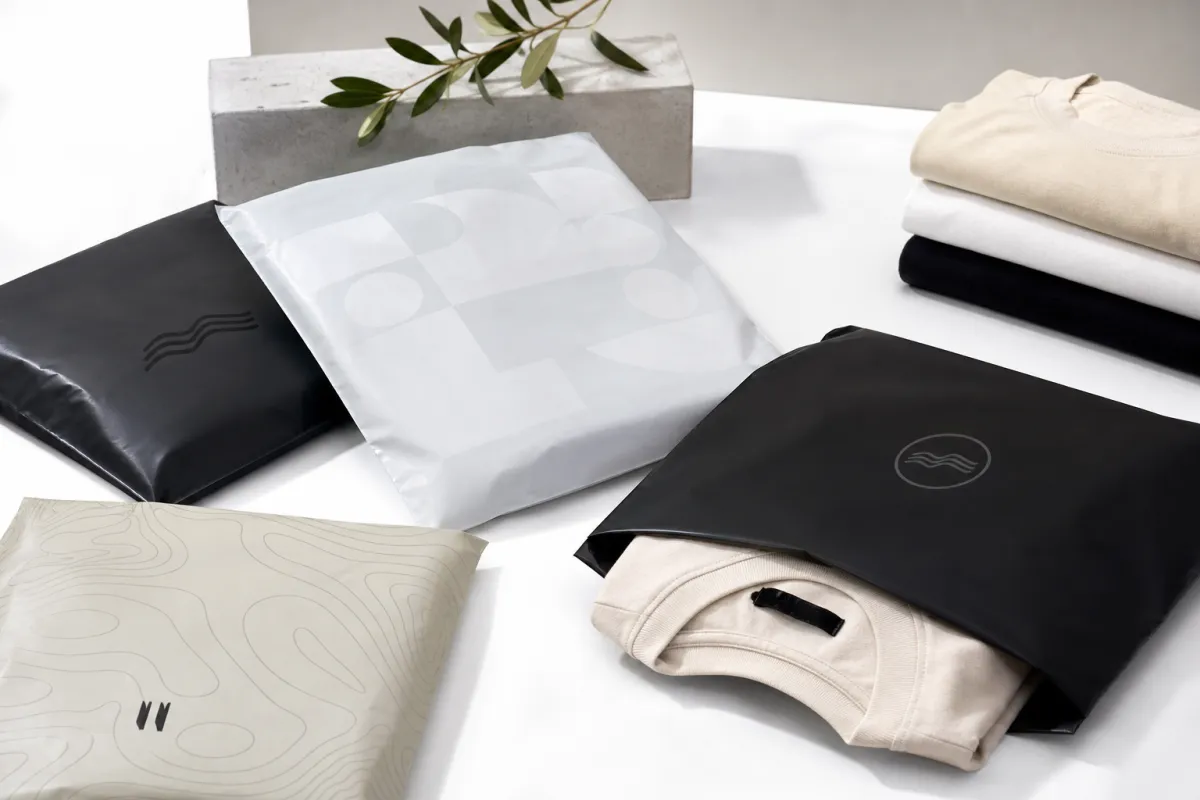
Poly mailers are flexible shipping envelopes made from polyethylene film. Most use a peel-and-stick adhesive strip, and some include a second strip for returns or resealing. For clothing brands, that format is hard to beat for speed and storage. Stacks of mailers take up far less room than corrugated cartons, and pack-out usually moves faster because staff are folding garments into a soft envelope instead of building a box around every order.
Poly mailers for clothing brands matter because apparel shipping is usually about balance, not brute force. Most garments do not need rigid walls. They do need a barrier against light rain, warehouse dust, and minor scuffing from handling. They also need packaging that does not add dead weight. Save a few ounces on every order and the math starts to matter fast when shipments climb into the hundreds or thousands.
I see a lot of smaller apparel teams underestimate how much packaging changes perceived value. A clean printed mailer can make a $28 tee feel intentional. A thin, oversized bag can make a premium sweatshirt feel oddly generic. That does not mean every brand should shout with graphics. Sometimes a restrained logo, a strong color block, and a finish that matches the rest of the line is the better move. Some brands want a print so quiet it is almost shy. That is kinda the point.
There is a practical inventory angle too. Poly mailers for clothing brands store easily in back rooms, packing stations, and third-party warehouses because they ship flat and nested. That helps brands working out of tight spaces or trying to avoid a mountain of packaging inventory sitting around for months.
For brands still weighing packaging formats, the main question is simple: does the item need structure, or does it mainly need protection and presentation? Soft goods with moderate transit risk usually fit well inside poly mailers for clothing brands. Heavy embellishment, fragile add-ons, or a gift-style reveal may call for a box or a more structured mailer instead.
Two details separate a decent mailer from a smart one:
- Fit: The folded garment should slide in without forcing the adhesive seal to do all the work.
- Film quality: The mailer should handle punctures, seal stress, and rough parcel handling without giving up.
That is the reason poly mailers for clothing brands deserve attention early in the packaging process. The mailer is not just a shell. It affects the product experience, the labor flow, and the margin math all at once.
How Poly Mailers for Clothing Brands Protect Apparel in Transit
A poly mailer protects apparel by sealing it inside a moisture-resistant layer that is lighter than a box and less fragile than paper. Light rain is one of the most common shipping annoyances, especially when parcels sit on docks or bounce through sorting facilities. Good polyethylene film gives the garment a better chance of arriving clean and presentable, even if the outside of the package looks like it had a rough day.
Poly mailers for clothing brands also help with dust, light abrasion, and casual tampering. Opaque mailers add privacy, which matters for direct-to-consumer orders, and they hide silhouettes and labels that can show through thinner packaging. That is a small thing on paper. In the real world, it makes the package feel more planned and less improvised.
The construction details matter more than most buyers expect. Single-layer mailers can work for lighter, lower-risk shipments, but co-extruded film often performs better because the layers can be tuned for toughness, print quality, and opacity. A strong peel-and-seal closure is easier for warehouse staff and less likely to spring open in transit. Brands that offer returns usually benefit from a second adhesive strip, since it makes the process simpler for customers and reduces the odds of a mangled flap.
There are limits. Poly mailers for clothing brands are not the best fit for structured hats, fragile accessories, or garments that crease badly without support. A blazer, a crisp dress shirt, or a premium set with rigid inserts may do better in a box or a more structured mailer. The package should protect the item, not force the item to adapt to the package.
“If the fold is clean, the seal holds, and the mailer leaves a little breathing room, most apparel orders travel just fine.” That rule keeps a lot of preventable damage, rework, and customer complaints out of the pipeline.
Printed and unprinted versions change the protection story in subtle ways. A fully printed exterior hides scuffs better than a plain translucent bag, and a darker opaque surface tends to look cleaner after conveyor belts, cartons, and general shipping abuse get involved. For many brands, poly mailers for clothing brands are doing two jobs at once: presenting the brand and reducing visible transit wear.
If you want a testing reference point, the parcel industry has long used transit simulation to evaluate packaging behavior. The International Safe Transit Association publishes test procedure families that are useful for thinking about drops, vibration, and compression. For sustainability and waste reduction context, the EPA recycling guidance helps packaging teams compare materials and disposal paths without pretending every option is identical.
For apparel brands shipping tees, leggings, and light knits, the sweet spot usually comes from matching the mailer construction to the actual abuse level. That is where poly mailers for clothing brands earn their keep: enough protection for soft goods, without the cost and bulk of overbuilding the package.
One caveat I tell teams all the time: recycled-content or thinner-film options are worth testing, but they are not automatically better. If a mailer tears and creates a second shipment, the environmental win disappears in a hurry. If a supplier claims every material is the same in practice, they are selling, not advising. Packaging only counts if it survives the route your orders actually take.
Key Factors to Compare Before You Order
Size comes first, and this is where a lot of packaging projects go sideways. Choose based on the folded thickness of the garment, not just the flat dimensions printed on a spec sheet. A medium tee with a tissue sheet behaves differently from a hoodie, and leggings fold tighter than people expect. Poly mailers for clothing brands work best when the buyer thinks in terms of pack-out volume instead of one lonely size number.
Film thickness is the next variable. It is often measured in mil. A thicker film usually means more puncture resistance, but it also means more material cost. For many apparel shipments, commercial-grade film in the 2.5 to 3 mil range is a common starting point. Heavier items or more abuse-prone shipments may justify a thicker build. There is no universal answer. The right call depends on the item mix, shipping distance, and return rate.
Branding choices matter just as much. Some brands want a minimal look with one clean logo and a quiet color. Others want a bold all-over print that turns the mailer into a moving billboard. Neither approach wins by default. The real question is whether the mailer supports the product positioning. A premium basics line usually looks stronger with restrained design. A trend-driven streetwear label can handle a louder visual system without blinking.
Poly mailers for clothing brands can also be customized on the inside, and that detail gets missed a lot. Interior printing creates a better reveal, especially when the outside stays simple on purpose. Brands that want a low-key exterior but a stronger unboxing moment can use the inside surface for a pattern, slogan, or repeated brand mark.
Sustainability needs an honest conversation, not a slogan. Recycled-content films, downgauged materials, and better right-sizing can reduce waste, but the package still has to survive the real shipping environment. If a thinner film tears and triggers reshipments, the environmental win disappears fast. That is why many teams test recycled-content options alongside standard film before placing a full order. If inserts are part of the system, FSC-certified paper cards or tissue can help support the packaging story without pretending the mailer itself is paper.
Here is a practical way to compare options Before You Order poly mailers for clothing brands:
| Option | Typical Unit Cost | Best For | Notes |
|---|---|---|---|
| Stock opaque poly mailer | $0.05-$0.12 | Basic tees, simple replenishment orders | Lowest complexity, limited branding, fast to source |
| Custom one-color logo mailer | $0.14-$0.28 | Growing DTC apparel brands | Good balance of identity and cost, usually moderate MOQ |
| Fully printed custom mailer | $0.22-$0.45 | Premium launches, stronger shelf-to-shipping consistency | More visual impact, often higher setup and lead time |
| Recycled-content mailer | $0.16-$0.35 | Brands with sustainability goals and tested transit needs | Availability and resin market conditions can affect pricing |
That table is not there to make the decision for you. It shows the shape of the decision. Poly mailers for clothing brands get much easier to buy once you know whether you are optimizing for cost, presentation, sustainability, or some combination of the three.
A small technical detail that matters: adhesive width and seal consistency. Some inexpensive mailers seal fine on day one and then behave differently in a humid warehouse or during winter storage. If the adhesive line is too narrow, the packer is gonna notice when the flap starts lifting under pressure. A wider, more consistent seal gives you a little more forgiveness, which is helpful when fulfillment gets busy and nobody has time for drama.
Poly Mailers for Clothing Brands: Cost and Pricing Factors
Packaging buyers usually start with unit price, but the true cost of poly mailers for clothing brands is built from smaller pieces. There is the mailer itself, setup charges for printing plates or digital preparation, freight to your warehouse, and the minimum order quantity that locks cash into inventory. A mailer that looks inexpensive on paper can stop looking cute once shipping and setup show up.
Volume changes the picture fast. Larger runs usually push the unit price down, sometimes enough to offset the extra storage burden. That Works for Brands with steady order flow. It gets annoying for smaller labels that do not want to park years of packaging in a closet. Poly mailers for clothing brands should be purchased with a realistic view of turnover, not just the lowest sticker price.
Custom versus stock is another area where buyers either save money or burn it. Stock mailers are usually the easiest way to keep spend down during early growth. They are fast, simple, and need almost no artwork work-up. Custom mailers cost more, but they can improve perceived value and make the package more memorable. For some apparel businesses, that brand lift is worth the margin tradeoff. For others, plain stock mailers are the smarter move until volume justifies the upgrade.
Shipping economics matter too. Lightweight packaging helps limit postage exposure, especially when a carrier charges by dimensional weight or when a package crosses a threshold where even a small weight change affects the rate. If a stronger custom mailer lets you skip a second outer carton or an overbuilt insert, the total landed cost may beat the cheaper-looking option.
Poly mailers for clothing brands also need to be viewed through labor. A package that loads faster and seals cleanly can shave real time off each order over the course of a shift. That matters in peak season, when a few seconds per order can turn into overtime or missed cutoffs. I have seen teams argue over a two-cent difference, then lose that savings in labor because the cheaper bag fought every fold and made the line drag.
Here are the pricing factors I would watch first:
- MOQ: A lower minimum is easier for new or seasonal brands.
- Setup: Print prep can add a meaningful first-order cost.
- Freight: Bulky packaging raises inbound shipping cost quickly.
- Storage: A cheap mailer is not cheap if it eats the back room.
- Failure risk: Replacements and reships erase savings fast.
The best price is not the lowest unit cost. It is the lowest all-in cost that still performs well. That is the frame I would use for poly mailers for clothing brands, because the hidden costs are usually the ones that show up later.
Step-by-Step Process: From Sample to Shipment
The cleanest packaging projects start with a product audit. List the garments that ship most often, then measure folded dimensions in a real pack-out condition. A tee folded for a photo shoot is not the same thing as a tee folded by a warehouse associate on a busy afternoon. Add room for tissue, inserts, or return documents if those belong in the customer experience. This is the stage where poly mailers for clothing brands either make the cut or get ruled out.
Next comes sampling, and this step matters. A spec sheet cannot tell you how the film feels, whether the adhesive grabs fast enough, whether the mailer tolerates slight overfill, or how the printed colors read under warehouse lighting instead of a bright studio render. Those details separate a smooth launch from a frustrating reprint.
During sampling, I like to test with real garments from the live assortment, not just the neatest fold in the office. A brand shipping both tees and hoodies should test both. Poly mailers for clothing brands need to prove themselves on the worst-case fold, not only the easiest item in the range.
Once samples pass inspection, artwork and production details move to approval. Lead time starts to matter here. Artwork revisions, material availability, and order quantity all affect the schedule. Stock mailers can ship quickly. Custom production needs more planning. If a brand is launching a new collection, I would build the packaging schedule early enough that the mailers are approved before final inventory lands, not after.
Pack-out testing is the final checkpoint. Have the team run a small batch exactly the way it will be done in daily fulfillment. Measure how long it takes to fold, insert, seal, and label each order. Check whether the adhesive performs after a few minutes of handling. Watch for wrinkling, bagging, and any awkward motion that slows the line. A packaging choice that looks fine on a sample table can turn clumsy in a live work cell.
Here is a practical launch sequence for poly mailers for clothing brands:
- Audit the product mix and note the most common fold thickness.
- Request samples in the closest expected sizes and films.
- Test closure, opacity, puncture resistance, and print quality.
- Compare pack-out speed with your current packaging method.
- Approve artwork only after the real garment fit is confirmed.
- Place the production order with enough buffer for freight and final checks.
If you want the process to stay efficient, do not finalize the packaging after the product is already locked. Packaging belongs in launch planning. That is especially true for poly mailers for clothing brands, because the package affects both shipping cost and the customer’s first tactile impression.
One more detail from the trenches: the warehouse table is not a design studio. A sample can look flawless in a bright room and still feel annoying when somebody has to open, fold, fill, and seal fifty of them in a row. If a packer has to fight the bag, you will hear about it. Usually not in polite language.
Common Mistakes Clothing Brands Make With Poly Mailers
The most common mistake is choosing a mailer that is too small. Force a garment into an undersized envelope and the seam works harder, the adhesive closure gets stressed, and the customer receives a package that looks overstuffed or wrinkled. Even if the item survives transit, the presentation can feel less premium than intended. Poly mailers for clothing brands should fit the product with a little room, not fight it.
Another frequent problem is buying on price alone. Cheap film can split at the corners, tear under tension, or fail when fulfillment gets fast and messy. A mailer that saves a penny or two can become expensive if it creates rework, replacements, or complaint handling. Packaging failure also hurts trust, and trust is harder to measure than freight cost but very easy to lose.
Overbranding is a subtler mistake. A loud, busy graphic system can feel off if the apparel line itself is quiet, minimal, or premium. I have seen brands make the mailer louder than the product. That usually feels backwards. The best poly mailers for clothing brands tend to match the tone of the merchandise instead of trying to compete with it.
Skipping real-world tests is another problem. A packaging buyer may approve a sample in a controlled setting and still get surprised when the fulfillment team packs twenty order types under pressure. Actual inventory, actual folding, and actual staff matter. Real pack-out exposes the little annoyances that never show up in a product photo.
Here are a few errors worth avoiding:
- Ignoring fold thickness: The same size can work for one tee and fail for a hoodie.
- Choosing opaque only by appearance: Darkness and opacity should support privacy and scuff resistance.
- Forgetting returns: A second adhesive strip can save labor later.
- Buying too deep: Overordering packaging ties up cash and storage space.
There is one workflow mistake that shows up a lot in small teams: packaging decisions get made by visual preference alone, without the person who actually packs orders in the room. If the mailer is hard to open, awkward to seal, or too tight to load quickly, the whole fulfillment process slows down. Poly mailers for clothing brands should be judged by the people who touch them every day.
The best packaging choices are usually the boring ones that work every time. That sounds unglamorous. It also sounds like profit.
Expert Tips and Next Steps for Poly Mailers for Clothing Brands
My first recommendation is still the same: order samples before you commit. Test them with the exact garments, fold methods, inserts, and seal motion your warehouse will use. A mailer that looks right in theory may be tight in practice, and a design that looks polished on screen may print darker or flatter than expected. That sample stage is cheap insurance for poly mailers for clothing brands.
Second, keep the size strategy simple. Many brands do well with one primary mailer for the core assortment and one backup size for bulkier items. That reduces confusion, shortens purchasing decisions, and gives the fulfillment team fewer chances to grab the wrong format. Small catalog? Simplicity usually wins.
Third, match the design to the brand position. A soft-touch or matte look can signal calm, premium basics. A brighter color and repeat pattern can add energy for trend-led lines. Neither choice is wrong. The package should feel like part of the same system as the product page, hang tag, and thank-you card. That is where poly mailers for clothing brands stop feeling generic and start acting like a brand asset.
Here is a straightforward decision path I would use:
- List the top five garments by shipment volume.
- Measure folded thickness and note any inserts.
- Request sample mailers in two or three size options.
- Test film thickness, seal strength, and printed color.
- Compare landed cost, lead time, and storage needs.
- Choose the option that supports both margin and presentation.
For brands that want to expand their packaging system beyond mailers, it helps to review related components at Custom Poly Mailers and then build the rest of the experience from there. The mailer does not live alone; it works with labels, inserts, and the shipping workflow that gets the order out the door.
One more practical tip: if your brand is split between basics and heavier seasonal items, do not force one mailer to cover everything. A single size can feel efficient and still create waste elsewhere. A slightly larger backup option is often enough to keep the line moving without wasting film or making the packer wrestle the package.
If you need a final filter, ask three questions: Does it protect the garment? Does it fit the brand? Does it keep fulfillment moving? If the answer is yes to all three, you are usually in the right neighborhood. That is the real goal with poly mailers for clothing brands - a package that works hard without drawing attention to itself for the wrong reasons.
For a clothing label trying to protect margin while still creating a strong customer impression, the right choice is rarely the fanciest one. It is the one that balances fit, film quality, branding, and speed in a way the whole operation can sustain. Choose carefully, test early, and treat poly mailers for clothing brands as part of the product experience, not just a shipping expense.
The cleanest next move is simple: pick the two or three mailer formats that actually match your top-selling garments, sample them with real folds, and run a small pack-out test before you commit to a full order. That gives you the numbers, the handling feedback, and the customer-facing look you need without guessing. Packaging should earn its place. It should not just fill space.
Frequently Asked Questions
What size poly mailers do clothing brands usually need?
Most brands start by matching the mailer size to the folded thickness of their most common items, such as tees, hoodies, leggings, or bundled sets. The cleanest approach is to test real garments in sample mailers before ordering, because the right fit depends on fold style, inserts, and closure margin. That matters even more for poly mailers for clothing brands that ship more than one apparel category.
Are poly mailers for clothing brands better than mailer boxes?
Poly mailers are usually the better choice for soft, lightweight apparel when low shipping cost and compact storage matter most. Mailer boxes make more sense for premium presentation, fragile add-ons, or products that need a more rigid structure in transit. For many DTC apparel lines, poly mailers for clothing brands are the more practical everyday option.
How thick should poly mailers be for apparel shipments?
Many clothing brands choose a thickness that balances puncture resistance with price, often starting with a standard commercial-grade film and testing from there. Heavier items, long-distance shipping, or high-return-value products may justify a thicker film for better durability. In practice, poly mailers for clothing brands around 2.5 to 3 mil are common starting points, but the right answer depends on the product mix.
Can poly mailers for clothing brands be customized with a logo?
Yes, most can be printed with a logo, brand colors, or a repeating pattern, though customization usually changes minimum order quantity and lead time. Confirm artwork requirements early so the final print looks clean and matches the brand’s packaging style. Customization is often what turns poly mailers for clothing brands from plain shipping supplies into a recognizable brand touchpoint.
How long does it take to produce custom poly mailers for clothing brands?
Timing depends on artwork approval, order size, and material availability, so lead time can stretch longer than stock mailers. Brands should build packaging into the launch schedule early and ask for sample approval windows before committing to a production date. If the calendar is tight, poly mailers for clothing brands should be ordered well before the first outbound shipment so the packaging does not become the bottleneck.


