For service shops, Oil Change Stickers custom are one of the smallest printed items with the longest shelf life. They leave with the vehicle, sit in the driver’s line of sight, and keep nudging the customer long after the invoice is forgotten. Not glamorous. Useful.
A good reminder sticker behaves like good packaging. It has to communicate fast, survive real handling, and carry the shop’s identity without turning into a tiny billboard nobody asked for. The best versions are easy to write on, easy to read, and boringly consistent. That is a compliment.
The problem is that many shops treat the sticker as an afterthought. They order whatever is cheapest, crowd it with too much copy, or approve a proof that looks fine on a screen and terrible on glass. Then the staff stop using it correctly. The customer stops noticing it. Congratulations, the retention tool has become windshield confetti.
Oil change stickers custom: what they do in the service lane
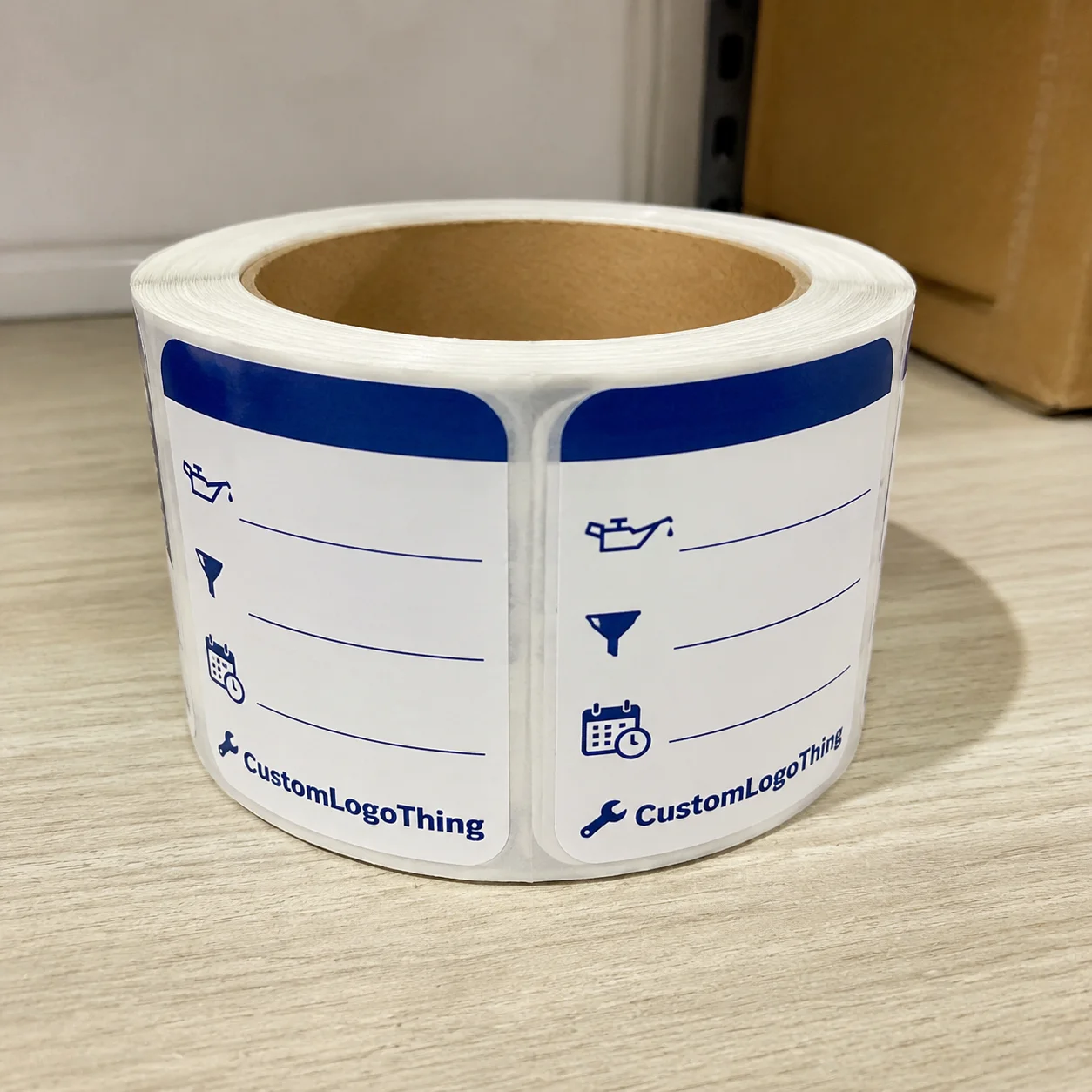
A windshield reminder is often the only maintenance cue that survives the drive home, the grocery run, and the next three weeks of life getting in the way. That is why Oil Change Stickers custom do more than carry a date. They carry the next action.
Most service reminder stickers include the next service mileage, service date, oil type or viscosity, and shop contact details. Some add a booking URL, QR code, technician initials, or a short message such as “Schedule before this mileage.” The right fields depend on the shop’s workflow. The wrong fields are the ones nobody fills out because the label is too cramped.
From a packaging buyer’s point of view, the logic is familiar. A small printed item supports a larger business outcome. Here, the outcome is return traffic. The sticker creates a physical reminder that does not depend on an opened email, a functioning app notification, or a customer remembering what the advisor said while handing over the keys.
It also reinforces the shop’s name at a practical moment. That matters more than a polished slogan. If the customer sees the same shop name every time they start the vehicle, the brand becomes tied to maintenance timing. Quiet repetition beats loud marketing here.
“If the reminder is hard to read, hard to write on, or easy to peel off too soon, it stops being a reminder and becomes waste.”
There is an operations benefit too. Standardized stickers reduce variation at the counter and in the bay. The technician knows where to write mileage. The advisor knows what the customer will see. The customer knows what the next step is. Nobody has to invent the system twenty times a day.
That is the real value: not just a sticker, but a repeatable branded handoff that keeps the service cycle moving.
How custom reminder stickers work from install to return visit
The use case is simple. After service, the sticker is filled out and applied to the windshield or another approved location before the vehicle leaves the bay. If the design is good, the driver sees it naturally. No extra behavior required. That part is hard to improve on.
The most useful fields are usually the same across independent shops, quick-lube operators, fleets, and dealerships: date, current mileage, next service mileage or interval, oil type, and shop name. A phone number or booking URL can help, but only if it does not steal space from the core reminder. If a QR code is included, it needs enough white space around it to scan. Tiny QR codes printed next to tiny text are optimism wearing a costume.
Placement matters more than many buyers expect. Windshield corners are common because they are visible without blocking the driver’s view. The lower driver-side corner is popular, though placement should follow local regulations and customer preference. Door jamb labels can work for fleet maintenance or dealership records, but they do not replace a visible reminder for retail customers. Invoice sleeves and hang tags are useful backup tools. They are not the same thing.
The sticker also has to match the shop’s service interval policy. Some businesses still default to 3,000-mile reminders. Others set intervals based on OEM recommendations, oil type, driving conditions, or internal policy. If the sticker design locks the shop into one interval without room for adjustment, it will create friction. A simple blank field usually beats a preprinted interval unless the process is tightly controlled.
Custom reminder stickers work best when they become part of the closing routine. Fill it out. Confirm the next service point. Apply it cleanly. Mention it during vehicle handoff. Done. That is not complicated, which is exactly why it works.
There is also a quality-control angle. Some operators include technician initials, advisor initials, or a job reference field. That does not need to be customer-facing drama. It can simply help a manager trace mistakes when a sticker is incomplete, illegible, or inconsistent with the invoice. Small fields can prevent long arguments later.
Design factors that affect readability, adhesion, and durability
The best custom reminder sticker is the one people can complete quickly and read later without squinting. Start with layout. Bigger fields improve legibility, but too much blank space can leave out useful information. A crowded sticker does the opposite: it looks “designed” and then fails under shop conditions. Very helpful, if the goal is annoying technicians.
Common sizes vary, but many windshield reminder stickers sit around 1.5 x 2.5 inches, 2 x 3 inches, or similar compact formats. Larger labels can be easier to write on, but they may feel intrusive on the windshield. Smaller labels save material and space, but they punish handwriting and aging eyes. Pick the size around actual use, not just unit cost.
Material choice has a direct effect on performance. Paper is usually the most economical option and can work for short-term use, especially when cost matters more than moisture resistance. Film stocks, such as polypropylene or vinyl-style materials, handle humidity, handling, and longer dwell times better. Static cling can be useful for interior glass applications, though it may not behave well on every surface or in every climate. Removable adhesive is often the practical middle ground for glass because it needs to stay put and still come off without a scraping session.
Adhesive performance depends on surface, temperature, humidity, and dwell time. A label that works fine in a mild shop may curl in high heat or release early in cold conditions. Glass cleaner residue can also interfere with adhesion. If staff apply stickers to damp or recently cleaned glass, even a good adhesive can look bad. Materials do not enjoy being blamed for process errors. Funny how that works.
The writing surface matters just as much. Some labels accept ballpoint pen. Some need permanent marker. Some smear if the ink is not matched to the coating. If technicians wear gloves, test with gloves. If the shop uses a specific marker brand, test with that marker. A slick coating that looks premium may reject ink or require extra drying time. That delay gets old fast in a busy lane.
Print contrast is the boring hero. Black on white is still hard to beat for quick reading. Brand colors are fine, but the critical fields need enough contrast to stay readable under glare, tint, sunlight, and interior shadows. Thin fonts disappear. Reverse type can look sharp in a proof and become a nuisance on glass. Use bold, clean type for anything the customer must read.
Finishing choices affect cost and usability. Lamination can improve durability but may make writing harder unless the writable area is handled correctly. Matte coatings often write better than gloss coatings. Die-cut shapes can support branding, but odd shapes may waste space or slow production. Rounded corners help reduce lifting on some materials. None of this is decorative trivia. It affects whether the sticker stays useful for the full interval.
A simple pre-order test catches most failures: apply the sample to glass, write on it with the real marker, leave it for a few days, then remove it. Check curl, smearing, residue, and readability. Do it under bright light. Do it after the label has warmed up. Screens lie politely. Samples tell the truth.
For buyers who need a more structured sourcing conversation, standards groups such as ISTA can help frame transport and handling questions, even though a reminder sticker is simpler than a shipping pack. If paper sourcing matters, FSC-certified options may be available. Just make sure the adhesive and coating still fit the job. Sustainable stock that fails on the windshield is not much of a win.
Cost, pricing, and MOQ: what changes the quote
Pricing usually comes down to quantity, material, print colors, adhesive, shape, finishing, and how much prepress work is required. A basic one-color paper reminder costs less than a film label with removable adhesive, full-color branding, and a custom die. Stunning revelation: complexity costs money.
MOQ, or minimum order quantity, matters because setup costs need somewhere to go. On small runs, setup can outweigh the printed material cost. Larger runs lower the unit price, but they also create storage needs and inventory risk. If the shop changes phone numbers, service intervals, branding, or location details before the stock is used, those “cheap” extra stickers become expensive recycling.
| Sticker type | Typical use | Approx. unit cost at 5,000 pcs | Notes |
|---|---|---|---|
| Basic paper reminder | Short-term oil change follow-up | $0.03–$0.06 | Best for simple, low-moisture use where low cost is the priority |
| Removable adhesive film | Windshield reminder with cleaner removal | $0.06–$0.11 | Better durability and peel behavior on glass |
| Branded custom print | Multi-field reminder with logo and contact info | $0.08–$0.15 | More color control, proofing, and layout work |
| Variable-data version | Preprinted interval, barcode, or location detail | $0.10–$0.18+ | Useful for controlled workflows, but less flexible |
Those ranges are working estimates, not universal promises. Quotes move with raw material costs, labor, press time, freight, order volume, and the supplier’s equipment. A shop ordering 500 pieces will not see the same unit economics as a group ordering 50,000. That is not a pricing conspiracy. It is math.
Hidden costs can matter as much as the printed sticker price. Proofing time, rush fees, freight, special die charges, plate or setup fees, and split shipments all affect the total. If multiple locations need separate phone numbers or QR codes, the order may require versioning. Versioning sounds harmless until five locations become fifteen files and someone has to check every number.
Storage deserves a quick mention. Stickers should be kept clean, dry, and away from heat extremes. Adhesives can age. Paper can curl. Boxes can get shoved under a counter next to cleaning chemicals because apparently labels enjoy chaos. Ask for shelf-life guidance if you plan to hold large inventory for more than a year.
If sticker spend is being compared with broader Custom Packaging Products or other shop marketing items, judge it by the job it performs. A label that helps recover even a few return visits can justify better material, clearer printing, or a slightly larger size. The cheapest sticker is not cheap if staff hate using it.
Production process and timeline: what happens after artwork approval
Most custom jobs follow the same basic sequence: specs, artwork, proof, approval, printing, finishing, inspection, packing, and shipping. The smoother the brief, the faster the order moves. Missing logo files, vague copy, and late changes are the usual culprits behind slow production.
A solid specification should include size, material, adhesive type, print colors, writable area, roll or sheet format, quantity, core size if rolls are needed, and packing requirements. If labels are going into dispensers, roll direction matters. If multiple shops share one design, the artwork should clarify which details are universal and which details vary by location.
For a first-time custom order, turnaround often lands around 10 to 15 business days from proof approval. Simple repeat runs may move faster because the spec is already locked. Jobs with special dies, unusual materials, multiple versions, or coatings can take longer. Nobody honest should promise a universal timeline without checking the current production queue.
Artwork approval is where time disappears. A proof may show that the mileage field is too small, the phone number is wrong, the QR code needs testing, or the logo file is too low resolution. Every revision adds time. That does not mean revisions are bad. It means rushed approvals are expensive in their own special way.
Quality-control checks should happen before cartons leave production. At minimum, confirm size, material, print position, color, legibility, roll count, and adhesive behavior against the approved spec. For writable stickers, test ink acceptance on the finished surface. For removable adhesive, check removal behavior on clean glass. Sampling does not need to be theatrical. It needs to be consistent.
Reorder planning should be based on actual service volume. If a shop uses 1,200 stickers a month, waiting until the last roll is half gone is asking for rush charges. A reorder trigger at six to eight weeks of stock gives room for proofing, production, and shipping. Multi-location operators should add time for internal approvals, because someone always has one more “small” change.
This is the same discipline used in product packaging, labels, inserts, and custom printed boxes. Lock the spec. Keep the artwork controlled. Order before panic arrives. The item may be small, but the process still needs structure.
Common mistakes when ordering service reminder stickers
The first mistake is low contrast. A design can look polished in a PDF and fall apart under windshield glare. Pale gray type, busy backgrounds, thin fonts, and tiny fields all make the sticker harder to use. If the customer has to lean in to read the next service mileage, the design failed.
The second mistake is overloading the format. Shops often want a logo, slogan, address, phone number, QR code, oil type, mileage, date, service notes, warranty language, and maybe a motivational quote if someone had too much coffee. The result is a label nobody wants to fill out. Prioritize the fields that support the next visit. Everything else needs to earn its space.
Adhesive mismatch causes another set of problems. Too weak, and the label curls or falls off early. Too aggressive, and customers complain about residue. Static cling may be fine for interior glass but unreliable if surfaces are dirty or textured. Removable adhesive film is often safer for windshield use, but it still needs testing under expected conditions.
Some buyers assume all writable coatings behave the same. They do not. A marker that dries quickly on one label may smear on another. A pen-friendly stock may not hold up to moisture. If the shop writes hundreds of stickers a week, that small difference becomes a daily irritation. Daily irritations are where good systems go to die.
Another common miss is approving artwork without printing it at actual size. Zoomed-in proofs are dangerous. Everything looks readable at 200 percent. Print it at final size, tape it to glass, stand back, and see what survives. If the field labels vanish or the QR code becomes decorative confetti, fix it before the run.
Version control also trips up multi-location orders. One outdated phone number, old logo, or wrong booking URL can ruin a batch. Keep a single approved artwork file and a simple version log. If separate locations need separate details, name files clearly and check every variable before approval. This is dull work. It is also cheaper than reprinting.
Finally, some shops choose a format that fits one employee’s habits instead of the team’s workflow. That is fragile. The better sticker still works when the bay is slammed, the regular advisor is off, the backup writer is covering, and the customer is already inching toward the exit.
Expert tips and next steps for a better reorder system
The cleanest way to manage oil change stickers custom is to standardize one master spec. Lock the size, material, adhesive, core fields, brand placement, and writable surface. If locations need different phone numbers or QR codes, create controlled versions instead of letting every shop improvise.
Set reorder points from monthly usage, not gut feel. If a location averages 800 services a month and lead time can stretch to three weeks, a one-month cushion is thin. Build in buffer for production, shipping, internal approvals, and the occasional delay nobody wants but everyone eventually meets.
Ask for a physical proof before the first full run. Test it on glass. Write on it with the actual marker. Let it sit. Remove it. Check for curl, smearing, ghosting, residue, and readability. If the label fails any of those checks, fix the spec before buying thousands.
Create a short internal checklist for staff. Fill out mileage. Fill out date. Add next service interval. Apply straight, in the agreed location. Mention it at handoff. This is not high theater. It is process control, and process control is how small tools stay useful.
If the shop wants to improve retention, compare two versions for a short period. One may emphasize the phone number. Another may use a QR code. One may have stronger branding, while the other is easier to read. Track return behavior, customer questions, and staff completion errors. Then pick the version that works, not the one that won the beauty contest.
Keep the conclusion practical: a reminder sticker has one job. It should help the customer know when and where to return. Get the spec right, and oil change stickers custom support the whole service cycle without shouting for attention. Get it wrong, and you have a very small piece of printed waste with a surprisingly large ability to annoy people.
FAQ
What should oil change stickers custom include for a basic service reminder?
Include the shop name, service date, current mileage, next-service mileage or interval, and oil type if it helps the customer or technician. Add a phone number, booking URL, or QR code only if the sticker still has enough room for clear handwriting.
What material works best for custom oil change reminder stickers?
For short-term, low-cost reminders, paper can work. For windshield use, film with removable adhesive is usually more durable and easier to remove cleanly. Static cling may be useful in some glass applications, but it should be tested before a full run.
How much do custom oil change stickers usually cost?
At around 5,000 pieces, basic stickers often fall near $0.03–$0.06 each, while film, branded, or variable-data versions may run closer to $0.06–$0.18+ each. Quantity, material, print colors, finishing, freight, and setup fees all affect the final quote.
How long does production take for custom reminder stickers?
First-time custom orders often take about 10 to 15 business days after proof approval, depending on material, quantity, press schedule, and finishing. Repeat runs are usually faster because the artwork and specifications are already approved.
What is the most common mistake shops make with service reminder stickers?
The biggest mistake is approving a sticker that looks good on screen but performs badly in the service lane. Test the actual size, writing surface, adhesive, and readability on glass before ordering a full production run.