The Opp Header Bags moq guide usually begins with a practical question: how do you make a small product feel retail-ready without paying for a carton, a blister pack, or a custom display tray that the item does not really need? A clear OPP header bag does that job well. It hangs cleanly on a peg, shows the product plainly, and keeps packing simple. That is why the format shows up so often in jewelry, stationery, hardware, craft kits, apparel accessories, and promotional assortments.
The appeal is not decorative. It is operational. A buyer gets faster merchandising, less assembly, and a display format that works across mixed product lines without forcing each SKU into a different packaging structure. The caveat is that the bag still has to match the product, the fixture, and the shipping method. A pack that looks sharp on a sales sample can still fail in a carton if the film is too soft, the seal is too narrow, or the header is not stiff enough for repeated hanging.
That is where a lot of buying mistakes happen. Teams focus on print first and fit second, then discover that the product shifts too much inside the bag or the hole placement does not match the retailer's hook system. The more tightly the packaging spec is tied to the real use case, the less likely the order is to drift into rework.
Why OPP Header Bags Make Small Products Look Retail-Ready
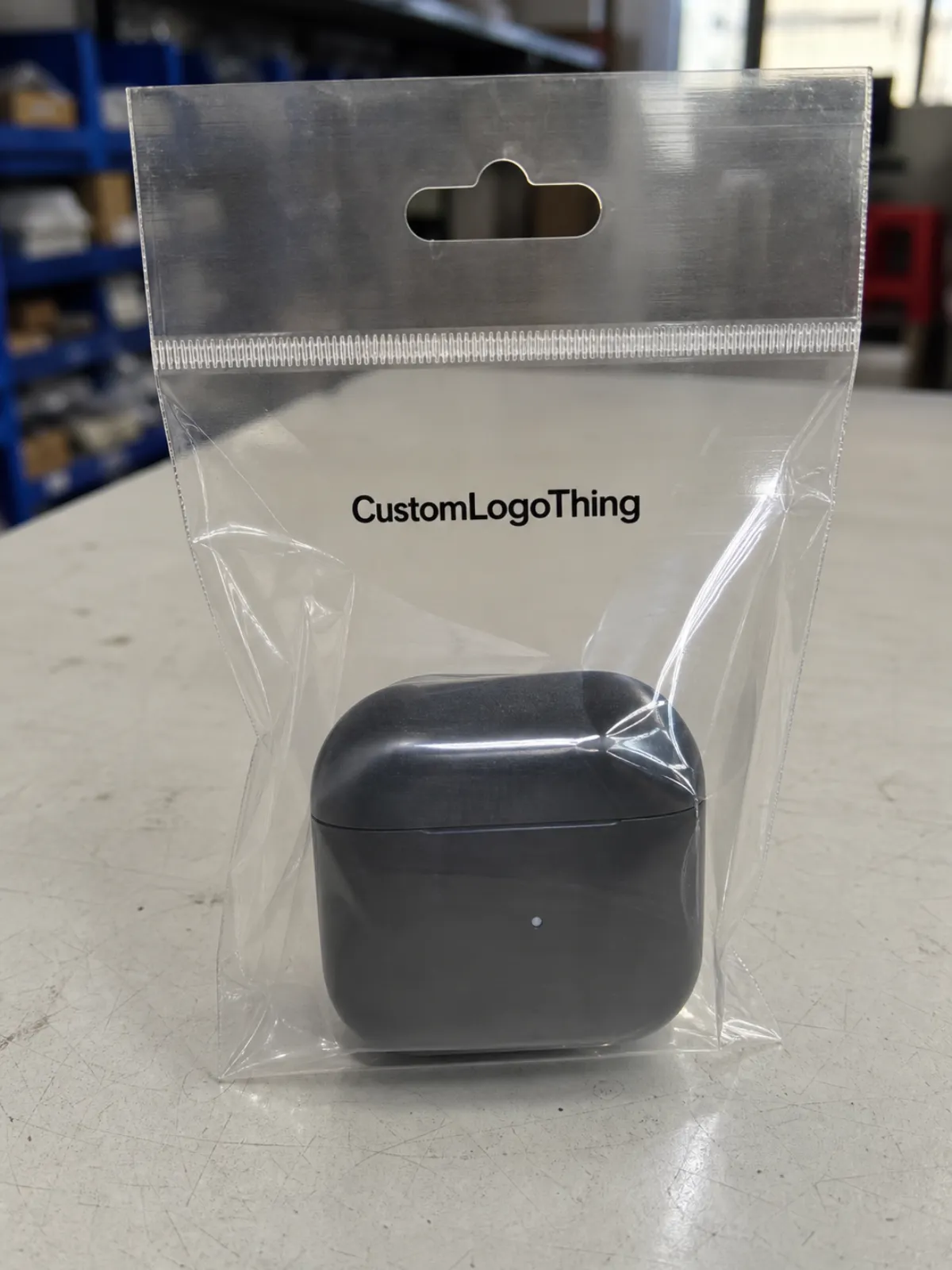
Opp Header Bags work because they combine visibility with structure. The OPP film gives the pack a crisp, high-clarity face, so the item itself remains the focal point. The header creates a branding zone and a hang point for peg hooks, slatwall rails, or euro-style display systems. That pairing matters. Small products often sell better when they look organized rather than loose.
In practice, the format performs best for items that are light, flat, and not overly sharp. Think charm sets, buttons, screws, craft embellishments, cable adapters, pens, phone accessories, or small apparel add-ons. These items benefit from a pack that keeps them grouped and visible without adding much material weight. For products with edges, pressure points, or a lot of movement inside the pack, the spec usually needs more care: thicker film, a stronger seal, or a stiffer header card can make the difference between a neat shelf presentation and a wrinkled mess after transit.
Another reason buyers like the format is speed. Filling and sealing these bags is straightforward, so line crews can work through large quantities without much special training. That matters once an order moves from samples to hundreds or thousands of units. Mixed-size assortments are easier too, because the merchandising logic stays consistent even when the contents change. The packaging is simple, but the buying decision is not. MOQ, fit, and print decisions still need to be tied to the product and the channel.
“A good header bag does not ask the customer to work for the sale. It puts the item in view, gives it a hang point, and keeps the pack neat enough to trust.”
If a buyer is comparing packaging formats, the first question should be functional, not visual. Is the bag protecting the product during fulfillment? Is it serving as a retail hang pack? Usually both. That means the spec has to hold up in storage, shipping, and display. For buyers who validate packaging through transit tests, mapping the finished pack against ISTA test standards can expose weak points long before the product reaches the shelf.
Film Clarity, Header Card Style, and Hanging Hole Options
The basic structure is simple: OPP film, a header area, and a hang feature that matches the fixture. The details are what change the buying decision. Clear OPP film is favored because it lets the product remain visible and can make modest items feel more premium than they are. The film also works well when the header card needs print, since the contrast between a clear body and a branded top section is easy for a shopper to read at a glance.
Header style affects cost and shelf presence. A plain insert card is usually the lowest-friction option and often supports a lower MOQ. A printed header card adds brand, copy, and visual structure, but it also introduces prepress work, proofing, and more setup. That usually raises the unit cost. A reinforced top area or a thicker board can improve stiffness, which matters if the bag will be pulled on and rehung often. In retail, that kind of wear is real. Packaging that looks fine in a carton can curl quickly on a peg.
Hanging-hole format should be decided early. Round holes are common and economical. Euro slots are widely used for retail hooks, but the slot size and position need to match the fixture. Some buyers ask for a teardrop slot or a custom punch, which can trigger tooling charges if the shape is outside standard production. A hole that is technically correct but a few millimeters off-center can make the finished pack sit crooked, and crooked packs look cheaper than they are.
Finish changes perception more than many buyers expect. Gloss print tends to feel brighter and more commercial. Matte can look cleaner and more restrained, especially on a white or light-colored header card. Stiffer board also helps the pack hold its shape on display, which can lift perceived value before anyone opens the bag. If recycled content or FSC-certified board matters to a retail account, it should be specified early. The FSC certification system is the reference many buyers use when they need proof of sourcing.
The right format depends on the product and the customer-facing channel. A boutique craft item may justify a printed euro-slot header with a matte finish and a more polished feel. A hardware assortment sold into a chain account may perform better with a plain, highly legible header and a clean hang hole. Retail rules vary, but the display system usually decides more than the brand story does.
Sizing, Thickness, and Seal Specs That Affect Fit
Before anyone can quote the job accurately, the dimensions have to be pinned down. The essentials are bag width, bag length, and header depth. After that, the buyer needs to account for the room the product occupies once it is inside the pack, not just the dimensions printed on the product sheet. A slim accessory and a rigid kit may share the same outer size on paper, but they behave very differently on the line.
Film gauge is about more than durability. Standard OPP retail packs often sit in the 30 to 40 micron range, while heavier or sharper contents may need something closer to 40 to 50 micron. Thinner film gives a lighter feel and can reduce unit cost, but it may wrinkle more or feel too soft for a hanging display. Thicker film improves tear resistance and usually gives the pack a more substantial look, though it can push the price upward. For buyers balancing shelf appeal and shipping performance, that tradeoff matters.
Seal style is just as important. A wider seal can improve closure confidence and tamper resistance, while a narrower seal keeps the pack looking cleaner and can save a little material. For heavier items, seal placement matters as much as seal width. A poor seal is often the first failure point in carton packing and fulfillment. If the product has corners or hard edges, a little extra clearance can reduce stress on the film and lower the chance of split seams or distortion near the bottom.
Fit problems usually come from three predictable mistakes. First, the top section is too tight, so the product crowds the header and bends the film. Second, the sample looks good, but the film is too flimsy for bulk handling. Third, the hanging feature is specified after the artwork, which creates a mismatch between the retail fixture and the finished pack. None of those errors is unusual. All of them cost time once production starts.
For buyers who want a more reliable check than a visual mockup, a sample run is the right move. A real sample shows whether insertion is smooth, whether the seal stays straight, and whether the header stands up to handling. That becomes even more useful on irregular products, because items that appear small in a photo can catch the film in unexpected places once they are actually packed.
OPP Header Bags MOQ Guide: Pricing, MOQ, and Quote Factors
This is the part most buyers want first, and for good reason. The opp header bags moq guide is really a pricing guide in disguise, because MOQ and unit cost move together. Standard sizes and plain builds usually allow a lower entry quantity. Custom dimensions, more print coverage, and nonstandard hang features tend to push the minimum order upward.
In broad terms, a bulk quote for standard clear OPP header bags may land around $0.04-$0.12 per piece at a few thousand units, depending on size, film thickness, and whether the header is plain or printed. Once custom print, heavier board, special finishing, or custom punching enter the picture, the range can rise to $0.10-$0.25+ per piece. Those numbers are directional, not universal. Still, they give buyers a useful frame of reference when they are comparing suppliers or checking whether a quote is out of line.
MOQ is rarely one fixed number. It moves with setup time, waste allowance, and the production method. A standard stock-size bag with a simple header card can often start lower than a fully custom size. Add more colors, larger print coverage, or a special euro slot and the minimum may increase because the line needs more setup and more stable material yield. Tooling fees can appear as well, especially if a custom punch or nonstandard seal geometry is required. In other words, the price is not just about the film. It is also about how many decisions the factory has to lock in before the first piece is made.
| Option | Typical MOQ | Typical Unit Cost | Best Fit |
|---|---|---|---|
| Plain stock-size OPP header bag | 3,000-5,000 pcs | $0.04-$0.08 | Simple retail presentation, lower entry budget |
| Printed header card, standard size | 5,000-10,000 pcs | $0.08-$0.15 | Branded resale items, peg display programs |
| Custom size or custom punch | 10,000+ pcs | $0.12-$0.25+ | Nonstandard products, retailer-specific fixtures |
The most accurate quote comes from a complete spec set, not a rough description. A supplier needs product dimensions, artwork files, target volume, packaging format, and destination. If the only input is the product name, the first number is usually a placeholder. If the measurements and the retail display requirement arrive together, the quote is more likely to hold.
For many buyers, the safest buying path starts with a standard size and a plain or lightly printed header. That keeps setup charges lower and makes it easier to compare one vendor against another. If the product proves out in the market, the spec can be tightened on the next run. That is a better use of MOQ than overbuilding the first order before the item has earned a more expensive packaging format.
Order Process, Proofing, and Production Lead Time
The order path is usually the same: inquiry, spec review, artwork check, proof approval, scheduling, production, then packing and shipment. The delay is often not on the production floor. It usually sits between spec review and proof approval, where missing measurements or unclear artwork force another round of questions.
A proper proof should confirm the bag size, header depth, hang feature, print placement, and any copy that must stay clear of the seal or punch area. If the artwork includes a logo, barcode, legal copy, or product instructions, those elements need to be checked against the usable header space rather than assumed to fit. A small shift in hole position can change the way the design lands on the finished pack. Even a few millimeters matter when a product is hanging in a tight retail row.
Lead time should be split into three parts. Setup time covers the quote, proof, and any tooling or prepress work. Production time covers film conversion, printing, sealing, and final pack-out. Freight time is the third piece, and it can add more than buyers expect if the goods are moving internationally or shipping by ocean instead of air. A job that takes 10-15 business days to produce can still arrive later if freight planning starts too late.
As a rule, standard unprinted bags move faster than custom printed ones. A plain spec may be ready in roughly 7-12 business days after approval, while printed or custom-size jobs often sit closer to 12-20 business days depending on queue and complexity. Those are planning ranges, not guarantees, but they are useful when a launch date or replenishment window is fixed.
The simplest way to keep the order moving is also the easiest to overlook: send complete information the first time. If the supplier gets dimensions, artwork, quantity, and destination in one message, there are fewer back-and-forth rounds. That also helps the buyer compare options faster through the FAQ page if quick answers are needed on specs or replenishment planning.
Quality control should not stop at the proof. Buyers should ask how the finished goods will be packed in cartons, what the count per inner pack is, and whether the bags will be flat-packed or bundled. Those details matter in receiving and in fulfillment, especially if the product will later be kitted, repacked, or inserted into subscription packs. A clean spec on paper can still create a warehouse headache if carton counts are inconsistent.
Why Buyers Reorder OPP Header Bags From a Packaging Partner
Repeat orders usually come down to consistency. Once a buyer has a packaging spec that works, the goal is to match that result on the next run without surprises. That is why many purchasing teams stick with a packaging partner instead of shopping every reorder from scratch. They want the same print placement, the same seal behavior, and the same carton count they approved last time.
Spec control matters more on reorder than on first order in many cases. It is easy to forget a small detail such as the exact hole location, the header card thickness, or the seal width. A good packaging partner keeps those details on record so the next batch does not drift. That reduces rework and protects the retailer relationship, because a slightly different bag can look like a quality issue even if the product inside has not changed.
There is also a factory-floor reality here. Clean sealing, consistent die-cutting, and predictable film handling are not abstract benefits; they are the difference between smooth fulfillment and a box of rejects. OPP film can be crisp and attractive, but it still needs controlled tension and careful sealing to avoid wrinkles, edge curl, or weak joints. Buyers who reorder usually care as much about that consistency as they do about the first quote.
Honest support is part of the value too. A supplier should say when a design is too tight, when a header is too small for the requested artwork, or when the MOQ does not fit the spec the buyer has in mind. That is better than forcing the job into a format that looks cheap at quotation stage and expensive during production. The strongest partnerships are factual, not performative.
If a business uses OPP header bags across multiple SKUs, the return on a good spec file is significant. Less time is spent rechecking artwork, less time is lost correcting quantity assumptions, and less time is wasted explaining the same requirements to a different contact every quarter. That kind of continuity lowers the hidden cost of replenishment.
What to Send Next for an Accurate Quote and Faster Approval
If a useful quote is the goal, send the full picture up front. The best requests include bag width, bag length, header depth, product weight or thickness, header style, hanging-hole preference, artwork, quantity, and shipping destination. That list may feel detailed, but it usually shortens the process because the factory does not need to guess at the missing pieces.
If the product needs to fit a specific peg, rail, or retail fixture, request a sample or proof. That step is especially helpful for unusual shapes, fragile contents, or packs that need to sit at a certain angle on display. A sample can also show whether the clarity is right, whether the seal stays straight, and whether the hang point is centered where the retailer expects it to be.
It also helps to think beyond the first run. Ask how many pieces go per carton, what reorder threshold makes sense, and whether the spec leaves room for a second production run without changing the packaging format. A good first order should make the second order easier, not create a one-off design that is expensive to repeat.
For many buyers, the most efficient next step is to submit product specs and target volume together, then ask for options on plain versus printed headers. That usually gives the clearest view of MOQ, bulk pricing, and presentation. The real objective is not just to find the lowest number. It is to land on a spec that sells the product, survives fulfillment, and can be reordered without starting over.
That is the heart of the opp header bags moq guide: match the packaging to how the item actually moves through production, storage, and retail. Get the dimensions, hanging method, and print requirements right the first time, and the quote becomes easier to trust. The approval moves faster, and the finished pack has a much better chance of doing its job on the shelf or pegboard.
FAQ
What is the usual MOQ for OPP header bags?
MOQ depends on the bag size, film thickness, and whether the header is plain or printed. Standard dimensions and simpler builds usually allow a lower entry quantity than fully custom runs. The quickest way to get a real MOQ is to send exact measurements and the target volume together.
How does printing affect OPP header bags MOQ?
Printed headers usually require more setup than plain stock bags, so the minimum order often rises. More colors, larger print coverage, and special finishes can push MOQ higher and increase unit cost. A simple one-color header card is usually the easiest path when a buyer wants a lower starting quantity.
What details do I need for an accurate OPP header bags quote?
Provide bag width, bag length, header depth, and the type of hang hole or slot you want. Include artwork files, target quantity, destination, and whether you need printed or unprinted headers. If the product is delicate or irregularly shaped, add that note so the fit and seal can be checked correctly.
Can I get a sample before placing a full OPP header bags order?
Yes, a sample or proof is useful when the product needs a precise fit or a specific retail presentation. A sample helps confirm clarity, seal behavior, and header placement before production begins. For printed jobs, a proof review can prevent costly mistakes in artwork alignment or copy placement.
What affects OPP header bags lead time after approval?
Lead time depends on proof approval speed, production queue, order size, and shipping method. Custom printing and special sizes usually take longer than standard stock options. If the buyer approves artwork quickly and confirms specs early, the order can move into production without delays.