Opp Header Bags Unit Cost
OPP Header Bags unit cost is rarely driven by the film alone. On a quote sheet, the biggest swings usually come from the header card, print setup, hole style, packing count, and how much information the factory has before pricing the job. Two bags that look similar on a peg can land in very different cost brackets once those details are fixed.
That is why experienced buyers start with the pack-out spec, not the headline price. If the product size is vague, the header height is unconfirmed, or the artwork file is not ready, the quote will carry extra room for risk. Clean inputs lower surprises, and they also make comparison shopping possible. Without that, one supplier’s low number might simply be a different product.
For retail, stationery, hobby, accessory, and small component packaging, OPP Header Bags sit in an awkward but useful middle ground: they need to look neat, hang cleanly, and stay cheap enough to protect margin. The challenge is balancing those three goals without under-specifying the package or overpaying for presentation details that do not move the sale.
Why Small Spec Changes Move Unit Cost Fast
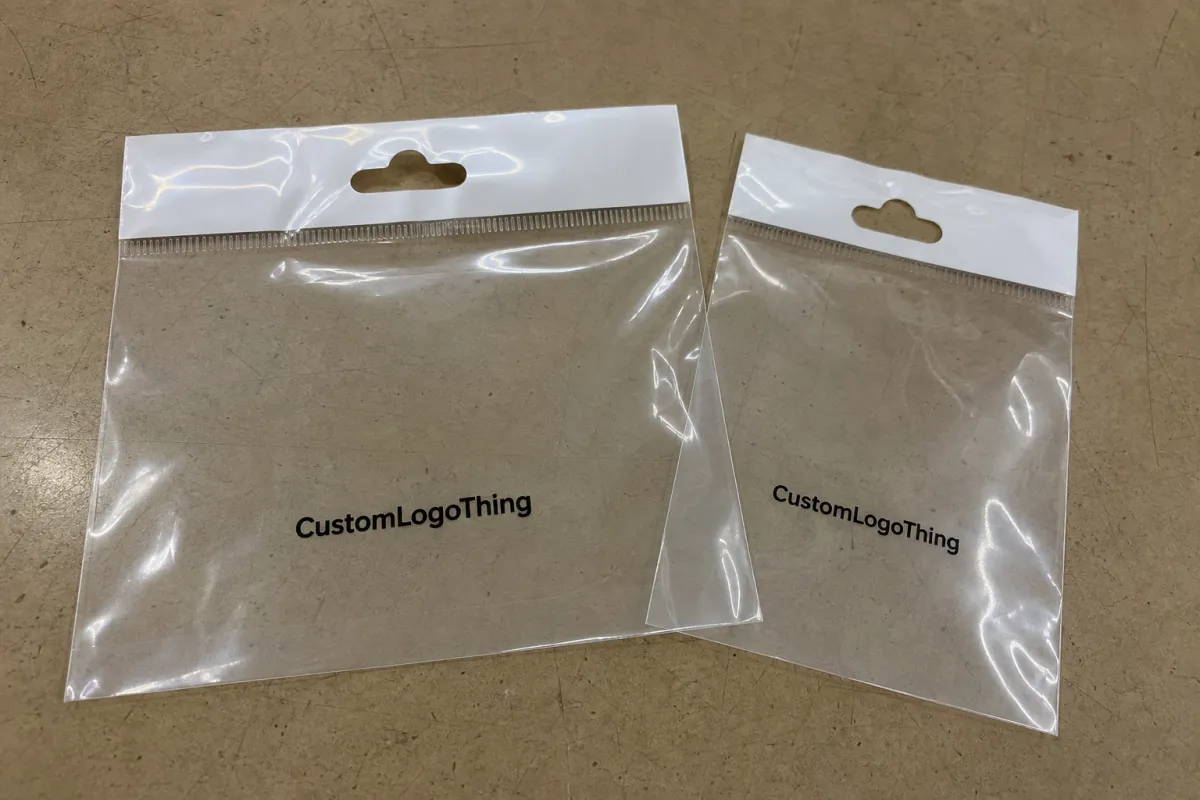
Small specification changes affect production in different places. A slight header height increase changes the dieline. A printed logo adds press setup. A stronger hang hole can slow punching and inspection. Even a modest shift in carton count changes how much labor goes into pack-out. That is why opp header Bags Unit Cost is usually a stack of decisions, not one material price.
Take a simple example. A clear 3" x 5" bag with a plain header often prices very differently from the same size with a printed header card, even if the body film is identical. Add two print colors, a reinforced euro slot, and a tighter inner pack, and the cost moves again. Buyers sometimes compare those quotes as if they were the same item, then wonder why the numbers do not line up.
The bigger lesson is channel fit. A bag that hangs on a pegboard in a chain store has different needs from one that ships in mixed cartons to a fulfillment center. Retail-facing packaging usually asks for better print clarity, a stiffer header, and more attention to hole placement. Warehouse-facing packaging can be simpler, as long as it protects the product and packs efficiently.
Vague specs do not produce cheaper packaging. They usually produce padding, rework, and a quote that is hard to trust.
For a broad reference point on packaging terms and procurement basics, packaging.org is useful. Still, the real answer lives in the details of your build, not in a category definition.
OPP Header Bag Construction, Materials, and Display Options
OPP means oriented polypropylene, a film chosen for clarity, stiffness, and a clean retail look. It gives the package a crisp appearance that softer films cannot match. For lightweight goods, that visual discipline matters. A wrinkled bag or sagging top edge can make a product look cheaper than it is.
A header bag has four parts buyers should think about separately: the clear body, the header area, the hanging feature, and the closure or seal. The body is usually transparent so the product stays visible. The header can be plain, printed, or paired with a card insert. The hanging feature may be a round hole or a euro slot. The seal can be a simple top seal, side seal, or another format depending on the production line and the product shape.
The header stock is where many quotes diverge. A plain unprinted header is usually the lowest-cost option. Printed card adds branding, barcode space, handling notes, and shelf discipline, but it also adds prepress work and color consistency checks. If the buyer wants paperboard, coated paper, or FSC-certified stock, that choice affects both sustainability documentation and price.
Display hardware is not a minor detail. A round hang hole may work fine for a local display hook, while a reinforced euro slot tends to survive distribution and retail handling better. Buyers who sell through multiple channels often need a package that looks polished on shelf but still travels well in transit. That balance changes how thick the film should be and how rigid the header needs to feel.
One common mistake is asking for a beautiful header without checking how it interacts with the product inside. If the bag is too tall, too wide, or too loose, the item can drift inside the package and blur the graphic area. If the header is too small, the design has nowhere to breathe. The most cost-effective package is usually the one that fits the product closely and leaves only the space that is actually needed.
Sizing, Thickness, and Pack-Out Specs Buyers Should Lock In
Size should never be reduced to width and length alone. A useful spec sheet includes finished bag dimensions, usable body length, header height, seal width, and exact hang-hole placement. Those numbers matter because a few millimeters can decide whether the package hangs straight or looks off-center once it reaches the peg. If the product is snug inside the bag, those dimensions become even more critical.
Film thickness is another decision that should be based on handling, not habit. Lighter gauge film may be fine for very small or low-value items. Heavier gauge film can hold shape better, feel more premium, and resist wrinkling during display and shipping. The trap is obvious: shaving thickness too aggressively may save a fraction of a cent, then cost more later if the bag looks flimsy or tears in transit.
Pack-out is where hidden costs often show up. How many bags go into an inner bundle? How many bundles per carton? Are cartons going to a warehouse, a retailer, or a fulfillment center? Each choice affects labor, carton material, and freight cube. A tight carton can reduce shipping volume, but if the packing sequence becomes awkward, the labor cost may erase the gain.
Tolerance deserves its own line on the spec sheet. If the product is narrow, irregular, or paired with a printed insert, the supplier needs real dimensions instead of estimates. A small change in width can affect the seal, the visual alignment, and how the package presents under store lighting. Buyers who skip tolerance discussions usually discover the problem after samples arrive.
- Width and length: confirm finished dimensions, not rough open size.
- Header height: reserve enough room for branding, code space, and the hang feature.
- Film thickness: match gauge to handling needs and shelf appearance.
- Carton count: decide whether storage efficiency or pack speed matters more.
- Tolerance: specify acceptable variation before production starts.
OPP Header Bags Unit Cost, MOQ, and Quote Inputs
For most buyers, opp header bags unit cost is shaped by five levers: quantity, film thickness, print coverage, header complexity, and packing requirements. Once those are fixed, the quote becomes much easier to interpret. If they are not fixed, the price may look attractive while hiding a different spec behind it.
MOQ matters because setup costs have to be spread over the run. Short orders usually carry a higher per-piece price, while larger orders often improve pricing because press setup, cutting setup, and inspection time are diluted across more units. That does not mean the biggest order is always the right move. It means the order should match sales velocity, storage space, and reorder rhythm.
A complete quote request should include final dimensions, film gauge, header style, artwork status, print colors, target quantity, ship-to destination, and the delivery window. If any of those are missing, the factory has to make assumptions. Assumptions cost money. They also make it hard to compare one supplier’s quote with another’s.
Some charges are normal but easy to overlook. Tooling may be required for custom print plates or special punching. Proofing may be billed once per design. Samples, freight, and unusual retail packing can sit outside the unit price. A good quote lists those items clearly instead of folding them into a number that looks simple but is difficult to audit later.
| Spec Level | Typical Use | Indicative Unit Cost | Common Cost Drivers |
|---|---|---|---|
| Plain clear OPP header bag | Simple retail or accessory packaging | $0.05-$0.11 | Quantity, film gauge, carton count |
| Printed header, one side | Brand-forward shelf display | $0.10-$0.22 | Print colors, proofing, setup charges |
| Heavier gauge with printed header | More rigid presentation, higher handling needs | $0.16-$0.30 | Material weight, packing labor, freight |
| Complex header with special pack-out | Retail programs with tighter display rules | $0.18-$0.35+ | Tooling fees, special finishing, inspection |
Those figures are directional only. A 5,000-piece order usually prices differently from a 20,000-piece order, and two print colors will not land at the same unit price as a plain header card. Treat the table as a planning tool, not a promise. The only accurate number is the one built from your actual spec.
Artwork Approval Process and Production Steps
The production path should be orderly: inquiry, proof, sample review, approval, production, quality check, packing, and dispatch. That sequence sounds obvious, yet it is where many orders lose time. If the artwork arrives late or the dieline is wrong, the schedule stretches and the price may shift if the factory has to redo work.
The dieline is the piece buyers should treat as non-negotiable. It shows where the header begins, where the hang hole sits, and how much safe space remains for copy and logos. If the design pushes too close to the hole or fold, the package can look crowded and become harder to read from a distance. The graphic area needs to be set before final artwork is approved.
A digital proof is often enough for simple layouts. A physical sample becomes more useful when the print is detailed, the packaging is display-critical, or the product fit is tight. Even a clean proof cannot show how the bag behaves in hand or how the film reflects light on a shelf. For retail packaging, those details can matter more than the flat artwork view suggests.
The best approval checklist is short and specific:
- Hang-hole placement so the bag displays straight.
- Logo position so branding is centered and readable.
- Color expectation so the printed result does not drift from the proof.
- Product fit so the item does not distort the face of the bag.
- Barcode and copy space so retail data remains legible.
For products that move through retail distribution or rough transit, it can help to look at transport testing guidance from ISTA. Not every run needs advanced testing. Some do. The point is to know whether the package needs basic shelf protection or enough resilience to survive long shipping chains, mixed handling, and carton stacking.
Approval discipline does more than prevent mistakes. It stabilizes the quote. A clean proof process keeps opp header bags unit cost from changing after the order has already been priced.
Lead Time, Packing Counts, and Freight Planning
Lead time is shaped by three things first: whether the material is stock or custom, how quickly artwork is approved, and whether the order needs printed headers or special packing. A plain, unprinted run can move faster than a custom print job with several revision rounds. If specs change after approval, the calendar usually expands.
Incomplete files are a common source of delay. So are unclear carton instructions. If the factory has to ask whether cartons need to be master-packed for export, palletized for distribution, or prepared for direct-to-store replenishment, the packing plan stops until someone answers. Those are not large delays on their own, but they stack up fast when a launch date is fixed.
Freight belongs in the landed cost. Carton size affects cube. Cube affects freight. Freight affects the real economics of the order. A package that saves a little at the unit level can become expensive if the carton is oversized or fragile. In many cases, the smarter move is to adjust bundle count or carton dimensions before production starts.
Practical planning works better than optimistic dates. A straightforward custom print order may need time for proof approval, production, inspection, and export packing. Multiple print colors, specialty finishing, or extra samples can extend the schedule enough to matter for a promotion or seasonal sell-in. Build the timeline backward from the date the product must be usable, not from the date the quote was requested.
That mindset protects margin. It also keeps opp header bags unit cost aligned with the true landed cost instead of a unit price that ignores freight, packaging, or rush handling.
How to Compare Suppliers Before You Place the Order
Compare suppliers only after the specifications match line by line. A lower quote is not useful if the material grade, thickness, print setup, or carton count is different. This is where a lot of purchasing mistakes start: the numbers look close, but the products are not the same.
Ask for a spec sheet that lists film thickness, seal consistency target, hole placement method, and inspection steps. If a supplier cannot explain how they control those variables, the quote may not survive production. Buyers do not need factory poetry. They need a clear account of what is being checked, how often, and against which standard.
Sample support is worth more than many teams admit. Fast answers help, but fast answers with a sample help more. A physical sample lets the buyer check print density, hole alignment, clarity, and fit before committing to a full run. That is a small step with a large upside, especially when the package will sit in front of customers.
A sensible comparison method looks like this:
- Match the specifications exactly.
- Confirm whether setup and proofing are included.
- Check whether freight is quoted or separate.
- Review sample support and response speed.
- Choose the offer that balances cost, consistency, and timeline.
Packaging orders often expose how a supplier works under pressure. Clear communication early usually predicts cleaner production later. That matters more for custom retail packaging than for commodity stock, because one overlooked detail can affect an entire batch.
Next Steps for a Fast, Accurate Factory Quote
If you need a useful quote, send the full spec set in one message: product size, film thickness, header style, print needs, quantity, carton preference, destination, and target in-hand date. That is the fastest way to get a price that reflects the real order rather than a placeholder estimate. It also reduces the number of revision cycles before production starts.
Ask for a proof or sample at the same time you request pricing. That keeps the visual review tied to the financial quote, which matters when the package is going to sit on a retail peg or carry a brand-facing front panel. If the proof changes the design, you want to see that early, not after the order is complete.
Before you place the order, compare at least two like-for-like quotes and verify that each one covers the same scope. If one supplier includes freight, proofing, and special packing while another does not, the lower number is not actually lower. The better choice is usually the one with clear communication, stable specs, and a realistic timeline.
For buyers managing retail packaging, the goal is not merely to find a low number. It is to land a quote that reflects the actual package, the actual schedule, and the actual landed cost. That is where opp header bags unit cost becomes useful: not as a slogan, but as a number you can build and trust.
FAQ
What information do you need to quote opp header bags unit cost accurately?
Provide the final bag size, film thickness, header style, print colors, and target quantity. Include whether the header is plain or printed, plus any special hole or hanging requirements. Add the shipping destination and required delivery window so freight and timing are quoted correctly.
Does a higher MOQ always lower the price per bag?
Usually yes, because setup and material waste are spread across more units. The savings can flatten out if the order needs more cartons, more print colors, or heavier freight. Ask for tiered pricing so you can see where the best break point sits.
Can I approve a sample before the full order goes into production?
Yes, and it is the best way to confirm size, clarity, hole placement, and overall presentation. A digital proof is often enough for simple orders, while a physical sample is better for detailed print work. Approved samples reduce the risk of costly changes after production starts.
What usually affects lead time the most?
Artwork revisions and approval speed are the biggest schedule factors. Custom materials, printed headers, and peak production periods can add time. Fast, complete specs usually move an order through the line more smoothly.
How should I compare two quotes for OPP header bags?
Make sure the material, thickness, dimensions, and print setup are identical on both quotes. Check whether setup, proofs, packing, and freight are included or listed separately. Choose the supplier that gives the clearest spec sheet and the most reliable communication.

