For buyers approving a retail-ready cap, a beauty Embroidered Baseball Caps material sample guide is not a formality. It is the difference between a controlled launch and a row of small but expensive surprises: thread that shines too hard under store lights, a crown that collapses where it should stand firm, or a logo that looked clean on screen and crowded on the finished panel. A digital proof can confirm placement and color intent. It cannot tell you how the fabric behaves under stitch tension, how the edge of a monogram holds on a curved front panel, or whether the cap still reads premium after handling and shipping.
A sample is not just a visual check. It is a stress test for fabric, thread, fit, and presentation.
That matters more in beauty than in many other categories. Salon retail, influencer merch, staff uniforms, and event giveaways all live in the same narrow space: they need to look polished without appearing overworked. A cap can be technically accurate and still feel wrong if the structure is too soft, the embroidery is too glossy, or the color temperature shifts under fluorescent lighting. The sample is where those mismatches show up early enough to fix.
There is also a production reality buyers sometimes underestimate. Embroidery is built on a three-part system: the cap body, the thread, and the stabilizer or backing under the stitch area. Change one part, and the result changes with it. That is why a sample should be judged as a complete object, not a loose decoration attached to a blank.
Beauty embroidered baseball caps material sample guide: why it can prevent bulk surprises
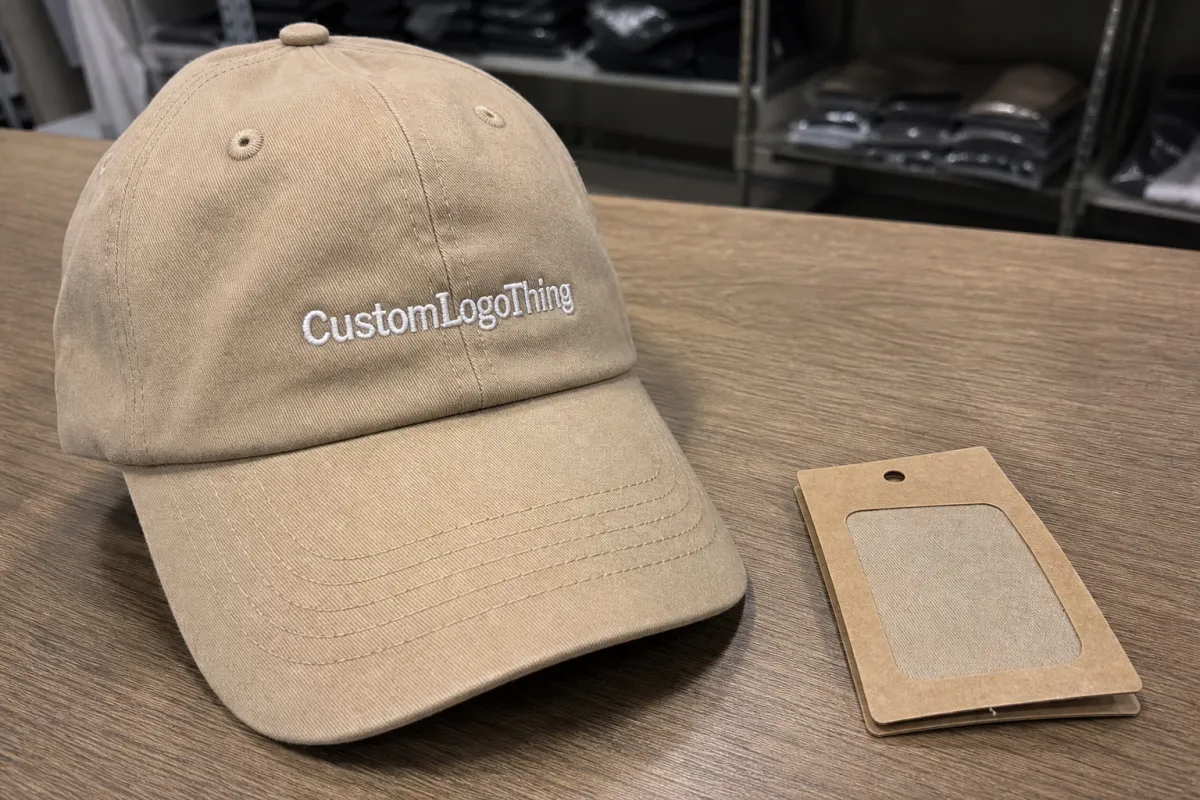
A beauty Embroidered Baseball Caps material sample gives you physical proof of texture, stitch behavior, and structure. That is especially important for embroidered headwear because the design is not printed flat. It is built with thread density, stitch direction, and machine tension, all of which interact with the fabric beneath. A logo that looks balanced in vector form can turn dense or awkward once the needle path is translated into actual stitches.
The most common surprise is scale. A mark that looks crisp on a screen may read too small on a curved front panel, especially if the linework is delicate or the lettering is narrow. Embroidery needs room. Tiny serifs, hairline strokes, and thin outlines often close in once they are stitched, and the cap’s shape can exaggerate that effect. What looked elegant in a mockup can become busy in hand.
Samples also reveal how the cap “personality” changes with construction. A structured six-panel cap with a firm front panel gives embroidery a cleaner stage. An unstructured crown feels relaxed but can make fine artwork look less defined. A shallow crown shifts the logo closer to the brim and can crowd the design; a deeper crown may position it higher than expected. Those differences are minor on paper and obvious in person.
Buyers used to packaging proofs will recognize the pattern. A carton spec sheet tells part of the story, but board thickness, scoring, and coating only make sense when you hold the box. Caps follow the same logic. If the blank color is wrong, the crown shape is off, or the fabric cannot support the intended stitch density, the sample has already done its job by exposing the issue before bulk production.
For beauty brands, this check is more than defensive. The cap often sits beside lip kits, brushes, salon uniforms, or PR boxes. If it looks even slightly off, the whole set can feel less considered. Sample approval is where the brand protects that impression.
How the fabric, thread, and backing behave on a finished cap
The fabric is the first variable that changes the end result. Cotton twill remains a common choice because it has enough body for embroidery and usually gives a matte, classic finish. Brushed cotton feels softer to the hand and can read more premium in a beauty setting, though the nap sometimes softens stitch edges. Polyester holds color well, resists wrinkling, and is practical for larger runs that will be packed, shipped, and handled repeatedly. Blends sit between those options and are often chosen to balance cost, breathability, and structure.
Backing, or stabilizer, matters just as much as the outer fabric. Without enough support, stitches sink into the cloth, fine letters lose edge clarity, and the front crown can pucker after wear. With the right backing, the embroidery sits higher, the front panel keeps its shape, and the logo remains legible from a distance. On softer fabrics, backing is not optional. It is the difference between a cap that looks finished and one that looks tired before it even leaves the warehouse.
Thread choice changes the mood immediately. Polyester embroidery thread is generally chosen for color stability and abrasion resistance. Rayon-style thread creates a brighter sheen and can look polished in photos, which some beauty buyers like. That same sheen can become a problem if the brand wants a restrained finish. Under bright retail lighting, a glossy thread can make the logo look louder than intended. Under dim lighting, it can disappear into the fabric if the contrast is too low.
Construction details influence the result as much as material choice. Seam placement, brim curve, and the distance between the logo and the front seam all affect how the design lands. A graphic centered perfectly on a digital template may shift once it crosses a panel seam or a crown break. That is why the sample should be inspected from more than one angle. Hold it at arm’s length. Tilt it. Put it on the head. The logo has to read clearly in the same way a shopper, staff member, or camera lens would see it.
Packaging still matters at the sample stage. A cap sent in corrugated cardboard with kraft paper wrapping and a clean spec card usually feels more controlled than one tossed into a loose polybag. If the brand has sustainability requirements, ask whether the shipper can use FSC certified cartons or inserts made from recycled materials. Some programs also request biodegradable packaging for the outer shipper, especially when the line is tied to clean beauty, natural ingredients, or low-waste positioning.
For transit and handling expectations, the International Safe Transit Association has useful guidance on package testing and distribution risks: ISTA. For chain-of-custody information on paper-based packaging, FSC is the reference point for certification basics.
Key material factors that change the final look and wear
Hand feel is one of the fastest clues to quality. A heavier cap usually feels more substantial and holds its shape better, but it can also trap more heat during long wear. A lighter cap breathes better and feels casual, yet it may read underbuilt if the buyer expects a premium retail item. The right balance depends on whether the cap is intended for staff use, consumer sales, or limited-edition promotional packaging.
Color behavior can be deceptive. The same brand color shifts across fabrics, and the change is not always subtle. A red can look deeper on brushed cotton, brighter on polyester, and slightly muted under warm indoor light. Thread sheen makes the effect more dramatic. Matte fabric with glossy thread creates strong contrast; satin-like fabric can flatten the embroidery and reduce legibility. Samples should be checked in daylight and under store-style lighting because the same cap can look calm in one setting and too loud in another.
Fit details are easy to overlook and hard to excuse once the product is in use. Closure type, sweatband finish, and interior seam tape influence comfort immediately. A metal buckle often feels more refined than a plastic snap, but it adds weight and cost. A soft sweatband can help if the cap will be worn for long stretches by salon staff or event teams. A rough interior finish, by contrast, can make the whole product feel cheaper than the embroidery suggests.
Logo scale is another place where buyers either overspecify or underspecify. Fine lines, tiny type, and delicate script often need simplification before production. A thin outline that looks elegant in a mockup may vanish after stitching, particularly if the thread color is close to the cap color. Sample approval should answer a practical question: can the design be read quickly from a normal viewing distance?
That question becomes even more important for beauty products because the audience often sees the cap in motion. Staff wear it while moving around a salon. Customers see it while browsing a shelf or scrolling a product photo. The cap has to hold up in each context. A design that only works in a perfectly staged image is not ready yet.
Sample cost, pricing variables, and MOQ tradeoffs
Sample pricing usually combines real labor and setup work. A fair quote often includes blank cap sourcing, digitizing, embroidery setup, stitch-out labor, inspection, and shipping. If any of those pieces are hidden inside a single number, ask for a breakdown before comparing offers. A low sample quote can look attractive and still become expensive once setup or revision fees appear.
For a basic embroidered cap sample, a common range is $25-$85, depending on the blank, the complexity of the artwork, and whether digitizing already exists. Pre-production proofs, which are meant to mirror the final bulk run more closely, often run higher because the supplier is matching exact materials and production settings. Premium custom samples can move beyond that if the order needs specialty fabric, unusual closures, or several revision rounds.
Pricing is shaped by stitch count, panel construction, and body style. A structured cap with a straightforward logo usually costs less to sample than a soft cap with multiple thread colors, dense fill areas, or small lettering. If the design includes custom panels, wash effects, or a less common closure, expect the sample fee and the final unit price to move upward. That is not a penalty so much as a reflection of complexity.
| Sample option | Typical use | What is usually included | Typical cost range |
|---|---|---|---|
| Basic decoration sample | Early visual check | Blank cap, standard embroidery, basic shipping | $25-$60 |
| Pre-production proof | Final approval before bulk run | Exact fabric, thread match, placement verification, inspection | $60-$120 |
| Premium custom sample | Retail or brand launch | Special blank, custom details, extra revisions, priority handling | $100-$180+ |
MOQ tradeoffs deserve equal attention. A low-cost sample does not guarantee a low production price. Small orders often carry higher per-unit costs because setup is spread across fewer pieces. Custom construction can also push the MOQ higher if the factory needs a certain volume to make the run efficient. Buyers should ask for separate numbers for setup, sampling, decoration, and production. Bundled pricing makes it difficult to see which variable is driving the total.
That clarity helps especially in beauty launches, where the order may be tied to a seasonal campaign, a salon rollout, or a retail test. If the quote changes because of stitch count, blank quality, or packaging requirements, the reason should be visible. Otherwise, comparing suppliers becomes guesswork.
Sampling process, timeline, and turnaround expectations
The sampling workflow is usually simple on paper and messy in practice. Artwork review comes first. Then digitizing converts the logo into a stitch file, which matters because embroidery is not drawn like print; it is mapped in direction, density, underlay, and stitch length. After that, the supplier selects the blank cap, stitches the sample, inspects it, and ships it for approval.
Timing depends on how ready the artwork is and whether the exact cap body is already available. If the logo needs cleanup, that adds time. If a specific fabric shade or closure style has to be ordered before sampling begins, that adds more. Thread matching can also slow the process when the brand wants a narrow color target instead of a standard stock thread. A simple sample with ready artwork may turn around in roughly one to two weeks; a more exact pre-production proof often takes longer.
Fast samples are not always better samples. A rushed proof can miss small but meaningful issues: a logo sitting a few millimeters too high, thread that looks too bright under warm light, or a panel seam that pulls the design off center. For retail or campaign use, the extra days spent at the sample stage are usually cheaper than correcting a full run later. Speed matters, but only after the core details are verified.
A good sampling process should answer three questions before anything is approved:
- When does the sample ship?
- How long is the approval window before bulk production starts?
- What happens if a revision is needed after the first sample arrives?
Those questions sound basic because they are. They also prevent the most common breakdown, where one side assumes the sample is a loose visual reference and the other side treats it as the final production standard. The more specific the approval path, the fewer arguments later.
Mistakes that make a sample mislead you
The first mistake is judging the cap only by a phone photo. Compression hides thread texture, deepens shadows, and flattens the difference between matte and glossy surfaces. A cap that looks clean in a shared image can feel entirely different in person. If the decision depends on color or stitch detail, the physical sample matters far more than the file sent through chat.
The second mistake is forgetting to wear it. A cap can sit beautifully on a table and still feel wrong on the head. Crown depth, panel height, and closure position change fit in ways that are hard to judge unless the cap is actually worn. Even a slight change in brim angle can alter how the logo reads during normal use.
Packaging context is easy to ignore and hard to fix after approval. If the cap will be sold in a box, displayed on a peg, or stacked with beauty merchandise, the sample should be evaluated in that setting. A cap that looks premium alone may feel off beside the rest of the line if the color tone or embroidery scale does not match. Buyers selling into salons or gift sets should think about the whole presentation, not just the cap in isolation.
Another common error is assuming one good sample proves repeatability. One sample can be excellent because the technician was especially careful or because the material batch was forgiving. The real question is whether the factory can reproduce that result across the full order. If the backing, stitching, or placement is likely to vary, ask for a second sample or a clearer production spec before signing off.
There is a reason experienced buyers are suspicious of a sample that looks “too perfect” without documentation. A sample should not just impress. It should explain what can be repeated and what cannot. If the approval note is vague, the production run will inherit that vagueness.
What to do after the sample arrives
Start with daylight. Then check the cap under indoor lighting. That simple habit reveals whether the embroidery reads the same way in both environments, which matters if the cap will be photographed, sold in a store, or worn at events. Compare the sample against the original artwork, the brand color reference, and the written brief. If the logo placement is off by a few millimeters or the thread shade shifts beyond tolerance, note it immediately.
Next, wear the cap. Flex the brim, settle it on the head, and see whether the embroidery remains balanced after movement. Watch the front panel after a few minutes of wear. If it creases quickly or the logo seems to sit too low, document that. A sample should prove look and comfort together. Either one on its own is not enough.
Then record the approved details in a simple spec sheet. Include thread color codes, logo size, placement measurements, crown style, closure type, and backing notes. If the sample arrived in corrugated cardboard with kraft paper wrapping, note that as well when presentation matters to the final product. Packaging can be part of approval if the cap will ship in a retail box, PR kit, or salon display. If the brand wants a lower-impact presentation, record whether recycled materials, FSC certified components, or biodegradable packaging are required for the final shipper.
If changes are needed, request them before bulk production starts. Once the supplier treats the sample as the reference, later edits become slower and more expensive. Precision matters here. Vague approval language causes more trouble than a blunt correction ever will. A clean sign-off note can save days once production is underway.
For the beauty category, the strongest sample approval usually answers four practical questions: does the embroidery read cleanly, does the cap hold its shape, does the material feel right in hand, and does the packaging match the brand standard? If those four checks pass, the sample has done real work. If one of them fails, the cost of fixing it now is still much lower than fixing it after the order ships.
Frequently Asked Questions
What should I check first on an embroidered beauty cap sample?
Start with logo placement, stitch clarity, and thread color in daylight. After that, check the cap shape, fit, and interior finishing before approving anything else.
How long does a beauty cap sample usually take to make?
Timing depends on artwork readiness, material availability, and whether digitizing is already complete. Simple samples can move in about one to two weeks, while detailed embroidery or special blanks usually take longer.
Why does the sample price change from one quote to another?
The main drivers are stitch count, decoration complexity, blank cap cost, setup work, and shipping. Some quotes also include digitizing or revision fees, while others separate them out.
Can I approve a sample if the color is slightly off?
Only if the color shift is acceptable for the brand and can be repeated in production. If the mismatch matters in store lighting or product photos, request a revision first.
What happens after I approve the material sample?
The factory usually locks the spec, confirms the production quantity, and starts bulk scheduling. Any later change can affect both cost and timeline, so approval should come after every detail is checked.

