Wedding Embroidered Baseball Caps Bulk Order Planning Guide
wedding embroidered baseball caps Bulk Order Planning works best when the buyer treats the cap like a practical brand item, not a decorative afterthought. Guests wear it, pack it, photograph it, and often keep using it long after the event. That gives the cap an unusual advantage: it has utility before, during, and after the wedding.
For planners, couples, and bridal-party buyers, the numbers matter as much as the look. MOQ, stitch count, cap construction, and carton labeling decide whether the order arrives cleanly or turns into a last-minute scramble. A strong plan keeps the design simple, the proof clear, and the delivery window realistic.
"A clean proof saves more money than a rushed reprint."
Why custom caps outperform most wedding favors
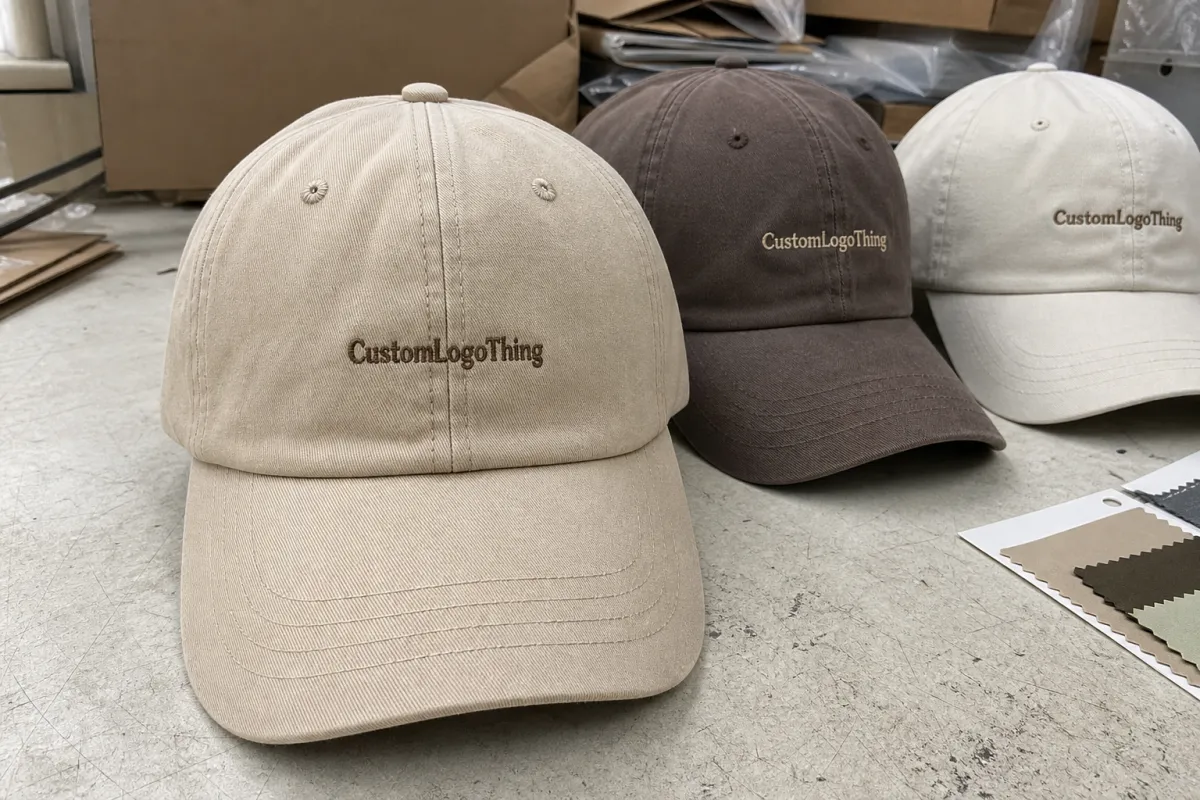
Most wedding favors fail for the same reason: they are charming in theory and inconvenient in practice. A custom embroidered cap does the opposite. It solves a real problem, especially for outdoor ceremonies, beach receptions, and destination events where guests want shade, comfort, and something that fits without sizing drama. That is why wedding Embroidered Baseball Caps bulk order planning has become a practical sourcing decision, not just a style choice.
The operational upside is bigger than most couples expect. One cap design can cover welcome bags, bachelorette weekends, rehearsal-dinner gifts, bridal-party photos, and vendor identification without splitting the order into four separate products. That reduces approval cycles and helps the buyer keep artwork, thread colors, and packaging consistent across the event.
- Wear rate is higher than for fragile favors, candles, or glassware.
- Size flexibility is built in with adjustable closures, which matters for mixed guest groups.
- Shipping is safer because caps tolerate carton compression better than breakable items.
- Photos improve because a well-placed logo or monogram reads clearly in group shots.
From a packaging buyer's point of view, embroidered caps also create less operational risk than fixed-size apparel. You do not need a full size run. You do not need to split by body type. And you do not need to explain why a medium ran out three days before the event. For larger programs, especially those tied to a recurring planner account or multi-event package, the structure looks a lot like the buying logic behind our Wholesale Programs.
Honestly, the smartest orders are usually the simplest ones. A cap with a sharp monogram, one thread color, and a clean front panel tends to outperform a more complicated favor that asks too much of the budget and too much of the guest.
Choosing the cap style, fit, and finish
The right silhouette changes how the cap reads in photos and how it feels on the day. Structured baseball caps create a cleaner front panel for embroidery and hold their shape well during shipping. Unstructured caps look more relaxed, which can work for casual welcome events or lakehouse weddings. Trucker styles add airflow, so they make sense for hot-weather venues where comfort matters more than formality.
| Cap style | Look | Best use | Typical cost impact |
|---|---|---|---|
| Structured baseball cap | Clean, firm front panel | Ceremony crews, branded guest favors, polished gift sets | Usually the most predictable base price |
| Unstructured cap | Soft, relaxed profile | Beach weddings, weekend trips, casual bridal events | Often similar to structured, sometimes slightly lower |
| Trucker cap | Mesh-backed, breathable | Summer receptions, outdoor hospitality teams, daytime events | Can add a small premium depending on the front panel |
Fit choice matters just as much. Snapback and strapback closures are easiest for mixed groups because they distribute cleanly without asking for head measurements. Fitted caps look sharper for a very specific team or crew, but they create more risk if the headcount shifts. Adjustable caps remain the safest option for bulk wedding orders because they reduce size-related waste.
Material selection changes both appearance and stitch quality. Cotton twill remains the classic wedding option because it takes embroidery cleanly and photographs well. Performance fabrics can work for warmer climates, but they need careful test stitching so the needle does not pucker the surface. Mesh-backed truckers breathe better, though the embroidery area is smaller and must be planned with more restraint.
Color is not just aesthetic; it affects perceived value. Neutrals like ivory, black, stone, navy, and soft sage photograph consistently and match most wedding palettes. Accent colors can work too, especially if the caps need to mirror bridesmaid outfits, venue branding, or welcome-kit inserts. The trick is to make the hat look intentional, not promotional.
Embroidery specs that control the final look
Embroidery is where the order either looks premium or looks rushed. Buyers often compare two proofs and assume the difference is only artwork, but stitch count, thread density, and logo size can change the result dramatically. A simple wordmark on a cap front may use 5,000 to 8,000 stitches. A more detailed monogram or crest can move into the 9,000 to 14,000 range, which increases machine time and can force a larger price break.
Digitizing is the hidden cost
Good embroidery starts with digitizing, which translates art into a stitch file. For a basic monogram or short line of text, digitizing is usually straightforward and often lands around $25 to $75. Thin lettering, small flourishes, and multi-part crests take longer because the digitizer has to protect legibility at a small scale. That is the part buyers miss: a logo that looks elegant on screen may collapse once it is reduced to cap size.
Thread thickness and underlay are not decorative details. They determine whether the embroidery sits flat or puckers at the edges. A strong supplier should tell you the minimum line thickness they can stitch cleanly, often around 0.8 to 1.0 mm for readable small text, though this depends on the cap fabric and the machine setup. Backing matters too. Tear-away backing works well for lighter designs, while cut-away backing can support more structure on performance fabrics.
Placement changes perception
Front-center embroidery is the obvious choice for most wedding orders because it gives the highest visibility. Side embroidery is useful for initials, a date, or a discreet role marker such as planner, crew, or vendor. Back embroidery works best when the front needs to stay minimal. If the design uses a front and side hit together, keep one element small so the cap does not start to feel crowded.
Proofing should always include thread color references, placement dimensions, and the final cap color. A buyer should also ask for a mockup that shows the logo on the actual silhouette, not just on a flat rectangle. That single step catches more mistakes than most revision rounds. If the supplier cannot explain why a detail is being simplified, the art probably needs another pass.
For cap embroidery, thin lines and tiny text are usually the first things to fail. Protect readability first, ornament second.
Pricing, MOQ, and unit cost drivers for wedding embroidered baseball caps bulk order planning
wedding Embroidered Baseball Caps Bulk Order planning gets much easier once the buyer understands the pricing stack. The biggest drivers are cap style, stitch count, embroidery size, quantity, and whether the artwork needs fresh digitizing or multiple revision rounds. A simpler order can be surprisingly efficient. A complicated one can become expensive even at moderate volume.
In practice, many bulk wedding orders fall into the following ranges for a basic single-location embroidery job. These numbers are directional, not absolute, because fabric quality and setup complexity move the price quickly.
| Quantity | Typical unit price | Digitizing/setup | Notes |
|---|---|---|---|
| 24-49 pcs | $13-$20 | $25-$75 | Best for bridal-party gifts or small venue teams |
| 50-99 pcs | $10-$15 | $25-$75 | Common for welcome bags and mixed guest packs |
| 100-249 pcs | $8-$12 | Often reduced or waived | Strong price break once setup spreads across more units |
| 250-499 pcs | $6.50-$10 | Usually waived on simple art | Good fit for destination events or multi-day programs |
| 500+ pcs | $5-$8 | Usually bundled | Works best with a standardized design and fewer thread colors |
MOQ depends on the cap body, closure, and decoration complexity. A simple front stitch on a standard cotton twill cap may start at 24 or 48 pieces, while specialty materials, extra placements, or custom color runs can push the minimum higher. That is normal. Every extra variable adds machine time, inspection time, or color-matching risk.
For quote requests, the shortest path is the best path. Include final quantity, cap style, embroidery placement, thread colors, target delivery date, and the ship-to address. If the order needs different names or roles, specify how many of each before the quote is issued. Ambiguity slows the process and usually creates a second proof cycle. If your team wants a quick reference for common setup questions, our FAQ covers the basics in plain language.
One more practical detail: freight can change the landed cost more than buyers expect. A cap order that looks inexpensive on a unit basis can still land late or over budget if the carton count is wrong, the delivery address is a venue with limited receiving hours, or the shipping method was chosen too aggressively.
Order process and turnaround from proof to delivery
The cleanest orders follow the same path almost every time: request quote, submit artwork, confirm mockup, approve sample if needed, move into production, then pack and ship. The sequence sounds obvious. The risk is in the gaps between each step, because that is where wedding schedules get squeezed.
- Quote stage: The supplier confirms quantity, cap style, decoration area, and price break.
- Artwork stage: The logo or monogram is prepared for digitizing and placement mockups.
- Proof stage: Thread colors, sizing, and stitch direction are checked before production starts.
- Production stage: Caps are embroidered, trimmed, inspected, and counted.
- Shipping stage: Cartons are labeled, tracked, and delivered to the final address.
Typical timing is manageable if the buyer stays decisive. Simple text-only orders can often move from proof approval to finished production in 7 to 12 business days, while more detailed artwork, multi-color thread changes, or special packing instructions can push that window to 12 to 18 business days. Rush service may shorten the schedule, but it can also narrow the revision window, which is a poor trade if the artwork is still unsettled.
Most delays come from predictable causes: missing logo files, slow proof approval, late color changes, and unclear split counts between bridal party, guests, and staff. A one-day delay in proofing often creates a bigger delay in shipping than the buyer expects. For venue deliveries, build in a buffer. A cap arriving at the hotel the day before the event is worth more than one shipped exactly on the deadline.
Ask three questions before paying: What is the written turnaround estimate? What shipping method is included? How long is the proof approval window before the order drops into production? That simple checklist prevents most surprises and keeps wedding embroidered baseball caps bulk order planning tied to a real schedule instead of a hopeful one.
What makes a supplier reliable for wedding orders
Reliability starts with proof accuracy. A strong supplier notices font issues, alignment drift, thread-color mismatches, and logo scaling problems before the embroidery machines start running. That saves money twice: once on production and once on rework. A weak supplier waits until the product is finished, which is too late for a wedding deadline.
Communication should have milestones. Buyers need a clear quote, a tracked proof revision, a production update, and a confirmed ship date that does not move after approval. If any of those steps are vague, the risk shows up later as a rush fee, a split shipment, or a missing carton. Good communication is not extra service. It is part of manufacturing discipline.
Packaging and carton labeling matter more than many apparel buyers realize. Wedding orders often ship to planners, hotels, venues, or gift-freight addresses, which means the box has to make sense the minute it lands. If caps are packed for parcel transit, it helps when the supplier thinks in terms of ISTA testing logic so cartons are less likely to fail in the channel. If the order includes presentation inserts or paper-based gift packaging, FSC-certified materials are worth asking about.
It also helps if the supplier can handle mixed order needs. Some weddings need different colorways, separate names, backup pieces, or special packout instructions for planners and vendors. That is common, not unusual. A supplier that can sort those variables without losing count is usually the one that protects the schedule.
Good vendors do not just sew a logo; they protect the approval path, the carton count, and the ship date.
Next steps for a clean bulk order submission
Build a one-page order brief before asking for quotes. Include quantity, cap style, embroidery placement, logo file type, thread colors, required delivery date, and ship-to address. That small prep step cuts the back-and-forth that usually stretches a simple order into three or four emails.
Separate the order into buckets if the event needs it. Bridal-party caps may deserve a higher-end finish, while vendor crew caps can stay simpler. Welcome-bag extras and replacement units should be counted separately so they do not distort the price tier. A split like that keeps the buyer from overpaying for the wrong pieces.
- Confirm spelling for names, dates, initials, and role labels.
- Check the stitch area so the artwork fits the cap shape.
- Approve the final hat color before the proof is locked.
- Ask for carton counts if the delivery goes to a venue or planner office.
Compare suppliers on the same terms, not on vague promises. If one quote includes digitizing and another does not, equalize the pricing before deciding. If one turnaround is shorter but leaves no revision buffer, that is not really faster. The best order is the one that arrives complete, readable, and on schedule. For wedding embroidered baseball caps bulk order planning, that is the standard that matters.
How many wedding embroidered baseball caps should I order for a bulk event?
Order for the confirmed headcount first, then add 5-10% for replacements, damaged pieces, and late additions. If the caps are going to both guests and staff, split the counts so the premium pieces are reserved for the people who need them most.
What is the usual MOQ for embroidered baseball caps in bulk?
MOQ depends on cap style, embroidery complexity, and whether the factory is running a standard or custom line. Simple front embroidery usually carries a lower minimum than multi-location artwork, specialty fabrics, or custom color programs.
How long does production take after I approve the proof?
Simple bulk orders can move quickly after proof approval, but timing changes with quantity, stitch detail, and seasonal demand. Ask for a written turnaround estimate that includes production plus shipping, not just the sew time.
What affects the unit cost of wedding embroidered baseball caps the most?
The biggest drivers are quantity, stitch count, cap quality, artwork complexity, and any setup or digitizing fees. Thread color changes and special placement can also raise cost if they require extra machine time.
Can I split one bulk order across different names or roles?
Yes, if the supplier allows variable personalization and the artwork is standardized enough to run efficiently. Ask how name changes affect proofing, lead time, and price before you finalize the order; that is the cleanest way to keep wedding embroidered baseball caps bulk order planning on budget and on time.