Logo Patch Beanies Print Method Comparison for Buyers
A logo patch beanies Print Method Comparison only becomes useful when it is tied to the actual beanie, not just the artwork file. On paper, embroidered, woven, printed, leather, and PU patches can all look acceptable. On a cuffed knit cap, the differences show up fast: edge quality, surface texture, readability, hand feel, and how the logo behaves once the fabric bends.
For buyers, the decision usually comes down to four questions: will the logo stay clear, will the patch feel right, will it hold up, and will it arrive on time at the right price? If the answer is yes to all four, the method is probably a fit. If one answer fails, the order often needs a different patch build or a simpler artwork layout.
The beanie itself matters as much as the decoration. A ribbed cuff, soft gauge knit, tall fold, or heavy yarn changes how much detail the patch can carry and where it can sit without looking awkward. A patch that looks premium on a sample board may be too rigid for a stretchy cuff. A patch that preserves fine detail may be the best technical choice for a small logo, even if it is not the most textured option.
Practical rule: choose the method that makes the logo readable on the finished beanie, not the method that looks best in isolation.
How Embroidered, Woven, and Printed Patches Are Built
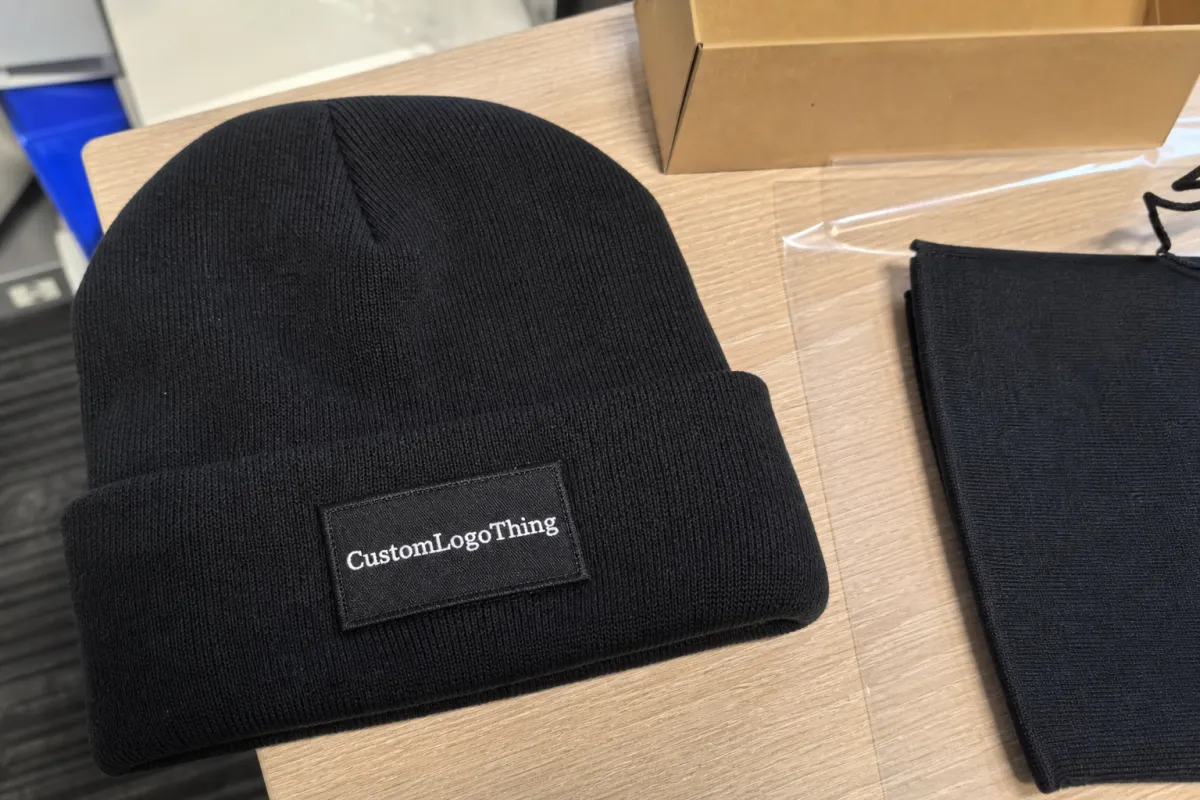
Embroidered patches use stitched thread over a backing, which gives them a raised, tactile surface. They suit bold marks, simple lettering, sports branding, and logos that benefit from texture more than precision. On a beanie cuff, embroidery can look substantial and familiar, but thin strokes, tiny type, and tight corners may close up if the art is not simplified.
Woven patches use finer thread and a tighter construction, so they can hold cleaner edges and smaller details. They sit flatter than embroidery, which helps when the beanie already has a lot of surface movement. If the logo has small text, hairline elements, or nested shapes, woven construction is often the safest textile option. The tradeoff is that it feels less raised and less textured than embroidery.
Printed patches are best when the artwork depends on color range rather than thread depth. Gradients, illustrations, and multicolor logos are easier to preserve in print than in stitch. The real difference is not just the image on top but the face material and finish underneath it. A good printed patch should keep the artwork legible without looking fragile, overly glossy, or prone to scuffing.
Leather and PU patches belong in the same comparison because they are common on beanies. Leather usually gives a more natural, premium, restrained look. PU is more consistent and often lower cost, while still delivering that debossed or molded patch feel. These options are less about fine color detail and more about tone, texture, and brand mood.
Attachment also affects performance. Sew-on is the most reliable for knit caps because it tolerates flex and repeated wear. Heat-applied or adhesive-backed versions can work, but the backing has to match the fabric movement. If the beanie will be handled a lot or packed tightly, ask how the patch is secured and whether the supplier recommends a sew guide or reinforced backing.
If the logo stops reading clearly when the cuff bends, the patch is too busy for the garment.
Cost, Pricing, MOQ, and Unit Cost Differences
Pricing starts with setup, and the methods separate quickly there. Embroidery usually needs digitizing and stitch planning. Woven patches need weave setup and artwork translation. Printed patches shift more cost into art prep, color control, and finishing. Leather and PU may require tooling or molding, depending on the effect.
Unit price then depends on size, number of colors, finish, backing, and quantity. Looking only at the per-piece number can be misleading. A cheaper patch can become more expensive overall if it needs extra proof rounds, slower application, or more complicated finishing. The real comparison is landed cost: decoration, sampling, freight, and any packaging or inspection requirements.
| Patch Method | Typical Use | Approx. Unit Cost at Mid-Low Volume | Common Setup Cost | Practical Notes |
|---|---|---|---|---|
| Embroidered | Bold logos, simple lettering, premium texture | $0.45-$1.20 per patch | $25-$75 digitizing | Strong hand feel; tiny text can close up |
| Woven | Small text, fine lines, cleaner edges | $0.30-$0.95 per patch | $35-$90 weave setup | Flatter surface; strong for detailed logos |
| Printed | Gradients, full color art, illustrated marks | $0.40-$1.10 per patch | $20-$80 art and finishing prep | Best for color range; finish affects durability |
| Leather / PU | Fashion, workwear, rugged branding | $0.50-$1.40 per patch | Varies by emboss or cut tooling | More about texture and mood than color detail |
MOQ usually follows the setup effort. Simpler patch styles and stock beanies can support lower quantities, while custom colors, multiple patch versions, or specialty finishes may push the minimum order up. If the run is small, buyers usually get better value from a method that needs less prep. At larger volumes, a more refined woven or printed patch can become cost-effective because the setup cost is spread across more units.
Ask about hidden line items early. Sampling, courier charges, PMS matching, rush fees, and special backings often matter more than the base decoration line. If the order includes retail packaging or inserts, those specs should be part of the quote. For paperboard or inserts, a standard such as FSC may matter to the buyer. If cartons must survive longer transit, references such as ISTA can be useful for packaging expectations.
The best value is not always the lowest quote. A method that produces a cleaner proof, fewer revisions, and a better final presentation can save time and reduce risk, even if the unit price is slightly higher. On a small product like a beanie, visible compromise tends to stand out immediately.
Process, Timeline, and Lead Time From Proof to Ship
The sequence is usually straightforward: artwork review, proof, sample if needed, patch production, attachment, inspection, and packing. Each step can slow down if the specs are still changing. Fast orders are usually the ones with the fewest open questions.
Sample approval matters because beanies hide problems that flat artwork does not show. A patch can be correct on screen and still feel too large, too stiff, too low-contrast, or too crowded on the cuff. Catching that in sample stage is usually cheaper than fixing it after bulk production starts.
Lead time depends on more than the decoration method. Stock beanie availability, yarn color, cuff height, backing choice, and seasonal load all affect the schedule. For a simple blank with a sewn patch, buyers often see roughly 12-15 business days after approval. Add custom knit colors, multi-color patches, specialty finishes, or extra proof rounds, and the timeline can extend to several weeks. Rush orders are possible in some cases, but they usually narrow material choices and increase cost.
If the beanies are tied to a launch or event, build the calendar backward. Leave enough time for internal approvals, especially if the item has to match a brand standard, merch plan, or gift program. It is much easier to move a proof deadline than to recover from a late shipment.
Choosing the Best Method for Artwork Detail, Wear, and Placement
Woven patches usually perform best when the logo has small text, thin lines, or tight internal shapes. They preserve detail more reliably at smaller sizes and sit neatly on a cuff that already has texture. If the mark must remain crisp without looking bulky, woven is often the safest technical choice.
Embroidery is usually better for bold, simple branding that should feel tactile and classic. Heritage marks, initials, outdoor labels, and uncomplicated symbols all suit it well. The raised thread adds depth, which can make the beanie feel more substantial in hand. It is a strong fit when the design uses thicker shapes rather than delicate strokes.
Printed patches make the most sense when the artwork depends on color range instead of texture. Gradients, illustration, layered shading, and other full-color designs are easier to preserve through print than through thread. In those cases, the file setup matters more than stitch count, and contrast has to be checked carefully so the patch reads cleanly instead of looking noisy.
Placement changes the result more than many buyers expect. Front-center on the cuff gives the strongest visibility, but it also sits on the most active fold line. Side placement feels quieter and more fashion-led. Lower-front placement can support subtle branding, though it gives up some distance readability. The same patch can look very different depending on where it sits on the knit.
Use case should guide the decision. Retail fashion usually wants a cleaner edge and a more considered finish. Corporate gifting needs easy readability and low risk. Staff uniforms need durability and straightforward recognition. Outdoor promotional wear needs a patch that can handle repeated use without looking worn too quickly. Those priorities usually push the method in different directions.
Simple rule: if the artwork is tiny, choose the method that preserves detail; if it is bold, choose the method that preserves texture; if it is colorful, choose the method that preserves tone and contrast.
Common Mistakes That Make Custom Beanies Look Off-Spec
The first mistake is choosing a patch method that cannot physically hold the artwork. That is how logos end up fuzzy, crowded, or missing fine elements. A design that looks sharp at 300 pixels may not survive as a 60 mm patch without simplification. Small changes to line weight and type size usually save more time than trying to force the original art through unchanged.
The second mistake is approving a mockup without checking actual size on the beanie. A patch can look balanced on a flat art board and still feel oversized once it sits on a cuff. The opposite happens too: a logo can seem large in the proof and disappear in the finished item. A ruler, scaled photo, or sample on the actual blank is much more useful than a polished rendering alone.
Color contrast deserves the same attention. If the patch base, thread, or print blends too closely with the beanie body, the logo can disappear in low light or from a distance. Dark-on-dark can work when the brand wants restraint, but it often creates a low-visibility piece by accident. That is a design choice only when it is intentional.
Seam placement and knit stretch can also distort the result. A patch that crosses a strong rib or lands too close to a seam may twist slightly once the fabric relaxes. On a knitted item, that imbalance is easy to spot. A quick review of the actual blank and a simple placement map reduce that risk.
The lowest quote is not always the best quote. If the finish feels flimsy, proofing drags, or the finished piece does not read as retail-ready, the savings disappear quickly. Buyers usually get the strongest result when they choose the method that fits the wear cycle, audience, and presentation level, even if it is not the cheapest option on the page.
Packaging should stay in view as well, especially for mixed kits or retail cartons. A patch that survives the beanie itself but scuffs during packing still creates a poor final impression. If sustainability targets are part of the brief, it is worth checking material claims early instead of after the order is locked.
Next Steps: Request Samples, Compare Proofs, and Lock Specs
Start with the cleanest logo file available, ideally vector art with outlined type and clear color references. Then lock patch size, placement, beanie color, and backing requirements before asking for quotes. Loose inputs create loose pricing and vague samples.
If the supplier can show side-by-side options, take them. Seeing woven, embroidered, and printed versions on similar beanies tells you more in a few seconds than a screen proof can. It also helps to compare them in different light, because these products are often judged outdoors, under mixed light, or while moving.
Use the same checklist for every option:
- Legibility: Can the logo be read at arm's length?
- Texture: Does the patch feel right for the brand?
- Cost: Does the full landed price fit the budget?
- Turnaround: Can the order meet the launch date?
- Wear: Does the patch still look balanced once folded and worn?
Once the choice is made, confirm the key specs in writing: MOQ, unit cost, patch size, backing type, placement, production timeline, and packaging details. That keeps the order cleaner and reduces late revisions. If the beanies are for retail, gifts, or staff wear, note the audience too, because that context often changes the best method more than the logo itself.
A good decision here respects both the brand and the production process. The best Logo Patch Beanies print method comparison gives you that balance without adding unnecessary complexity, and that is usually what keeps the finished product looking deliberate.
FAQ
Which print method works best for logo patch beanies with small text?
Woven patches usually handle small text best because the tighter construction keeps edges cleaner than heavier embroidery. If the lettering is bold and simple, embroidery can still work well, but thin characters may close up once the patch is sized for a beanie cuff. A physical sample is the safest way to check readability before production.
Are printed logo patches durable enough for beanies?
Yes, if the patch material and finish are chosen for the intended wear. Printed patches are strongest when the design needs color range, gradients, or illustration detail, while embroidery usually handles abrasion better over time. If the beanie will be worn often, ask how the print is sealed or backed so the surface stays stable on a flexible knit body.
How does a logo patch beanies print method comparison affect price?
The method changes setup cost, decoration complexity, and unit cost, so the same artwork can price very differently across options. Quantity matters a lot: higher volumes spread setup costs, while smaller orders usually favor simpler methods with lower prep work. A slightly higher unit cost can still be better value if it improves the finish and reduces revision cycles.
How long does production usually take for custom patch beanies?
Lead time depends on whether the beanie body is in stock, how complex the patch is, and whether sample approval is required. Simple artwork and standard materials move faster; custom colors, special backings, and extra proof rounds add time. It is smart to leave room for seasonal demand and shipping so the order does not slip near delivery.
Can I mix patch methods within one beanie order?
Yes, many buyers mix methods when they need one look for retail and another for staff, events, or gifts. Mixing methods usually creates extra SKUs, which can affect MOQ, setup cost, and approval timing. Keep the beanie body and patch placement consistent so the collection still feels unified even if the patch construction changes.


