Ordering custom Beanies for Brand merchandise bulk is one of the simplest ways to get a logo into regular circulation without building a complicated apparel program. No size run to manage. No fit matrix to chase. And no long list of variants that can slow production or packing. A beanie gives you one main canvas, one practical seasonal item, and one decoration method that can hold up well across a small internal drop or a larger branded rollout.
That simplicity is the main advantage. Bulk merch programs often run into trouble when too many variables appear at once: sizing, artwork corrections, packaging rules, freight details, and a deadline that keeps shifting. Why invite that kind of friction? Beanies reduce much of that complexity. A clean knit, a legible logo, and a sensible packing spec are often enough to create a dependable product that feels intentional instead of improvised.
They also work across a wide range of programs. A beanie can support employee onboarding, trade show giveaways, seasonal promotions, customer gifts, retail bundles, and field-team uniforms without changing the core production model. That flexibility matters when the item needs to sit inside a broader packaging plan or ship in volume to several destinations. For buyers comparing merch categories, it often helps to review related options in our Custom Packaging Products page as a reference point for how different branded items can fit into the same program.
In many cases, the packaging is just as important as the beanie itself. A product that arrives folded neatly in a master carton is easier to handle than apparel with multiple size labels, garment bags, and inconsistent folding rules. When the order is moving through a warehouse, a kit assembly line, or a mail fulfillment process, those small differences show up quickly. That is why custom beanies for brand merchandise bulk often perform well: the product is straightforward, and the packing can be just as straightforward if the spec is written clearly.
Why Custom Beanies for Brand Merchandise Bulk Orders Work
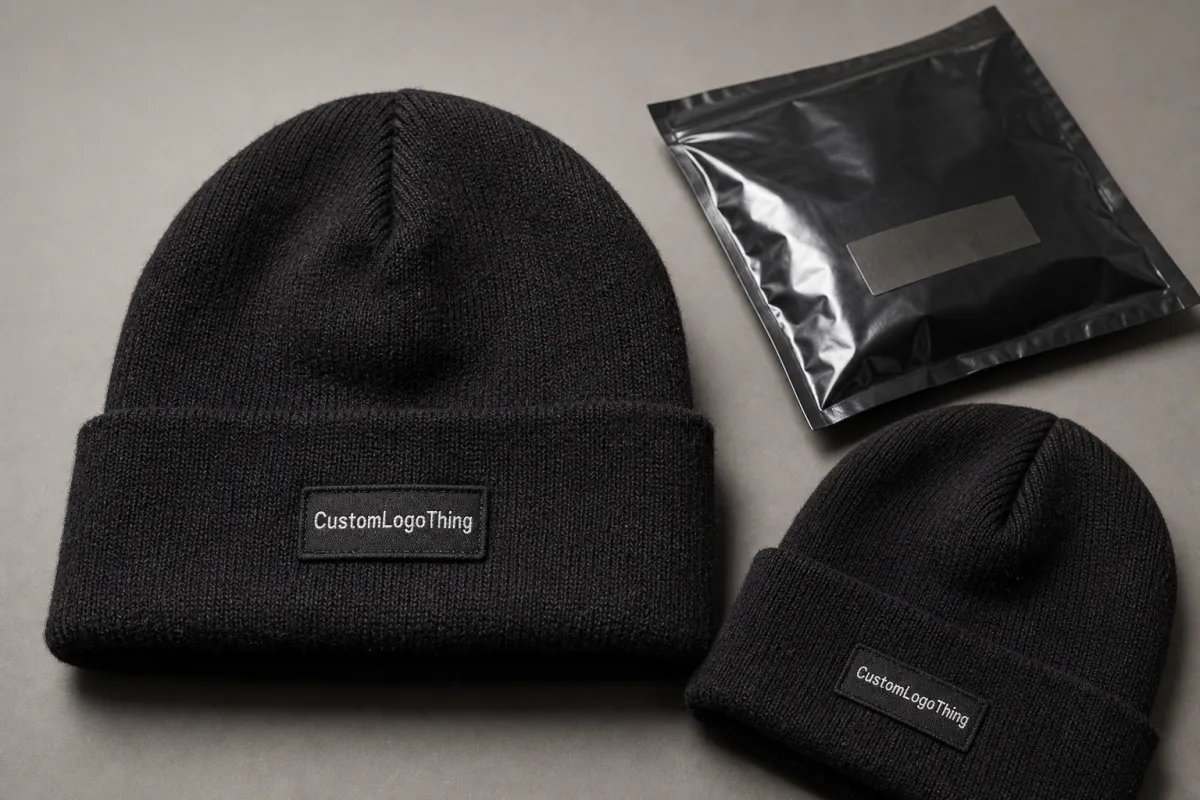
Beanies stay useful because they solve a real merchandising problem: cold-weather branding with low friction. One size fits most, which removes the headache of inventory splits by size. There is less risk of returns, fewer mistakes during packing, and less dead stock sitting around because one size never moved. For anyone managing a recurring promotional item, that simplicity is a major operational benefit.
The knit surface is also forgiving in a way that smoother garments are not. A cuffed beanie gives you a stable front panel for embroidery, a woven label, or a sewn patch. That panel is small, but it is reliable. When a logo needs to look the same on 250 units and 5,000 units, reliability matters more than novelty. In bulk production, the goal is not to create a complicated object. The goal is to create a repeatable one that still feels branded and useful.
For buyers managing brand merchandise, that reliability has practical value. Marketing teams can use the same product for a winter campaign and a conference kit. HR can tuck it into onboarding boxes. Operations teams can ship it to field staff without worrying about fit returns. If the order is part of a larger package build, the beanie is easy to stage beside inserts, cards, tissue, or other branded items. That kind of compatibility is one reason beanies are common in seasonal kitting and mailing programs.
There is also a visibility advantage. A beanie sits high on the body and stays in view during daily wear. The logo is not hidden in a sleeve or near the hem of a shirt. That does not make it louder than a hoodie, but it does make it efficient. One item can do a lot of work if the artwork is clean and the base color is chosen well. Neutral base colors such as black, navy, gray, and forest green are often popular because they work across campaigns and tend to hide minor wear better than very light shades.
In bulk programs, the best beanie is rarely the most elaborate one. It is usually the one that is easiest to reproduce, easiest to pack, and easiest to keep consistent from the first unit to the last. A plain acrylic cuffed beanie often beats a more decorative option if the goal is volume and dependable branding. If the goal is a premium customer gift, the bar moves, but the same production logic still applies: keep the decoration readable, keep the handfeel decent, and avoid overcomplicating the build. If you want to compare sourcing or volume programs more broadly, our Wholesale Programs page can help frame what a bulk-friendly order usually looks like.
Buyer reality: The fewer moving parts in the spec, the fewer surprises in the bulk run. That is why custom beanies for brand merchandise bulk keep showing up in seasonal and year-round merch plans.
Packaging also influences the final perception. A beanie that is folded consistently, labeled clearly, and packed in a carton that protects shape will usually feel more polished than a better-quality beanie that arrives with no structure or organization. The product is important, but the receiving experience matters too. That is especially true when the shipment is going to a fulfillment center, a distributor, or an internal operations team that needs the goods ready to count and sort quickly.
Choose the Right Beanie Style for Your Use Case
The right style depends on how the beanie will be used, not just how it looks in a mockup. A classic cuffed acrylic beanie is the default for a reason. It is cost-effective, easy to decorate, and predictable in bulk. The knit has enough stretch for comfort, and the cuff gives embroidery a stable surface. For many brand merchandise programs, that is enough to make it the best starting point.
Rib knit beanies feel a little more refined. The texture reads better in retail settings, and the finished piece tends to feel less purely promotional. Slouch styles work when the brand wants a more relaxed look or when the beanie is meant to feel fashion-forward rather than strictly functional. Fleece-lined versions are the practical choice for colder climates, outdoor teams, or anyone who will actually wear the item through winter instead of tossing it into a desk drawer. Each style carries a different message, so it is worth aligning the knit choice with the audience rather than choosing only by price.
Recycled yarn blends are worth a look when sustainability is part of the brief. They are not automatically better in every case. Sometimes they cost more, sometimes the color range is narrower, and sometimes the handfeel is slightly different from standard acrylic. Still, they can support a cleaner sourcing story if the claim is accurate and the documentation is in order. If the brand wants to lean into a more responsible positioning, the beanie can carry that message without forcing the entire merch program to change.
Color choice matters more than many buyers expect. Black, navy, charcoal, and forest green are safe because they work across campaigns and hide minor wear. Heathered yarn can add texture and depth, but it softens contrast, so logos with thin detail may lose some edge. If the beanie may be reused across teams or events, a neutral base usually gives the best return. Brighter colors can work well for event visibility or fan merch, but they usually need stronger logo contrast and more careful approval on color matching.
Packaging should also influence the style decision. A thicker knit or fleece-lined beanie may need a little more attention when folded, especially if the order is being kitted with other items and the receiving team expects a tidy, standardized presentation.
That extra attention pays off.
Would you rather fix folding problems after the fact?
It is usually smarter to choose a style that fits the packing plan from the start. A slimmer beanie can reduce carton bulk and help with mailer efficiency, while a heavier one may justify a more premium unboxing moment. The right answer depends on the destination, the budget, and the expectations around the final handoff.
Decoration, Artwork, and Placement Rules That Protect Quality
Decoration is where a beanie starts to feel branded instead of generic. Embroidery is the most common choice because it is durable, dimensional, and readable from a distance. A woven patch can work well when the logo has fine detail or when the brand wants a sharper retail look. Sewn labels and small rubber patches also have their place, especially when the artwork needs contrast without heavy thread density. The best option depends on how much detail the logo needs and how much texture the knit can handle cleanly.
Placement matters just as much as method. A centered cuff logo is easy to read and easy to reproduce. A side placement can feel more subtle and fashion-forward, but it requires more care in sample approval because the eye reads asymmetry differently at production scale. Some buyers want front-and-center visibility. Others want a quieter mark that blends into the garment. There is no single right answer, only a decision that should match the audience and the brand voice.
Artwork setup can make or break the final result. Thin lines, tiny text, and complex gradients often lose clarity once they move onto knit fabric. Is the logo still legible at a small size? If not, it needs simplification before production begins. High-contrast artwork usually performs best because it survives the texture of the beanie and stays readable after stitching. Vector files are preferred, and a production-ready proof should show exact placement, size, thread colors, and any restrictions on the knit structure.
Color matching deserves careful handling. Thread colors will never behave exactly like print colors, and yarn shades can shift slightly under different lighting conditions. That is normal, but it should still be managed. A good supplier will confirm the closest available thread or patch material, and the buyer should review those options before signing off. Small adjustments upfront are easier than trying to rescue a mismatched run later.
The safest decorating rule is simple: keep the mark bold enough to survive the fabric. If the brand wants detail, the patch or label route may be better. If the brand wants speed and durability, embroidery often wins. The decision is not about taste alone. It is about how the artwork behaves when it meets a knit surface that stretches, bends, and gets worn in real life.
Custom Beanie Pricing, MOQ, and Unit Cost Drivers
Pricing depends on more than the blank beanie itself. Yarn type, decoration method, artwork complexity, packaging requirements, and order quantity all change the final unit cost. Acrylic basics usually sit at the lower end of the range, while fleece-lined or recycled options can move higher. Add custom inserts, specialty folding, or individual polybagging, and the price climbs again. That is why a quote should always be read as a system, not as a single line item.
MOQ is often the first real constraint. Some suppliers can support very small runs, but the cost per unit may be much higher because setup time gets spread across fewer pieces. Larger orders usually improve the unit price, yet they also increase the need for clear specs and stable artwork. The sweet spot depends on how the item will be used. A one-time event drop can justify a smaller run. A recurring merch program may benefit from a bigger batch if the design is stable and the brand expects repeat demand.
Packaging choices can change the economics in subtle ways. A simple bulk carton is efficient, but it may not be the right fit if the beanies are going into gift kits or direct mail. Individual folding, sizing labels, branded belly bands, and barcode stickers can all help with distribution, yet each one adds labor or material cost. Buyers should decide early whether the order is being treated as inventory, a gift, or a fulfillment-ready item. That decision shapes the quote more than many people expect.
Lead times also affect pricing pressure. Rush orders often require more expensive production scheduling or limited material choices. Standard timelines give the factory more room to source, sample, and pack carefully. If the beanie is tied to a launch date, the safest move is to lock the details early and leave enough room for proofing. Rushing a bulk order is rarely the cheapest path, and it is almost never the calmest one.
Why guess at the budget when the inputs are so clear? Once quantity, decoration, packaging, and deadline are defined, the cost structure becomes much easier to manage. A good quote should make those tradeoffs visible instead of hiding them.
Production Steps, Sampling, and Lead Time Expectations
The production flow usually begins with artwork review and style selection. After that comes sampling or proof approval, followed by bulk knitting or sourcing, decoration, packing, and final shipment. Each step sounds simple on paper. In practice, every handoff is a chance to catch a problem before it becomes expensive. That is why a clean approval process matters so much in bulk merchandise work.
Samples are especially valuable when the design uses embroidery, woven patches, or a new yarn blend. A sample shows how the logo sits on the cuff, how much stretch the knit has, and whether the chosen colors still work in real light. Even when a formal pre-production sample is not required, a detailed proof should be reviewed carefully. Small changes in logo scale or placement can have a big impact once the order is running at volume.
Lead times vary based on factory workload, decoration method, and whether the beanie is standard stock or fully custom. A straightforward order can move relatively quickly, but more complex builds need extra time for sourcing and sign-off. Seasonal demand also matters. Winter planning can compress schedules fast, and a popular style may take longer if inventory tightens. Buyers who need a holiday or event deadline should work backward from the ship date, not forward from the purchase order.
Communication during production should stay specific. Confirm the style, the color codes, the decoration size, the carton count, and the destination details before the run starts. If anything changes after approval, it should be documented immediately. That habit keeps everyone aligned and prevents misunderstandings that can slow down the final stage of the order.
A careful timeline is not just paperwork. It is the difference between a smooth bulk launch and a scramble. And in merch, scrambles are expensive.
Quality Checks, Packing Options, and Program Support
Quality control starts with consistency. The logo should sit in the same position on every unit, the thread tension should look even, and the color should stay within the approved range. The knit should feel uniform, the cuff should hold shape, and the folds should be stable enough for shipping. A buyer does not need laboratory-level testing for every promotional beanie, but a basic standard of visual and tactile inspection goes a long way.
Packing options should be matched to the final use case. Bulk-packed cartons are ideal for warehouse distribution, store replenishment, or kitting operations. Individual polybags may be useful for retail presentation or direct mailing. Inserts, labels, and barcode stickers can support sorting and fulfillment, though they should be planned early so the packout team is not guessing later. The goal is to make the beanie easier to receive, count, and deploy.
Program support becomes important when the order is not a one-off. Some buyers need repeat runs, color hold consistency, or a standard packaging format that can be reused across campaigns. In those cases, the supplier should keep the spec clean and easy to reference. That saves time on every reorder and reduces the risk of drift from one batch to the next. If the beanie is becoming a regular part of the brand kit, the process should feel repeatable from the start.
Good support also means being realistic about what the product can do. A beanie is a strong branded item, but it is still a knit accessory with limits. Overly delicate artwork, rushed approvals, and overly complex packouts can all create friction. When the order is designed with those limits in mind, the result is usually better and the process is much calmer.
What is the point of a bulk order if it creates avoidable rework? The best programs reduce decisions, not multiply them.

