knit Beanies for Brand launches work because people keep wearing them after the event. Unlike most promo items, a beanie gets used in real life: commutes, walks, outdoor events, and cold offices. That repeat use gives the brand more staying power than a one-night handout.
For winter launches, retail openings, outdoor activations, and press kits, knitwear feels useful instead of disposable. The result depends on a few decisions that buyers control early: yarn, stitch density, cuff shape, decoration method, and packaging. Those specs decide whether the piece reads as retail-ready or budget filler.
The goal is not a loud billboard. It is a wearable item that still leaves a clear brand impression. That balance is why launch teams need to think about construction, not just artwork.
What Knit Beanies for Brand Launches Really Do
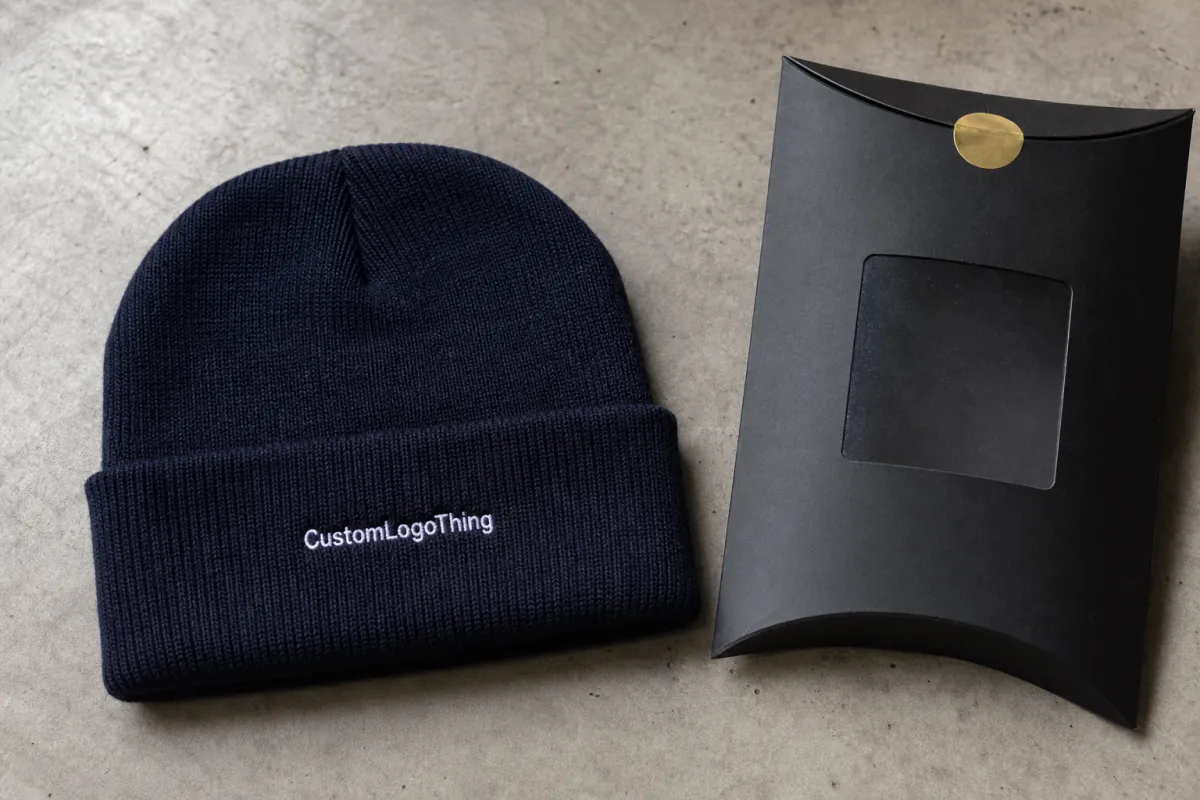
A beanie is one of the few launch items that can stay visible for months. A tote gets used sometimes. A sticker sits on a laptop. A knit hat keeps showing up in public, which is the kind of exposure most teams want from merch.
From a buyer's point of view, it is not just a giveaway. It is part of the launch story. If the item feels flimsy, the program feels rushed. If the cuff is neat, the logo is aligned, and the fabric looks intentional, the launch feels more polished.
Basic choices set that tone quickly. Tight ribbing usually looks cleaner than a loose knit. A woven label or embroidery often feels more controlled than a busy all-over design. The difference is small on paper and obvious in hand.
If people wear it more than once, the launch has already done better than most merch.
For outdoor launches and winter retail drops, the best version is the one that looks wearable first and promotional second. That is what keeps the piece in circulation after the event ends.
How Custom Knit Beanies Get Made
The process usually starts with a brief: quantity, deadline, target price, logo file, and where the branding should sit. The supplier turns that into artwork or a proof, then production moves to sampling, bulk knitting, finishing, inspection, and packing.
There is an important difference between knit-in branding and surface decoration. A fully knit mark uses yarn as part of the structure and works best for simple shapes and strong contrast. Fine lines, tiny type, and complex gradients usually do better as embroidery, a woven label, or a patch.
Placement matters as much as the method. The cuff is the easiest place for a logo because it gives a flatter visual area and strong visibility. Front-panel branding suits larger marks. Side labels keep the design subtle. Interior tags help with brand consistency without adding clutter on the outside.
Good buyers lock decisions early. If you want one logo placement, two yarn colors, and a standard cuff, say that upfront. If you want multi-color jacquard, a custom patch, and special packaging, expect more proofing and a higher chance of revisions. Complexity shows up in cost and lead time.
Before bulk production starts, confirm the things that affect fit and finish: yarn shade, knit gauge, cuff width, logo alignment, stitch tension, and folding or packing method. Those details are not flashy, but they are what keep the launch from looking sloppy in a tray or box.
For practical sourcing, compare build types before asking for quotes.
| Option | Typical feel | Best use | Cost tendency |
|---|---|---|---|
| Fully knit logo | Integrated and usually more premium | Simple marks, strong contrast | Mid to higher |
| Woven label | Clean and controlled | Small branding, layered launches | Lower to mid |
| Embroidery | Sharp, classic, easy to read | Logos with limited detail | Mid |
| Patch application | More structured and fashion-driven | Streetwear or premium merch | Mid to higher |
Specs That Change Fit, Feel, and Shelf Appeal
Yarn choice is the first real decision. Acrylic is common because it is affordable, warm, and easy to produce consistently. Wool blends feel richer and hold warmth better, but they cost more and may need clearer care expectations. Recycled fibers are common in sustainability programs, though the hand feel can vary by supplier.
Gauge and stitch density change the whole look. Tighter knits usually appear more polished and reduce logo distortion, but they can cost more and stretch less. Looser knits feel softer and more casual, but they can blur details. For launch merch, stitch density is a spec, not an afterthought.
Silhouette also affects appeal. A cuffed beanie gives more room for branding and fits a wider range of heads. A slouchy style feels more casual and fashion-driven, but it is less predictable in wear. Pom-pom versions work for seasonal or youth-focused launches, though they are not right for every brand.
Decoration limits are where good ideas get saved or wrecked. Small logos disappear in textured fabric. Too many colors make the knit look muddy. One or two logo colors plus one base color usually gives a cleaner result than a crowded design trying to do too much.
Here is the tradeoff buyers usually need to see in one place:
| Spec | Pros | Tradeoff | Buyer takeaway |
|---|---|---|---|
| Acrylic yarn | Budget-friendly, warm, consistent | Less natural hand feel | Best for larger orders and tighter budgets |
| Wool blend | Richer feel, stronger warmth | Higher cost, care sensitivity | Good for premium launches |
| Tight gauge | Cleaner graphics, more polished look | Less stretch, often higher cost | Better for premium visual branding |
| Loose gauge | Soft, relaxed, lower structure | Can distort logos | Better for casual campaigns |
If the audience will judge the launch by the item itself, the spec has to support that judgment. If the budget is tight, keep the construction simple and the branding controlled. That is usually the safest way to get a piece that looks more expensive than it is.
For broader quality context, packaging and apparel buyers still benefit from documented testing and material discipline. The ISTA framework is useful if the beanies move through distribution or retail channels, and FSC matters if the launch includes paper tags, inserts, or outer cartons made with certified fiber.
Process and Timeline: What to Expect Before Launch Day
Quote turnaround is usually a few days if the brief is clear. Sampling often takes 5 to 10 business days, though complex knit patterns can take longer. Bulk production commonly runs 2 to 6 weeks depending on color count, decoration method, factory load, and packaging requirements.
What slows projects down? Custom color matching, extra proof rounds, packaging changes, holiday demand, and vague feedback. "Make it better" is not a production note. If the team keeps changing logo placement or colors after sampling starts, the schedule slips quickly.
What speeds things up? Fewer colors, stock yarns, one approval owner, and a simple label plan. If fit, palette, and decoration are approved in one clean round, the order moves faster and with fewer surprises.
Add transit time, customs if relevant, and a small buffer for late fixes. If the launch date is fixed, do not plan for a box arriving at the last possible hour. A cushion of at least 5 to 7 extra days after production is a safer assumption.
If the date is fixed, lock the spec early. Changing yarn, logo placement, and packaging after approval turns a simple order into a rescue job.
Cost, Pricing, MOQ, and Unit Cost Explained
Pricing comes from a few inputs: quantity, stitch complexity, yarn type, embellishment method, packaging, and freight. You do not pay for "a beanie" in the abstract. You pay for how difficult it is to make the exact piece you want.
MOQ, or Minimum Order Quantity, is where many buyers get surprised. Small orders usually carry a higher unit cost because setup is spread across fewer pieces. Larger runs improve per-unit pricing, but they tie up more budget and inventory. A common starting range is 100 to 300 pieces, though the real MOQ depends on the design.
The useful way to think about landed cost is base unit price plus sampling, setup, freight, duties if applicable, and any extras for tags or packaging. That total matters more than the headline quote. A low unit price can end up more expensive if shipping or revisions are added later.
For planning, simple launch beanies may land around $3.50 to $6.50 per unit at mid-sized quantities. More premium builds can move into the $7 to $12 range or higher. Yarn choice, logo method, and finishing details can shift the number quickly, so treat those figures as planning ranges, not promises.
Watch for hidden costs:
- Sampling fees for first prototypes or revised colorways
- Setup charges for knitting files, label tooling, or embroidery prep
- Rush fees when the calendar gets squeezed
- Duties and taxes if the order crosses borders
- Replacement allowance for defects or launch-day backups
Compare quotes on landed Cost, Lead Time, and included services. If one supplier includes folding, inner tags, and polybags while another charges separately for each line item, the lower quote may not be lower at all.
Common Mistakes That Make Launch Beanies Look Cheap
The biggest mistake is visual overreach. Too many brand colors in one knit pattern turn a clean concept into noise. Textured fabric already has movement, so extra color often makes the piece look muddier instead of more custom.
Another common miss is tiny logo treatment. A mark that works on a screen can disappear in ribbed knit, especially on a smaller cuff. Weak contrast makes that worse. If the brand cannot be read at arm's length, the beanie is failing its main job.
Picking a trendy silhouette nobody actually wears again is another trap. The team may like the mockup, but if the audience finds the fit awkward, the item stops circulating. That cuts repeat exposure and weakens brand recognition.
Skipping fit and color approval is the fastest route to disappointment. Once bulk production starts, fixes get expensive. A sample that is too tight, too loose, or too bright should be caught before the run. The same goes for packaging. A strong beanie in a sloppy polybag still feels off.
If presentation matters, ask for a sample fold or packed mockup. The unboxing experience matters for press kits, VIP drops, and retail displays. The moment a recipient opens the package, they are already deciding whether the brand feels thoughtful or rushed.
Another avoidable issue is ignoring production tolerance. Knit is not print. A small size variation, a few millimeters of logo shift, or a slight dye-lot difference can still fall within normal limits. The point is to agree on what is acceptable before the order starts.
Next Steps: Build a Beanie Brief That Gets a Fast Quote
If you want a useful quote, send the right information upfront. Quantity, audience, deadline, budget ceiling, logo files, preferred decoration method, and packaging needs should all be in the first message.
Decide the non-negotiables first. Is the launch date fixed? Does the beanie need to feel premium? Is warmth more important than fashion? Do you care more about low unit cost or better wearability after the event? Once those answers are clear, the spec gets much easier to build.
Ask every supplier for the same basics: sample timing, bulk lead time, MOQ, landed price, and what is included in the quote. If you are comparing multiple options, keep the questions identical. Otherwise, you are not comparing suppliers; you are comparing random answers.
The cleanest brief is usually the simplest one that still feels on-brand. One strong color, one clear logo placement, one fit your audience would wear again. That approach may sound plain, but in production it is often the version that comes back looking expensive and wearable.
For teams planning knit beanies for brand launches, that is usually the right goal: a piece that survives the event, stays in rotation, and keeps the brand visible long after the launch materials are gone.
FAQ
How many knit beanies for a brand launch should I order?
Start with the confirmed guest count or staff count, then add 10% to 15% for extras, replacements, and VIPs. If you are sending press kits or influencer gifts, keep that quantity separate so launch-day stock does not disappear. For retail-linked launches, split event wearables from sell-through inventory so you do not undercut future sales.
Are knit beanies better than printed hats for a product launch?
Usually yes when you want something people will wear repeatedly, because knit construction feels more intentional and premium. Printed hats can be cheaper, but knit often wins on warmth, texture, and post-launch visibility. If the launch is in warm weather and speed matters more than feel, a simpler printed option may make more sense.
What MOQ should I expect for custom knit beanies?
A common starting range is about 100 to 300 pieces, but the exact number depends on the factory and the design complexity. More colors, custom labels, or unusual construction usually push the MOQ higher. Always confirm whether the MOQ is per colorway, per style, or for the full order total.
How long do knit beanies for brand launches take to produce?
A realistic total timeline is often around 4 to 8 weeks from artwork approval to delivery, depending on sampling and production load. Simple builds with stock yarns move faster; custom color matches, revisions, and freight make the schedule longer. If the launch date is fixed, lock the spec early and do not keep changing the art after sampling starts.
How do I keep branded knit beanies from looking too promotional?
Use one strong brand color, one logo placement, and one texture detail instead of covering every inch with branding. Prioritize contrast and wearability so the design reads like apparel, not a billboard. Choose materials and a fit your audience would still wear after the event, because that is where the real visibility comes from.