Order Custom Beanies for Trade Show Giveaways That Get Seen
If you are evaluating custom beanies for Trade Show Giveaways, the main question is not how they look in a mockup. It is whether people will wear them after they leave the booth. That is what separates a disposable handout from a moving ad.
Beanies work because they solve a real comfort problem in cold weather, over-air-conditioned halls, and travel. They also give you a logo surface that stays visible longer than most event swag. The best orders are usually the simplest: clear artwork, practical materials, and a shipping plan that respects the show date.
Why Beanies Work at Trade Shows
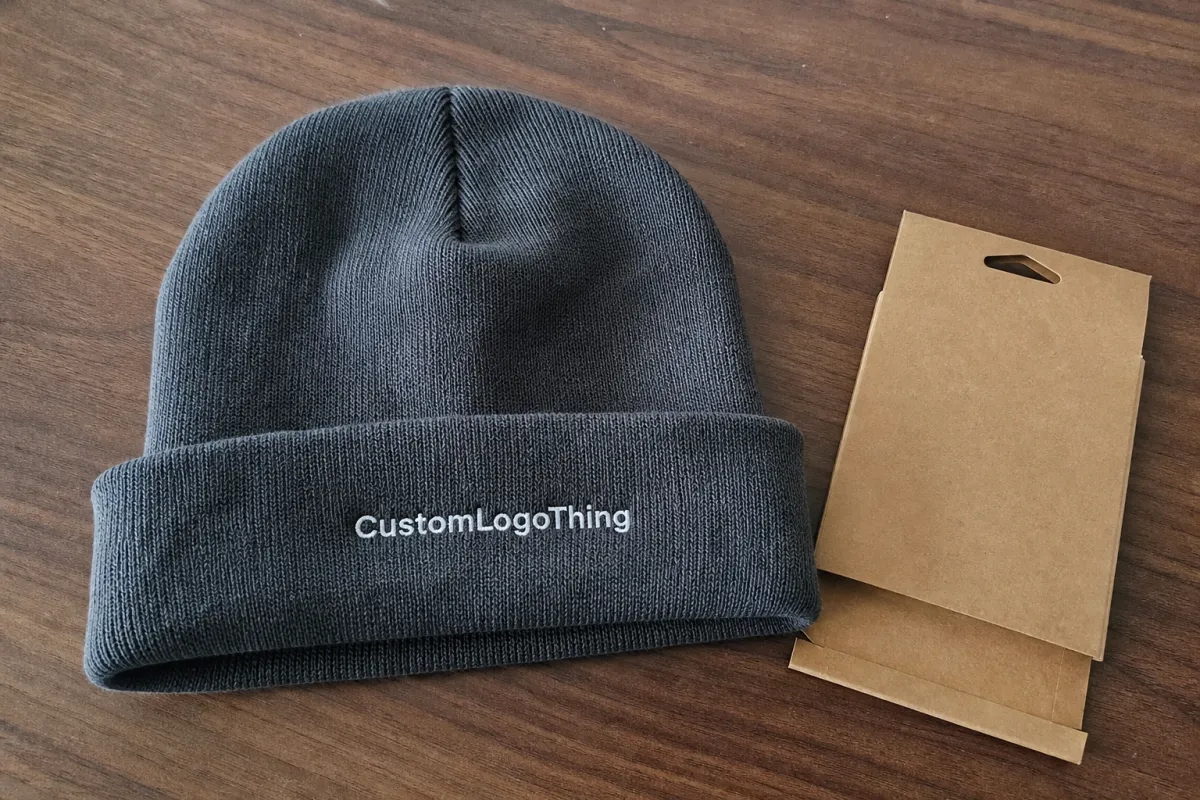
Trade show giveaways live or die on retention. If the item gets used after the event, the brand keeps traveling. If it gets tossed, the value ends at the exit door. Beanies do well because they are useful in real weather, useful in a chilly venue, and useful during travel.
They also create better visibility than most table swag. A hat sits higher in the sightline and is often seen from several feet away. That makes a simple, readable logo more valuable than a dense design that only works when someone is holding it in their hand.
Compared with pens, flyers, or stress toys, beanies feel more substantial. That matters because buyers and recipients both make quick judgments about value. For teams balancing utility, brand presence, and cost, beanies sit in a practical middle ground.
They are not right for every event. A summer expo in a hot climate does not need the same giveaway as a winter convention. But for regional conferences, travel-heavy events, and colder seasons, they can outlast almost anything else in a promo bag.
Choosing the Right Style and Fit
Style affects wear frequency, and wear frequency is the whole point. A cuffed beanie is usually the safest option because the cuff creates a clean decoration zone and keeps the logo visible. Slouchy styles feel more fashion-forward, but the branding can disappear if the placement is too low or the hat is worn loosely. Pom-pom styles draw attention, though they can skew the tone toward playful rather than corporate.
Fit matters just as much. A beanie that stretches well and sits comfortably across a range of head sizes will move faster at a show. One that feels tight, scratchy, or shallow will sit in a drawer after the first wear. Ribbed knits usually offer more flexibility, while flatter knits can look cleaner but may have less give.
Material choice affects both feel and price. Acrylic is the most common option because it is warm, lightweight, and budget-friendly. Acrylic blends can improve softness and shape retention. Wool blends bring a richer hand feel and a more premium impression, though they raise cost. Recycled yarns are increasingly common for teams that want a sustainability story, but that story should be supported by accurate sourcing details and not overclaimed.
A useful rule: if the audience is broad or anonymous, choose broad comfort over niche fashion cues. Trade show giveaways are not runway pieces. They need to fit more people than they impress.
Decoration, Materials, and Quality Cues
Decoration method matters as much as the knit. Embroidery is usually the most reliable choice for bold logos and strong contrast. It gives a clean finish and works especially well on cuffed styles. Woven labels are helpful when the logo includes smaller details or thinner lines that embroidery would soften. Patches, whether leather, faux-leather, or woven, can raise perceived value, but they also change the look of the piece.
Knit-in logos are the most integrated option. They can look excellent when the art is simple and the colors are well chosen, but they are unforgiving. Fine type, gradients, and crowded layouts usually break down once translated into stitches and yarn tension.
On a beanie, scale beats complexity. A single strong mark on a high-contrast cuff usually performs better than a busy layout across the body. The brand should be readable at a glance. If the logo needs explanation, the product is doing too much work for too little return.
Color deserves more attention than it gets. A trendy shade may look good in a render and still bury the logo in the finished piece. Clear contrast and limited decoration colors usually produce the best results because they survive poor lighting, quick glances, and the noise of the show floor.
| Style / Build | Best Use Case | Typical Price Band | Notes |
|---|---|---|---|
| Acrylic cuffed beanie with embroidery | High-volume event giveaways | About $3.50 to $7.50 each at moderate quantities | Reliable, easy to decorate, strong logo visibility |
| Acrylic blend with woven label | Balanced value and detail | Usually mid-range | Better texture and sharper small branding elements |
| Wool blend with patch | Premium hospitality or executive gifts | Higher than basic acrylic | Richer feel, but not always the best fit for bulk giveaways |
| Recycled yarn with knit-in logo | Sustainability-led campaigns | Mid to higher | Strong story, tighter artwork limitations |
Good suppliers will usually ask for vector artwork, Pantone references, and a clear placement note before they quote. That is not busywork. It is how they avoid avoidable mistakes. The best files are AI, EPS, or a clean PDF with outlined fonts. A low-resolution JPEG can sometimes be rescued, but it slows the process and can create extra revision time.
A proof should show hat color, logo placement, decoration method, and any special finish such as a patch, belly band, or insert card. Review it like a production spec, not just a graphic. A logo that looks fine on a screen can become too small, too low, or too close to a seam once it is mapped onto fabric.
For larger runs, ask for a sample or pre-production approval piece when the schedule allows it. That is especially useful if the beanies are part of a broader kit with other Custom Packaging Products. Color drift across boxes, inserts, and apparel can make the whole package feel less coordinated than it should.
“The cleanest beanie orders usually start with the least complicated artwork. The closer the logo is to the final production method, the fewer surprises show up in proofing.”
What Drives Price and MOQ
There is no fixed price for these beanies. The quote depends on quantity, material, decoration method, color count, packaging, and shipping destination. Quantity is usually the biggest lever. At a few hundred pieces, setup costs are spread thinly and the unit price looks higher. At 1,000 or more, pricing often becomes more efficient because the same setup is amortized across a larger run.
The minimum order quantity, or MOQ, is part of the reality here. Simple embroidered acrylic styles often have lower entry points than knit-in logo or custom jacquard options. If a supplier offers a very low MOQ, check what changed. Sometimes the per-unit cost rises, sometimes the decoration options narrow, and sometimes both happen.
Expect the quote to break into several parts: unit cost, setup or digitizing, freight, rush fees if needed, and any packaging upgrades. Packaging can be deceptively expensive if you want individual polybags, branded belly bands, or insert cards. A few cents per item adds up quickly at scale, and special packaging can move the budget more than a better yarn choice.
A fair comparison requires matching specs. If one quote uses a cuffed acrylic style with embroidery and another uses a looser knit with a patch, the difference in price may be justified. Buyers often compare those as if they were the same product. They are not. Match construction, decoration, quantity, and delivery terms before deciding which number actually matters.
Timelines, Inspection, and Shipping
Lead time is where many orders get stressed. A straightforward run can still take several business days for artwork review, a day or two for proof approval, then production, finishing, packing, and shipping. In practical terms, a clean domestic order often lands in the two- to four-week range from final approval to delivery. More complex knit styles, added packaging, or international freight can extend that window.
Trade show season compresses everything. Late fall and winter put pressure on production schedules because multiple buyers want warm apparel at the same time. Freight carriers feel that pressure too. Add customs clearance or port congestion, and the schedule can slip even if the factory is moving on time.
Inspection should not be an afterthought. Count accuracy, color consistency, logo placement, seam quality, and packaging condition all matter. If the hats are going directly to a venue or receiving warehouse, build time for a receiving check before the event. That buffer matters more than many teams realize.
Shipping to a convention center deserves special care. Receiving windows can be narrow, addresses need to be exact, and some venues require advance labels or special instructions. One mistyped suite number can create an avoidable delay. Confirm the final ship-to details well before production ends and keep backup contact information on the paperwork.
If your program includes compliance or sustainability requirements, documentation should be part of the plan from the start. The ISTA framework is useful when you want to think seriously about transit durability, and the FSC system matters when paper inserts or hang tags need a documented sourcing story. Those standards do not improve the hat itself, but they do help support a more defensible package program.
Common Mistakes Buyers Make
The most common mistake is overdesigning the art. Thin lines, small text, and crowded logos often look acceptable in a mockup and then disappear in the finished product. Beanies reward bold shapes and clean spacing. If the logo includes a long tagline, consider leaving the tagline off the hat and placing it on an insert card instead.
Another mistake is ordering the wrong quantity. Too few pieces force a rush reorder, often at a worse price and with less design freedom. Too many pieces turn into dormant inventory. The right count depends on booth traffic, lead quality, and whether the giveaway is reserved for qualified prospects or handed out to everyone who walks by.
Color selection can also backfire. A fashion-forward shade might photograph well and still bury the logo in the finished piece. If the branding cannot be read from a short distance, the giveaway loses one of its main jobs. Simple, high-contrast combinations are usually safer because they survive poor lighting and quick glances.
Late logistics cause more pain than most buyers expect. If the hats arrive without enough time to count, label, or sort them, the booth team ends up doing inventory under pressure. That is a bad use of event time. The giveaway should make the booth run smoother, not create a last-minute packing project at the hotel.
How to Improve Giveaway ROI
The strongest giveaway programs are aimed at a defined audience. A premium knit makes sense for customer meetings, hospitality suites, or executive-level contacts. A simpler cuffed style is better for volume traffic and general attendance. Not every beanie needs to be precious, but every beanie should be intentional.
Distribution strategy matters as much as the item. If every passerby gets a hat, the product becomes ordinary. If the team reserves it for booked appointments, qualified leads, or cold-weather arrivals, the hat feels more valuable and often supports a better conversation.
Presentation adds another layer. A belly band, insert card, or branded mailer can turn the giveaway into a more memorable package without overcomplicating the order. That fits neatly into broader product packaging thinking: the beanie is no longer just merch, it is a component of an event system. If the booth also uses custom printed boxes or coordinated inserts, the visual language should stay consistent across the pieces.
Simple programs often outperform elaborate ones because fewer variables mean fewer production surprises, fewer freight problems, and fewer chances for the final product to miss the mark. That is especially true with custom beanies for trade show giveaways, where the strongest results usually come from clear branding, comfortable construction, and a realistic delivery window.
“A giveaway earns its keep when it stays in rotation. If the hat gets worn after the show, the brand keeps paying for itself without buying another impression.”
Buyer Checklist
Before requesting a quote, define the basics: quantity, audience, budget range, delivery date, and preferred decoration method. That small amount of discipline prevents vague pricing and makes the options comparable. If the brand has strict color standards, send Pantone references. If the logo needs to sit in a precise position on the cuff, note that early rather than during proof review.
Ask for a quote that separates unit price, setup, freight, and any rush or packaging charges. A low product cost can become the expensive option once shipping is added. A slightly higher quote may be the smarter one if it includes better proofing, more reliable timing, or fewer revision cycles.
Review the proof like a production manager, not a fan of the concept. Check logo scale, contrast, placement, stitch clarity, and the delivery window. If the order sits inside a larger merch or packaging rollout, make sure the beanie aligns with the rest of the system instead of fighting it.
For trade shows, the best beanie orders arrive early, look clear, and get worn. That is a modest standard on paper and a hard one in practice. It depends on simple art, honest timelines, and enough production margin to absorb the ordinary delays that happen between approval and delivery.
How many custom beanies for trade show giveaways should I order?
Base the quantity on booth traffic and distribution strategy, not just total event attendance. If the beanies are premium, order fewer and reserve them for qualified visitors, scheduled meetings, or staff use. That usually preserves perceived value better than handing them out indiscriminately.
What decoration method works best for trade show beanie giveaways?
Embroidery is the most dependable all-around choice for a clean logo and a polished finish. Woven labels and patches can help when the art needs more detail or texture, while knit-in logos work best for simple designs with strong contrast. Fine type rarely survives the transition into fabric very well.
What is a realistic lead time for custom beanies?
A straightforward order often takes about two to four weeks from final approval to delivery, though more complex builds can take longer. Add time for proofing, inspection, freight, and any event-specific receiving requirements. Rush options exist, but they usually narrow your choices and raise the risk of avoidable mistakes.
Is there usually a minimum order quantity?
Yes. The MOQ varies by style, decoration, and yarn type. Standard cuffed acrylic beanies often have lower minimums than custom knit or premium finishes. Always ask for tiered pricing so you can see whether a smaller run is actually cost-effective.
How do I keep the order affordable without making it look cheap?
Choose one strong color, one clear decoration method, and a style with good fit and stretch. Spend on legibility, accurate color, and delivery reliability instead of stacking extra finishes that do not improve wearability. A clean beanie with the right logo placement usually outperforms a more elaborate piece that nobody wants to wear.

