Custom clear zipper Bags for Trade Show giveaways work because they make the handout easy to see, easy to carry, and easy to keep. That matters on a crowded show floor where a buyer decides in seconds whether a kit looks organized or forgettable. If the contents are visible and the package feels tidy, the giveaway is more likely to leave the booth with the attendee.
Transparency also helps the sales conversation. People can see the brochure stack, sample, or merch bundle before the rep explains it, which makes the offer feel more concrete. For buyers comparing branded packaging options, that visibility turns the bag into part of the presentation instead of a layer that hides the product.
There is a practical reason these bags keep showing up at events: they reduce clutter. Staff can stack them, hand them out quickly, and pack them cleanly when traffic spikes. That simplicity is useful when the booth table is already crowded with inserts, samples, and business cards.
If the contents look worth keeping, the bag is already doing part of the selling.
Why custom clear zipper bags for trade show giveaways stand out
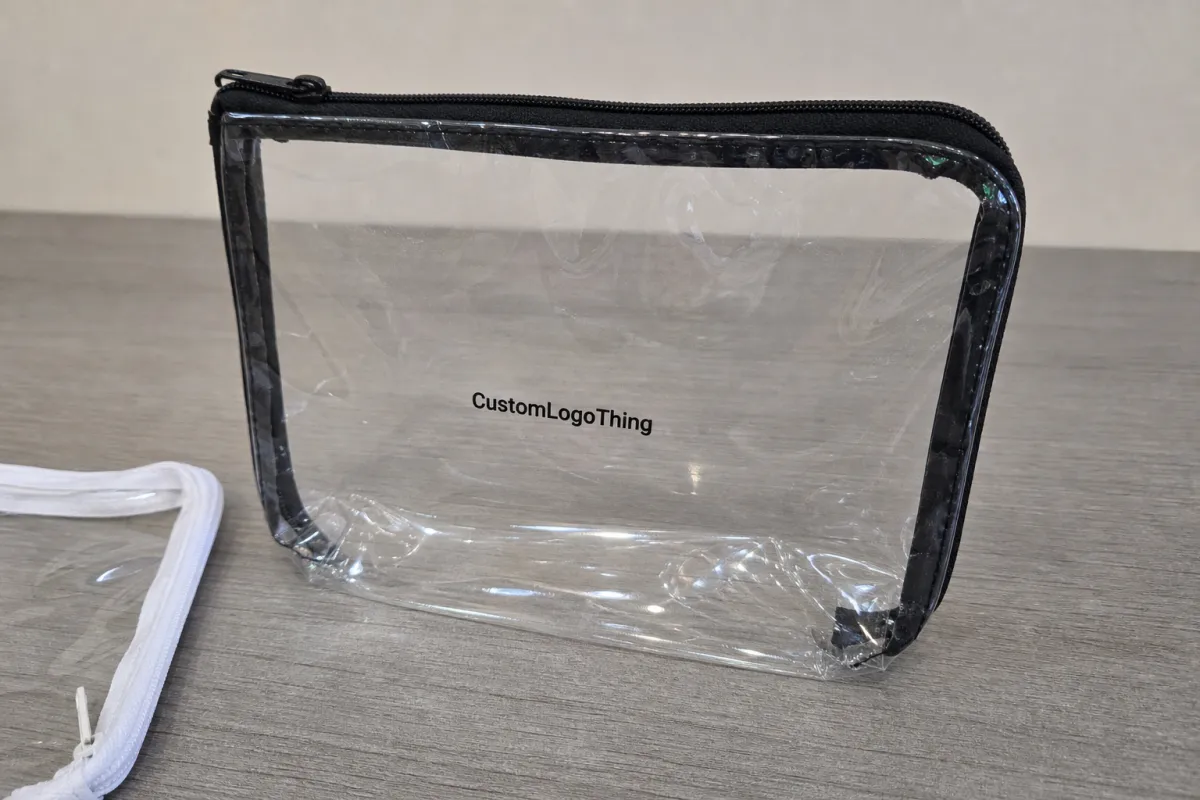
From a packaging buyer's point of view, the appeal is straightforward. The bag protects the contents, presents them clearly, and leaves room for branding without covering what is inside. That balance is especially useful at trade shows, where the product or kit has to be understood instantly.
A clear format works best when the giveaway has visual value. Brochures, sample vials, pens with inserts, and compact demo kits all benefit from being seen at a glance. The bag acts like a frame around the contents, which is often more effective than a fully printed pouch that hides the items people are supposed to notice.
That is why these bags can be a better fit than opaque pouches or heavy sleeves for event use. Clear packaging keeps the message open while still leaving room for a logo, short tagline, or simple mark. It works well when the goal is presentation, not concealment.
Attendees also prefer one neat thing to hold instead of juggling loose pieces. A zippered bag makes the handout easier to carry, which improves pickup rates and lowers the chance that the giveaway gets left behind after a quick first look. In a busy aisle, convenience is part of the value.
The strongest results usually come from matching the bag size, closure style, print method, and quantity to the actual event plan. A smart spec starts with the contents, not with a catalog photo.
How clear zipper bag packaging works at events
In practical terms, this is a flexible plastic bag with a zipper closure that holds samples, inserts, or small branded kits for distribution. The zipper lets staff seal items quickly and lets attendees reopen the package later without damaging it. That repeat-use feature helps the bag stay useful after the booth visit.
Clear zipper bag packaging also makes inspection easier. Staff can confirm that each kit is complete before it goes out, and attendees can see what they are receiving without opening the bag first. That reduces confusion and speeds up handout flow.
Most teams use these bags for layered kits: a brochure plus pen, a sample plus instruction card, or a product card plus QR code insert. Once the bag is treated as a small carrier system, it becomes easier to plan the contents and easier to compare it with other branded packaging formats.
Some buyers consider lightly frosted material because it softens the look. That can work, but fully clear is usually stronger when the contents are part of the message. The goal at a trade show is quick comprehension, not mystery.
Reusable bags also extend the exposure window. A well-made clear bag often stays in a backpack, briefcase, or desk drawer long after the event ends, which gives the logo more chances to be seen.
Cost, MOQ, and quote factors that shape pricing
Pricing for Custom Clear Zipper Bags for Trade Show Giveaways usually comes down to five variables: size, film thickness, zipper style, print coverage, and quantity. If two quotes look far apart, one of those details is usually different even when the descriptions sound similar.
The MOQ question matters because smaller runs carry more setup cost per unit. A 1,000-piece order can work for a pilot event or regional show, but the unit price is usually higher than a 5,000-piece run. At larger volumes, setup spreads across more bags and the per-piece cost falls.
For planning purposes, many buyers see ranges like these:
| Order profile | Typical unit range | Best use | Main tradeoff |
|---|---|---|---|
| 1,000-2,500 pieces | $0.30-$0.55 | Small launches, pilot programs | Higher setup share |
| 5,000 pieces | $0.18-$0.28 | Standard booth programs | Needs more storage and planning |
| 10,000+ pieces | $0.12-$0.22 | Multi-show or regional rollouts | Cash tied up longer |
Those are working ranges, not promises. A lower quote is not always the better buy if the bag clouds up, tears at the zipper, or slows down handout speed. In event packaging, a small improvement in handling or appearance can matter more than a few cents on the unit price.
Ask each supplier to separate material, printing, sample charges, freight assumptions, and rush fees. That is the only fair way to compare quotes. If shipping is included in one estimate and excluded in another, the comparison is not useful yet.
For teams also comparing custom printed boxes or other Custom Packaging Products, putting the bag quote beside the rest of the kit makes the economics easier to read. Sometimes the bag is the least expensive line item and the most visible one, which is why it deserves careful review.
Process and turnaround: from artwork to delivery
The production path is straightforward, but it only moves quickly when the buyer has the details ready. Start with the brief: dimensions, quantity, print area, zipper style, and contents list. Then submit artwork, review the proof, approve the sample or preproduction detail if offered, and move into production.
Artwork is the most common delay point. Files that are not vector-ready, missing dimensions, or changing insert counts all slow the schedule. If the bag needs to hold a brochure, sample, and card, the supplier needs actual measurements so the kit closes cleanly and the logo lands where it should.
Turnaround should be planned around the event calendar, not around hope. Straightforward runs often finish in 12-15 business days from proof approval, though specialty specs, larger quantities, or imported film can extend that timeline. Add transit time, venue delivery rules, and a buffer for late revisions.
It also helps to ask how the lead time is split: proofing, production, packing, and transit. That breakdown shows where delays are likely to happen and makes the schedule easier to manage. For fragile contents, confirm how cartons will travel, since the bags still need to survive shipping before they ever reach the booth.
Standards such as ISTA test logic are useful reference points when cartons face vibration, compression, or drop exposure in transit. If the event kit includes paper inserts or instruction cards, FSC-certified stock from FSC can support a cleaner sourcing story without changing the bag format.
Choosing the right size, gauge, and print area
Bag size should be built around the real contents, not the marketing idea. Measure the thickest item first, then add enough room for easy insertion and a clean seal. If a brochure, sample bottle, and insert card all need to fit, the bag has to close without bulging.
Film thickness matters too. Thinner material can work for light inserts, but thicker film usually feels more premium and resists punctures better. For trade show kits that will be opened and handled more than once, a sturdier feel often makes more sense.
Print area is the next decision. A larger logo can be strong, but too much ink can reduce visibility. With clear packaging, blank space is part of the design because it allows the contents to stay visible. For package branding, that balance is often more effective than covering every panel with copy.
Closure details deserve the same attention. Some zipper pulls are easier to grab at a table, and some seals hold up better after repeated opening. If the bag needs to be opened during the show and carried around afterward, test that motion before ordering the full run.
The best spec keeps the handout neat, survives handling, and stays easy to use. A bag is a carrier, not a poster or a display carton, so the sizing and print choices should support that role.
Step-by-step guide to planning a trade show giveaway run
Start with the goal. Is the bag meant to support lead capture, product education, sample distribution, or post-show follow-up? The answer changes the spec. A lead-gen kit might need a QR code insert and business card slot, while a sample kit might need thicker film and a stronger zipper.
- List the contents first. Measure the thickest piece, then add 0.25 to 0.5 inch of clearance so the kit closes cleanly.
- Choose the size around the contents. Do not guess from a stock chart alone. Real pieces take more room than mockups on a screen.
- Keep the artwork focused. One brand message and one strong visual anchor usually reads better than a busy layout.
- Ask for a proof or mockup. Seeing scale next to the actual contents helps catch problems before production starts.
- Order a few extras. Damaged kits, late VIP additions, and staff needs always show up at the wrong time.
That process is basic, but it works. Teams that lock the contents first and the artwork second usually get cleaner results than teams that design the bag before they know what it has to hold. For Custom Clear Zipper Bags for Trade Show Giveaways, the order of operations matters more than most buyers expect.
If the show staff will assemble the kits on site, simplify the packing process. Put items in the order they will be inserted, keep the zipper edge easy to access, and use one consistent build method. That saves time when the booth is busy and everyone is trying to keep pace with visitors.
Common mistakes that hurt giveaway performance
- Overstuffing the bag. A kit that strains the zipper looks crowded and can fail during handling.
- Choosing from a catalog photo alone. A bag that looks right online may be too tight for actual brochures or sample packs.
- Cramming the artwork. Tiny text and busy layouts disappear against clear film.
- Ignoring logistics. Flat-packed bags still take space, and late delivery can create a costly scramble.
- Fixating on unit price. The lowest quote can become the most expensive choice if the bag tears or slows the giveaway line.
A common mistake is treating these bags like an afterthought because they are small. They are not small in effect. They influence how the kit looks, how fast it gets assembled, and whether attendees carry it away with interest or leave it behind.
Another issue is assuming transparency means zero design work. It does not. Clear film asks for more discipline, not less, because every weak layout choice is visible. That is useful when the branding is strong and the contents are worth showing.
Expert tips and next steps for smarter ordering
A one-page spec sheet saves time. Include dimensions, quantity, print area, zipper style, insert list, shipping deadline, and packaging format. That gives suppliers enough information to quote accurately and cuts down the back-and-forth that slows proofing.
Ask for a production proof that shows scale next to the actual contents. A flat artwork file can hide problems that only appear when the bag is filled. You want to see how the logo sits beside the brochure fold, where the zipper lands, and whether the contents remain visible enough to do their job.
It also helps to compare two quantity tiers. A 3,000-piece run might work for one show, but a 5,000-piece run could lower the unit cost enough to cover a second event or a regional roadshow. That comparison is often more useful than asking for every possible quantity at once.
Build a small spare inventory, too. A few extra bags cover damaged units, VIP visitors, or late additions to the giveaway list. In practice, that buffer is cheap insurance and keeps the booth from scrambling when one component runs short.
If your team is already comparing Custom Packaging Products for different campaigns, keep the trade show bag in the same conversation. The best ordering decisions happen when the kit is treated as a system, not as a pile of separate SKUs.
Are custom clear zipper bags for trade show giveaways reusable enough for attendees to keep?
Yes, if the zipper closes smoothly and the film is thick enough to survive multiple openings. Reusable bags tend to stay with attendees longer, which extends brand exposure after the show.
What size clear zipper bag works best for brochures and samples?
Choose the bag around the thickest item in the kit, then add room for easy insertion and a clean seal. For mixed kits, measure the largest brochure or product sample first instead of guessing from a standard size chart.
How much do clear zipper bags usually cost at trade show quantities?
Price depends on size, gauge, print coverage, and quantity, with lower MOQs usually carrying a higher unit cost. Ask suppliers to separate material, printing, setup, and shipping so you can compare quotes accurately.
How long does production usually take after artwork approval?
Turnaround varies by order complexity, proof revisions, and shipping method, so ask for a timeline broken into stages. Build in extra time before the show in case art changes, freight delays, or sample approval add days to the schedule.
Can I print a logo on a clear zipper bag without blocking the contents?
Yes, but the design should use enough contrast and leave clear viewing space where the giveaway items need to show through. A smaller logo, side placement, or partial print often preserves visibility better than full-coverage graphics.
If the event depends on visible contents, quick handout, and easy carry-home value, these bags are one of the simplest packaging choices to get right. Keep the spec tight, compare quotes carefully, and the bag will help do more than hold the contents; it will help sell them.

