Buyer Fit Snapshot
| Best fit | Order Custom Biodegradable Shoe Boxes Better projects where brand print, material claims, artwork control, MOQ, and repeat-order consistency need to be specified before quoting. |
|---|---|
| Quote inputs | Share finished size, material target, print colors, finish, packing count, annual reorder estimate, ship-to region, and any compliance wording. |
| Proofing check | Approve dieline scale, logo placement, barcode or warning zones, color tolerance, closure strength, and carton packing before bulk production. |
| Main risk | Vague material claims, crowded artwork, missing packing details, or unclear freight terms can make a low unit price expensive after revisions. |
Fast answer: Order Custom Biodegradable Shoe Boxes Better: Board, Finish, Dieline, and Unit Cost should be specified like a repeatable production item. The safest quote records material, print method, finish, artwork proof, packing count, and reorder notes in one written spec.
Production checks before approval
Compare the actual filled-product size with the drawing, then confirm tolerance on folds, seals, hang holes, label areas, and retail display edges. Reserve space for logos, QR codes, warning copy, and material claims before decorative graphics fill the panel.
Quote comparison points
Review material grade, print process, finish, sampling route, tooling charges, carton quantity, and freight assumptions side by side. A quote is only useful when the supplier can repeat the same color, closure quality, and packing count on the next order.
Order custom biodegradable shoe boxes if you want packaging that does more than hold a pair of shoes until the customer gets home and opens the lid. A shoe box is often the first physical proof of quality a buyer sees, and the difference between a crisp, sturdy build and a crushed corner is the difference between “this brand pays attention” and “they cut every corner they could find.” When brands order custom biodegradable shoe boxes with the right board, print, and structure, they get sharper retail packaging, a better unboxing moment, and a more believable material story for customers who care about what the box is made from.
From the buyer’s side, the job sounds simple enough: protect the shoes, fit the shelf, keep costs under control, and support package branding. That sounds easy until the sample shows up too loose, too shiny, too fragile, or too expensive. The better path is practical. Choose a fiber-based material that suits the product, confirm the dimensions before the artwork is finalized, and order custom biodegradable shoe boxes that fit the actual sales channel instead of a spec that only looks good in a presentation deck.
Why order custom biodegradable shoe boxes instead of standard cartons
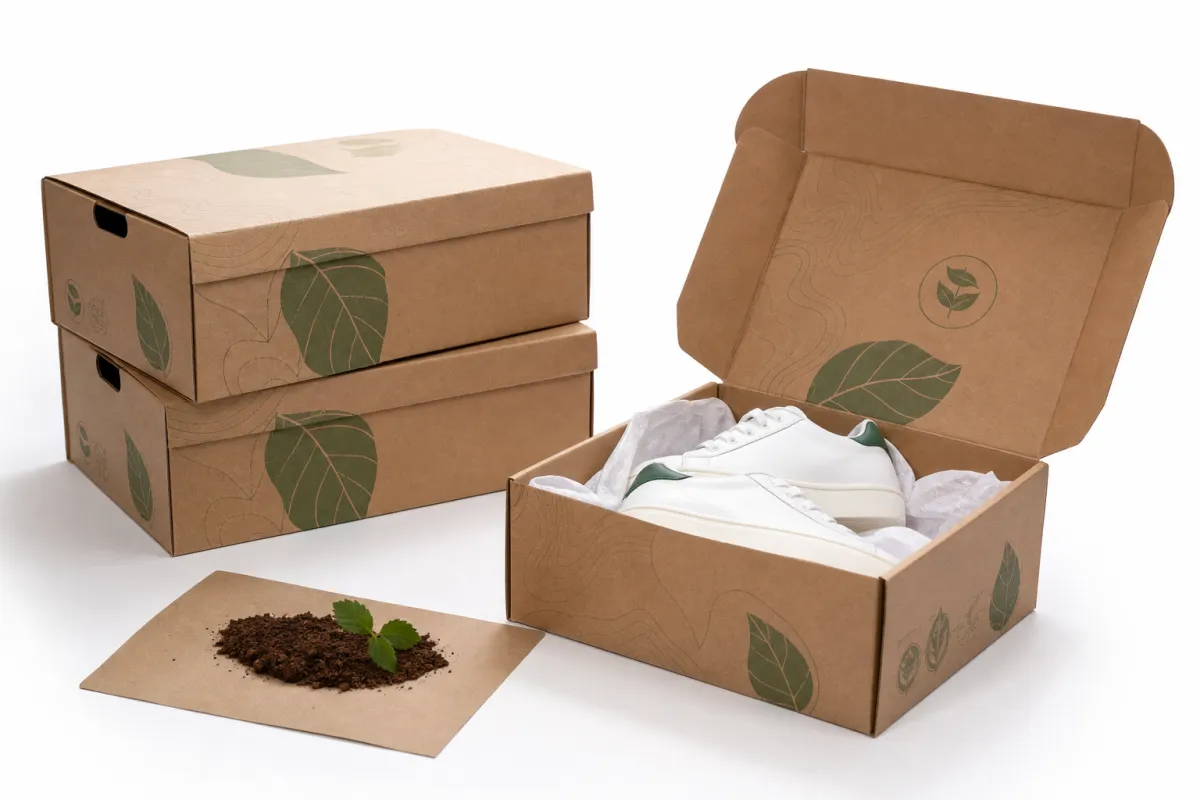
Standard cartons do one thing reliably: they exist. That does not mean they help a brand sell shoes. If the lid bows, the corners crush in transit, or the print lands flat and lifeless, the box sends the wrong message before the customer ever lifts the pair out. That is why brands order custom biodegradable shoe boxes instead of leaning on generic stock cartons. The box becomes part of the product story, not just a shipping shell.
There is also a plain commercial reason to order custom biodegradable shoe boxes. Buyers notice waste. Retail teams notice packaging consistency. Ecommerce customers notice the first reveal. A paper-based box with the right structure gives your team a cleaner talking point than a mixed-material carton that is hard to describe and even harder to defend. If your brand makes sustainability claims, the packaging should support them in a way that feels grounded, not performative.
Standard cartons fail in familiar ways: inconsistent sizing, weak stacking strength, dull print quality, and poor shelf presence. That matters more than people like to admit. A shoe box is part of the product experience, and weak branded packaging can make a solid shoe line feel less valuable before anyone tries it on. Order custom biodegradable shoe boxes when you want the box to reinforce the product price instead of quietly undermining it.
Biodegradable or fiber-based packaging is a purchasing decision, not a morality contest. Recyclable paperboard, compostable fiber inserts, and FSC-certified boards can all fit real storage and shipping requirements if the spec is set correctly. If a brand needs more stacking strength, corrugated inserts or a thicker board may be the smarter choice. The point is to match the box to the use case, not force one carton style to do every job in every channel.
A shoe box is not decoration. It is a sales surface with a lid.
That is why order custom biodegradable shoe boxes shows up so often in searches from retail brands, DTC labels, and private-label footwear programs. The box has to do more than hold shoes. It needs to stack cleanly, open neatly, print accurately, and survive the trip from warehouse to customer without turning soft, bent, or sloppy. Anything less is expensive waste with a logo on it.
I have seen more than one packaging program fall apart because the team treated the shoe box as an afterthought. The sample looked fine on a desk, then the first freight test turned the corners grey and the lid lost its shape. That kind of miss is easy to avoid if the spec is built around the product and the route it actually takes.
If you need other packaging formats for a wider product line, our Custom Packaging Products page includes related options that can follow the same brand system. If your team wants a quick answer on proofs, samples, or reorders, the FAQ page covers the common buying questions without the usual runaround.
Product details: materials, finishes, and structural options
To order custom biodegradable shoe boxes that hold up in the real world, start with the material. Most buyers land on one of four practical choices: kraft paperboard, recycled paperboard, FSC-certified board, or corrugated components for extra protection. Kraft gives a natural look and handles simple graphics well. Recycled paperboard sits in a useful middle ground for brands that want a cleaner sustainability profile without moving into a heavy rigid build. FSC-certified board supports chain-of-custody claims, and you can read more about the standard through FSC.
Finishes matter, but they should never run the project. Uncoated kraft gives a raw, honest look that suits eco-focused custom printed boxes. Water-based inks are usually the cleanest option for a natural packaging story. Matte coatings can work on some builds, although they are not always worth the added complexity if recyclability is the priority. Soft-touch coatings create a premium feel, but they can complicate material recovery and may not fit a strict biodegradable claim. That tradeoff belongs in the conversation before the quote gets too polished to question.
Structural options are where a lot of projects either get smarter or get expensive for no good reason. Common formats include tuck-top cartons, lid-and-base boxes, drawer-style boxes, mailer-style shoe boxes, and rigid-style presentation boxes for higher-end footwear. Tuck-top boxes are efficient and easy to store. Lid-and-base builds add a better presentation moment. Drawer style feels more premium, though it raises both labor and material cost. Rigid styles work well for luxury lines, but they should be reserved for products where the box is part of the perceived value, not a decorative afterthought.
Small details matter too. Thumb notches make opening easier. Dust flaps help keep the interior clean. Internal partitions work well for paired items, bundled accessories, or special inserts. Fold-flat storage saves warehouse space. Reinforced corners improve handling. Secure closures keep the lid from slipping during transit. None of those features are flashy, yet they matter more than a glossy rendering. If a box looks good and fails in shipping, it is still a bad box.
Channel planning should guide the structure. Retail display packaging needs stronger shelf presence and cleaner graphics. Ecommerce packaging has to survive courier handling, corner drops, and stacked pallets. If the brand sells through both channels, the best solution is often a hybrid spec: a clean retail-facing design with enough structural strength to handle shipping abuse. That is a better use of money than overbuilding a decorative carton that still collapses on the way out the door.
For buyers who want a lower-material option, order custom biodegradable shoe boxes with a simple folding structure and limited print coverage. For premium launches, order custom biodegradable shoe boxes with a lid-and-base build, restrained matte graphics, and a die-cut insert that keeps the shoes centered. Both can work. The right answer depends on product weight, shoe profile, and how much shelf presence the brand actually needs.
Specifications that matter for custom biodegradable shoe boxes
Before You Order custom biodegradable shoe boxes, confirm the specs that affect fit, print, and performance. Internal dimensions matter more than external dimensions because the shoe has to fit where it lives, not where the rendering wishes it lived. Sneakers, boots, kids’ shoes, and luxury footwear all need different clearance. Too tight and the uppers crease. Too loose and the shoes shift around, which looks sloppy and wastes board.
The core checklist should include internal length, width, and height; board thickness; target shoe type; print coverage; finish; insert requirements; and packing method. If the box is meant for a heavy boot, that detail should not be guessed. If the shoe is delicate, the insert should hold the pair in place without compressing the material. If the line runs in multiple sizes, one base structure with size-specific inserts may make more sense than rebuilding the whole packaging family from scratch.
Print setup deserves attention as well. Most brands use CMYK for full-color graphics or PMS for tighter logo control. Decide whether the logo sits on the lid, side panel, or front face. Leave a clean area for barcodes, care icons, and size marks. If the box ships into retail channels, reserve space for sticker labels and store handling notes. Good packaging design is usually disciplined, not crowded. A busy carton starts to look cheap very quickly.
Practical compliance matters too. Ask about moisture resistance, stacking strength, and edge crush resistance if the boxes move through warehouse handling or long-distance shipping. For carton performance, look at transit expectations in relation to common shipping and vibration standards such as ISTA protocols; the industry resource at ISTA is a useful reference point for testing language and methods. You do not need to turn the project into a lab report, but you do need to know whether the box survives real handling.
Here is the short version of what to confirm before you place the order:
- Internal dimensions for each shoe size range.
- Board grade and thickness.
- Artwork files in vector format.
- Print method and color standard.
- Insert style, if needed.
- Warehouse packing count per master carton.
- Finish selection and recyclability impact.
- Sample approval before bulk production.
Do not skip the dieline review. That single file shows whether the box folds properly, whether the logo sits where you expect, and whether the interior dimensions actually work. Order custom biodegradable shoe boxes only after the dieline is checked against the product, not just against a sales sketch. That habit saves a lot of rework.
A final point on sustainability claims: use material declarations that match the actual build. If the box includes coatings, mixed laminations, or plastic windows, do not call it fully compostable. Buyers can spot nonsense fast. A clean claim beats a flashy one. Order custom biodegradable shoe boxes with language you can stand behind.
Pricing, MOQ, and what drives the quote
Pricing for custom packaging is not random, even if some quotes look that way. When you order custom biodegradable shoe boxes, the cost is driven by box style, material grade, size, print complexity, finish, insert count, and order quantity. A simple kraft shoe box is going to cost less than a rigid presentation box with multiple colors, special coatings, and custom inserts. That is not a mystery. It is manufacturing.
For realistic planning, a simple kraft shoe box at higher quantities may land in the roughly $0.28-$0.55 per unit range, while the same style at lower quantities can easily sit in the $0.42-$0.85 range depending on size and print coverage. Drawer-style or rigid presentation builds push higher, often into the $1.20-$3.50 range or more. If someone offers a number that looks strangely low without asking about dimensions or artwork coverage, they are either guessing or planning to revise later. Both approaches are frustrating.
MOQ changes the math in a serious way. Smaller runs usually cost more per unit because setup and labor get spread across fewer boxes. Bigger runs improve unit pricing, but they also require more storage and more cash tied up in inventory. If your line has uncertain sell-through, a moderate order may be the better move. If you already know the size and the box will repeat across seasons, larger runs make more sense. Order custom biodegradable shoe boxes with the quantity strategy that fits your sales cycle, not just your optimism.
The hidden costs are the ones people forget. Sample charges, printing plates, setup fees, freight, and revision cycles all affect the budget. If artwork changes after proof approval, expect both the schedule and the cost to shift. That is why a clear brief matters. Send the dimensions, logo files, print count, and finish preferences before asking for the final number. Better data gives a better quote, and it usually avoids a round of unnecessary back-and-forth.
| Box style | Best use | Typical MOQ impact | Indicative unit price | Main tradeoff |
|---|---|---|---|---|
| Kraft folding shoe box | Everyday retail and DTC | Lowest setup burden | $0.28-$0.85 | Best value, less premium feel |
| Recycled paperboard box with insert | Brand-led retail packaging | Moderate setup | $0.45-$1.10 | Better presentation, slightly higher cost |
| Mailer-style shoe box | Ecommerce shipping | Higher board usage | $0.65-$1.40 | Stronger transit performance |
| Rigid presentation box | Luxury footwear | Highest setup and labor | $1.20-$3.50+ | Premium feel, higher storage cost |
Ask for tiered quotes before you commit. A 500-unit, 1,000-unit, and 5,000-unit comparison shows where the real breakpoint sits. Sometimes the smarter choice is to accept a slightly higher unit price at a lower run because storage, risk, and launch timing matter more than squeezing out a few cents. Order custom biodegradable shoe boxes with a pricing model that fits your margins, not someone else’s spreadsheet fantasy.
If you are comparing channels or planning a larger rollout, the Wholesale Programs page is useful for understanding where volume pricing starts to bend in your favor.
How to order custom biodegradable shoe boxes: process and timeline
The process stays straightforward if you give the supplier real information. Start by requesting a quote with the shoe dimensions, target quantity, preferred structure, print requirements, and any sustainability criteria. Then confirm the material, receive the dieline, review artwork placement, approve the sample, and move into production. That is the normal path. The complications usually come from vague inputs and late changes, not from the factory itself.
Typical timeline ranges are easy to frame. Quoting can happen quickly. Dieline prep and artwork revisions usually take a few days if the client responds promptly. Sampling can add more time depending on whether the box needs structural refinement. Production time depends on material choice, print complexity, and current factory load, but many projects run in the 12-20 business day range after proof approval. Transit time is separate, and it should stay separate, because shipping delays have a habit of arriving right on cue.
Where do projects slip? Missing vector files. Unclear measurements. Debates over gloss versus matte after the proof is already approved. Last-minute logo changes. A client-side approval chain that needs six people to say “looks good” and none of them are available. If you want to order custom biodegradable shoe boxes without wasting weeks, assign one decision-maker, send complete artwork, and confirm the box count by size before production begins.
Packaging teams also need to plan for launch timing. If the boxes are tied to a seasonal shoe drop, leave room for rework, shipping, customs if applicable, and buffer stock. A beautiful box that arrives after the product launch is just expensive storage. Order custom biodegradable shoe boxes early enough that the packaging lands before the product, not after the press release.
Here is the cleanest order flow:
- Send dimensions, quantity, and artwork files.
- Confirm the box style and board grade.
- Review the dieline and print layout.
- Approve the sample or request one revision.
- Release production and lock shipping timing.
If a supplier cannot explain the process in this sequence, that is worth paying attention to. Good communication matters. So does sample control. In packaging, “we’ll figure it out later” is a reliable way to waste time and money. Order custom biodegradable shoe boxes only after the sample looks right in hand, not just on a screen where every box somehow appears more premium than it really is.
The other thing I have learned from packaging projects is that the cleanest schedule is usually the boring one. Send complete files once, approve the right sample, and avoid re-litigating the finish three days before production. It is not glamorous, but it keeps the whole job from turning into a chase.
Why brands order custom biodegradable shoe boxes from us
Brands usually want three things from a packaging partner: fewer surprises, cleaner quality, and advice that actually saves money. That is the part people often miss. A supplier should help you Choose the Right spec, not push the most expensive one in the room. When brands order custom biodegradable shoe boxes from us, the value sits in the details: board guidance, proof control, consistent color placement, and production checks that keep the run from drifting off spec.
Packaging expertise pays for itself quickly. If a box is overbuilt, it costs more than it should. If it is underbuilt, it fails in transit and creates replacements, complaints, and waste. The right recommendation is usually the one that balances structure, print, and budget. That is what practical product packaging support looks like. No drama. No fake certainty. Just a spec that works.
Brand consistency matters as well. A shoe line often has multiple sizes, sometimes multiple collections, and usually more than one sales channel. That means the box artwork needs to stay aligned across repeat runs. Logo placement should be precise. Color should be repeatable within normal print tolerances. Dielines should be built for the same family of sizes so the brand reads as one system instead of five unrelated jobs sharing the same logo file.
Operational credibility matters just as much. If a supplier disappears after the deposit clears, the project gets expensive fast. Buyers deserve realistic lead times, sample review before bulk production, and clear updates if a material or print issue appears. They also deserve honest advice when a requested spec is too fragile, too costly, or too ambitious for the shipping environment. That is how order custom biodegradable shoe boxes turns into a dependable program instead of a one-off headache.
Trust also depends on documentation. If a brand needs fiber sourcing information, ask for it. If the material claim matters, confirm it. If the box will be tested for transit performance, say so upfront. In some cases, a buyer wants the packaging to follow a stricter handling standard, and the conversation should point back to the real use case rather than whatever sounded nice in the kickoff call. That is normal. In fact, it is how serious packaging programs are supposed to work.
The cheapest box is rarely the cheapest outcome. Reprints and returns have a sense of humor about that.
If you want to see how that thinking applies across more formats, start with our Custom Packaging Products page, then use the FAQ page to sort out sample timing, artwork setup, and reorder basics. For larger programs, the Wholesale Programs page is the right place to talk volume strategy.
Next steps to order custom biodegradable shoe boxes
If you are ready to order custom biodegradable shoe boxes, gather the basics first: shoe dimensions, target quantity, preferred box style, artwork files, and any sustainability requirements that matter to your team. If you do not have those yet, get them before asking for a final quote. That alone cuts down on back-and-forth and makes the pricing far more usable.
Then ask for two or three quote options. A budget build. A balanced build. A premium build. That comparison shows you where the real value sits and keeps the decision grounded in numbers instead of taste. Some brands discover they do not need a rigid-style box. Others discover the premium version is only a little more expensive once the run gets large enough. Either way, you get a clearer decision.
Order a physical sample or prototype before you commit to the full run, especially if the shoe is bulky, delicate, or sold in several size ranges. A sample fit test will tell you more than any render can. It will show whether the lid closes properly, whether the insert works, and whether the shoes move around too much. That is the kind of test that prevents embarrassing surprises later.
Once the spec is confirmed, lock the dieline, approve the artwork, and set the production slot. Keep the launch calendar in view. If the packaging has to arrive before a drop, build in buffer time for transit and any changes. Order custom biodegradable shoe boxes with the same discipline you would use for a production schedule, because packaging is part of the launch, not a side note.
So yes, order custom biodegradable shoe boxes for the sustainability story. Order them for cleaner shelf presence. Order them for the unboxing experience. Mostly, order custom biodegradable shoe boxes that fit the product, hold up in transit, and support the brand without wasting money. That is the point, plain and simple.
How do I order custom biodegradable shoe boxes for multiple shoe sizes?
Provide internal dimensions for each size range, not just the outside box size. That keeps the fit accurate and avoids guesswork. In many projects, the smartest move is one base structure with size-specific inserts, because it reduces tooling complexity and keeps unit cost under control. If you need to order custom biodegradable shoe boxes across several sizes, ask for a sample fit test before you approve the full run.
What materials are best when I order custom biodegradable shoe boxes?
Kraft paperboard and recycled paperboard are the most practical starting points. If documentation matters for your brand claims, FSC-certified board is a strong choice. For many brands, uncoated or lightly printed paper-based builds are the cleanest route because they support a more honest sustainability story. Avoid unnecessary coatings if recyclability or compostability is a priority, because mixed materials can complicate the claim.
What is the usual MOQ for custom biodegradable shoe boxes?
MOQ depends on size, print method, and structure, but smaller runs usually cost more per unit because setup costs are spread across fewer boxes. Larger quantities lower the unit price, especially when you keep the same design across multiple sizes. If you want a real read on volume breakpoints, ask for tiered pricing at 500, 1,000, and 5,000 units before you choose.
How long does it take to order custom biodegradable shoe boxes and receive them?
The timeline usually includes quoting, dieline approval, sample review, production, and transit. Artwork delays and revision cycles are the most common reason orders slip. Many projects move through production in roughly 12-20 business days after proof approval, but that changes with complexity and factory load. If the boxes must arrive before a seasonal launch or retail reset, build in buffer time.
Can I add premium finishes and still order custom biodegradable shoe boxes?
Yes, but finish choices should match your sustainability goals and budget. Embossing, restrained print work, and clean board selection often keep the packaging more honest than heavy plastic-style effects. Ask whether the finish affects recyclability before you approve the final spec. A premium look is useful only if the box still fits the brand story and the supply chain.

