A folded tee can look crisp in a bag or look like it was shoved into the nearest paper sack. The difference is usually not the logo. It is the structure, the paper grade, and whether the bag was sized for the actual product instead of a guess. That is the point of a Custom Clothing Store Paper bags Material and Sizing guide: keep the handoff neat, protect the garment, and make the packaging feel deliberate rather than improvised.
A paper bag is not just a carrier. It sits in the same customer moment as the receipt, the tissue, the tag, and the first impression of the brand leaving the store. If the bag collapses, wrinkles badly, or feels too cheap for the merchandise, the packaging lowers the perceived value of the sale. That matters whether the basket contains one T-shirt or a layered purchase with denim, knitwear, and a gift item.
Good apparel packaging fits the product first and the logo second. If the dimensions are off, print coverage cannot rescue the experience.
Custom clothing store paper bags material and sizing guide: the spec choices that matter
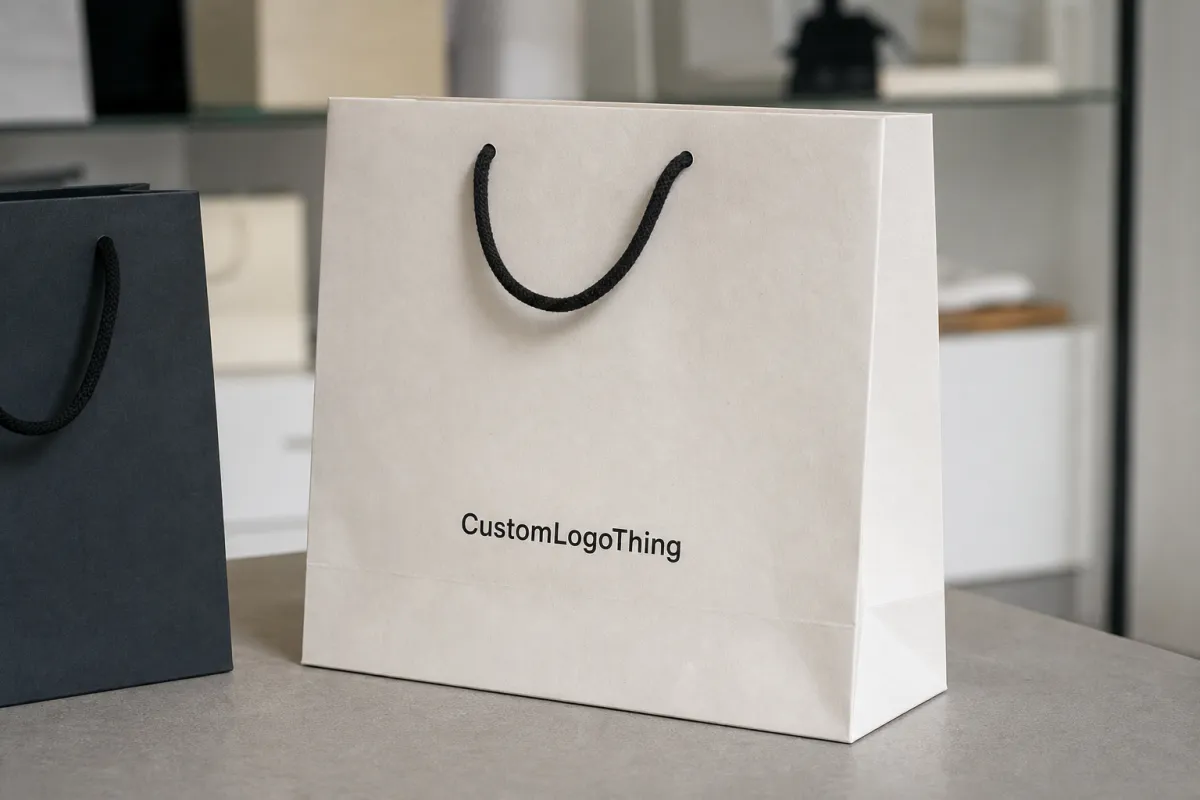
There are six decisions that drive most of the outcome: paper grade, finish, handle style, dimensions, print coverage, and reinforcement. Everything else is secondary. Useful, sometimes. Secondary, always.
For a boutique selling folded basics, the bag usually has to hold one or two items, a piece of tissue, and maybe a small insert. For a premium store, the same bag may need to carry heavier garments, a higher-value presentation, and repeated use after the sale. That changes the build fast. A pretty logo on a weak structure still produces a weak bag.
The most common mistake is spending on decoration before the load path is solved. Stores approve a polished graphic, then under-spec the bag wall or handle. The result is predictable: creases at the corners, a sagging bottom, or a tear before the customer reaches the car. That is not just a durability problem. It makes the entire purchase feel less considered.
The smarter route is to match the bag to the way people actually buy. Are most orders single tees? Are customers leaving with stacked denim, gift bundles, or outerwear wrapped in tissue? Those buying patterns should shape the paper, the handle, and the size. Packaging is presentation, but it is also a physical object carrying real weight.
For most clothing retailers, the decision tree starts here:
- Kraft paper for a natural look, solid stiffness, and an easy fit with minimal branding.
- White paper for sharper artwork and cleaner color reproduction.
- Coated stock for a smoother, more premium finish, usually at a higher cost.
- Twisted paper handles for economical everyday retail use.
- Flat paper handles for a straightforward retail look and efficient production.
- Rope or ribbon handles for a softer hand feel and higher perceived value.
If your brand leans natural, earthy, or minimal, kraft paper usually feels honest instead of forced. If the store is fashion-forward, gift-oriented, or built around clean visuals, white or coated stock tends to print better and read more polished. The paper should support the merchandise, not compete with it.
For buyers comparing paper bags with custom printed boxes, the bag often wins on speed, flexibility, and cost for apparel. Boxes make sense for shipped goods, rigid protection, or premium folded pieces that need a more structured reveal. Bags make more sense when the goal is an efficient checkout with enough visual weight to feel branded.
Paper grades, coatings, and handles that survive retail
Kraft paper is usually the most forgiving starting point. It hides minor scuffs, feels sturdy without pretending to be luxury packaging, and works well with restrained print. White paper is better when the design depends on sharp contrast or a clean fashion-retail look. Coated stock sits at the polished end of the range, but it is easy to overspend there if the bag only needs to carry a folded shirt and a receipt.
Paper weight matters more than most buyers expect. Lightweight bags for tees, socks, and accessories usually sit around 120-150 gsm. Heavier retail bags for hoodies, denim, and multi-item orders often move into 150-200 gsm, usually with some form of reinforcement. If a bag needs to carry bulky apparel, trimming the stock just to hit a lower price point is a false economy. The cost savings disappear the first time a handle lets go.
Handles do two jobs at once: they change the feel of the bag in hand, and they change the failure point. Twisted paper handles are common because they are affordable and adequate for daily use. Flat paper handles deliver a similar price tier with a slightly different look. Rope handles lift the presentation quickly, which is why they show up on premium retail packaging more often. Die-cut handles keep the silhouette clean, but they need stronger construction elsewhere if the bag is going to carry real weight.
Reinforcement is the part that gets ignored until a bag fails. A bottom board helps the base sit flat and gives folded denim or a shoe box a more stable platform. Handle patches spread the load and reduce tear risk. Double-wall construction can make sense for heavy apparel, gift bundles, or bags expected to be reused after purchase. If customers will carry the bag around for a while before it reaches a car or closet, the bag should be built for that path, not just the counter.
There is also a visual tradeoff. Too much structure for a lightweight purchase can make a bag look overbuilt and awkward. Too little structure for a premium order looks cheap. The better answer is usually a middle ground, and that is why many retailers keep two or three bag specifications instead of forcing one universal size to do every job badly.
For brands that want a sustainability angle, FSC-certified paper is worth asking about. FSC certification does not make the bag magical, but it does give buyers a traceable paper sourcing standard to compare against. For transit-sensitive orders or packaging that has to travel with products, ISTA testing guidelines are also useful references for understanding where bags may fail under handling and shipping stress.
How to size bags for tees, denim, and outerwear
Start with the folded product dimensions, not the hanger size or the label size. A medium shirt on display can fold into a compact rectangle. A hoodie can expand much more than the rack suggests. Measure the actual folded width, height, and thickness, then add space for tissue, a tag, and a little movement so the bag does not look stuffed to the top seam.
A practical sizing framework covers most clothing stores without multiplying SKUs unnecessarily:
- Small for tees, accessories, socks, and light gift items.
- Medium for shirts, knitwear, and one neatly folded layer with tissue.
- Large for denim, hoodies, and two-item purchases.
- Oversized for bulky outerwear, shoes, or boxed sets.
The gusset is where many buyers misjudge the fit. Width and height get attention, but depth is what keeps the product stack from crushing itself. Too shallow and the bag bulges. Too deep and the bag looks hollow and oversized, which can be just as wrong in a premium environment. For many apparel stores, a moderate gusset is the most useful compromise.
Think about the full basket, not just the hero item. Tissue adds bulk. A boxed belt changes the profile. A second folded item may be small in theory and awkward in practice. If customers frequently buy pairs or bundles, size the bag to the bundle. That reduces re-bagging at checkout and keeps the presentation consistent during busy shifts.
A useful move is to map your top-selling SKUs to three standard bag sizes. Most stores do not need a separate bag for every product. They need enough coverage to handle the majority of orders without overcomplicating the counter workflow. A clean size matrix saves time, cuts reorder confusion, and reduces the chances of a bad fit during a rush.
Here is a starting point that works for many apparel retailers:
| Apparel type | Typical bag size approach | Why it works |
|---|---|---|
| Tees, socks, small accessories | Small | Prevents wasted material and keeps the purchase tidy |
| Shirts, light knitwear | Medium | Leaves room for tissue and a clean fold |
| Denim, hoodies | Large | Handles thickness without stressing the seams |
| Outerwear, bundles, boxed sets | Oversized or reinforced large | Reduces bulging and lowers handle failure risk |
That table is a working baseline, not a rulebook. It is still better than choosing a random size because it “seems right.” That phrase has probably caused more packaging waste than anyone wants to admit.
Production steps, proofing, and turnaround timeline
The normal order flow is straightforward: brief, spec confirmation, dieline setup, artwork placement, proof approval, production, packing, and shipping. The difficult part is that many buyers change the size, handle, or print coverage halfway through. Every change adds time. Packaging teams are not being dramatic when they say that revisions move the clock.
Most delays come from the same avoidable issues. Artwork is too low-resolution. A logo arrives without vector files. A color is described as “close to this blue” instead of an actual Pantone reference. The size changes after the proof is already in motion. Handle details are still being debated while the order is supposed to move into production. None of that is mysterious; it just slows the queue.
Timing usually falls into three stages. Proofing can be quick if the files are clean. Sampling takes longer because someone has to physically make the bag. Full production sits in the middle, depending on quantity, print complexity, and finish. Freight adds its own clock, and long-distance shipping can end up being the most unpredictable part of the schedule.
For standard Custom Retail Packaging orders, a realistic production timeline is often 12-18 business days after proof approval. Sample requests add several days before production even starts. Rush jobs can be done, but they usually reduce the room for special finishing and increase the unit price. That is not a penalty so much as a consequence of compressing a manufacturing schedule.
Before requesting a quote, have these items ready:
- Final bag size, including gusset depth.
- Paper weight and finish preference.
- Handle style.
- Print colors and coverage area.
- Target quantity.
- Delivery date and destination.
If the bag is part of a broader packaging system, it helps to coordinate it with hang tags, inserts, and your other Custom Packaging Products so the store looks like one brand rather than a stack of unrelated pieces. Packaging works better when the parts agree with each other.
Cost, MOQ, and unit pricing: what changes the quote
Paper bag pricing is driven by a small set of variables, and they all accumulate. Bigger bags use more paper. Heavier stock costs more. More print colors add setup work. Special finishes add labor and material. Rope handles cost more than twisted paper. Reinforcement adds more. Higher quantities reduce the unit price mainly because the setup cost gets spread across more bags.
MOQ is where many first-time buyers get surprised. Small runs are rarely cheap because the setup cost does not shrink just because the order is modest. If a supplier has to prep plates, set up a dieline, and run a custom print job, those costs exist whether the order is 500 bags or 5,000. That is why low-volume custom packaging often looks expensive on paper. It is not a markup trick; it is the math of setup.
At around 5,000 units, these ranges are a reasonable planning band for apparel paper bags with standard custom printing and typical retail construction:
| Option | Typical spec | Ballpark unit price | Best fit |
|---|---|---|---|
| Budget kraft | 120-150 gsm, twisted paper handle, one-color print | $0.18-$0.28 | Tees, accessories, promotional retail packaging |
| Mid-range retail | 150-170 gsm, reinforced handle, one to two colors | $0.28-$0.45 | Shirts, knitwear, everyday boutique carryout |
| Premium presentation | 170-200 gsm, coated or white stock, rope handles, better finish | $0.45-$0.85 | Denim, gift bundles, upscale branded packaging |
Those numbers are planning ranges, not promises. Final cost changes with print coverage, freight, supplier location, reinforcement, and how many revisions the artwork needs before approval. A clean file set saves money. A messy approval chain does not.
Watch for hidden costs. Setup fees matter. Sample charges matter. Carton charges matter. Freight matters. Rework matters the most, because an artwork change after proof approval can make a good quote look fragile. If a supplier only gives a tempting unit price without spelling out the rest, compare carefully. Cheap quotes often grow teeth later.
The better way to compare offers is by total landed cost and actual packaging performance. That means unit price plus freight plus sample cost plus the risk of failure in use. A bag that costs a few cents less but tears at the handle is not savings. It is a customer complaint waiting for a name.
For stores comparing paper bags with boxes, the answer is usually category-specific. Bags are lighter and usually cheaper to ship. Boxes may protect certain products better or create a more rigid premium reveal. Different tools, different jobs. That distinction matters more than the label attached to the packaging format.
Next steps before you place the order
Create a one-page spec sheet before requesting quotes. Keep it plain and exact: size, paper weight, handle style, finish, print colors, quantity, and delivery date. Boring is a feature here. It keeps suppliers quoting the same thing instead of sending five versions of a mystery bag.
Ask for a sample or at least a dieline against your best-selling folded item before full production. Guessing fit is how stores end up with bags that are too shallow, too tall, or just odd enough to make the checkout feel off. A sample check costs less than a warehouse of packaging that technically exists and practically fails.
It also helps to compare two versions side by side: your preferred spec and a cost-down version. The cheapest bag is not always the smartest buy. Sometimes the mid-range option gives you the best balance of hand feel, durability, and total landed cost. Sometimes the premium option earns its keep because the merchandise genuinely needs a more polished carrier.
Place the order around your own calendar, not the supplier’s optimism. Seasonal launches, store openings, and promotions leave less room for delay than people like to think. If shipping slips, the packaging does not become less necessary; it just becomes late.
For most apparel retailers, the strongest result comes from matching the bag to the product mix, reorder rhythm, and brand feel. That is the real value of a custom clothing store Paper Bags Material and Sizing guide: choose a build that fits what you sell, not what looks impressive in a catalog, and the packaging will do its job without wasting money.
What paper weight works best for custom clothing store paper bags?
Use lighter stock for tees and accessories, then move up when the bag has to carry hoodies, denim, or multiple folded items. If the bag needs to feel premium and survive repeat use, do not cut paper weight too far just to reduce cost. Ask for at least two options so you can compare hand feel, durability, and unit price side by side.
How do I choose the right size for clothing paper bags?
Measure the folded product, not the hanging garment, then add room for tissue, tags, and a little movement. Standardize around your best-selling product bundles instead of trying to make one bag cover everything. If customers often buy multiple items, size up slightly so the bag does not bulge or look overloaded.
What does a custom clothing store paper bags quote usually include?
A useful quote should list size, paper weight, handle type, print colors, finish, quantity, and any reinforcement options. It should also show setup fees, sample costs, and shipping so you can compare offers properly. If the quote only gives you a unit price with no specs, it is incomplete at best.
How long does paper bag production usually take?
Proofing can move quickly if the files are ready, but sampling, artwork revisions, and final approval usually set the real schedule. Production often takes about 12-18 business days after proof approval, with freight added on top depending on distance and shipping method. Rush orders are possible, but they usually cost more and leave less room for changes.
Are reinforced handles or inserts worth the extra cost?
Yes, when the bag will carry heavier apparel, be reused, or represent a premium purchase where a torn handle would look bad quickly. Reinforcement is usually money well spent when the packaging is part of the brand experience rather than a disposable afterthought. For lightweight tees and low-cost promotions, you can often skip the extra build if the load is low.

