Small Retail Paper Bags Material and Sizing Guide for Buyers
A small retail paper Bags Material and Sizing guide only works if it starts with the handoff at the counter, not the presentation render. A bag can look clean on screen, clear internal review, and still feel wrong the first time a cashier loads a candle set, a folded tee, or a boxed serum into it. In practice, the bag has three jobs: protect the purchase, carry the brand, and survive the walk out the door without wrinkling, collapsing, or tearing at the handles.
Material and size are tied together more tightly than many buyers expect. Change the paper weight and the bag may hold its shape differently. Change the gusset and the same product can suddenly fit better or worse. Even a small adjustment can affect print quality, unit price, and the feel of the bag in the hand. The detail that gets missed most often is not height. It is depth. A small bag usually fails because the base is too narrow, not because it is too short.
That is the practical lens for the sections that follow: fit first, then finish, then cost.
What Small Retail Paper Bags Need to Solve on Shelf
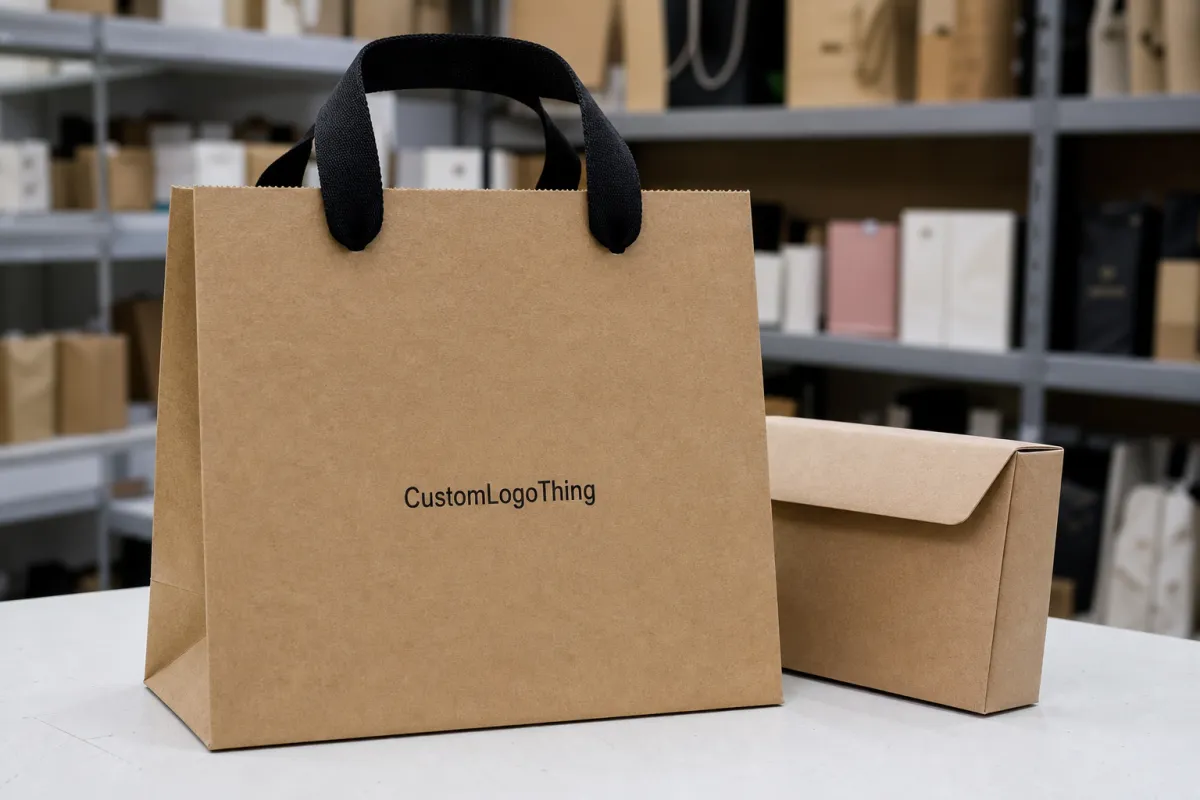
From a packaging buyer’s point of view, a small retail bag is not a generic carrier. It is a short piece of brand experience that has to work under pressure, often with very little room for error. If the opening is too tight, loading slows down. If the gusset is too shallow, the product leans against the sidewall. If the board weight is too light, the whole bag loses confidence the moment a customer lifts it.
The good ones feel almost invisible in operation. They open with one hand, accept the product without forcing the corners, and stand long enough for checkout to move smoothly. That is the real test. Most customers never think about paper grade, but they absolutely notice whether the bag feels sturdy, neat, and easy to carry.
If the render looks perfect but the gusset pinches on the floor, the customer notices it in the first five steps.
A small bag also has to match the retail setting. A boutique counter with slow, careful packing can tolerate a slightly more delicate structure. A beauty chain or gift shop with faster turnover usually cannot. Add staff speed, seasonal volume, and stacked purchases, and the spec becomes less about aesthetics and more about friction. Every extra second at checkout is visible.
The best choices are rarely the cheapest on paper. A lighter sheet may save a fraction of a cent, but if it wrinkles badly, needs a second outer bag, or makes staff over-handle the product, the true cost rises. That is why Small Retail Paper Bags material and sizing guide decisions should be made against the product, the counter, and the route the bag will take after it leaves the store.
How Material Choice Changes Strength, Print, and Feel
The most common paper options for small retail bags are brown kraft, white kraft, coated paper, and recycled stock. Each one behaves differently once folds, glue, ink, and handles are added. Brown kraft gives a natural, low-gloss look that works well for casual retail, gift shops, candles, soaps, and apparel. White kraft offers a cleaner print face and usually handles logos, fine type, and lighter colors with less visual noise. Coated paper delivers a more polished surface for premium branding. Recycled stock brings texture and a visibly lower-fi appearance that many buyers now use for sustainability messaging.
Surface texture matters more than many spec sheets admit. Smooth paper holds small text and crisp edges better. Fibrous kraft softens detail slightly, which is not a flaw if the artwork was designed for it. In fact, that softer edge can be the right answer for boutique packaging, natural skincare, or specialty food programs where a warmer feel matters more than razor-sharp print. The same logo can look expensive on one stock and flat on another. Paper is not neutral.
Strength is the next variable. A small bag for folded apparel does not need the same board weight as a bag for boxed cosmetics or glass jars. For many small retail applications, paper in the roughly 120-200 gsm range is common, with the exact spec shifting based on size, handle type, and whether the product has hard corners. A bag for light tissue-wrapped goods can stay on the lighter side. A bag carrying boxed goods usually needs more stiffness at the folds and more resistance at the bottom panel.
Handles change the equation too. Twisted paper handles are usually efficient and widely used for everyday retail. Flat paper handles can be cost-effective in some builds. Rope handles, cotton handles, and die-cut options often raise the perceived value, but they also change labor and material cost. On a small bag, the handle is not a small decision. It affects the load path, the look, and the risk of failure under tension.
There is also a sustainability angle that deserves more precision than marketing usually gives it. Buyers often ask for biodegradable packaging, but paper only fits that description cleanly when the full structure supports it. Heavy coatings, plastic lamination, foil, and mixed-material handles can change disposal behavior. If the goal is stronger environmental positioning, ask whether the stock includes post-consumer waste, whether it is FSC certified, and whether the finish still allows the bag to enter ordinary municipal recycling streams.
The Forest Stewardship Council is a useful reference if chain-of-custody language matters to your brand. It does not solve every sustainability question, but it does provide a cleaner basis for claims than vague eco language.
In practical terms, the main options tend to behave like this:
| Material | Print and look | Typical use | Buyer note |
|---|---|---|---|
| Brown kraft paper | Natural, slightly muted print | Apparel, gifts, casual retail | Good for warm branding and recycled messaging |
| White kraft paper | Cleaner graphics and brighter color | Beauty, boutique, specialty goods | Often the easiest stock for detailed logos |
| Coated paper | Smoother, sharper, more polished | Luxury retail, full-color branding | Feels premium, but usually costs more |
| Recycled stock | Textured and organic-looking | Sustainable brands, natural products | Strong fit for recycled materials messaging |
Sizing for Product Weight, Gusset Depth, and Carry Comfort
Good sizing starts with the product. Measure width, depth, and height, then add clearance for tissue, inserts, or a cleaner loading motion. If the product is in a rigid box, give the opening enough room that the top edge does not catch. If it is soft, such as apparel or fabric accessories, the dimensions can be tighter without creating friction.
The gusset is often the hidden dimension that decides whether the bag works. A narrow gusset can look fine on a spec sheet and still make a bag fail for boxed goods, candle sets, small kitchenware, or bundled cosmetics. Once the base is too shallow, the product stacks upward instead of sitting flat, and the bag begins to bow. That is why depth deserves as much attention as height, and sometimes more.
Carry comfort matters too. A bag can be technically large enough and still feel awkward if the handle drop is too short or the opening is too stiff. Buyers often focus only on internal measurements, but the carrying experience changes with every structural decision. If the customer is walking a long mall corridor, carrying multiple purchases, or holding the bag with one hand, handle comfort becomes part of the spec.
A simple fit rule helps:
- Tighter fit for compact, consistent products like jewelry boxes or folded gift sets.
- Moderate clearance for beauty items, candles, and mixed accessory orders.
- Extra headroom for apparel, multi-item purchases, or products with inserts and tissue.
For boxed products, compare the item against the bag’s internal width and gusset, not just the height. A box that slides in easily at the base often performs better than a taller bag with a cramped footprint. A slightly wider base can be more useful than extra vertical space, especially in retail where the bag is loaded quickly and carried immediately.
For planning purposes, many buyers keep a simple margin in mind: a few millimeters of clearance for tightly packed boxed goods, and more for soft or irregular products. The right amount depends on the product, but the principle stays the same. Fit should feel intentional, not forced.
Cost, MOQ, and Unit Price Drivers to Compare
Price is rarely about one thing. It usually comes from a combination of paper grade, size, handle type, print coverage, finishing, and order quantity. Move from blank kraft to a full-color printed white kraft bag with rope handles and a soft-touch finish, and the quote changes for understandable reasons: more setup, more labor, more material handling, more waste during make-ready.
MOQ matters because the fixed work in a custom bag order has to be spread across the run. That includes die cutting, gluing, handle attachment, proofing, and press setup. Smaller runs can be done, but the per-unit price is usually higher because those fixed costs do not disappear. A common custom MOQ for small retail paper bags sits around 3,000 to 5,000 pieces, though some suppliers will quote lower quantities with a premium attached.
For budgeting, the ranges below are realistic enough to help buyers compare quotes without pretending every market behaves the same. Paper costs move. Freight moves. Labor moves. The structure still matters more than the sticker price.
| Option | Approx. unit price | Typical use | Cost driver |
|---|---|---|---|
| Blank kraft bag | $0.12-$0.20 | Simple retail, low branding needs | Lowest print and setup demand |
| One-color printed kraft | $0.16-$0.26 | Boutique and gift retail | Moderate print labor and ink use |
| White kraft, one to two colors | $0.18-$0.30 | Beauty, accessories, premium counter bags | Cleaner print face, slightly more finishing attention |
| Coated paper, full-color art | $0.24-$0.42 | Luxury presentation, detailed branding | More complex print and finish requirements |
| FSC certified recycled stock | $0.19-$0.34 | Sustainability-led retail programs | Stock selection and certification handling |
Twisted handles are often cheaper than rope handles. Large print coverage is usually more expensive than a small logo and a few lines of copy. Heavy coatings, foil, embossing, and specialty finishes each add cost in separate ways, and they do not all increase perceived value equally. A buyer who wants a premium effect should ask whether the finish supports the shelf and the customer’s hand, not just the artwork file.
The cheapest bag on paper is not always the lowest-cost choice in practice. If a thin bag tears, gets double-bagged, or forces staff to repack items, the hidden cost climbs quickly. A bag that performs well can save time at the counter and protect the presentation at the same time. In a busy store, that matters more than a small price difference on the quote.
Production Steps, Proofing, and Timeline Expectations
The cleanest production flow starts with a clear spec review, then moves into artwork preparation, material selection, sampling or proofing, approval, production, finishing, packing, and shipping. If the spec is vague at the start, every later step slows down. If the size, print area, and handle type are locked in early, the schedule becomes easier to manage.
Proofing is where buyers protect themselves. A flat artwork proof confirms copy placement, logo scale, bleed, and safe areas. A dieline shows exactly where folds, glue seams, and handle points sit. For sensitive projects, a physical sample is worth the extra time because it shows how the paper feels, how the handles sit, and whether the bag opens the way the team expected.
Quality control should be concrete, not vague. The most useful checks are the ones that can be repeated: measure the finished bag against the dieline, test handle pull strength, confirm glue alignment, inspect print registration, and check that the bottom panel sits square. If the bags will carry boxed goods, test a real product load rather than guessing from dimensions alone. A bag that passes in a file can still fail under weight.
Simple custom orders can often move through production in about 12 to 15 business days after proof approval. More complex work, such as specialty paper, multi-color artwork, custom handle materials, or extra finishing, can push that to 18 to 25 business days or more. Those windows are normal. The biggest schedule risk is usually not machine time; it is waiting on revisions, missing measurements, or late artwork files.
Shipping needs its own attention. If bags are packed into weak master cartons, the most careful production run can still arrive crushed. Strong corrugated cartons reduce corner damage and help keep the bags square in transit. For larger commercial shipments, ISTA testing guidance is worth checking, especially if cartons will move through multiple handoffs or long-distance freight.
For buyers sending a brief to a supplier, the most useful information is simple and concrete:
- Exact product measurements and product weight
- Target quantity and acceptable MOQ range
- Paper preference, including kraft paper or recycled materials
- Handle style, color count, and finish expectations
- Whether the bag needs to support light, medium, or heavier retail loads
Common Mistakes to Avoid Before You Approve Artwork
The classic mistake is approving the bag on appearance alone. A render can hide a too-tight opening, an awkward gusset, or a handle position that feels wrong once the bag is filled. Real samples and measured templates catch those problems early. If possible, place the actual product into the sample bag before sign-off. That one step saves a lot of rework.
Another common issue is choosing a material by price only. Thin paper, weak glue, or the wrong handle style can create returns, customer complaints, and unusable inventory. The bag may look acceptable in a box, but retail use reveals the weakness fast. A low-cost spec that fails at the store is not a bargain.
Branding placement creates its own traps. Important copy should stay away from folds and glue lines, and artwork should be designed for the actual stock, not only for the screen. Fine gradients and small text often print better on smoother white kraft than on a heavily textured recycled sheet. On brown kraft, dark solid artwork can work well, but lighter tones can disappear if the contrast is weak.
Storage and shipping are easy to overlook. Humidity can affect flatness, stacked cartons can compress corners, and rough handling can scuff finishes before the bags ever reach the sales floor. If the bags will sit in a warehouse before use, the carton and pallet plan matters almost as much as the bag spec itself.
One more issue appears often in mixed-product retail programs: a bag that fits one category beautifully can perform badly for another. A size that suits a boxed candle may crush soft goods, while a size that works for apparel can let smaller boxes slide around. If the product mix is broad, the sizing brief should acknowledge that instead of pretending one bag solves everything.
Expert Checks and Next Steps for a Clean Quote
Before requesting pricing, build a short checklist: product measurements, target quantity, print colors, handle style, paper preference, and the load category the bag needs to support. That gives the supplier enough detail to quote the right structure instead of guessing. It also makes it easier to compare quotes fairly, because you are comparing like with like.
If the product mix is uncertain, ask for two or three size options. A small change in width or gusset often solves fit issues without changing the whole bag design. That happens often with boutiques that carry both boxed items and soft goods; one dimension change can make the bag work for both more cleanly.
Request a sample or dieline review before production approval, especially for gift retail, boutique packaging, or any program where customer touch matters. The best packaging decisions are usually the ones that look straightforward once they are installed, even though they were carefully checked behind the scenes.
If the brief is strong, a small retail paper bags Material and Sizing guide becomes more than a reference page. It becomes a working spec that keeps fit, cost, and timing aligned. That is the point. A clear brief almost always leads to a better bag, a cleaner price comparison, and fewer surprises once production starts.
How do I choose the right small retail paper bag material for light products?
Match the paper to the load, not just the look. Lightweight goods may only need standard kraft paper, while denser items usually benefit from a thicker sheet or a reinforced handle. If print clarity matters, a smoother stock usually gives cleaner detail. If the brand wants a natural feel, recycled materials and textured kraft can work well, as long as you accept a softer print edge.
What size small retail paper bag works best for boxed products?
Measure the box width, depth, and height first, then add room for easy insertion and removal so the bag does not bind at the opening. For boxed goods, gusset depth is often more important than extra height because it controls whether the item sits flat and carries evenly. A bag that is slightly wider at the base usually performs better than one that only gains height.
What affects the cost of custom small retail paper bags most?
The biggest price drivers are paper type, bag size, print coverage, handle style, finishing, and order quantity. Smaller runs usually cost more per bag because setup time, proofing, and production changeovers are spread across fewer units. If you need FSC certified stock or special recycled content claims, that can also change the quote.
How long does production usually take after approval?
Simple orders can move faster, while custom sizes, specialty paper, or multi-color printing usually add time. A clean approval process matters most; final artwork, confirmed specs, and prompt proof feedback help keep the schedule on track. For many small retail paper bags, 12 to 15 business days after proof approval is a fair planning window, with longer lead times for more complex builds.
What should I send to get an accurate quote for small retail paper bags?
Send the product measurements, desired bag size, approximate order quantity, paper preference, handle style, and print details. If possible, include a sample product photo or packaging note so the supplier can recommend the most realistic structure and size. The more exact the brief, the more useful the pricing.

