Cheap mailers are only cheap until they start tearing, splitting, or slowing the line. In an economy poly Mailers Bulk Order, the real bill often arrives later: repacking labor, damaged shipments, customer complaints, and the kind of returns that quietly erase margin. For apparel, cosmetics, accessories, and subscription kits, the aim is not maximum protection. It is enough protection to move product cleanly without paying for overbuilt film that does nothing useful.
If you are comparing formats, start with Custom Poly Mailers and the rest of our Custom Packaging Products. Seeing the options side by side is better than trying to decode a quote with missing specs.
The lowest quote is often the most expensive mistake once returns and repacks begin. Weak mailers fail in familiar ways: thin film, poor seal strength, and sizing that forces the bag to work too hard.
Why cheap mailers get expensive in bulk
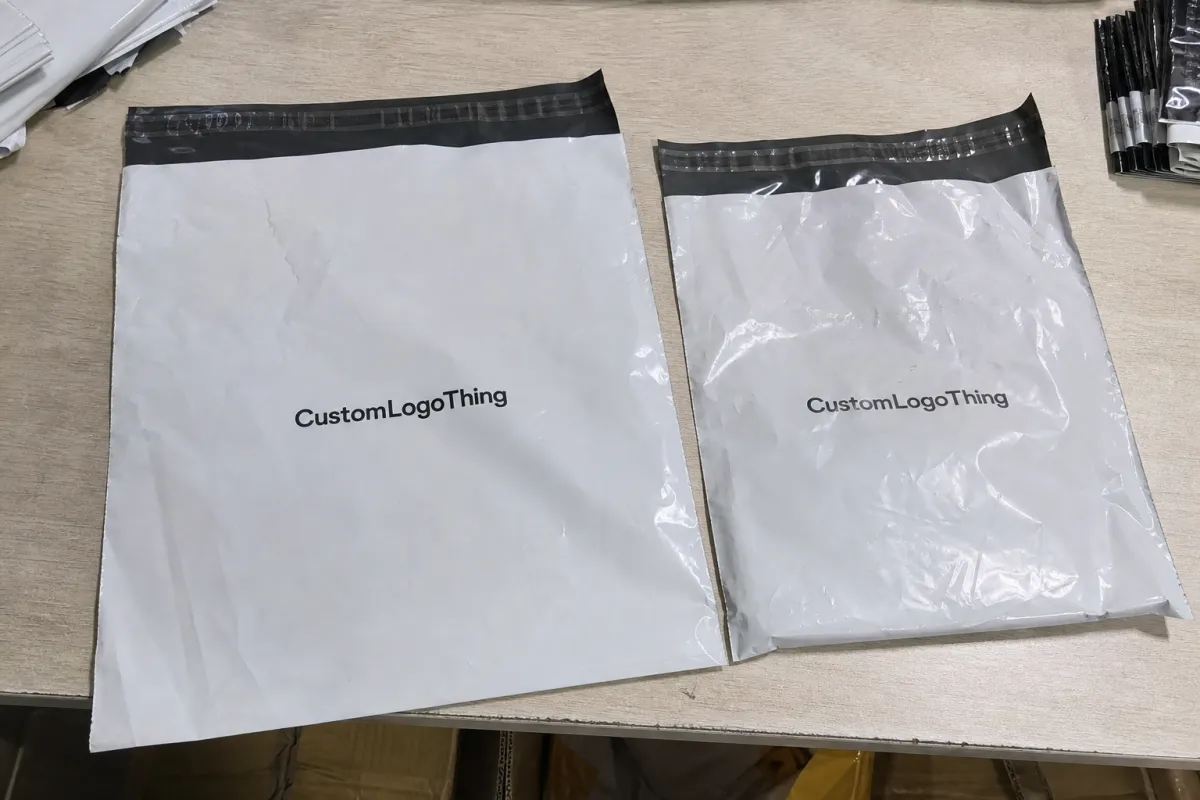
A poly mailer has three jobs: protect the contents, keep packing moving, and survive transit abuse. If any one of those breaks down, the savings disappear fast. A bag that looks inexpensive on paper can become the costliest option when it splits at the seam, arrives oversized for the product, or makes workers double-bag items that should have fit once.
This problem shows up first with lightweight goods. Soft apparel, small beauty sets, socks, swimwear, and subscription inserts do not need heavy-duty film, but they do need a controlled amount of strength and a closure that stays closed. Economy should mean fit-for-purpose, not flimsy material, weak adhesive, or print that scuffs off before the package leaves the dock.
Buyers usually fall into one of two traps. They go too thin and pay for damage later, or they go too thick and pay for film they never needed. The better target is a mailer that feels stable in hand, loads quickly, and seals without a fight. If the packing team has to wrestle every bag, labor cost is already eating the discount.
That is why an economy poly mailers bulk order should be judged on total landed cost, not just the unit price of the bag. Freight, cartons, storage space, and returns all belong in the math. A bag that saves one cent and creates two cents of downstream pain is not a bargain. It is a delay with a logo on it.
Film, seal, and finish: what changes performance
Film construction matters more than many buyers expect. A single-layer film is usually the cheapest route, but co-extruded film can offer better puncture resistance, better opacity, and a cleaner feel in the hand. Co-extrusion is not magic. It simply lets the manufacturer control softness, stiffness, and barrier properties more carefully, which matters when the contents have corners, zippers, hardware, or stiff folds.
Seal strength comes next. A tough film with a weak adhesive strip still fails at the worst possible moment. Ask about the closure type, adhesive width, and whether the seal stays reliable in cold warehouses or humid receiving areas. Some closures grab well at room temperature and then get less dependable when storage conditions shift. That is one of those small production details that turns into a large return problem.
Finish also affects cost and presentation. Clear film shows the product, white film gives a cleaner blank surface, and gray film usually hides contents without moving into full custom print. Printed film adds branding, but it also adds setup time, color matching, and minimum quantity pressure. If the goal is a lower-cost branded look, a simple one-color logo on a standard white bag usually keeps the budget more controlled than full coverage graphics or special effects.
The practical tradeoff is straightforward: thinner film lowers unit cost, but the wrong gauge can create failures that erase the savings. For soft apparel, 1.5 to 2.0 mil often works. For contents with edges, hardware, or mixed materials, 2.0 to 3.0 mil is usually the safer range. That is not a universal rule. It is the range that tends to hold up once the order is scaled beyond a few test pieces.
Sizes, colors, and print options that keep costs down
Dimensions matter more than people want to admit. An oversized mailer wastes film, creates a sloppy fit, and can look wasteful in the customer’s hands. An undersized one slows packing and increases split risk. The best size matches the product packed flat, plus closure allowance and enough room for the bag to seal without stretching. That little bit of extra room is often what keeps the line from fighting every parcel.
Most buyers should think in three measurements: product width, product thickness, and the amount of closure space needed after the item is inserted. A folded hoodie is not the same as a soft tee. A cosmetic set in cartons is not the same as a flat insert pack. If the product is irregular, test one sample flat and one loaded before ordering volume. Guessing is expensive, especially when the error gets multiplied by thousands of units.
Color and print decisions are where the budget can drift. Plain stock mailers are usually the lowest-Cost and Fastest-to-source choice. Gray and white stock options are common because they balance privacy, appearance, and price. Once print is added, artwork setup, press time, and sometimes higher minimum quantity enter the picture. A one-color logo generally protects margin better than full artwork coverage, foil effects, or specialty finishes.
If the program needs to stay flexible, do not let design dictate inventory chaos. Two colorways and five bag sizes can turn into a storage problem quickly. One clean size, one clear print plan, and a realistic reorder point are much easier to manage. If you are balancing mailers against the rest of the packaging mix, compare them with the broader Custom Packaging Products range before you lock the spec.
Common size decisions buyers should make:
- Product width after folding or compression
- Whether the item needs extra room for corners or closures
- Space for labels, return addresses, or brand marks
- Whether the mailer must hide the contents fully
economy poly mailers bulk order: pricing and MOQ
Pricing in an economy Poly Mailers Bulk order is driven by a handful of inputs: material gauge, bag size, print complexity, quantity tier, and shipping method. That sounds basic, but buyers still end up comparing quotes that are not actually comparable. A 2.0 mil plain stock bag is not the same thing as a 3.0 mil custom printed mailer. If the specs differ, the quote only tells you how much one specific setup costs.
MOQ works the same way. Higher runs usually lower the unit price, but they also tie up cash and storage space. Stock mailers often start around 500 to 1,000 pieces. Custom printed mailers can land anywhere from 3,000 to 10,000 pieces depending on size, film, and artwork. Some suppliers will go lower, but lower MOQ usually means a higher per-unit price. The tradeoff is simple even if the sourcing process is not.
| Option | Typical MOQ | Typical unit price | Best fit |
|---|---|---|---|
| Plain stock mailer, 1.5-2.0 mil | 500-1,000 | $0.06-$0.12 | Basic apparel and low-risk shipments |
| One-color custom print, 2.0 mil | 3,000-5,000 | $0.10-$0.22 | Simple branded programs with steady reorders |
| Full-coverage print or custom color | 5,000-10,000 | $0.14-$0.30 | Brand-heavy presentation and retail-facing shipments |
| Heavier opaque mailer, 2.5-3.0 mil | 1,000-5,000 | $0.12-$0.26 | Products with corners, hardware, or higher puncture risk |
Use that table as a filter, not a promise. Freight, cartons, palletization, and print setup can move the final number more than the bag itself. A quote that looks unusually low often hides a thinner film, a weaker seal, or freight that was left out. It is better to see the real number up front than to discover the missing pieces after the deposit clears.
Check quotes on the same basis every time:
- Same size and usable interior dimensions
- Same gauge or film thickness
- Same print method and color count
- Same carton count and shipping term
- Same destination and freight assumption
Process, lead time, and proof approval for bulk runs
The order flow should be boring. Request quote, confirm specs, review artwork, approve proof, run production, then book shipment. When a supplier makes this sequence feel messy, the order usually gets messy too.
- Send product dimensions, target quantity, and intended use.
- Confirm material gauge, bag size, seal type, and color.
- Upload artwork in vector format if possible.
- Review the proof carefully before approval.
- Release production and confirm freight timing.
What slows orders down most often? Missing artwork files, unclear size requirements, late proof changes, and repeated back-and-forth on print placement. A logo that looks fine on screen may print awkwardly if nobody checked the safe area around the closure flap. If the proof is wrong, the production run is likely to be wrong too. Production does not guess for you.
Lead times usually split into two buckets. Stock mailers are faster because they skip print setup and color matching, so a run may ship in 3 to 7 business days once payment is cleared. Custom printed mailers often take 10 to 18 business days after proof approval, and special colors or unusually large runs can take longer. Rush orders are possible, but the cost usually shows up in freight, fewer production choices, or both.
If you need branded mailers and want a predictable schedule, ask whether the artwork needs trapping, whether the supplier wants Pantone references, and whether the proof is digital or press-ready. That avoids the classic mistake of approving a nice-looking proof that does not actually reflect the finished bag size.
How to reduce damage, returns, and packing friction
A small pack-out test saves more money than a slightly lower quote ever will. Before committing to a large economy poly mailers bulk order, load a few samples with the real product, seal them the way your team will, and check what happens to the corners, closure, and label placement. If the item is oddly shaped or sharp-edged, that test is not optional. It is the difference between a controlled rollout and a warehouse headache.
Look closely at the overfill point. Too much product pressure can split the side seal or keep the adhesive from gripping fully. Too little support can leave the bag loose and more likely to scuff. The goal is a close fit without stress. That matters especially for cosmetics, accessories, and mixed kits, where one hard edge can create repeated failures across an entire batch.
Handling tests matter too. Simple drop checks, corner pressure, and line-speed trials reveal weak spots before the full run ships. If the contents are fragile or you need to compare results to a transit standard, ask whether the supplier’s test references align with ISTA methods. That is not a guarantee of perfection, but it is a better starting point than trusting a polished sales sheet.
Warehouse speed is the last piece. A good mailer should load fast, close consistently, and not force workers to fight the bag on every unit. If packing slows down, labor cost eats the savings from the cheaper bag. A bag that adds two seconds per pack can be more expensive than a slightly better film that closes cleanly the first time. At scale, small friction turns into real money.
What to verify before choosing a supplier
Ask for a real spec sheet. Not a vague promise. You want gauge, dimensions, seal type, film construction, print method, carton count, and acceptable tolerance ranges side by side. If a supplier cannot spell out the basics, they are not ready for a serious bulk run.
It also helps to know whether the supplier can handle the required quantity without quietly splitting the job across unknown subcontractors. That may sound harsh, but it matters. The more handoffs a production run has, the more chances there are for color drift, inconsistent film, or packing errors. One accountable source is easier to manage than three people pointing at each other.
Quality control should cover film consistency, seal integrity, print registration, carton packing, and batch sampling before shipment. Ask what gets inspected and when. A decent supplier will be able to explain how weak seams or off-spec print are caught before boxes leave the floor. If they cannot answer basic questions clearly, they are likely to be worse when production gets complicated.
For paper-based parts of the order, such as cartons or inserts, ask for FSC documentation where it applies. FSC certification covers the paper side, not the film itself, and that distinction matters. You can review the standard at FSC. Buyers who confuse the logo with real traceability usually end up with marketing language instead of proof.
If your program involves more than mailers, our Wholesale Programs are a better fit for repeat buyers who need stable specs and consistent reorders. Stability matters more than a one-time discount that cannot be repeated.
Next steps for a clean reorder plan
Before requesting a quote, gather the basics: product dimensions, target quantity, desired mailer size, print file, and shipping destination. If you already know pack-out weight or carton count, include that too. The more precise the input, the less likely you are to get a quote that sounds attractive and fails later.
Compare two or three spec options instead of one bare number. That makes the tradeoffs visible. A slightly heavier gauge may add only a small amount per unit while reducing damage, or a simpler print plan may save enough to move the order into a safer MOQ tier. Those are the decisions that shape the actual cost of the program.
Confirm sample approval, production timing, and freight method before paying a deposit. Those three details decide whether the order is usable or merely inexpensive on paper. A clean reorder plan should leave you with a bag that fits, seals, prints cleanly, and arrives when the warehouse can use it.
For repeat programs, the goal is simple: fewer surprises, fewer rushes, and fewer bags rejected at the packing table. That is what turns an economy poly mailers bulk order into a steady supply plan instead of a monthly scramble.
What size economy poly mailers bulk order should I choose?
Measure the product packed flat, then add room for the closure flap and a little movement. If the item is thick or has hard edges, choose slightly larger rather than forcing an undersized mailer that splits or slows packing.
How do I compare economy poly mailer prices in bulk?
Compare the same gauge, size, print setup, and shipping terms across every quote. Check whether freight, cartons, artwork setup, and any plate or tooling charges are included before you compare unit prices.
What MOQ is normal for bulk poly mailer orders?
MOQ depends on whether the mailer is stock or custom printed, plus the size and film spec. Lower MOQs usually cost more per unit, while higher volumes bring the unit price down.
How long does production take after proof approval?
Stock mailers are usually faster because they skip print setup and color matching. Custom runs take longer, especially if the artwork needs revisions or the order requires a special film color.
Can I print branding without raising the cost too much?
Yes, if you keep the artwork simple and limit the number of colors or print coverage areas. A clean one-color logo on a standard mailer usually costs less than full-coverage graphics or specialty finishes.