A cap keeps working long after the hangtag is gone, the mailer is recycled, and the first launch post has disappeared from the feed. That is why Custom Five-Panel Caps for apparel brands deserve the same care as product packaging, printed inserts, retail labels, and every other branded detail a customer handles before deciding whether something feels worth keeping.
From a buyer’s point of view, a cap is not just soft goods. It is a small, curved, wearable billboard that has to fit well, hold its shape, carry decoration cleanly, survive shipping, and arrive with the same level of intention as the rest of the apparel line. A strong five-panel cap can make a simple mark feel retail-ready; a weak one can make an otherwise solid collection feel unfinished.
Why Custom Five-Panel Caps for Apparel Brands Work
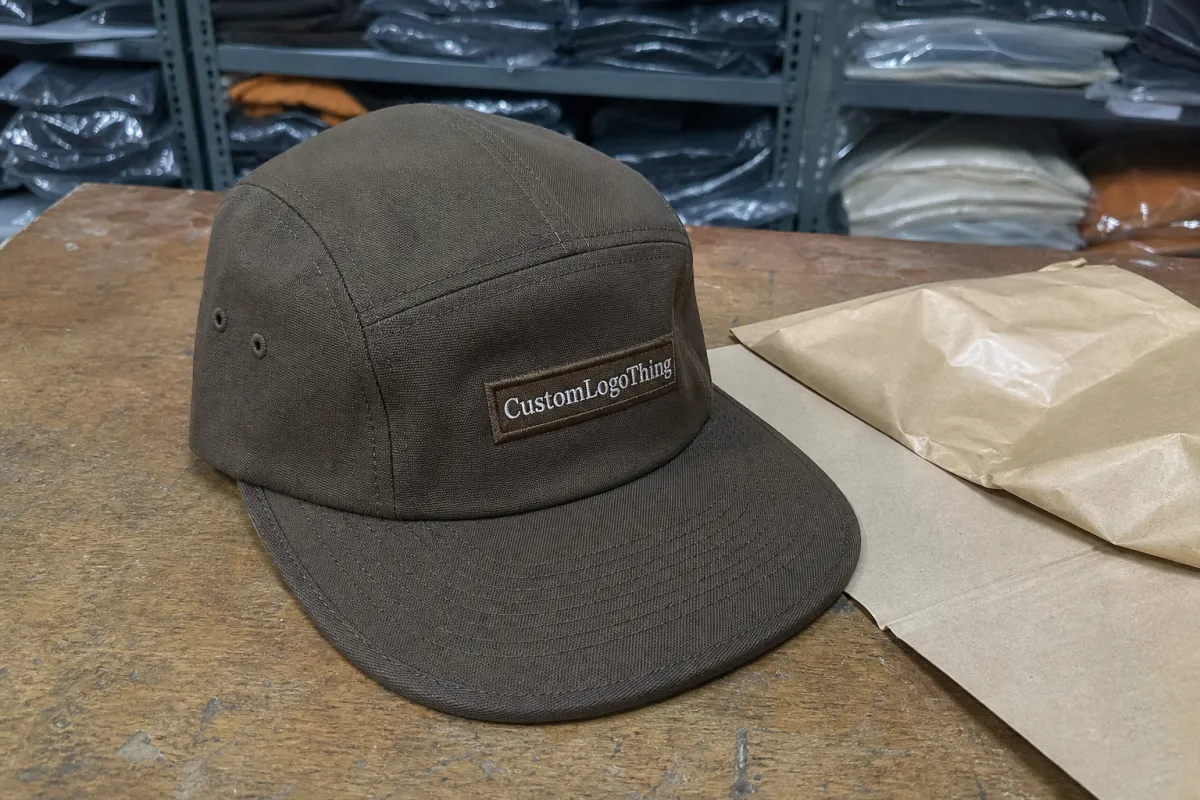
A five-panel cap is built with one uninterrupted front panel, side panels, and a crown shape that gives decorators a clean surface for embroidery, woven patches, screen print, heat transfer, or sewn labels. That front panel is the main advantage. Compared with a traditional six-panel baseball cap, there is no center seam cutting through the primary logo zone, so box logos, wide wordmarks, rectangular patches, and simple graphic marks sit flatter and read more clearly.
Apparel brands often use this construction for streetwear drops, outdoor capsule collections, gym merchandise, staff uniforms, and retail accessories because it feels more designed than a standard promotional cap. The profile can be low and relaxed, structured and sharp, or somewhere in between. “Five-panel” describes the construction, not one fixed silhouette.
There are soft camp caps with nylon straps, structured five-panel snapbacks with flat visors, and low-profile lifestyle caps that feel closer to fashion headwear than sports merch. Each material choice changes the message. Nylon feels light and trail-ready. Brushed cotton twill feels familiar and easy to wear. Corduroy adds warmth and texture. Canvas gives the cap a tougher hand and a more substantial retail feel.
The packaging side of the order is easy to underestimate. Caps need to arrive folded or supported correctly, tagged cleanly, boxed without crushing the visor, and packed in a way that matches the rest of the brand experience. If the cap ships inside a custom printed box, kraft mailer, apparel kit, or wholesale carton, the product and package branding should feel like they were planned together rather than assembled at the last minute.
Practical rule: if the front panel is the brand billboard, the carton, poly bag, insert, and hangtag are the frame around it. Both affect perceived value.
How Five-Panel Cap Construction Affects Fit, Shape, and Decoration
The basic anatomy is simple, but small changes alter the finished cap quickly. A cap includes the front panel, side panels, crown depth, visor, sweatband, closure, eyelets, seam tape, and inner structure. On a typical adult adjustable cap, the front decoration area may be around 2 to 2.5 inches tall and 4 to 5 inches wide, although the safe zone depends on crown height, panel curve, and the distance between the visor seam and the top of the crown.
The uninterrupted front panel matters because embroidery machines, patch sewing, and heat presses all prefer stable, open space. A center seam can distort small type, break up a thin line, or make a rectangular patch lift at the middle. With custom five-panel caps for apparel brands, that smoother surface gives the artwork a better chance of looking like a finished retail product instead of a rushed giveaway.
Fabric choice drives structure, hand feel, color saturation, decoration limits, and care requirements. Cotton twill is common because it embroiders well and takes dye consistently. Brushed cotton feels softer, though it may show lint, nap changes, and handling marks more easily. Nylon works for outdoor or active collections, but coated nylon can be sensitive under heat. Ripstop adds a technical look. Canvas feels substantial and supports patches nicely. Corduroy has strong texture and style, although fine lettering can disappear into the ribs. Recycled polyester and performance blends can be good options when sustainability or function claims are backed by clear material documentation.
Structured crowns use backing or buckram to hold the front shape. They stand better on a shelf, photograph crisply, and feel more like a retail accessory. Unstructured crowns collapse more easily, pack flatter, and suit relaxed camp caps or travel-friendly headwear. Neither construction is automatically better. The right choice depends on the use case, price point, and how the cap will be packed and sold.
Visor details also change the price signal. A flat visor reads more streetwear. A slight curve feels easier for daily wear. Rope detail, sandwich trim, contrast underbrim, recycled board inserts, and specialty stitching can add modest cost at volume, often cents per unit, but the visual effect is noticeable. Closures work the same way. Plastic snapbacks feel casual and adjustable, metal buckles look cleaner, nylon straps with clips suit outdoor styling, hook-and-loop closures work for utility or staff use, and stretch fit removes hardware while narrowing sizing flexibility.
Decoration Methods That Make Apparel Brand Caps Look Retail-Ready
Decoration is where good cap ideas either sharpen up or fall apart. Embroidery is still the standard premium option for many brands. Flat embroidery works well for clean marks, short wordmarks, and simple icons. 3D puff embroidery gives raised dimension, especially on structured fronts, but it needs bolder shapes, thicker strokes, and enough spacing between letters. Tonal thread can look refined, while exact thread matching depends on available thread books rather than screen color alone.
Tiny lettering is the usual trap. Letters under roughly 0.18 to 0.25 inches tall can fill in, especially on textured fabrics or dense designs. Thin strokes, distressed effects, gradients, and narrow gaps may look sharp in vector artwork but close up under stitches. A good digitized file controls stitch direction, density, underlay, pull compensation, and thread changes; a weak digitizing job can make even a strong logo look uneven.
Woven patches are a strong answer for detailed logos. They handle small type better than direct embroidery because the design is woven into a label before being sewn onto the cap. They are common for outdoor-inspired branding, badge graphics, rectangular front labels, and artwork that needs a sharp edge. Merrowed edges feel classic and slightly heavier. Laser-cut or heat-cut edges feel cleaner and flatter.
Rubber, PVC, leatherette, genuine leather, and suede patches each carry a different signal. PVC feels durable and dimensional but can look heavy on a soft camp cap. Leatherette is consistent and often easier to source than genuine leather. Genuine leather varies by hide and finish, so color tolerance should be discussed early. Suede feels premium but can mark more easily. Heat sensitivity matters too, especially if adhesive backing or heat pressing is part of the application.
Screen printing and heat transfers can work well on lightweight caps, nylon styles, and broader graphic designs that are not stitch-friendly. They are useful when the artwork is flat, clean, and not too close to heavy seams. The caution is surface behavior. Coatings, water-resistant finishes, curved panels, and textured cloth can affect adhesion or print sharpness, so testing is not optional on orders where the cap will be sold at retail price.
- Front placement: embroidery, woven patch, rubber patch, screen print, or transfer.
- Side placement: small embroidery, mini woven label, or short icon mark.
- Back placement: strap label, closure tab branding, buckle engraving, or small arch embroidery.
- Inside branding: printed seam tape, custom sweatband text, size label, care label, and private label.
Pre-production sampling matters because caps are curved and flexible. A logo that looks balanced on a flat artboard may need a 10% size reduction, thicker strokes, wider letter spacing, or a different backing method once it is placed on the actual front panel. That adjustment is not a failure of the design; it is part of translating flat brand artwork into a dimensional product.
Pricing, MOQ, and Unit Cost Factors Buyers Should Expect
Pricing depends on the blank or custom construction, fabric, decoration method, stitch count, patch type, closure hardware, private labeling, packaging, quantity, and freight. MOQ means minimum order quantity: the lowest quantity a supplier can run efficiently before setup time, material sourcing, machine changeovers, and production labor make the order uneconomical.
Decorated stock caps are usually faster and lower-risk because the cap body already exists. Fully custom cut-and-sew caps give more control over crown depth, fabric, panels, labels, lining, visor, and closure, but they usually require longer planning and higher minimums. The practical answer varies by supplier and spec, so Buyers Should Ask directly instead of assuming a universal number.
| Cap Route | Typical Best Use | Common Cost Range | Typical MOQ Pattern |
|---|---|---|---|
| Decorated stock five-panel | Fast merch, staff caps, smaller retail tests | $7.50-$14.00 per unit depending on decoration | Lower minimums are often possible |
| Stock cap with premium patch and labels | Retail drops and capsule collections | $10.00-$18.00 per unit depending on patch and finishing | Moderate minimums, especially for labels |
| Fully custom cut-and-sew cap | Brand-owned silhouette, custom fabric, private label line | $12.00-$24.00+ per unit depending on materials and volume | Higher minimums are common |
| Premium boxed or kitted cap | Influencer mailers, loyalty gifts, launch kits | Add $0.75-$4.00+ for packaging and inserts | Packaging may have separate minimums |
Those ranges are not promises, but they are useful planning numbers. A 5,000-piece run usually carries setup costs better than a 150-piece order. High stitch-count embroidery, custom-dyed fabric, specialty closures, multiple decoration locations, and private labels all raise unit cost even if the cap looks simple from the outside.
Quote requests should include exact specs. A nylon five-panel with a woven patch, side embroidery, custom seam tape, and individual poly bagging does not price like a cotton twill five-panel with one flat embroidered logo. To control budget, simplify thread colors, use stock fabric colors, reduce decoration locations, standardize one closure style, or increase quantity so fixed costs are spread across more units.
If product packaging is part of the order, price it separately. Custom hangtags, barcode stickers, cap inserts, tissue wrap, carton dividers, and Custom Printed Boxes can be modest per unit, but they still require artwork, proofing, material selection, packing instructions, and sometimes their own minimums. For transport testing language and distribution hazards, the International Safe Transit Association is a useful authority for understanding why carton strength and packing method matter.
Process and Timeline From Artwork to Finished Caps
A clean production path usually runs in this order: confirm cap style, choose material and closure, prepare logo artwork, select decoration, approve digital mockup, produce a sample or strike-off, approve production, manufacture, inspect, pack, and ship. Skip one checkpoint and problems tend to appear later, when they cost more to fix.
The artwork stage is more than placing a logo on a template. Vector files should be checked for line thickness, stitch limits, patch dimensions, safe zones, Pantone references, thread options, and print method. If the only available file is a low-resolution PNG, the supplier may need to redraw it before quoting accurately or preparing a proper proof.
Sampling can mean several things. An embroidered sew-out shows how the stitched logo behaves. A patch proof shows woven detail, edge style, backing, and color. A material swatch confirms fabric hand and shade. A full physical sample is best for checking fit, crown height, visor curve, label placement, inside finishing, and overall balance, especially for caps that will be sold rather than handed out at an event.
Simple decorated stock cap orders may move in a few weeks after proof approval. Fully custom builds take longer because material sourcing, dyeing, pattern work, sampling, production queue time, inspection, and freight all add steps. Custom dyeing alone can add meaningful lead time, particularly when the color needs to coordinate with apparel fabric, printed packaging, or a broader seasonal palette.
Build a buffer before product launches, trade shows, influencer mailers, retail drops, or wholesale delivery windows. Freight delays and proof revisions compress schedules quickly. Fast approvals keep the job alive on the production calendar; every unclear logo file, late color decision, changed quantity, or revised label spec can move the order backward.
Step-by-Step Spec Guide Before You Request a Quote
Start with intended use. Is the cap for retail resale, a giveaway, staff uniform, event merchandise, wholesale line extension, or premium loyalty gift? A resale cap needs stronger finishing, better labeling, cleaner package design, and more consistent inspection than a one-day event cap.
- Choose the silhouette and fit. Decide between camp cap, low-profile five-panel, structured five-panel snapback, shallow crown, mid crown, adult sizing, youth sizing, or adjustable one-size format.
- Select the fabric. Cotton twill works for everyday wear, nylon suits outdoor or active brands, corduroy fits lifestyle collections, and canvas gives a more substantial hand.
- Define the decoration. Include logo size, front placement, side placement, patch dimensions, thread colors, backing method, print type, and any inside branding.
- Decide on finishing. Specify hangtags, barcode stickers, poly bags, tissue wrap, cap inserts, master carton quantities, and whether caps need to arrive fulfillment-ready.
- Prepare the quote packet. Send quantity, due date, delivery address, artwork files, reference images, preferred materials, target unit cost, and must-have details.
Reference images help. Three to five examples can show fit, crown height, visor shape, closure, decoration style, and finish quality. They should guide the build, not copy another brand. If you are coordinating caps with boxes, mailers, inserts, or other Custom Packaging Products, share those visual references so the cap does not feel disconnected from the broader retail presentation.
For sustainability claims, keep the language tight and documentable. FSC-certified hangtags or paperboard inserts can be useful, but the claim should match the actual component. The Forest Stewardship Council provides clear guidance around certified paper and wood-based materials, which is helpful when package branding includes responsible sourcing language.
Common Mistakes That Weaken a Five-Panel Cap Order
The first mistake is using artwork that is too detailed for embroidery. Thin strokes, tiny letters, narrow gaps, distressed textures, and gradients often look good on a screen and weak in thread. If the logo needs small type or fine detail, a woven patch may be the better choice.
The second mistake is choosing decoration before choosing fabric. Nylon, corduroy, canvas, and twill all behave differently under needles, heat, pressure, and patch sewing. Heat transfers may perform well on one nylon finish and poorly on another. Corduroy can make small embroidery look uneven because the ribs interrupt the stitch surface.
Placement errors are easy to miss in a digital proof. A front graphic that is too tall, too close to the visor seam, or centered to the artboard rather than the actual panel can make the cap feel crooked. Ask for real dimensions in inches or millimeters, not just a mockup image.
Color matching also needs discipline. Pantone targets, fabric lots, thread books, patch yarns, leatherette sheets, and monitor screens rarely match perfectly. If color is critical, request physical references or approve a tolerance range. Not every cap program needs laboratory-level matching, but apparel brands selling coordinated drops should be realistic about shade variation between fabric, thread, patch, and printed packaging.
Packaging is another frequent weak point. Caps can arrive crushed, warped, or inconsistently presented if cartons, inserts, stacking direction, and poly bagging are left vague. For retail-ready orders, specify master carton quantities, inner packing, visor protection, hangtag placement, barcode position, and whether the cap should be shaped before packing.
Digital mockups are useful, but they are not the product. Before approving production, check real logo dimensions, cap height, decoration method, fabric, closure, label callouts, care information, and packing instructions. A balanced screen image can still produce an oversized logo once the cap is worn.
Next Steps to Build a Clean Cap Brief for Production
Narrow the project to one clear lane first: premium retail cap, affordable promo cap, outdoor performance cap, or limited-edition fashion accessory. That decision keeps the spec from drifting. A premium retail cap might justify a woven patch, custom seam tape, FSC hangtag, barcode label, and controlled carton packing. A promo cap may only need stock fabric, one decoration placement, and basic bulk packing.
Send the manufacturer enough information to price without guessing. At minimum, include quantity, cap shape, fabric preference, color, decoration method, logo files, placement, label needs, packaging needs, delivery location, and in-hands date. If you already have product packaging, mailer artwork, or retail display plans, include those too. Consistent package branding across the cap, hangtag, mailer, and carton makes the finished program feel intentional.
Ask for a quote that separates major cost drivers: cap base, decoration, private labeling, packaging, sampling, freight, and rush charges. That breakdown helps you make practical tradeoffs. Maybe the leather patch stays, but the second side embroidery goes. Maybe the cap insert is necessary for shipping shape, while tissue wrap is optional. Clean numbers are better than assumptions, especially when several departments are reviewing margin, launch date, and presentation.
Approval checkpoints should be written into the process: artwork proof, decoration proof, material confirmation, sample approval when needed, production approval, inspection standard, and packing instructions. If you want to see how other branded merchandise and packaging decisions are framed, reviewing Case Studies can help connect the logo, product, and customer handoff into one practical plan.
Planned well, custom five-panel caps for apparel brands become more than an add-on item. With clear specs, realistic timing, suitable fabric, tested decoration, and packaging that protects the finished shape, they become a wearable product customers actually keep, photograph, and wear again.
FAQs
What makes custom five-panel hats different from regular baseball caps?
A five-panel cap uses a single, clean front panel instead of a center seam, which gives logos, patches, and printed artwork a smoother placement area. The shape is often lower-profile and more lifestyle-focused, though structured five-panel snapbacks are also available. For apparel brands, the main advantage is visual control: the front panel acts like a cleaner canvas for retail branding.
What is the best decoration method for five-panel caps for clothing brands?
Flat embroidery works well for simple logos, short wordmarks, and premium everyday caps. Woven patches are better for detailed logos, small lettering, and badge-style branding. Heat transfers or screen printing can work on nylon and lightweight caps, but the fabric coating and panel shape should be tested before production.
How much do custom five-panel caps usually cost to produce?
Unit cost depends on quantity, fabric, structure, decoration, stitch count, patch material, labels, packaging, and freight. Decorated stock caps are usually more economical and faster than fully custom caps built from raw materials. The most accurate quote comes from sending exact specs, artwork, quantity, delivery location, and target timeline.
What MOQ should apparel brands expect for custom five-panel caps?
MOQ varies by whether the order uses stock blanks, custom decoration, custom fabric, or full cut-and-sew production. Lower quantities may be possible with stock caps and standard decoration, while fully custom builds usually require higher minimums. Brands should ask whether sampling, private labels, and packaging have separate minimums.
How long does production take for custom five-panel caps?
Timeline depends on artwork readiness, material availability, proof approvals, sampling needs, decoration complexity, production queue, and shipping method. Simple decorated cap orders can move faster than fully custom caps with custom fabric, labels, patches, and packaging. Build in extra time before launches or wholesale dates, especially if a physical sample must be approved.


