Order Custom Holo Stickers That Make Packaging Pop
A small reflective sticker can make a plain kraft mailer look more expensive than a full-color printed box. Annoying, but true. Custom holo stickers catch light, shift color as the package moves, and pull the eye before the customer reads a logo, slogan, or ingredient line.
That is the useful part of holographic packaging. Not magic. Not a cure for weak branding. Just controlled shine, used in the right place, doing a job.
On crowded shelves, in unboxing videos, inside subscription boxes, and across limited-release packaging, holographic stickers create a fast signal: this product was considered. The finish suggests rarity, care, and a little drama. The trick is knowing where the shine helps and where it becomes visual noise.
What Custom Holo Stickers Are and Why They Catch the Eye
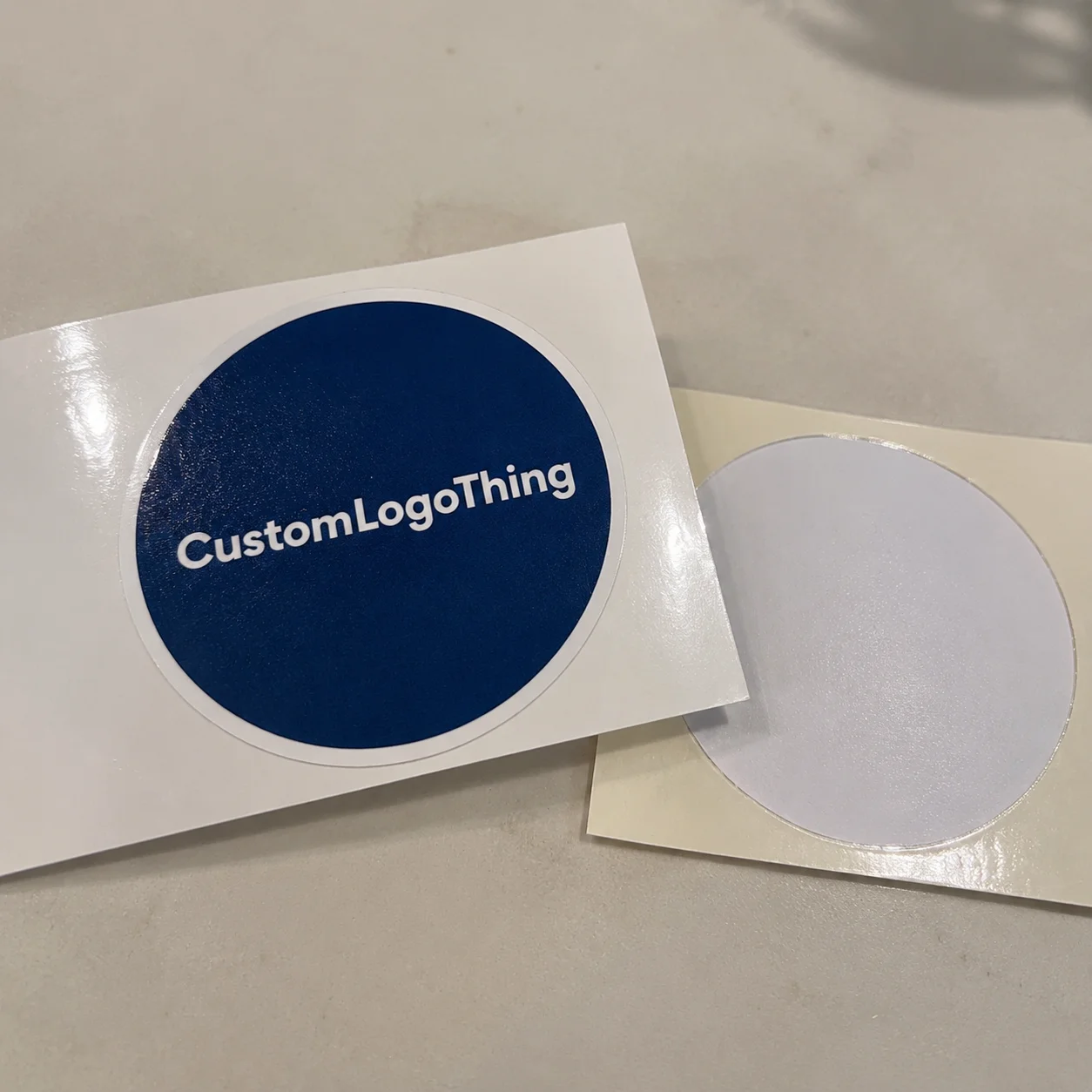
Custom holo stickers are stickers printed on holographic or iridescent film with brand-specific artwork, sizing, shape, finish, and adhesive choices. Most use a reflective film face stock, pressure-sensitive adhesive, release liner, printed ink, and sometimes a protective laminate. A 2-inch circle for a candle lid is not the same production problem as a 1-by-4-inch tamper seal for a pouch, even if both start with rainbow film.
The shine comes from the material itself. That matters. Standard paper stickers rely on ink and coating for effect. Vinyl stickers can be clean, durable, and practical, but they do not naturally throw that shifting spectrum. Foil stickers usually give one metallic tone, such as gold or silver. Holographic stickers scatter light across multiple colors, which is why they feel animated when the package moves.
Brands use them on mailers, tissue seals, thank-you cards, product boxes, jars, tubes, sample kits, hang tags, release drops, event merch, collectible packaging, cannabis packaging, and authentication labels. The same finish can feel playful, luxury, futuristic, or security-focused depending on the design. A holographic starburst on a lip gloss carton says something different from a numbered holo seal on a collectible card pack.
Here is the part buyers often miss: more holo is not always better. Heavy ink coverage can bury the effect. Tiny type can disappear in glare. A detailed logo that looks great on a matte label can look busy on reflective film. Strong holographic packaging usually starts with restraint: bold marks, clean negative space, high contrast, and a clear plan for which areas should shine.
Use the material like a spotlight, not wallpaper. Yes, there are exceptions. There always are. But if every square millimeter screams for attention, none of it does.
How Holographic Sticker Printing Actually Works
The basic stack is simple: holographic film, adhesive, liner, printed ink, and optional coating or laminate. Each layer changes performance. A 2.5 mil to 4 mil film may stay flexible enough for curved bottles, while a thicker build can feel better for laptop stickers, collectible decals, or handout merch. Adhesive can be permanent, removable, freezer-grade, high-tack, or selected for specific plastics and coated papers.
White ink is the control layer. Think of it as a blocker. If your logo needs solid black text, a true red icon, or a QR code that actually scans, white ink can sit under those areas so the holographic base does not distort them. No white ink means the film shines through the printed color, creating a translucent, shifting look. Sometimes gorgeous. Sometimes a brand-color nightmare.
Most designs use one of three approaches:
- Full holo exposure: artwork prints with little or no white backing, so the full design shifts under light.
- Partial holo effects: selected areas stay open, such as stars, borders, logo accents, security marks, or background patterns.
- Spot-white printing: white ink blocks the holo under important text, compliance copy, QR codes, barcodes, or brand colors.
Dark colors usually hold better on holographic film because they create stronger contrast against the reflective base. Pale pink, light gray, yellow, and thin pastel lines can change dramatically depending on angle and lighting. Under retail LED strips, a pale color may look washed out from one direction and saturated from another. That is not automatically a print defect. That is reflective material doing reflective material things.
Finish changes the read. Gloss laminate boosts reflection and gives the sticker a slick, polished look. Matte laminate softens glare and can make the piece feel more editorial, but it reduces sparkle. UV coating can add protection and shine. A waterproof film with a scratch-resistant laminate is usually safer for cosmetics, beverage labels, coolers, outdoor use, and products handled often.
The International Safe Transit Association is a useful reference point for thinking about distribution stress. Stickers may look perfect on a proof, then face vibration, compression, humidity shifts, abrasion, and repeated handling before the customer sees them. Packaging does not live on a mood board. Rude, but useful to remember.
Digital printing is common for shorter runs, fast artwork changes, and multiple versions. Larger volumes may use workflows that improve speed, registration, and unit cost. Neither route wins by default. The right process depends on quantity, artwork complexity, deadline, finish, and tolerance for color variation.
Specs That Decide Durability, Adhesion, and Shelf Impact
A holographic sticker is not one spec. It is a bundle of decisions. Size, shape, film thickness, adhesive, finish, liner format, and indoor versus outdoor exposure all affect whether the final piece feels premium or irritating. From a packaging buyer’s point of view, the sticker has to do two jobs at once: look good and stay put.
Adhesion is where many projects succeed or fail. Glass jars are usually friendly surfaces if they are clean and dry. Smooth PET bottles often work well, but curved surfaces need flexible material and sensible label dimensions to avoid edge lift. Kraft boxes and mailers are trickier because fibers, dust, and texture reduce contact area. Candle tins may carry oils or residue. Flexible pouches move, so rigid sticker constructions can crease, bridge, or peel.
Environmental exposure adds another layer. Moisture, condensation, oils, sunlight, abrasion, cold storage, and frequent handling all attack labels differently. A sticker on a lip balm tube may face skin oils and pocket abrasion. A coffee pouch seal may need strong tack over a flexible matte surface. A shipping-box closure has to resist rubbing during transit and still look clean when the customer opens the package.
Shape changes performance as much as appearance. Circles and rounded rectangles apply cleanly because they have no sharp corners to catch. Custom Die-Cut Stickers can look distinctive, especially for logos and mascots, but narrow points may lift. Kiss-cut stickers are easier to peel from backing sheets. Sticker sheets work well for merch bundles. Roll labels suit repeated packing workflows or higher-speed application. Tamper seals need adhesives and cuts that either reveal opening or resist clean removal, depending on the goal.
Readability deserves its own line item. Type under 5 pt is risky on reflective film. QR codes need a quiet zone and usually need a white-backed or non-holographic area. Barcodes require strong contrast. Legal copy should not fight glare. If the sticker carries ingredients, batch codes, warnings, compliance marks, or instructions, beauty does not outrank legibility. The package still has to function after everyone finishes admiring the rainbow.
Packaging rule of thumb: if the sticker carries functional information, protect readability first and use the holo effect as a controlled accent, not the background for everything.
For practical planning, split the job by use. A lip balm label needs oil resistance and tight curvature control. A coffee pouch seal needs flexible adhesion and clean peel behavior. A shipping-box closure needs abrasion resistance more than micro-detail. Same visual family. Different engineering problem.
Cost, Pricing, MOQ, and What Changes the Unit Cost
Pricing for custom holo stickers depends on quantity, dimensions, shape complexity, material, laminate, white ink, proofing needs, packing format, and deadline. A small 1.5-inch circle is not priced like a 4-inch die-cut logo with spot white and scratch-resistant laminate. Unit cost drops as quantity rises because setup, artwork review, material handling, press time, cutting, packing, and quality checks spread across more pieces.
For planning, small batches often look expensive per sticker because setup is doing the heavy lifting. A short run of 250 to 500 pieces may carry a high unit cost. A 5,000-piece run can drop that number sharply. Actual quotes vary by supplier, equipment, material, and finishing, but the cost pattern is consistent across most sticker and label production.
| Order Scenario | Typical Use | Cost Drivers | Buyer Watchout |
|---|---|---|---|
| 250-500 stickers | Launch tests, seasonal drops, influencer kits | Setup, proofing, small material runs | Higher unit cost, but lower inventory risk |
| 1,000-5,000 stickers | Growing ecommerce SKUs and recurring package branding | Size, white ink, laminate, cut shape | Often the best balance for small brands |
| 10,000+ stickers | Mature SKUs, retail packaging, subscription boxes | Material yield, press efficiency, packing format | Confirm storage, version control, and reorder timing |
Low Minimum Order quantities are useful when a brand is testing packaging, running a limited drop, or checking customer response to the finish. Larger runs make more sense once the SKU, artwork, surface, and application method are stable. Buying 20,000 stickers before testing them on the actual jar, pouch, or box can create a very shiny pile of regret.
Custom die-cut shapes may increase price when the outline is intricate or slow to weed. Multiple artwork versions can add setup or proofing time. Sticker sheets can be efficient for merch, but they need careful layout. Roll labels may cost more to set up, yet save labor if a packing team applies hundreds per hour. Rush orders cost more because they compress scheduling and leave less room for proof corrections.
For an accurate quote, send dimensions, quantity, artwork, use surface, finish preference, indoor or outdoor conditions, packing format, and deadline. If the sticker goes on glass, kraft, plastic, metal, a flexible pouch, or a chilled bottle, say that upfront. The cheapest holographic sticker can become the most expensive option if it peels, scratches, or turns a barcode into a customer service problem.
Process, Timeline, and Production Steps From File to Delivery
The workflow usually runs in this order: inquiry, spec confirmation, artwork review, proof, approval, printing, cutting, quality check, packing, and shipping. The order may look simple from the outside. The proofing stage is where expensive mistakes get caught before material hits the press.
Artwork review checks bleed, safe zones, cut paths, resolution, white ink layers, and color expectations. Bleed is commonly around 0.0625 to 0.125 inch, depending on the production method. Safe zones keep text and critical logo details away from the cut edge. Vector files are preferred for logos and cut lines. Raster images should generally be 300 dpi at final size. Fonts should be outlined or packaged so the proof does not substitute a lookalike typeface. Because apparently fonts enjoy causing chaos at the worst possible time.
Proof types vary. Digital proofs are fastest and usually enough for straightforward orders. They show size, cut line, artwork placement, and white ink intent. Physical samples or press proofs can make sense for high-stakes launches, national retail packaging, regulated products, or designs where the exact balance of holo exposure and opacity matters. A sample adds time, but it can prevent a full production run that looks different from the screen mockup.
Timelines depend on order size, material availability, proof revisions, die-cut complexity, finishing, rush production, and shipping method. A ready-to-print short run may move quickly after proof approval. A larger order with multiple SKUs, custom roll orientation, specialty laminate, or several white ink zones will take longer. Production lead time usually starts after final proof approval, not after the first email. That detail causes plenty of missed launch dates.
Build buffer before product launches, influencer mailouts, retail drops, conventions, and subscription box packing dates. A practical planning window includes artwork fixes, internal approval, production, shipping, and receiving checks. If a packing team needs stickers on Monday, they should not be arriving Monday morning. One proof revision, courier delay, or weather problem can throw the schedule off.
Custom Logo Things also offers related Custom Labels & Tags and broader Custom Packaging Products, which can help if the sticker is part of a larger branded packaging system with boxes, bags, inserts, or retail displays. Coordinating these pieces early keeps colors, finishes, and sizing from feeling patched together after the fact.
Common Artwork and Ordering Mistakes That Flatten the Holo Effect
The most common mistake is covering the entire holographic base with opaque ink. That turns a premium effect into an ordinary printed sticker, usually at a higher price. If the design leaves no open areas for light to move, the film cannot do much work. The strongest designs reserve the rainbow effect for borders, icons, negative space, starbursts, security accents, or background texture.
Tiny text is another problem. Reflective film creates glare, and glare reduces contrast. Thin lines, delicate scripts, and low-contrast palettes can become hard to read, especially on small stickers under retail lighting. A logo that looks crisp on a white PDF proof may feel fuzzy on a 1-inch holographic seal. Scale is ruthless.
Skipping white ink planning creates predictable issues. Skin tones can look strange. Brand colors may shift. QR codes may fail. Barcodes can lose scan reliability. Compliance text can become a liability instead of a formality. If information must remain accurate and readable, place white ink behind it or move that information to a separate non-holographic label.
File problems slow production. Missing bleed, low-resolution raster logos, no cut line, incorrect color mode, locked files, and fonts that have not been outlined all create proof revisions. For custom die-cut work, the cut path should be clean and not overloaded with tiny jagged details. A smoother outline usually peels better, weeds faster, and applies with fewer torn edges.
Surface mismatch is the physical version of the same mistake. An adhesive that works on a smooth cosmetic jar may fail on a textured kraft mailer. A sticker that performs on a flat box panel may wrinkle on a squeezable tube. Oils on candle tins, condensation on bottles, and powdery paperboard coatings can weaken bond strength. ASTM test methods for pressure-sensitive materials are often used across the industry to evaluate peel adhesion, tack, and related properties, but most buyers do not need lab testing for every order. They do need to describe the surface honestly.
Ordering late compounds every other risk. Rush production reduces time for proof revisions, sampling, internal review, and shipping delays. If the project has a fixed event date, the sticker schedule should sit beside the box, insert, and product schedule from the start. Treat it like packaging, not a last-minute decoration.
What to Check Before Ordering
Define the use case first. Is the sticker decorative, functional, promotional, tamper-evident, scannable, or several of those at once? Measure the application area with a ruler, not a guess from a mockup. A 2-inch sticker can look generous on screen and oversized on a 30 ml jar. It can also look tiny on a 10-by-13-inch mailer.
Choose shape based on design and application. Circles, ovals, and rounded rectangles are forgiving. Die-cut logos create stronger brand recognition but may need simplified edges. Sticker sheets make sense for merch and community-building. Roll labels work better for repeated packing stations, especially if orientation matters for a label dispenser or semi-automatic applicator.
Pick the finish with the product environment in mind. Gloss gives more shine. Matte gives a quieter, softer read. Scratch-resistant laminate helps with handling. Waterproof film and suitable adhesive matter for cosmetics, drinkware, refrigerated products, and outdoor use. The U.S. Environmental Protection Agency offers useful background on packaging and material recovery through its sustainable materials management resources, though recyclability still depends on the full package structure, local systems, inks, films, and adhesive compatibility.
Prepare two artwork layers if possible: the visible print artwork and a white ink guide. The guide should show where the holographic effect is blocked and where it remains visible. Use simple notes such as “white ink under logo text” or “leave stars open to holo.” Clear instructions remove guesswork from proofing.
Test one sticker size on the actual package before ordering thousands. Put it on the jar, pouch, box, mailer, or tin. Hold it under store-like lighting. Rub the edge. Scan the QR code. Chill the bottle if it will be refrigerated. Leave it overnight on kraft if the surface is textured. Small tests reveal problems that screen previews hide.
Compare total project value, not just sticker price. Durability, readability, launch timing, application speed, and shelf impact all matter together. A sticker that costs a few cents more but prevents peeling, returns, repacking, or brand disappointment may be the cheaper decision across the full run.
Before requesting a quote for custom holo stickers, gather artwork, quantity, size, finish, application surface, indoor or outdoor conditions, packing format, and deadline. The quote will be more accurate. The proof will be cleaner. The final package will have a better chance of looking intentional instead of improvised.
FAQ
Are custom holographic stickers waterproof?
They can be waterproof when printed on water-resistant film with a suitable laminate, but paper-based options are not ideal for moisture. For bottles, cosmetics, coolers, or outdoor use, specify water exposure before ordering so the material and adhesive can be matched to the job.
What artwork works best for holo stickers?
Bold logos, thick lines, high-contrast typography, simple icons, and selective open areas usually show the holographic effect best. Use white ink behind text, QR codes, barcodes, and brand colors that must stay solid and readable.
How much do custom holo labels cost?
Cost depends on size, quantity, shape, finish, white ink, adhesive requirements, proofing, packing format, and turnaround time. Larger quantities usually reduce unit cost, while rush orders, complex cuts, and specialty finishes can increase the quote.
Can holographic stickers be die cut to any shape?
Most can be die cut or digitally cut into custom shapes, including logos, seals, product icons, and sticker sheets. Very thin points, tiny gaps, and intricate edges may need adjustment so the sticker peels cleanly and applies without tearing.
How long does holographic sticker production take?
Production time varies based on artwork readiness, proof approvals, order quantity, material availability, finishing, and shipping method. The timeline usually begins after final proof approval, so fast feedback is one of the easiest ways to avoid delays.