Order Custom Logo Patch Beanies for retail winter displays when you need a small seasonal item that can carry brand, warmth, and shelf impact at the same time. The product has to read clearly from a few feet away, hold its shape in display, and still be practical for bulk buying. That makes specs, cost, packing, and lead time more important than decorative extras.
The best winter headwear programs usually look simple because the decisions behind them are specific. Knit weight, patch material, cuff depth, color contrast, and packing format all affect how the item presents on a peg, in a tray, or in a folded stack. If those choices are coordinated early, the display looks intentional instead of improvised.
Why custom logo patch beanies for retail winter displays move so fast
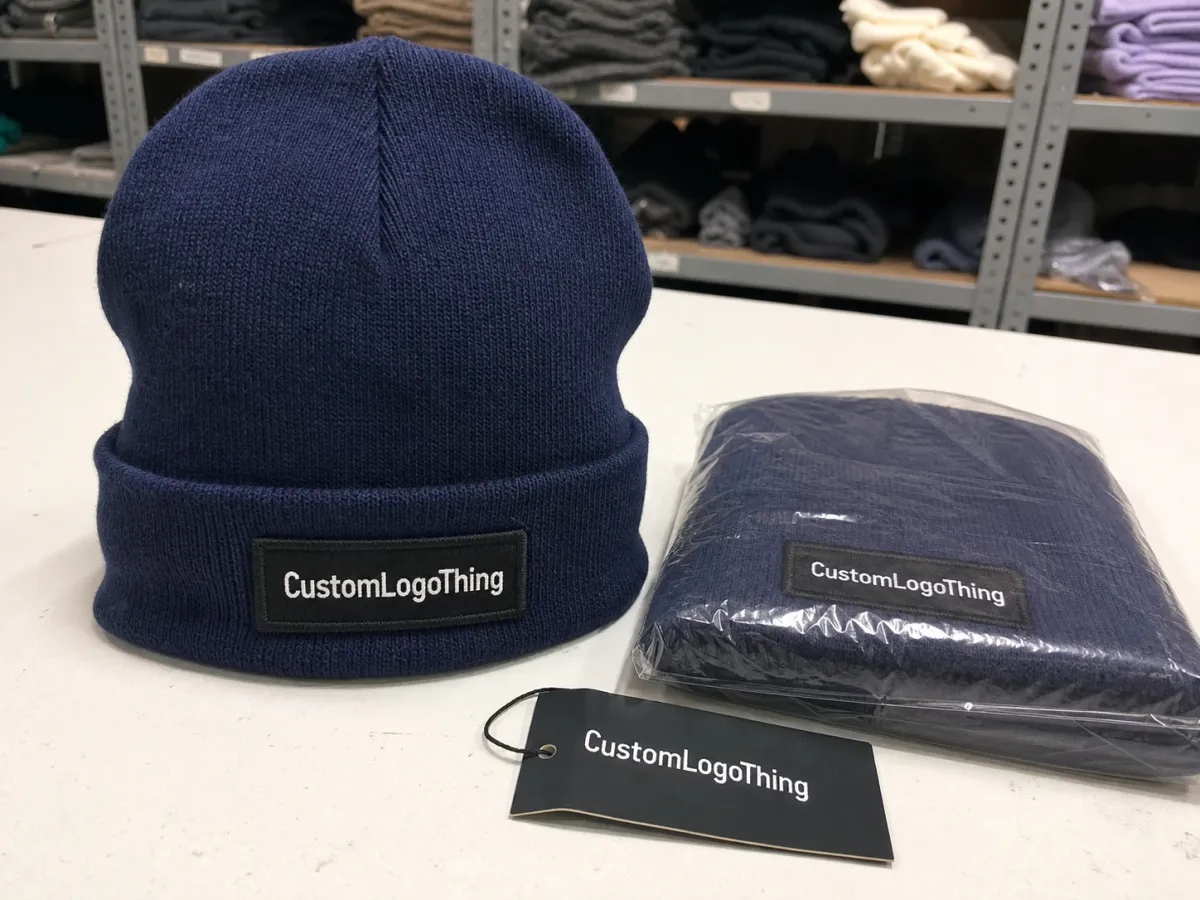
A centered patch gives the eye a clear landing point. The border, texture, and contrast are easier to read than tiny embroidery, which matters in winter retail where shoppers are moving quickly and making short decisions. When the logo is legible at shelf distance, the beanie is easier to understand and easier to sell.
Texture also helps. A smooth knit with a defined patch stands out against bulky outerwear and mixed accessories because the materials look different. Cuffed styles are especially useful since the cuff creates a stable panel for branding and keeps the logo from disappearing when the hat is folded or pegged.
For buyers, the product is useful as a gift item, an add-on purchase, or a small-ticket seasonal piece that can support coordinated merchandising. A store near checkout may want stronger contrast for fast recognition, while a boutique floor may prefer a quieter finish that still matches the rest of the winter assortment.
The main point is simple: if a winter beanie cannot be understood in a few seconds, the patch is probably too small, the artwork is too detailed, or the contrast is too soft.
How custom logo patch beanies work on retail shelves
The product is usually a knit beanie finished with a sewn-on patch made from leather, PU, woven fabric, or rubberized material. Each option changes the feel of the item. Leather and leatherette read more rugged or premium, woven patches support finer detail, and rubberized patches feel sportier and more modern.
Placement matters as much as material. A front-cuff location usually gives the logo the cleanest read. A front-panel position can work better on slouch silhouettes or lighter fashion knits. If the patch sits too low, it can disappear when the hat is folded; if it sits too high, the silhouette can feel top-heavy.
Buyers usually compare a few style decisions first:
- Cuffed vs. slouch - cuffed hats read cleaner and more retail-friendly; slouch hats feel more casual and fashion-led.
- Heavier vs. lighter knit - heavier gauges feel warmer and more winter-appropriate; lighter knits can work better for early-season floors or indoor displays.
- Textured vs. smooth finish - smoother knits make a logo patch pop more sharply, while textured knits add depth and a softer hand-feel.
Display method changes the decision too. The style should look tidy on a peg, in a tray, or folded in a cubby. That is why patch size, cuff height, and yarn weight should be planned together instead of treated as separate choices. If shelf presentation matters, the hat should be designed for the shelf from the start.
Production steps, proofing, and turnaround timing
The process starts with artwork and ends with shipment, but the approvals in between determine whether the order stays on schedule. Logo review comes first because the patch needs clean linework, manageable stitch paths, and enough contrast to stay legible at final size. Then come patch proofing, knit approval, bulk production, finishing, packing, and final inspection.
- Artwork review - clean up the logo, simplify if needed, and confirm final dimensions.
- Patch proof - check edge finish, material, thread color, and readability.
- Knit approval - confirm yarn shade, cuff depth, and overall hand-feel.
- Bulk production - knit, attach, finish, and trim.
- Inspection and packing - verify sizes, counts, labels, and carton contents.
Timing usually stretches in three places: sampling, color matching, and approval cycles. A sample can show whether the logo is too busy, but the buyer still has to confirm the knit shade against the store fixtures or the rest of the winter assortment. If the art needs cleanup, another proof round may be necessary.
Seasonal timing changes the pressure quickly. If the product needs to hit the floor before the cold stretch, the order should be locked early enough to allow for revisions. Many programs work best when the buyer allows roughly 12-15 business days after proof approval for simpler runs, with more time if patch sampling, special folding instructions, or retail labeling are involved. Freight can add another layer of risk, so shipping method should be part of the timeline from the start.
From a margin standpoint, early approval helps in two ways: it reduces the chance of rush freight and gives room for small corrections before production is finalized.
Pricing, MOQ, and quote variables to watch
Pricing depends on more than the hat itself. Buyers should look at the blank beanie, patch material, stitch count, decoration method, quantity, packaging, labeling, and any retail finishing. A simple knit with a woven patch and basic polybagging will price differently than a heavier style with embossed PU, custom hang tags, and fold-to-display instructions.
| Run Size | Typical Unit Range | What It Usually Means | Best For |
|---|---|---|---|
| 250-499 pcs | $7.50-$11.00 | Higher setup impact, fewer production efficiencies | Testing a style or serving a small store group |
| 500-999 pcs | $5.20-$7.80 | Better balance of setup and quantity | Regional winter launches and gift programs |
| 1,000-2,499 pcs | $3.90-$5.50 | Stronger unit economics and easier planning | Multi-store retail orders |
| 5,000+ pcs | $2.80-$4.20 | Lowest unit cost, higher commitment to forecasts | Chain-wide seasonal assortments |
MOQ changes the math quickly. Smaller quantities usually carry a higher per-piece price because patch setup, digitizing, sampling, and color approval costs are spread across fewer units. Larger runs bring the unit cost down, but only if the assortment is planned well enough to sell through. A buyer should include the logo file, preferred patch size, color count, target quantity by size or color, delivery deadline, and any hang tag or barcode requirement.
Freight belongs in the quote too. A low unit price can turn into a poor landed cost if cartons need rush shipping, extra labeling, or retail-ready packing changes at the last minute. If the order is part of a broader seasonal program, it helps to review Custom Packaging Products early so the apparel and the presentation pieces line up before production starts.
Material, fit, and patch construction choices
Acrylic remains common because it is dependable, easy to color match, and suitable for broad retail use. Wool blends bring more warmth and a slightly more natural hand-feel, which can matter in premium channels. Softer blended yarns sit between the two and are useful when comfort matters but the price target still has to stay controlled.
Fit affects the shelf more than many buyers expect. A cuff that is too short can make the logo patch feel cramped. A crown that collapses too easily can make the display look tired before the week is over. A beanie with enough structure to hold shape usually photographs better too, which helps when the retailer needs buyer approval or online merchandising assets.
Patch construction deserves close attention. Edge finish, thread color, backing support, and stitch density all change how crisp the logo looks at distance and how well it holds up under winter handling. A dense stitch count is not always better if the artwork is tiny; sometimes a cleaner simplified patch reads more clearly. For most retail applications, a patch around 2.25 to 3 inches wide gives enough room for a logo to breathe without overpowering the knit.
If paper components or inserts are part of the order, it may be worth asking whether they can be sourced with FSC certification. That matters most when the beanies ship with hang tags, insert cards, or bundled retail packaging that customers will handle before the product reaches a register.
Color strategy belongs in the material discussion too. High-contrast patches can cut through dark knits, while tonal branding can feel calmer and more upscale. A sporting goods wall may benefit from a bright patch on charcoal or navy. A boutique gift set may look stronger with a muted patch on oatmeal, forest, or heather gray.
How to plan a retail assortment that sells
A good assortment starts with target retail, expected store count, and where the beanies will live on the floor. Endcaps need strong color breaks and fast readability. Wall pegs need a consistent fold. Gift bundles need tighter coordination with scarves, gloves, or outerwear.
The strongest winter programs are often the simplest. Two to four core colors can look sharper than six or seven scattered options, especially if the store is already busy. A small color story makes replenishment easier and helps the brand feel intentional.
Here is a practical planning sequence:
- Set the target retail and margin.
- Choose the patch style and patch size.
- Select 2-4 core colors that work with the fixture.
- Confirm whether the display is hanging, folded, or mixed.
- Approve a sample before bulk production.
- Set a reorder threshold so stock does not run flat mid-season.
If the beanies are going into a gift package or bundled winter offer, the same care should guide the outer presentation. That might mean custom printed boxes for a premium set, or it might mean simpler branded packaging with a strong hang tag and barcode placement. The point is to make the whole offer feel like one decision, not several unrelated ones.
Mistakes that make winter displays look generic
The most common mistake is making the logo too detailed for the patch size. Fine lines blur, small lettering crowds, and the mark loses its punch at retail distance. If the patch only has room for one strong idea, the artwork should be simplified until it reads quickly.
Color mistakes are just as damaging. A beanie that matches the fixture too closely can disappear under store lighting, and a low-contrast patch can look flat even when the product quality is fine. Winter displays need visual rhythm, so the hat color should be compared with the wall, neighboring merchandise, and the packaging around it.
Operational misses hurt just as much: missing art approvals, forgetting retail labels, or placing the order after the display date is already locked. Those problems are avoidable, and they often force last-minute changes in freight, packing, or shelf setup.
For Custom Logo Patch Beanies for retail winter displays, the goal is not just to make a hat that looks good on a sample board. The goal is to create a shelf item that can survive handling, stay legible in store light, and keep selling without extra explanation.
Next steps before you place the order
Before requesting quotes, gather the logo file, quantity by store or channel, preferred beanie style, patch material, color direction, and the date the product must arrive. That gives a supplier enough information to quote accurately and keeps the conversation tied to the retail calendar. If labels, barcodes, or folding specs matter, include them now.
Ask for a sample or proof whenever the order has meaningful shelf risk. A proof shows whether the logo scale feels right, whether the patch texture suits the brand, and whether the knit color works in the store environment. If the product is part of a broader winter offer, it also helps to check how the beanie will sit beside scarves, outerwear, or other retail packaging elements already planned for the floor.
Here is the shortest planning checklist worth trusting:
- Confirm the final logo file.
- Lock the patch size and patch material.
- Set the quantity and store split.
- Approve the sample or digital proof.
- Confirm hang tags, barcodes, and carton marks.
- Build enough time for shipping and receiving.
Done well, these beanies become an easy winter buy: clear on the shelf, practical to stock, and simple to explain to a shopper. If the decoration, packaging, and delivery window are planned together, the order has a much better chance of arriving ready to sell.
Are custom logo patch beanies better for retail winter displays than embroidered beanies?
Patch branding usually gives a cleaner read at shelf distance, which helps in crowded seasonal sets where a small embroidered mark can disappear. A patch also adds a tactile, slightly more premium feel that can support giftability. Embroidery still works for some brands, but patches often scale better for retail visibility.
How many patch beanies should I display per store for winter retail?
Start with the space you actually have, then build a small color story around it instead of crowding the fixture. Many buyers use 2 to 4 colors so the display feels intentional and replenishment stays manageable. If the beanies sit near outerwear or gift items, leave enough spacing for the logo patch to read from a distance.
What affects the price of custom logo patch beanies for retail orders?
The main drivers are quantity, patch material, knit type, color count, and how much setup the artwork requires. Packaging, labels, and freight can change the delivered cost, so compare total landed cost instead of just the base unit price. MOQ matters too, because lower quantities usually carry a higher per-piece cost than larger seasonal runs.
How long do custom logo patch beanies usually take to produce?
Timing depends on artwork approval, patch proofing, sample needs, and the production schedule for the knit itself. Seasonal orders should be started early so there is room for revisions before the retail set date arrives. If the shipment needs special packaging or labeling, build extra time into the plan before the winter display goes live.
What do I need to request a quote for patch beanies for retail displays?
Send the logo file, target quantity, preferred beanie style, patch size, color direction, and the date the product must arrive. Include any retail requirements like hang tags, barcode labels, folding method, or polybag specs so the quote matches the real order. The clearer the brief, the easier it is to compare pricing, lead time, and finishing options without surprises.

