Crews keep beanies. They live in truck cabs, tool bags, and locker rooms long after a seasonal giveaway is forgotten, which is why Custom Logo Patch Beanies for workwear distributors can deliver more impressions than a lot of larger promo items. A patch also gives the logo a cleaner read than direct stitching into bulky knit, so the brand stays visible instead of sinking into the fabric.
For a distributor, that matters because the beanie stops being a throwaway winter extra and starts acting like a repeatable workwear SKU. The same blank can support different accounts, different patch styles, and different price points without changing the whole program. That is a useful balance of speed, control, and margin.
Why Custom Logo Patch Beanies for Workwear Distributors Move Fast
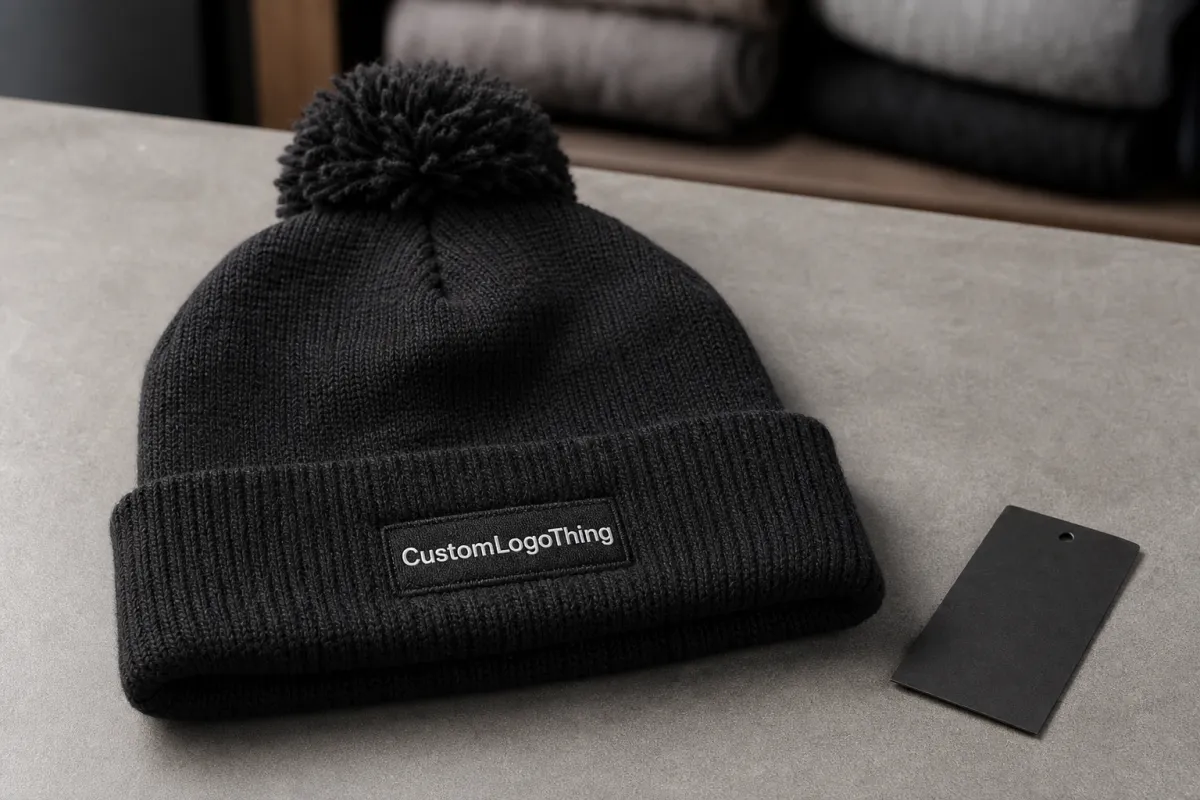
In practice, a winter beanie is one of the easier accessories to move through a workwear program because the buyer already understands the use case. It is warm. It fits in a pocket. It works with jackets, hoodies, hi-vis layers, and cold-jobsite gear. The patch simply gives that everyday item a stronger identity.
Custom Logo Patch Beanies for workwear distributors also age well in the field. A crew may cycle through gloves, rain gear, and shirts quickly, but a knit cap often stays in rotation for months. That means the logo gets repeated exposure instead of disappearing after one event. From a packaging buyer's point of view, that kind of shelf life is closer to product packaging than a one-off promo purchase: the item keeps working after the sale.
The other reason they move fast is control. Direct embroidery on thick knit can distort thin lines and small text. A patch creates a flatter, cleaner surface, which makes approval easier and reduces surprises later. For distributors quoting multiple branches or account managers, that predictability is a real advantage. It helps them offer branded packaging-style consistency without rebuilding the artwork every time.
Honestly, I think this is where a lot of teams underestimate the category. They treat beanies as a winter add-on. Buyers, especially in trades and logistics, treat them as uniform-adjacent gear. That shift changes the way you quote, proof, and reorder.
How a Patch Beanie Is Built and Decorated
A patch beanie is simple on paper, but the production sequence matters. First comes the blank beanie: acrylic, acrylic-blend, recycled polyester, or a heavier rib knit depending on the climate and budget. Then comes the patch style, the patch size, and the placement, usually on the cuff but sometimes on the crown body. After that, the factory matches the attachment method to the knit so the patch stays flat and does not curl at the edge.
Patch materials change the look more than many buyers expect. Woven patches tend to read clean and detailed, which helps when the logo has small type. Leather or faux leather feels more premium and sits nicely on neutral-colored beanies. PVC and TPU bring a tougher, more industrial look and generally hold up well in outdoor use. If the account wants a softer retail style, woven usually wins. If the account wants rugged utility, PVC often fits better.
Attachment method matters just as much. Sew-on construction gives strong durability and works across most knit bodies. Heat-applied or backed patches can speed production when the factory has the right setup, but that option depends on the beanie fabric, the adhesive system, and the wash expectations. Direct embroidery still has a place, especially for simple, bold logos on thicker cuffs. Once the logo gets smaller, more detailed, or more color-sensitive, patch decoration usually reads better.
Build sequence:
- Select the blank beanie and confirm fiber content.
- Choose the patch material and finish.
- Approve size, placement, and color references.
- Confirm attachment method and packaging.
Material, Fit, and Artwork Choices That Change Outcomes
The spec sheet can make or break the finished hat. Knit gauge, yarn weight, cuff height, and stretch all affect where the patch can sit and how large it should be. A tall cuff gives more decoration space. A shallow cuff leaves less room for the logo to breathe. A loose rib knit may look relaxed on a sample but shift slightly once worn under a hood or helmet.
Contrast is the first thing I check. A dark patch on a dark beanie can disappear from six feet away. A high-contrast combination, by comparison, gives the logo a better chance of reading on a jobsite, in a warehouse, or on a delivery route. That matters for Custom Logo Patch Beanies for workwear distributors because the buyers are not usually shopping for art; they are shopping for visibility and repeat wear.
Artwork quality also changes the outcome. Tiny text, thin strokes, and gradient-heavy logos often need cleanup before patch production. A vector file helps, but it is not magic. The logo still has to survive the real patch size, and that size is usually smaller than the client imagines. If the file is not ready, simplify the detail before production begins instead of discovering the problem on a proof.
A buyer can forgive a plain box. They rarely forgive a patch that sits crooked, shifts color, or gets lost on the cuff.
Environmental use should also guide the spec. Cold-weather field crews may wear these under hoods, hard hats, or hearing protection. If the patch is too bulky, it can create pressure or irritation. If the beanie will be washed often, ask how the patch behaves after repeated laundering. The right answer depends on the blend, the attachment method, and the end user's routine.
Production Steps and Lead Times From Proof to Delivery
The cleanest orders follow a predictable path. First the buyer sends artwork and basic specs. Then the supplier recommends a blank beanie, a patch style, and a placement. After that comes the digital proof. If the patch is new, some factories will also want a sample or tooling check before full production starts. Only then does the order move into the run itself.
Time usually gets lost in three places: late logo changes, color revisions, and patch approvals that keep bouncing between sales and art. If the buyer changes the logo after proof approval, the clock resets more than they expect. A simple reorder can move quickly because the spec is already locked. A first-time order almost always takes longer because the patch layout and placement have to be confirmed from scratch.
For quoting, separate the timeline into three buckets:
- Approval time: artwork review, proof comments, sample sign-off.
- Production time: knitting, patch creation, attachment, packing.
- Freight time: transit from the factory or warehouse to the destination.
That separation keeps everyone honest. A supplier may promise fast production, but if the proof sits for four days, the ship date still slips. If the order needs retail presentation, carton labels, or custom printed boxes, add that time before you lock the delivery window. For carton testing and transit planning, standards and guidance from groups like ISTA are useful when the shipment has a fragile presentation layer or multiple drop points.
Pricing, MOQ, and Unit Cost Drivers
Pricing for custom Logo Patch Beanies for workwear distributors is driven by more than just the blank hat. The main variables are the beanie body, patch material, number of decoration colors, attachment method, packaging, and whether the order needs a special presentation finish. A basic acrylic cuff beanie with a simple woven patch will usually price lower than a recycled blend with a leather patch and custom hangtag.
For realistic quoting, distributors usually see quantity breakpoints around 100, 250, 500, and 1,000 units. The exact Minimum Order Quantity depends on patch setup and color runs. A two-color woven patch can often fit a smaller order than a highly detailed full-color piece because the production setup is simpler. Once setup costs are absorbed across the run, unit price drops quickly, then starts flattening out.
| Patch option | Typical add-on at 250 pcs | Typical add-on at 1,000 pcs | Best fit |
|---|---|---|---|
| Woven patch | $0.55-$0.95 | $0.28-$0.55 | Detailed logos and cleaner retail-style branding |
| Faux leather patch | $0.45-$0.85 | $0.22-$0.48 | Premium look on simple one-color logos |
| PVC / TPU patch | $0.65-$1.20 | $0.35-$0.75 | Industrial feel, outdoor accounts, tough wear |
| Direct embroidery | $0.30-$0.70 | $0.18-$0.42 | Bold logos with limited detail on thicker knits |
Those are not fixed price cards. They are working ranges. A buyer who wants faster turnaround, premium packaging, or split shipments will pay more than a buyer placing a straightforward reorder. That is why landed cost matters more than decoration cost alone. Freight, carton count, and packaging design can change the final margin in ways that a simple per-piece quote hides. If the program also needs retail packaging or package branding, compare the full delivered number before you promise a sell price.
For paper inserts, tags, or sleeve cards, materials with FSC certification can support a cleaner sustainability story, especially if the beanies are going into a retail or dealership channel. That extra detail is not always required, but it can help when the buyer needs the order to feel more finished than a basic bulk ship.
Common Mistakes That Trigger Delays or Rework
The biggest error is usually artwork. A logo file that looks fine on a screen can fail badly once it is scaled down to a patch. Low-resolution art, tiny text, and thin outline strokes cause proof churn, which adds days. If the supplier keeps asking for a cleaner file, that is a warning sign, not a nuisance.
Color is the second common problem. Low-contrast combinations may pass a quick internal review, then vanish on the finished beanie. A charcoal patch on a black cuff might be acceptable in a mockup and invisible in real life. For workwear, visibility beats cleverness almost every time.
Fit and wear also get overlooked. If the crew uses hard hats, hoods, or hearing protection, patch placement can interfere with comfort. A patch that sits too high may press under a helmet edge. A patch that is too wide may feel bulky under cold-weather layers. Those details matter because the beanie is not a desk item; it is worn in motion.
Keep the spec tight. Every order should say the same placement, size, patch material, color references, and packaging instructions. Vague notes like “put logo on front” create avoidable variation. If one branch gets a centered cuff patch and another gets a slightly shifted body placement, reorders become messy very quickly.
Clear specs reduce arguments later. Ambiguous specs create them.
Expert Tips for Cleaner Quotes and Better Reorders
The smartest distributors usually keep one core beanie body color and build variation through the patch. That approach lets them serve several customer types without rebuilding the entire program. Black, charcoal, navy, and heather gray tend to cover a lot of ground. Then the patch changes by account or department.
Create one reusable spec sheet and keep it current. Include vector artwork, Pantone targets or close matches, patch size, placement, body color, thread or material notes, and approved packaging. That single page shortens quote cycles because reps are not hunting through old emails to find the last approved version. It also helps when the client asks for a reorder six months later and expects the same result.
For larger distributor programs, I like to see two options side by side: one premium and one value. The premium option might use a woven or faux leather patch with labeled retail packaging. The value option might use a simpler cuff beanie with a direct embroidery mark and bulk ship carton. That comparison gives the buyer a realistic choice instead of a vague budget conversation. It also keeps the estimate tied to actual production variables, not guesswork.
If the account needs branded packaging, define it separately from the beanie itself. Custom printed boxes, sleeve cards, and hangtags belong in the Custom Packaging Products lane, while the garment spec sits in the apparel quote. Mixing those two jobs makes pricing messy. A clean separation between product packaging and the garment line protects both margin and lead time. For teams that quote frequently, pairing that structure with a distributor page like Wholesale Programs helps standardize how the offer is presented.
Pre-approved patch templates are another quiet advantage. If a buyer can choose from a fixed set of patch shapes and placements, the sales cycle shortens. They are not starting from scratch. They are selecting from known options. That matters more than most teams realize.
Next Steps for Building a Distributor-Ready Program
Start with the most common use case first. If most of your accounts need a cold-weather beanie for field crews, build around that. If most want a retail-ready winter accessory for branch counters, design for shelf presentation. The point is to create one repeatable program that quotes fast and reorders cleanly.
Before you send the next request for pricing, gather five basics: vector artwork, beanie color choice, target quantity, delivery window, and packaging expectations. If the buyer already has a budget, include it early. That one number helps the supplier choose the right blank, patch style, and packaging level without wasting time on mismatched options. For custom logo patch beanies for workwear distributors, the right spec is usually the one that survives the second order, not just the first.
Then test one sample. A single approved sample can reveal fit issues, patch scale problems, or color mismatches before they become expensive on a larger run. That sample also gives the distributor a tool for future sales. It is easier to sell from a physical reference than from a mockup on a screen.
If you build the program with that level of control, custom logo patch beanies for workwear distributors become a reliable line item instead of a seasonal headache. The spec sheet stays fixed, the pricing becomes easier to defend, and the reorder path gets shorter every time.
What patch material works best for custom beanies in workwear?
Woven patches are a strong default when the logo has detail and the buyer wants a clean, retail-style look. PVC or rubber patches add durability and a tougher industrial feel, which can suit outdoor and trade accounts. Leather and faux leather read more premium, but they are less flexible when the brand needs bright color contrast.
How long does a patch beanie order usually take?
Most timelines have three parts: proof approval, production, and shipping, so the real schedule depends on how fast each step moves. Simple reorders move faster than first-time jobs because the patch spec, placement, and artwork are already approved. Rush timing usually costs more and should be confirmed before the quote is sent to the end buyer.
What order quantity gives distributors the best unit price?
Pricing often improves at common breakpoints such as 100, 250, 500, and 1,000 pieces, depending on the factory. The best price is not always the best margin if the distributor ends up carrying excess inventory. Ask for tiered pricing so you can see where the discount actually starts to matter.
Can one beanie spec work for multiple client accounts?
Yes, if the body color, patch size, and placement stay consistent and only the logo artwork changes. This approach reduces setup friction and makes reorders easier across different job sites or branches. It works best when the spec sheet is locked before the first purchase order is placed.
What files do I need to quote custom logo patch beanies?
Send a vector logo file whenever possible, along with PMS or close color references for both the hat and patch. Include the target quantity, delivery date, patch placement, and any packaging needs so the quote is accurate. If the buyer has a budget target, share it early so the supplier can recommend the right beanie and patch combination.

