Custom NFC Stickers: The Tiny Label With a Data Trail
A shopper picks up a candle box, taps a small printed mark near the logo, and lands on a scent story, refill subscription, authenticity check, or loyalty offer. No QR scan. No app download. That is the practical promise of custom nfc stickers: they turn packaging into a tappable digital entry point.
The surprising part is not the technology. NFC is already built into most modern smartphones. The harder part is packaging strategy. A customer will tap only if the package gives them a clear reason: “verify this,” “reorder this,” “learn how to use this,” or “claim this reward.” Curiosity is weak. Utility wins.
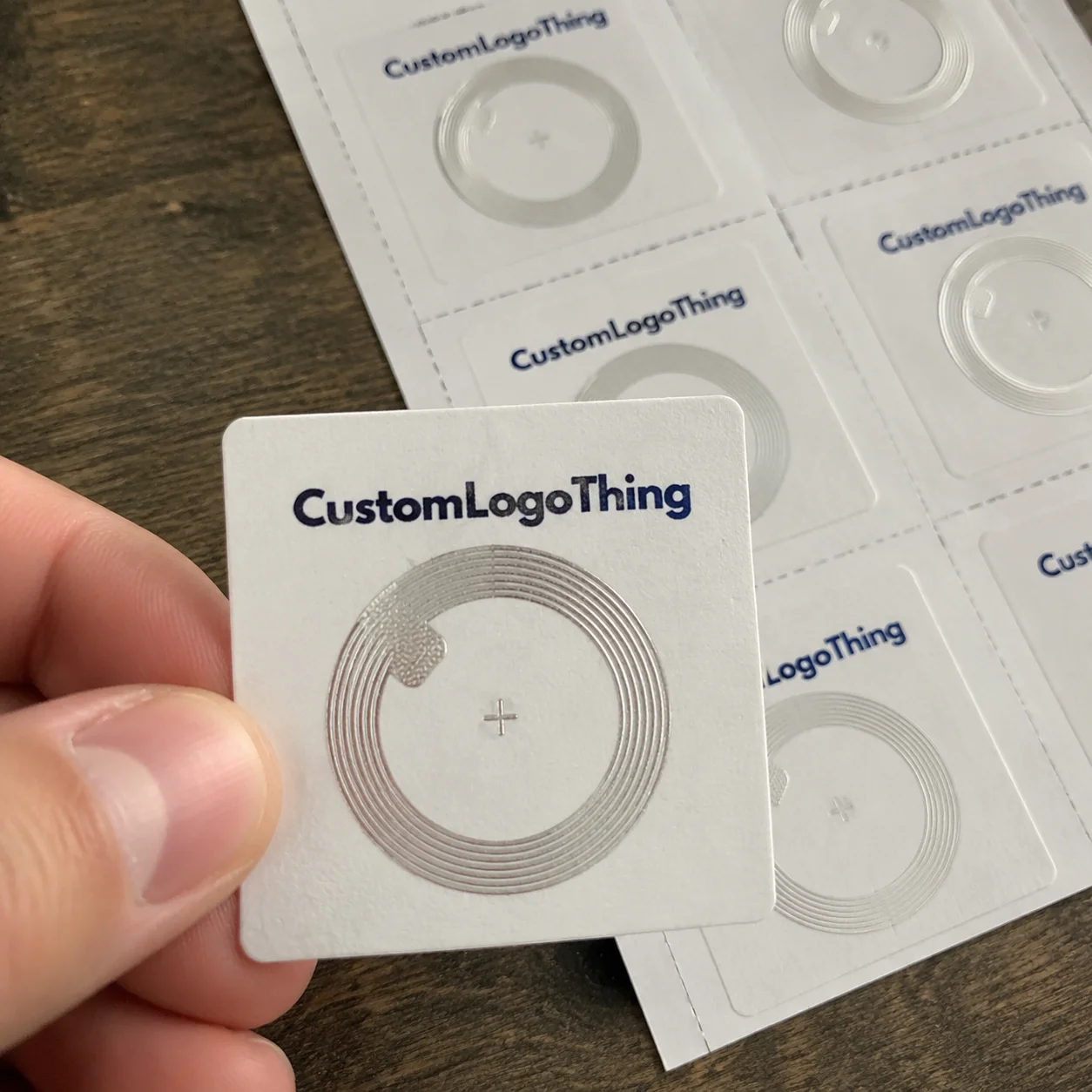
So, what are these stickers? They are adhesive labels with a hidden near-field communication chip and antenna inside. Buyers can specify the shape, artwork, adhesive, face stock, surface finish, chip type, encoded destination, and sometimes security functions such as unique IDs or anti-counterfeit validation. Think of them as a printed label plus a very small digital handshake.
They differ from ordinary stickers because they carry readable data. They differ from QR labels because the phone reads the chip at close range instead of scanning visible code. They differ from long-range RFID tags because NFC is short-range and customer-facing. They differ from tamper seals because they do not automatically prove opening or damage unless they are built into a tamper-evident construction.
For packaging teams, the use cases are broad: authentication on spirits, warranty registration for electronics accessories, care instructions on cosmetics, ingredient transparency on supplements, event access on promotional packs, reorder links for consumables, and post-purchase engagement for Premium Retail Packaging. The sticker is small. The planning is not.
This guide covers how the technology works, what pushes the price up or down, where production schedules usually slip, and what buyers should prepare before requesting a quote from a supplier such as Custom Logo Things for Custom Labels & Tags.
How NFC Sticker Technology Works on Real Packaging
NFC stands for near-field communication. In packaging terms, it means a phone activates and reads a tiny chip when it gets very close, usually within a few centimeters. The phone’s NFC reader energizes the antenna inside the label, pulls the stored instruction from the chip, and opens the assigned action.
A finished NFC label has several layers. From top to bottom, there may be a printable face stock, ink, varnish or laminate, adhesive, NFC inlay, chip, antenna, and release liner. On paper, simple. In production, each layer can affect performance. A heavy laminate may protect the print but add stiffness. A high-tack adhesive may improve bonding on a textured mailer but make application less forgiving. Metallic ink or foil near the antenna can reduce readability if it is poorly placed.
During a tap, the chip can open a URL, display text, launch a contact card, connect to an app workflow, or send the user into an authentication path. Most packaging projects use a URL because it is flexible and phone-friendly. The real decision is whether that URL is static or dynamic.
- Static encoding: the chip points directly to one URL or record. Simple, but hard to change if locked.
- Dynamic redirect: the chip points to a redirect URL, and the destination can be changed later.
- Managed platform: the chip connects to a dashboard for analytics, unique IDs, campaign changes, and sometimes authentication logic.
Common chips are often described as NTAG-style chips. Buyers do not need to memorize every chip code, but memory size, phone compatibility, read reliability, and authentication features matter. Buzzwords do not. If every label needs a unique encrypted identity for anti-counterfeit work, that is a different spec than a simple “tap for instructions” campaign.
QR codes still deserve respect. They are visible, cheap, and familiar. NFC feels more premium and removes camera-framing friction, but it costs more. Many brands use both on the same package: NFC for a fast tap experience, QR as a fallback. That combination is sensible for products shipped across mixed phone models, regions, and user habits.
Material matters too. Metal can interfere with the antenna. Aluminum tins, foil-lined cartons, metallic closures, and some metallized pouches need ferrite shielding or metal-compatible inlays. Test first. A sticker that reads beautifully on a desk may fail on a filled tin. Physics is rude that way.
Key Specs to Decide Before You Ask for a Quote
Before asking for pricing, define the physical and digital requirements. A vague request such as “quote smart stickers with our logo” forces the supplier to guess. Guesses create rework.
Start with quantity, sticker size, shape, chip type, print method, adhesive, finish, package surface, and data behavior. Then add the environment: will the label see water, oil, cold storage, UV exposure, fulfillment scuffing, or curved application? A sticker for a paperboard sleeve has a different risk profile than one applied to a chilled glass bottle.
Size is not only a design choice. The antenna needs enough area to perform reliably, especially on curved, textured, or metallic surfaces. Very small NFC tags can work, but read distance usually drops. For many packaging applications, labels around 25–40 mm wide are a practical starting range, depending on chip selection, inlay layout, and design needs. Tiny marks can be elegant. They can also be maddening.
Surface compatibility deserves serious attention. Glass is smooth but may be cold or wet. HDPE and PP plastics can have low surface energy, which often calls for a stronger adhesive. Paperboard is friendly unless it has heavy varnish, soft-touch coating, embossing, or loose fibers. Aluminum tins need metal-compatible construction. Pouches flex. Coated mailers scuff. Cold-chain packaging may require freezer-grade adhesive.
Adhesive options include permanent, removable, high-tack, freezer-grade, tamper-evident, and specialty formulas for low-surface-energy plastics. A permanent acrylic adhesive may be enough for coated cartons. A removable adhesive might fit event badges or temporary promotions. A tamper-evident layer can support product security, but it adds cost and may affect how the NFC inlay is converted.
Artwork also needs discipline. Provide dielines, bleed, safe zones, chip location notes, white ink instructions for clear films, and any variable print rules. If the sticker uses metallic ink, foil simulation, spot varnish, matte lamination, or gloss highlights, keep conductive or dense decorative effects away from the antenna area unless the supplier confirms compatibility.
Practical rule: decide the customer action first, then build the NFC spec around that action. Packaging design should support the tap, not hide it.
A small tap icon, “Tap to verify,” or “Tap for refill” can increase interaction because it tells the customer what to do and what they get. Branding should not be so subtle that the smart feature becomes invisible. Mystery is not a user interface.
Pricing, MOQ, and Unit Cost: What Actually Moves the Number
Custom NFC stickers cost more than standard printed labels because they combine printing, electronics, chip sourcing, encoding, conversion, testing, and sometimes platform setup. That stack of work is why a smart label cannot be priced like a plain paper sticker.
The main cost drivers are chip type, quantity, dimensions, material, adhesive, print complexity, lamination, metal-compatible inlays, variable data, encoding, test requirements, and freight. Security features add another layer. So do managed dashboards, analytics, or unique URLs per piece.
MOQ behavior follows familiar packaging economics. The first thousand can feel expensive because setup dominates. At higher quantities, unit cost drops, but the stakes rise. If 50,000 labels are encoded incorrectly, the issue is not cosmetic. It is operational.
| Specification Choice | Typical Cost Effect | Buyer Watchout |
|---|---|---|
| Standard NFC label on paper or film | Lower unit cost, often best for simple URL campaigns | Still needs adhesion and phone testing on the final package |
| Metal-compatible NFC inlay | Higher cost due to ferrite shielding or special inlay construction | Essential for tins, cans, foil-lined cartons, and metallic surfaces |
| Unique ID or variable URL per sticker | Adds encoding, data handling, and QC cost | Requires clean data files and stronger approval controls |
| Tamper-evident or security construction | Higher material and converting cost | Must be tested for both break behavior and NFC readability |
| Premium finish such as soft-touch, matte, or spot gloss | Moderate increase depending on coverage and process | Finish can affect durability, scuffing, and visual tap cues |
Exact pricing depends on the spec, but the pattern is consistent. A small pilot run has more setup cost per unit. A larger production run spreads artwork setup, sourcing, and encoding across more pieces. For basic printed NFC labels, buyers may see broad per-unit ranges from under a dollar at higher volumes to several dollars at low quantities or complex builds. Metal-compatible, security, and managed-data projects can move higher.
Ultra-cheap tags are risky. The problems usually show up as weak adhesive, short read range, inconsistent encoding, incompatible chips, poor print registration, or no test documentation. Saving $0.08 on a sticker is not a win if 12% of customers cannot tap successfully. For authentication or reorder campaigns, calculate value per successful tap, not just price per sticker.
Ask suppliers for line-item clarity where possible: printed label cost, NFC inlay cost, encoding cost, tooling, proofing, freight, and any platform fees. For related packaging components, it can also help to coordinate specs across Custom Packaging Products so the NFC label, carton, insert, and shipper are not designed in separate little kingdoms.
Process and Timeline From Artwork to Tap Testing
A reliable NFC sticker run follows a sequence. Skip steps and the risk moves downstream, where fixes cost more.
- Discovery: define the product, package surface, quantity, deadline, and tap goal.
- Spec confirmation: choose size, shape, material, adhesive, finish, and NFC behavior.
- Artwork setup: prepare dielines, bleed, safe areas, tap instructions, and print notes.
- Chip selection: match memory, compatibility, and security needs to the campaign.
- Proof or sample: review layout digitally and, when needed, test a physical sample.
- Encoding plan: confirm static URL, unique URLs, dynamic redirects, or managed platform rules.
- Production and conversion: print, laminate or varnish, insert or convert the NFC inlay, die-cut, and finish.
- QC: check print, adhesion, encoding, read performance, count, and packing.
- Shipping: protect rolls or sheets from crushing, moisture, and heat exposure.
Delays usually happen in the unglamorous places: unclear URLs, untested surfaces, missing vector artwork, late chip decisions, or changes after proof approval. Legal review can also hold up projects if the tap opens claims, warranty terms, ingredient data, or regulated product information.
A digital proof checks layout. It does not prove adhesion. It does not prove read range. It does not show whether a customer can find the tap point on a curved bottle or a soft-touch carton. For that, order a physical sample or pilot run.
Simple repeat orders can move faster once specs are locked. New projects often need more planning, especially if they involve custom shapes, metal-compatible tags, security features, variable data, or large quantities. A realistic path may run from roughly 10–15 business days for straightforward repeat work after approval to several weeks for pilot testing, special materials, or large encoded campaigns. Chip availability, print queue, freight method, and approval speed all matter.
Encoding checkpoints are non-negotiable. Does every sticker carry the same URL? Does each sticker get a unique ID? Is the chip locked? Does the redirect platform capture tap analytics? Who owns the destination domain? These are not technical footnotes. They affect customer experience and data control.
Test on the actual filled package, not only on a loose label. Liquids, foiled cartons, metal lids, curved glass, and dense products can change read performance. Use several phone models and tap angles. Keep the approved spec sheet, chip type, encoded URL structure, artwork files, and test results. Repeat orders become much easier when documentation exists.
Packaging teams that already follow transport testing disciplines will recognize the logic. Standards such as ISTA testing focus on distribution performance; smart labels need the same kind of thinking for digital performance after handling, shipping, and display.
Step-by-Step Buying Guide for a Reliable Smart Sticker Run
Buying custom nfc stickers should feel less like buying a novelty label and more like specifying a small packaging system. Use a practical sequence.
- Define the tap goal in one sentence. “Authenticate this product.” “Register this warranty.” “Explain this ingredient.” “Reorder this SKU.” If the sentence is fuzzy, the build will be fuzzy.
- Choose the post-tap journey. The landing page should load quickly on mobile, match the product in hand, use readable type, support accessibility basics, and offer a clear next step. A generic homepage is usually a waste.
- Match construction to the package. Specify adhesive, face stock, finish, and environment. If the label goes on aluminum, foil, or metallized film, ask for metal shielding.
- Decide data behavior. Locked, editable, unique, or platform-managed? Each option affects cost, testing, and future flexibility.
- Prepare production-ready artwork. Include dielines, bleed, safe zones, tap icon placement, color references, and variable-print instructions if needed.
- Order a sample or pilot. Test multiple phones, tap positions, lighting conditions, packaging states, and user behaviors. People do not tap like lab equipment.
- Approve production only after confirming four things. Tap performance, adhesion, color, and data routing.
- Plan measurement. Track taps, conversion rate, repeat taps, product registrations, support tickets, and sales from reorder flows.
For branded packaging, the strongest NFC projects connect the physical design and the digital offer. A beauty brand might use a matte black label with a subtle tap icon and a batch-specific ingredient page. A coffee subscription box might use a reorder link tied to the roast. A Custom Printed Boxes campaign might place the smart sticker inside the lid for onboarding rather than on the exterior for retail browsing.
Many buyers underinvest in the landing page. The label gets approved by the packaging team. The page gets tossed to whoever has time. Then the campaign disappoints. A tap is not the finish line; it is the front door.
If sustainability claims are part of the tap flow, make sure they are specific and supportable. The EPA’s greener products resources are a useful reference point for avoiding vague environmental language. FSC-certified paperboard, recycled content, compostability, and refill systems all need precise wording. NFC can deliver that detail, but it cannot rescue a weak claim.
Common Mistakes That Make Smart Labels Feel Dumb
The first mistake is treating NFC as decoration. If the customer taps and receives nothing useful, they will not tap again. A premium interaction needs a premium reason.
The second mistake is applying a standard tag to metal packaging. Standard NFC labels often perform poorly on aluminum tins, cans, foil-lined pouches, and metallic closures. Use metal-compatible inlays and test them in position.
The third mistake is choosing the smallest possible sticker while expecting generous read distance. Small antennas can work, but physics is not sentimental. Give the inlay enough room, especially on curved or textured packaging.
The fourth mistake is sending users to a slow desktop-style page. Mobile speed matters. So does relevance. If the customer is holding a vanilla candle, the page should not make them hunt through a full catalog to find refill instructions or fragrance notes.
The fifth mistake is testing too early and too cleanly. A loose sticker on a desk is not the same as a label applied to a filled bottle, chilled in a refrigerator, rubbed in a shipping carton, or displayed under retail lights for weeks. Use realistic handling conditions.
The sixth mistake is locking the chip before final approvals. Once locked, a static record cannot be rewritten. If legal, regulatory, or campaign teams are still changing URLs, use a dynamic redirect or wait.
The seventh mistake is hiding the interaction. Customers need a cue. A tap icon, short instruction, or printed benefit can lift participation because it removes doubt.
The eighth mistake is ignoring data governance. Unique IDs, warranty forms, anti-counterfeit checks, and customer tracking create obligations. Decide who controls the data, how long it is stored, and what privacy language appears after the tap.
Reality check: a smart label with bad UX is still bad packaging. Electronics do not fix unclear communication.
Next Steps: Build a Spec Sheet Before You Order
Before ordering custom nfc stickers at scale, build a one-page spec sheet. It does not need to be fancy. It needs to be complete.
- Quantity and expected reorder volume
- Sticker size, shape, and application location
- Package surface: paperboard, glass, plastic, tin, pouch, coated mailer, or other material
- Adhesive requirement: permanent, removable, high-tack, freezer-grade, tamper-evident, or specialty
- Face stock and finish: paper, white film, clear film, matte, gloss, soft-touch, varnish, or laminate
- Chip requirements: standard, higher memory, authentication-capable, or metal-compatible
- Encoding type: same URL, unique URLs, dynamic redirect, locked chip, or managed platform
- Artwork status: dieline, bleed, safe zones, tap icon, color references, and variable data notes
- Testing expectations and delivery deadline
Send photos or samples of the real packaging. Better yet, send the exact substrate or finished pack. A supplier can often flag risks early: metal interference, tight curves, condensation, heavy texture, low-surface-energy plastic, or varnish that may reduce adhesion.
Create a simple tap-flow map: sticker location, printed instruction, phone tap, landing page, customer action, confirmation message, and analytics event. One page. Seven boxes. That little map prevents expensive confusion.
Request a pilot if the project involves premium goods, regulated products, authentication, cold storage, cosmetics, spirits, or high-value ecommerce packaging. A pilot of 50–500 pieces can reveal issues that no spreadsheet will catch.
Ask direct supplier questions: Have you tested on this surface? Can you encode unique URLs? Do you provide read testing? Can the destination change later? What chip family are you proposing? What happens if a portion fails QC? Do you pack on rolls or sheets? Can the label be applied by hand, machine, or both?
Custom nfc stickers are best understood as packaging infrastructure, not novelty labels. Gather the specs, define the tap outcome, test a sample on the actual package, then move to full production with the same discipline you would apply to cartons, inserts, labels, and retail displays.
FAQs
What are custom NFC labels best used for on packaging?
They work best when the tap leads to something immediately useful: product authentication, reorder pages, tutorials, warranty registration, loyalty enrollment, care instructions, or batch-level product information. They are less effective when they only send customers to a generic homepage with no clear next step.
Do custom NFC stickers work on metal tins or aluminum packaging?
Yes, but not with a standard construction in most cases. Metal can interfere with the antenna, so tins, cans, foil-lined cartons, and metallized pouches usually need a metal-compatible inlay or ferrite shielding. Test the label on the actual filled package before approving production.
How much do printed NFC stickers usually cost?
Pricing depends on quantity, chip type, material, adhesive, finish, encoding, and testing requirements. Basic printed NFC labels can range from under a dollar at higher volumes to several dollars each for small or complex runs. Security features, metal-compatible inlays, unique IDs, and managed platforms can increase the cost.
Can the NFC destination be changed after the stickers are made?
Sometimes. If the chip points directly to a locked static URL, changing the destination may not be possible. If the chip points to a redirect URL or managed platform, the destination can usually be updated later. Decide this before encoding, not after the labels are already packed in cartons.
What size should an NFC sticker be?
Many packaging projects start around 25–40 mm wide, but the right size depends on the inlay, package surface, curve, artwork, and read-distance expectations. Smaller labels can work, but they often have less forgiving tap performance. Ask for the proposed inlay dimensions, not just the printed sticker size.
Should I use NFC, QR codes, or both?
Use NFC when the product benefits from a premium tap interaction, authentication flow, refill journey, or loyalty experience. Use QR when cost, visibility, and universal access matter most. Using both is often smart, especially for packaging sold across different phone models and customer habits.
What files should I prepare before requesting a quote?
Prepare production artwork with dielines, bleed, safe zones, color references, finish notes, tap icon placement, and any variable data instructions. Also provide the package material, application surface, expected environment, quantity, deadline, and encoding plan. Photos or samples of the real package help prevent bad assumptions.
Can NFC stickers be tamper-evident?
Yes, but tamper evidence requires the right label construction. A standard NFC sticker does not automatically prove opening or removal. If the label needs to break, void, or reveal damage, specify tamper-evident behavior early and test both the break pattern and the NFC read performance.