Custom Plastic Packaging Bags low moq are a practical choice for brands that need to launch, test, or repackage without tying up cash in excess inventory. A small run is often the only sensible move when the product is still proving demand, the size is not final, or the artwork may change after the first market read. Ordering 50,000 bags before the product has earned that volume is not caution. It is expensive optimism.
Buyers usually turn to low-MOQ packaging for one of three reasons: they want to validate demand, they need to replace a packaging spec that failed in production, or they are launching a seasonal or limited-edition SKU that does not justify a large buy. The appeal is not just lower quantity. It is control. A short run lets you check fit, seal performance, print quality, and shelf appearance before committing to a larger inventory position.
If you are comparing bag formats, print options, and materials, start with the broader Custom Packaging Products lineup, then narrow the spec before asking for pricing. A complete request produces a useful quote. A vague request produces a number that looks precise but is mostly guesswork.
Why custom plastic packaging bags low MOQ make small launches less risky
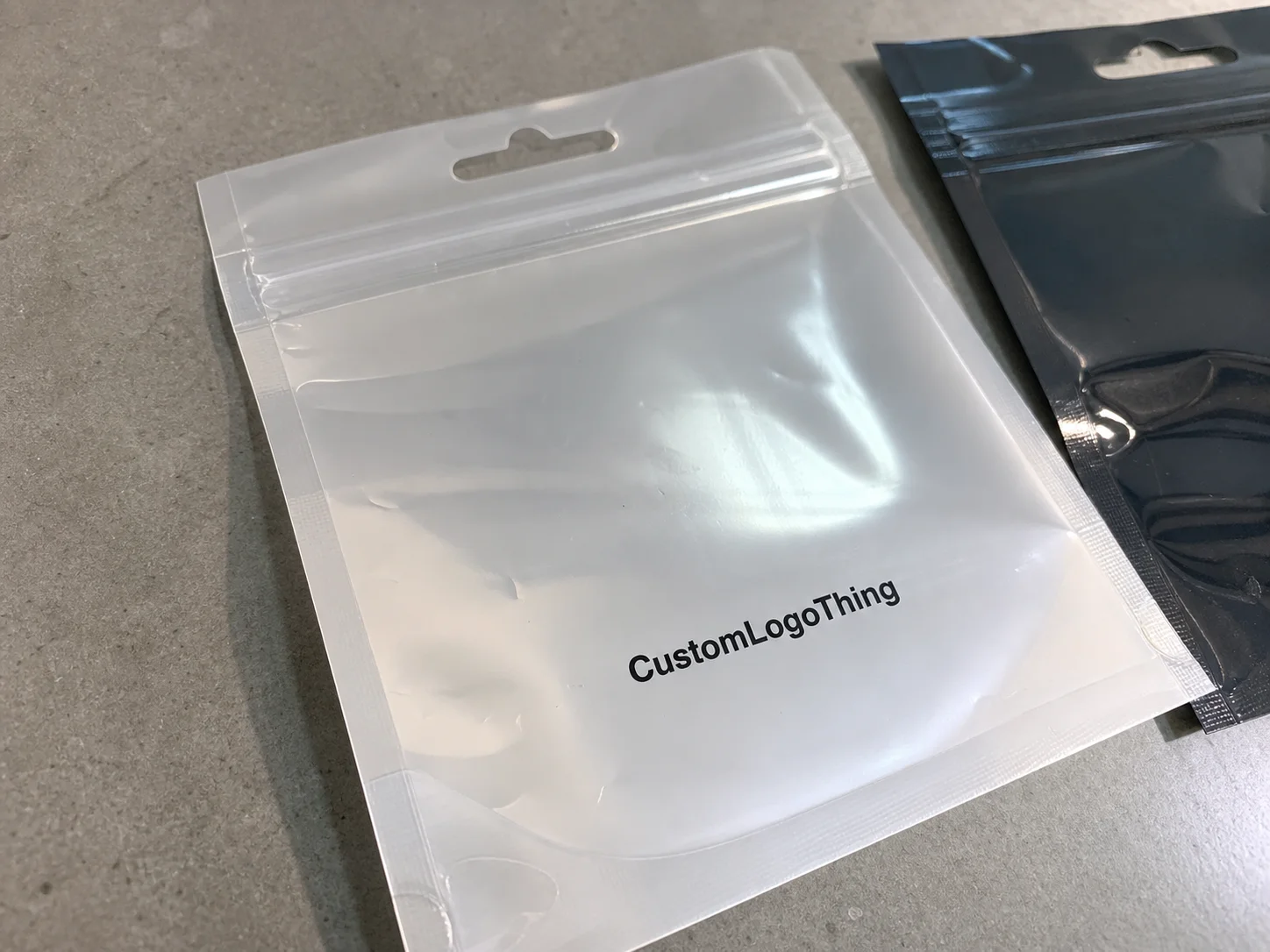
Most brands do not need a warehouse full of packaging to learn whether a product works. They need enough bags to test demand, observe handling, and see whether the package behaves properly in transit and on shelf. That is the real value of Custom Plastic Packaging Bags low MOQ: they reduce the damage when the first spec is wrong.
Small runs expose problems quickly. A zipper set a few millimeters too low, a gusset that will not stand cleanly, or a film that looks bright in a mockup but dulls in print all become obvious before the order grows large enough to hurt. Those are the kinds of issues that are cheap to fix at 1,000 or 2,500 pieces and expensive to fix after a full pallet arrives.
That is why the buying decision should focus on risk, not only on unit price. A slightly higher cost per bag can still be the better choice if it prevents overbuying, warehouse clutter, and dead stock. That matters for new brands, private label launches, subscription kits, seasonal lines, and product relabeling projects where the goods already exist but the packaging needs to do more of the selling.
A low MOQ is a test strategy, not a discount trick. If the format does not survive a small run, it will not become better at scale.
Small runs also make branding mistakes visible before they become expensive. You can check whether the logo reads at shelf distance, whether the finish looks clean under store lighting, and whether the bag supports the product rather than competing with it. The difference between a good package and a tolerable one often shows up in details that are easy to miss on a screen: color density, seal placement, edge trim, and the way the bag sits once filled.
There is another benefit that buyers sometimes underestimate. Low-MOQ ordering gives you a cleaner feedback loop. If the team finds that the bag opens too easily, feels too thin, or takes longer to fill than expected, you can adjust the next run without throwing away a full production batch. That is not just convenient. It is how packaging gets improved without turning the launch budget into sunk cost.
Bag styles, films, and print options that actually matter
There are many bag types, but most low-MOQ projects end up in a narrow set of options. Flat bags are simple and efficient. Gusseted bags increase capacity and help the pack stand or stack more cleanly. Stand-up pouches are the obvious choice when shelf presence matters. Resealable zipper bags are useful for products that get opened more than once. Hang-hole formats make sense for peg displays, especially when the bag has to stay aligned in retail fixtures.
Film selection matters just as much as bag shape. PE is widely used for flexibility, softness, and reliable sealing. PP is often chosen when clarity and stiffness matter more. Laminated structures add print quality and barrier performance, but they also add cost and complexity. If the product needs moisture resistance, odor control, or a longer shelf life, barrier film may be worth the extra spend. If the product is lightweight and visibility is the priority, a simpler structure may be the smarter buy.
Buyers usually need to evaluate five technical points before signing off on a material spec:
- Thickness, usually measured in mils or microns, which affects feel, strength, and packaging consistency.
- Clarity, important when the product itself needs to be seen clearly.
- Puncture resistance, critical for sharp, angular, or dense items.
- Moisture barrier, which protects the product and keeps the bag looking clean during storage and transit.
- Seal strength, which determines whether the bag holds up under real handling.
Print method changes both appearance and economics. Flexographic printing is efficient for repeat patterns and simpler color work. Rotogravure can deliver stronger visual quality and is often preferred for larger print runs, although the setup cost makes it less attractive for very small orders. Digital printing can be useful when artwork changes often, when the run is short, or when the design requires a lot of variation. Labels are still a sensible workaround for projects that need branding now but do not justify a full print setup yet.
Finish is not cosmetic noise. Matte creates a softer, more restrained presentation. Gloss pushes color and can help the bag stand out under bright retail lighting. Spot finishes can highlight a logo or product name without flooding the whole bag. The right choice depends on the product, the shelf environment, and how much visual weight the bag should carry. A package that functions cleanly is better than one that looks expensive and fails in use.
For shipping performance, it helps to think beyond the print face. Transit conditions expose weak seals and inconsistent film more reliably than design reviews do. Standards such as ISTA testing methods are useful if the package has to survive rough handling. If the project includes paper inserts, cartons, or labels, FSC certification may matter too. Not every order needs every certification, but the right benchmark should be known before production starts.
A practical packaging buyer also thinks about the machine side. If the bag will be filled on a line, zipper position, seal width, and gusset depth can affect throughput. A design that looks fine on paper may not feed, fill, or stack as intended once it meets actual equipment. That is one reason early prototyping pays for itself. It turns abstract assumptions into visible faults before the expensive part begins.
Specifications to lock before you request a quote
If the quote request is incomplete, the pricing will be incomplete too. That is normal. Suppliers cannot price a vague package with any real confidence. Before you ask for Custom Plastic Packaging Bags low MOQ, lock down the size, thickness, material, closure style, print colors, finish, and any special features such as a hang hole, tear notch, or tamper-evident seal.
Artwork deserves the same discipline. Vector files are best whenever possible. Bleed, safe margins, and seal clearance matter more than they do in a digital mockup, because production trimming and sealing remove a little room from every edge. A design that looks balanced on screen can become cramped in production if text sits too close to the zipper or logo elements sit too near a cut line.
Before requesting pricing, answer these questions:
- What is the exact product, fill weight, and density?
- Will the bag be hand-filled or machine-filled?
- Does the product need food-contact suitability, odor resistance, or another compliance note?
- Is the bag meant for retail display, shipping, storage, or all three?
- Is the priority premium appearance, functional protection, or both?
Those answers matter because packaging that works for one use case can fail another. A food product may need a different barrier profile than a dry goods item. A retail-ready pouch needs a stronger visual hierarchy than a shipping bag. A product that ships in a carton may not need the same puncture resistance as one tossed into a corrugated master case. The package should match the real use, not a generic expectation.
Line-fit details should also be confirmed early. A fill line that tolerates a 2 to 3 mm variance is different from a pouch that must align with an automated filler. Zipper placement, overall width, and gusset depth can affect feed behavior, dwell time, and visual consistency. Teams often learn this only after the prototype arrives and the line operator notices the bag is harder to work with than expected.
For buyers, the fastest projects usually come from the clearest inputs. Final dimensions, final artwork, intended product use, and any special compliance requirements should all arrive in one request. The fewer assumptions the supplier has to make, the fewer revisions you will have to pay for later.
Cost, pricing, and MOQ: what changes the unit price
Pricing is driven by several variables at once. Material type, bag size, print coverage, number of colors, structure complexity, and quantity all affect the unit number. A plain clear PE bag with a label is a very different job from a laminated stand-up pouch with full coverage, multiple colors, and a matte finish.
MOQ is tied to production economics. Tooling, plate creation, setup time, and print registration all create fixed costs. When those costs are spread across a small order, the unit price rises. That is not a penalty. It is how manufacturing works. The real question is whether the higher unit cost is worth the reduced inventory exposure and faster learning cycle.
These are the pricing bands buyers often see on low-MOQ projects. Actual quotes vary by region, supplier, and material market conditions, but the structure is consistent: the more complex the bag, the higher the unit cost, especially at smaller quantities.
| Bag option | Typical low-MOQ use case | Approximate unit cost | Notes |
|---|---|---|---|
| Plain PE flat bag with label | Testing a new product or SKU | $0.10-$0.22 | Low setup burden, useful for short runs and internal trials |
| 1-color printed zipper bag | Basic branded packaging for retail or kits | $0.18-$0.35 | Good balance of appearance and cost for early launches |
| Multi-color stand-up pouch | Retail packaging with stronger shelf presence | $0.28-$0.65 | Higher setup and print complexity, better for premium presentation |
| Laminated barrier pouch | Moisture-sensitive or odor-sensitive product | $0.35-$0.85 | Chosen for protection, structure, and visual impact |
There are clear ways to reduce cost without damaging performance. Use standard dimensions if the product can tolerate them. Reduce print coverage if the logo and core information already carry the brand. Skip premium finishes unless they materially improve shelf appeal or product differentiation. Avoid overbuilding the structure if a simpler film meets the storage and transit requirement. Packaging gets expensive fastest when buyers add features because they sound premium rather than because they solve a real problem.
The cheapest quote is not always the best quote. A lower price can hide a thinner film, looser tolerances, or weak quality control. The more useful comparison is total value: does the bag protect the product, present it well, and leave room to scale? That is a better lens for first runs than chasing the lowest possible unit price.
Process and timeline: from artwork approval to delivery
The production path is straightforward if the buyer stays organized. It usually goes like this: inquiry, spec review, quote, artwork prep, proof approval, sampling if needed, production, quality check, and shipping. Skip a step, change a detail late, or approve the proof too quickly, and the timeline stretches.
A standard low-MOQ order often lands in the 12 to 18 business day range after proof approval if the spec is simple and materials are in stock. More complex jobs, custom tooling, or several proof revisions can push production to three or four weeks. If the bag needs a specialty zipper, unusual barrier properties, or a custom print format, plan for more time. A supplier that knows the process will tell you that before the order is locked.
What speeds the job up?
- Final artwork files, preferably vector.
- Complete dimensions and structure details.
- Clear product information, including fill weight and use case.
- Fast proof review and approval from the buyer side.
- Accurate ship-to details and delivery requirements.
Where do delays usually appear? Missing dielines. Late color changes. A buyer approving a proof before checking the dimensions against the actual product. That last one causes more trouble than it should. The proof looks balanced on a screen, then the real bag arrives and the zipper sits too close to the artwork or the gusset behaves differently than expected.
Sampling is worth the extra time when the product is awkward, the shelf presentation is sensitive, or the package has to match an existing brand standard closely. A reference sample, photo, or dimensioned old bag can eliminate a lot of guesswork. It gives the production team something concrete to compare against instead of asking them to infer the intent from a mockup and a short email.
Low-MOQ jobs can still move quickly. A simple printed zipper bag does not need the same timeline as a complex barrier pouch with multiple finish requirements. The mistake is assuming all custom packaging follows the slowest path. It does not. Clear specs, prompt approval, and a realistic structure do more to protect the schedule than almost anything else.
Quality control and why short runs still need discipline
Small orders sometimes get treated as low-stakes orders. That is a mistake. A short run still needs proper quality control, because the customer does not care whether the order was small. They care whether the bag seals, prints correctly, and looks consistent.
On a practical level, the checks that matter most are simple: print registration, seal integrity, thickness consistency, edge trimming, zipper alignment, and visual inspection for defects. If the supplier skips those checks to save time on a low-MOQ order, the buyer pays for it later in returns, repacking, or a second print run. The quantity is smaller, but the reputational risk is not.
Good production discipline also means knowing when the spec itself is the problem. Sometimes the requested width is too tight for the product. Sometimes the fill weight is too high for the film thickness. Sometimes the artwork is trying to do too much on a small face panel. Those are not design preferences. They are production constraints, and they should be called out early.
There is value in blunt feedback during review. If a requested finish will add cost without improving shelf performance, it should be questioned. If a more standard zipper will perform just as well as a specialty option, that should be said too. Buyers do not need flattery. They need a spec that can be made consistently and shipped without surprises.
One useful habit is to review the package in the same conditions where it will actually be used. Check it under warehouse lighting, on the intended shelf, and alongside the product it will hold. Look for color shift, awkward stand-up behavior, and text that disappears when the bag is filled. That kind of review catches issues that polished renderings tend to hide.
For repeat programs, the benefit of a disciplined first run is obvious. Once the format is proven, later orders become simpler to re-run and easier to forecast. That means the packaging choice stops being a guess and starts behaving like a controlled input in the supply chain.
Next steps to get a usable quote without wasting time
If you want a quote that is actually useful, send the core details in one shot: bag style, size, material, thickness, closure style, quantity, print colors, intended use, and artwork files if available. If the project is supposed to match an existing package, include a sample, a photo, or at least a dimensioned reference. That single step can remove days of back-and-forth.
Ask for pricing on two or three quantity tiers. That makes the MOQ effect visible and shows how much unit cost improves as the order grows. It also makes the tradeoff easier to judge. Sometimes a slightly larger first run is the right move if the product is already proven. Sometimes the smaller run is the smarter choice because demand is still uncertain. Both can be correct.
Review proof notes carefully before production starts. Check dimensions, color expectations, zipper placement, finish, and any special display or shipping requirement. Proof approval is not paperwork. It is the last low-cost moment to correct a mistake.
If the project is for retail packaging, branded packaging, or a new product launch that needs a clean first impression, the practical sequence is simple: confirm the spec, get the quote, approve the proof, and move into production once the numbers match the budget. That is the most reliable way to buy custom plastic packaging bags low MOQ without overcommitting to inventory that may not be needed yet.
Use the FAQ to clear up the most common spec questions, then send the details. The more complete the request, the faster the quote becomes useful instead of merely indicative.
What is the MOQ for custom plastic packaging bags low MOQ?
MOQ depends on the bag style, print method, material, and size. Simple bags with standard specs usually support lower quantities than highly customized structures. The fastest way to get a real MOQ is to send final dimensions and print details with the quote request.
How much do custom plastic packaging bags low MOQ usually cost per unit?
Unit cost rises as quantity drops because setup and production overhead are spread across fewer bags. More colors, larger sizes, premium finishes, and barrier materials increase the price. A quote should include spec details, not just the bag count, or the pricing will be guesswork.
How long does production take for low MOQ plastic packaging bags?
Timeline depends on artwork approval, material selection, and print complexity. Standard specs move faster than custom structures that need special setup or sampling. Fast approvals from the buyer side are the easiest way to shorten lead time.
Can I order custom plastic packaging bags low MOQ with full-color printing?
Yes, but print method and artwork complexity affect MOQ and cost. Full coverage usually costs more than a simple logo print because setup and registration are more demanding. A clean vector file helps keep the process efficient and avoids avoidable proof revisions.
What details do you need before I request a quote?
Send bag type, size, material, thickness, closure style, quantity, print colors, and intended product use. Include artwork files or a reference image if you need a match to an existing package. If you are unsure on specs, ask for guidance first so the quote reflects a workable production setup.
custom plastic packaging bags low moq make the most sense when the buyer needs control, not excess inventory. The best order is the one that protects the product, fits the line, and leaves room to scale after the first run proves itself.


