Custom ribbon Handle Paper Bags for salon retail bags are a practical upgrade when the packaging needs to feel polished without moving into rigid-box territory. They help a product purchase feel like part of the salon experience, not just a transaction at the counter. For shampoo sets, styling tools, gift cards, and seasonal bundles, the bag becomes part of the brand’s presentation.
For buyers, the real question is not whether the bag looks nice in a mockup. It is whether the spec works in daily use: the right size, the right board weight, a handle that carries well, and decoration that matches the brand without inflating cost. That is why the useful details are construction, pricing, minimum order quantity, proofing, and inspection.
Custom ribbon handle paper bags for salon retail bags: what they are
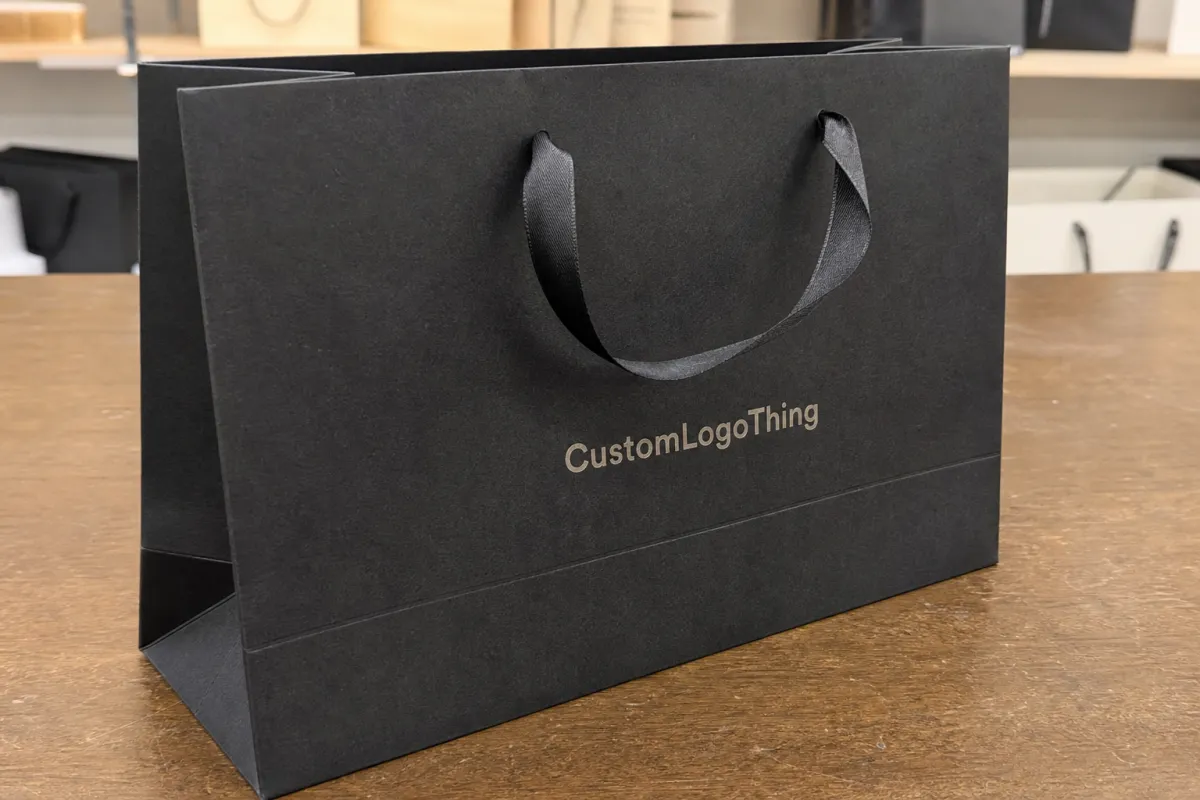
This format combines a paper carrier with ribbon handles and custom printing. The ribbon gives the bag a softer, more gift-ready feel than twisted paper or narrow cord. In salon retail, that matters because many purchases are small, personal, and handed over after a service rather than picked from a shelf.
The best use cases are straightforward: a shampoo and conditioner pair, a retail add-on with a brush or treatment, or a gift card packaged more intentionally. The bag does not need to dominate the sale. It just needs to support the value of the product and feel consistent with the salon’s identity.
It also works well where storage and replenishment matter. Salons usually need packaging that can be stacked near the counter, folded efficiently, and pulled into service quickly. A bag that looks oversized or complicated tends to slow staff down. A bag that fits the common basket cleanly is usually the stronger choice.
How ribbon handles change the carry experience
Ribbon handles change both comfort and perception. A narrow paper loop can work, but ribbon spreads pressure more evenly in the hand and feels more considered for short retail carries. That is useful when the bag contains glass bottles, denser styling products, or a bundled purchase that leaves the salon after a long appointment.
Handle width matters. Around 10-15 mm is often a practical range for boutique retail use. Too thin and the handle can feel flimsy. Too wide and it can look overbuilt on a small format. The right choice depends on product weight, bag size, and how the customer is expected to carry it.
The attachment point matters just as much as the ribbon itself. If the top reinforcement or anchoring is weak, a premium-looking handle will not perform well in use. Ask whether the bag has been specified for the actual fill weight, not just the visual effect.
Ribbon also shifts the tone of the bag toward gift packaging. That can be useful for holiday sets, VIP retail, or launch campaigns. It is less useful if the salon wants a very minimal everyday carrier. The handle should support the brand, not push it into a style that does not fit the rest of the packaging system.
Materials, sizes, and finish choices that shape the bag
Paper stock is the first cost and performance decision. Lightweight coated paper can print sharply, but it may feel too soft for bottle-heavy orders. Heavier board improves stiffness and helps the bag stand on the counter. Kraft gives a more natural look and often fits cleaner, understated salon brands. The best stock depends on how much the bag needs to carry and how premium it should feel.
Size should follow the products. Small formats suit gift cards, minis, or one retail add-on. Medium sizes usually fit the standard salon basket: one or two bottles plus a brush or treatment. Larger bags are better for boxed sets or seasonal gift bundles. If the bag is too large, it can look empty. If it is too small, the gusset can bulge and the base can strain.
Finish changes the visual tone. Matte feels calm and modern. Gloss adds brightness and contrast. Soft-touch lamination usually reads as more premium because the surface feels smoother in hand. Foil is effective on a logo or small accent, but too much of it can make the bag feel promotional rather than retail-ready. Spot UV should stay controlled and purposeful.
Construction details are easy to overlook and hard to fix later. Gusset width affects how the product sits. Base reinforcement matters if the bag carries bottles. Top reinforcement helps keep the opening stable. Handle anchoring determines whether the bag can safely support the intended load. These are specification details, not decoration.
If you are comparing custom ribbon handle paper bags for salon retail bags with other retail packaging options, ask each supplier for the same spec sheet: finished size, paper weight, handle type, print count, finish, and reinforcement. Without that, quotes are hard to compare and the cheaper offer may simply be a lighter build.
For paper sourcing, FSC-certified board may be worth requesting when it fits the brand’s sustainability goals. The FSC system is useful as a sourcing reference, but it does not replace the need to check the actual structure, print quality, and carry performance.
Pricing, MOQ, and quote drivers for salon orders
Price depends on the spec. Size, paper weight, handle material, print coverage, and finish complexity can move the quote quickly. A one-color kraft bag with ribbon handles is a different build from a soft-touch bag with foil, reinforced base, and multiple print layers. Similar-looking samples can sit in very different cost bands.
Order quantity also matters. Unit price usually improves as volume rises, but sample costs, setup, and freight still affect the final landed number. A useful quote should separate production, proofing, packing, and shipping so buyers can compare suppliers on the same basis.
| Bag style | Typical MOQ | Indicative unit range | Best use |
|---|---|---|---|
| Kraft board, one-color print, satin ribbon | 3,000-5,000 | $0.22-$0.36 | Everyday salon retail and refill items |
| Coated paper, full-color print, ribbon handles | 5,000+ | $0.28-$0.48 | Core branded packaging and promotional launches |
| Soft-touch finish, foil logo, reinforced base | 5,000+ | $0.42-$0.78 | Gift sets, VIP purchases, seasonal campaigns |
These figures are directional. Lower-volume salons and independent buyers usually pay more per unit because setup costs are spread over fewer bags. Larger groups may lower unit price, but only if the spec stays consistent. Changing ribbon color, finish, or size can remove much of the savings.
MOQ should also be tied to inventory strategy. If the salon uses several locations, one base size with a controlled ribbon or print variation is often easier to manage than many niche versions. That keeps stock simpler and reduces the risk of slow-moving packaging sitting in storage.
Industry resources can help frame the quote before requests go out. The Packaging & Processing industry resources are useful for understanding common material and format choices. The goal is to ask clearer questions, not to over-spec the project.
Production steps, proofing, and lead times
Most orders follow a predictable path: dieline and artwork review, digital proof, optional physical sample, mass production, inspection, packing, and shipment. Delays usually come from unclear dimensions, missing artwork files, or changes after proofing begins.
Lead time depends on complexity and approval speed. A straightforward bag with standard ribbon handles and ready artwork may take about 12-15 business days after proof approval. More involved jobs with special finishes or exact color matching often need 18-28 business days. If a physical sample is required first, the schedule usually extends further.
For launch dates, work backward from the event instead of the purchase order. That gives room for proof corrections, sample review, and transit time. It also helps avoid pushing production into a busy season where freight and factory schedules tighten.
If the bags need to travel through multiple warehouses or cover long shipping distances, ask how they are packed and whether any transit testing is available. The ISTA protocols can be a useful reference for shipping durability. The point is simple: the bag should arrive with the corners intact, the handles undamaged, and the presentation preserved.
Common mistakes that make salon bags feel less premium
Oversizing is a common mistake. A bag that looks elegant empty may collapse or wrinkle once filled, which makes the packaging feel less deliberate. A better spec fits the common purchase with a little room for tissue or an insert, not a large amount of unused space.
Underbuilt handles are another problem. Thin ribbon can look refined in a rendering and fail in use if the bag is carrying heavier products. The handle, attachment, and reinforcement should be tested together with the actual product mix.
Color drift can also weaken the presentation. Salons often rely on stable neutrals, creams, blacks, blush tones, or metallic accents. If the supplier is not checking against the right reference, the final bag can look slightly off and disrupt the rest of the brand system.
Overcrowded artwork is the last frequent issue. Too much copy or too many decorative elements can make the bag feel like a flyer rather than retail packaging. Most salons do better with one clear logo treatment and a restrained accent than with a crowded front panel.
"If the bag is meant to elevate the sale, every extra line of copy has to earn its place. Otherwise the package starts talking louder than the brand."
The same applies if the salon already uses other custom printed packaging. The bag should support the system, not compete with it. Clean, repeatable packaging usually looks more premium than a design that tries to do too much.
Expert tips for a cleaner spec and better sample review
Start with the most common purchase, not the largest one. Many buyers spec a bag around the biggest possible bundle and end up with extra cost and a loose-looking everyday carrier. A spec centered on the average retail mix is usually easier to store, cheaper to produce, and better in use.
Ask for a carry test with the actual products you sell. Real bottles, real weight, real movement. A sample that looks polished on the counter can still fail if the handle feels uncomfortable or the base distorts when the customer leaves.
Keep the structure stable and vary only the seasonal layer where possible. Ribbon color, a small insert, or a limited print accent can refresh the bag without forcing a new build every time. That helps with MOQ, simplifies purchasing, and keeps the packaging consistent across branches.
During sample review, focus on five checks: handle attachment, board stiffness, edge finish, print accuracy, and how the bag reads under salon lighting. Matte black, cream, and metallic finishes can look different under warm interior light than they do on screen, so the sample matters.
The most useful review question is simple: does the bag still feel premium after it has been carried, set down, and opened? That is the real test. Empty presentation alone does not tell you whether the bag will work in service.
What to prepare before you request samples or a quote
Measure the products that will go inside the bag before you ask for pricing. Record bottle height, bottle width, box depth, and total fill weight. Add space for tissue, inserts, or a small card so the bag is not sized too tightly.
Then gather the details that affect cost and lead time:
- Logo files in vector format, if available
- Brand colors with Pantone references or clear visual targets
- Preferred bag size and target quantity
- Finish preferences such as matte, gloss, soft-touch, or foil
- Any need for FSC paper, reinforced base, or special ribbon color
If the salon has more than one retail tier, it can help to request two builds: a standard version for everyday sales and a premium version for launches or VIP gifting. That approach is often more practical than forcing one spec to cover every use case.
Also explain how the bag will be used. Will it be carried a short distance by hand? Will it sit in a car with heavier items? Will it be packed with glass bottles or bundled retail sets? Those details help the supplier recommend the right construction and reduce the risk of a bag that looks right but performs poorly.
Before you approve custom ribbon handle paper bags for salon retail bags, confirm three things: the size fits the most common product mix, the handle is secure in motion, and the visual treatment matches the salon’s other branded packaging. If those three points hold, the bag is doing its job.
What size custom ribbon handle paper bags work best for salon retail kits?
Start with the products you sell most often, then size the bag to fit the tallest item plus a little headroom for tissue or inserts. Medium formats usually work best for mixed retail bundles, while smaller bags suit gift cards, minis, or single add-ons. If you sell both minis and boxed kits, two sizes are often better than forcing one bag to do everything.
How much do ribbon handle salon retail bags usually cost per unit?
Unit price depends on size, paper stock, print coverage, handle type, and finish, so similar-looking bags can price very differently. Higher quantities usually lower the per-bag cost, but setup, sampling, and freight can still change the final landed number. Ask for a quote that separates manufacturing from shipping so you can compare suppliers cleanly.
What turnaround time should I expect for custom salon paper bags?
Timing usually depends on artwork readiness, proof approval speed, and whether you need a physical sample before production. Standard production can move faster when the size and handle style are simple and the print spec is locked early. Plan extra time if your order needs special finishes, exact color matching, or a busy-season delivery window.
Can ribbon handle paper bags carry bottles and heavier retail products?
Yes, if the paper weight, base construction, and handle attachment are specified for the product load. Heavier items need reinforced tops and a bag size that prevents bottles from leaning or punching through the base. Ask for a real-world carry test using your actual product mix before you approve the final spec.
Which finishes make salon retail bags look premium without overspending?
A clean matte or soft-touch finish often feels upscale without the expense of layered decorative effects. Selective upgrades like foil on the logo or a richer ribbon color can create impact without covering the whole bag in special processing. Match the finish to your brand position: quiet luxury, bright retail energy, or seasonal gifting.

