The smallest part of a wine gift often does the most work. Custom twisted Handle Paper Bags for wine shop gifting are the first thing a customer sees, carries, and hands over, so the bag is not filler; it is part of the sale. That matters in a wine shop because presentation can quietly push a shopper from a single bottle to a better bottle, a tasting note card, or one more add-on at the counter.
The twisted-handle format sits in a useful middle ground. It looks more deliberate than a thin takeaway sack, feels sturdier in the hand, and gives the shop a clean surface for branding without turning the purchase into a whole wrapping project. For busy counters, that combination saves time and keeps the handoff looking considered instead of improvised.
There is also a practical side that buyers sometimes underestimate. Wine gifting happens in small bursts: holidays, hostess gifts, birthday dinners, corporate drop-offs, and last-minute errands on the way to dinner. Packaging has to support those moments without slowing the staff down. A good bag does that quietly. It helps the bottle leave the store looking ready to give, not just ready to carry.
Why custom twisted handle paper bags for wine shop gifting work
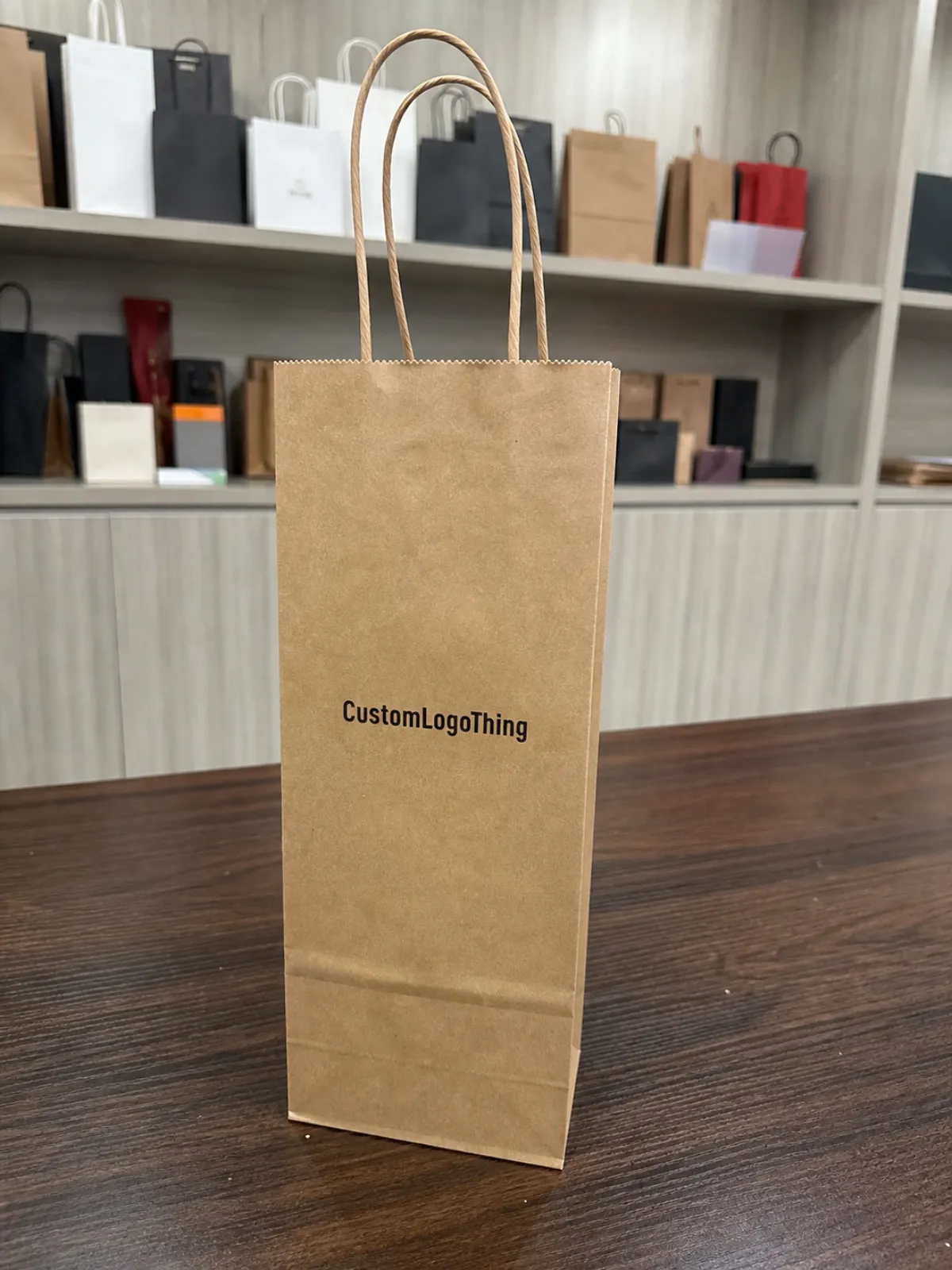
A wine shopper usually judges the gift before the bottle is even visible. The bag sets the first cue: premium, casual, seasonal, or corporate. If the carryout looks flimsy, the whole experience drops a step, even when the bottle inside is excellent. A clean, well-proportioned bag changes that first impression fast.
The format works because it balances utility and presentation. Twisted paper handles usually feel more secure than a flat, unreinforced grip, and the shape gives the bag a more polished profile at the counter. For wine shops, that means a customer can walk out with one bottle, tissue wrap, a note card, and maybe a small chocolate bar or opener without asking staff to build a separate gift box or improvise wrapping on the spot.
Speed matters more than many packaging buyers expect. Holiday gifting, tasting events, corporate orders, and add-on sales all happen in the same few square feet. If the packaging already looks gift-ready, the team spends less time fixing the presentation and more time serving the next customer. That difference is small on a single order and very real across a busy week.
Price also plays a part. A custom bag does not need to look expensive to feel premium, and it does not need ornate finishing to lift the purchase. In many retail settings, the right proportions, a disciplined print layout, and a clean paper finish do more for perceived value than a crowded graphic treatment. That is one reason custom twisted Handle Paper Bags for wine shop gifting remain such a useful choice: they can support the sale without overpowering the product.
How the bag structure supports bottles in transit
Wine bottles are awkward cargo. They are heavy for their size, the weight sits low, and the glass body concentrates force at the base. A well-built bag handles that with three basics working together: reinforced handles, a firm base, and gusseted sides that keep the bottle upright instead of letting it lean into the paper wall.
Bottle shape changes the stress pattern. A standard Bordeaux bottle sits differently from a wider Burgundy bottle, and sparkling wine bottles often bring more shoulder bulk and more weight near the bottom. Magnums push the structure harder still. If the bag is sized for a slim bottle but used for a broad shoulder or a taller neck, the carry feel gets awkward quickly. The bottle can rub the side seam, tilt in transit, or make the opening look strained.
Buyers should ask about the bottom structure, not just the outside size. A base board, inserted bottom, or reinforced fold can help the bag hold shape, especially for higher-value bottles. Paper stock matters too. Lighter stock can work for short carryouts or promotional use, but heavier paper gives better confidence for gift-giving. For a premium wine bag, a common range is 150-200 gsm, with stronger builds used for heavier bottles or retail programs that need more shelf life.
The opening has to work for staff, not just for the render. If the mouth is too tight, the team ends up fighting the packaging. If it is too loose, the bottle shifts and the presentation looks careless. A practical bag gives enough opening width to pack fast during a line, enough stiffness to stand upright on the counter, and enough margin to accommodate tissue or a card without over-stressing the handles.
"Test the actual bottle, not the idea of the bottle. A bag can look right on paper and still fail once tissue, a card, and the real glass weight are inside."
That test should include the full gift build, not just the bottle alone. Condensation, neck tags, ribbon, and closures all change the fit. A chilled bottle wrapped for gifting behaves differently from a room-temperature bottle in a plain sack. The best suppliers usually encourage a trial with the exact bottle style before volume production, because a package that passes the catalog stage can still misbehave on the floor.
For retailers building a paper-based packaging system, the wine bag should sit comfortably beside the rest of the store’s materials. A shop that already sources Custom Packaging Products can often align the bag with tasting kits, labels, inserts, and seasonal wraps so the shelf story stays coherent. That kind of consistency matters more than many buyers realize; it keeps the store from looking like a stack of unrelated components.
For sustainability signals, ask for FSC-certified paper where possible. The Forest Stewardship Council explains certification and chain-of-custody basics clearly at fsc.org. That does not solve every sourcing question, but it gives buyers a recognizable reference point for paper origin and responsible forestry claims.
Sizing, stock, and print choices that shape the buyer experience
Size starts with the bottle, but it should not stop there. A useful spec sheet covers bottle height, shoulder width, headroom for tissue or a note card, and whether the shop needs a single-bottle format or something wider for two bottles. A standard 750 ml bottle often fits best in a bag with extra height and enough side clearance to avoid scuffing the label during carry.
In practical terms, many wine shops land on a single-bottle bag sized to leave a little breathing room above the closure and around the shoulders. That margin helps the bag feel relaxed rather than stretched. It also makes it easier for staff to add a small card, a ribbon, or a tasting insert without rethinking the package every time.
Paper stock changes both feel and pricing. A lighter kraft stock works well for rustic or everyday gifts. Heavier matte or art paper creates a more refined look and usually pairs better with premium labels. Some buyers prefer uncoated stock because it has more grip and a natural finish; others choose gloss or soft-touch lamination because it makes the bag feel more deliberate in the hand. That is not just a cosmetic choice. Finish changes how the bag sits under light, how it resists fingerprints, and how the brand reads from across the room.
Handle choice matters more than people expect. Twisted paper handles can be left natural, dyed to match the artwork, or paired with a restrained accent color. A black handle on a cream bag reads differently from a kraft handle on a white bag. Those small decisions affect package branding more than a lot of buyers realize. If the logo is elegant but the handle looks mismatched, the whole run loses some of its authority.
Print should support the gift, not crowd it. A single-color logo, a foil stamp, or a limited palette often looks better than a busy full-wrap design on a wine gift bag. In a retail setting, negative space has value. It gives the bottle room to feel premium and leaves space for a seasonal sticker, neck tag, or handwritten card. If the shop wants flexibility, a blank label area can be useful because it lets staff personalize the bag without changing the artwork.
It also helps to think about the paper surface in the store environment. Wine shops often deal with chilled bottles, coolers, and occasional condensation. A stock with enough surface strength to handle light moisture, while still looking clean on the shelf, is usually a better fit than a delicate coating that scratches easily. Buyers who test a sample under normal lighting and with a real bottle get a much clearer view of the final result than buyers who judge from a flat mockup.
Here is a simple way to compare common choices:
| Bag style | Typical use | Approx. unit cost at 5,000 pcs | Notes |
|---|---|---|---|
| Light kraft twisted-handle bag | Everyday carryout and value gifting | $0.18-$0.28 | Best for simple branding and lighter bottles |
| Heavier matte paper bag | Premium gifting and seasonal sales | $0.26-$0.42 | Better hand feel, stronger shelf presence |
| Soft-touch or foil-accent bag | Upscale gifts and corporate orders | $0.35-$0.80 | Higher finishing cost, stronger luxury cue |
If you are comparing bag specs alongside other retail packaging choices, it helps to review the full range of paper bags and matching branded packaging before locking in artwork. That makes it easier to keep the wine bag consistent with tasting kits, gift cards, and any custom printed boxes the store may already use.
Pricing, MOQ, and unit cost drivers for wine-shop orders
Unit cost is usually driven by five things: bag size, paper weight, print complexity, finish, and quantity. The larger the bag and the heavier the paper, the more material goes into each unit. Add foil, spot color, or a full-wrap design, and the cost climbs again. That is normal, not a sign of bad sourcing.
MOQ, or minimum order quantity, changes the math directly. Smaller runs cost more per bag because setup gets spread over fewer units. Larger runs bring the price down, but they ask for more storage space and more cash upfront. For a wine shop, the right quantity usually depends on seasonal demand. A store that sells heavily during the holidays may justify a bigger run; a smaller neighborhood shop may be better off with a modest order and a reprint later.
There are also hidden costs buyers sometimes miss. Freight can matter a lot, especially if the order is bulky. Proofing, plates, or setup charges may be separate. Rush fees can sting when a holiday launch is closer than expected. Inserts, dividers, or custom tissue add cost too. The landed price is the number that matters, not the headline unit price.
As a rough planning guide, small-volume custom runs often carry a noticeably higher per-unit price than orders in the 5,000-piece range, sometimes by 20-40 percent or more depending on print and finish. That gap is why it pays to think about sell-through before ordering. A lower unit price only helps if the store can move the inventory before the design goes stale or the seasonal window closes.
It also helps to think in labor terms, not only material terms. A bag that cuts one minute of wrapping time per sale can save meaningful staff time over a month. It can also improve the customer experience enough to lift attachment rates on cards, accessories, or second bottles. Packaging design should be read as part of the sales system, not just as decoration.
For teams that want a basic sourcing benchmark, the paper and packaging sector’s trade groups often publish useful context on material performance and sustainability expectations. The ISTA transit testing standards are also useful if the bags will ship mixed with other gift components or travel inside e-commerce cartons. That kind of testing is not glamorous, but it gives buyers a better sense of how packaging holds up outside the showroom.
Production steps, proofing, and turnaround timing
The production path is straightforward, but the details matter. Start with the bottle dimensions and the gift scenario. Are you packing a single 750 ml bottle, a sparkling bottle, or a wider bottle for premium gifting? Then finalize artwork, confirm the paper stock and handle style, approve a digital proof or physical sample, and move into production and shipping. Each step sounds simple until a small mismatch forces a revision.
Most delays come from avoidable issues. Logos supplied in low-resolution files slow proofing. Color corrections add back-and-forth. Changes to the bag size after proof approval can trigger a new setup. If the shop has not settled on whether the bag should hold one bottle, two bottles, or a bottle plus inserts, the supplier ends up guessing, and guessing is expensive.
Quality control should be specific, not vague. A practical factory or sourcing check usually includes handle pull testing, bottom glue inspection, print registration review, carton packing checks, and a quick fit test with the actual bottle style. Those checks do not guarantee perfection, but they catch the failures that matter most in retail: splitting handles, weak bottoms, off-center artwork, and cartons that crush the bag shape before it reaches the shop.
Turnaround depends on the level of customization. Stock-style customization with a simple print can often move faster than a fully custom build with special finishes. A realistic window for many custom orders is 12-15 business days after proof approval, with more complex work taking longer. Rush orders are possible in some cases, but they usually raise the price and reduce the room for revisions.
If the bags are tied to holidays, tasting events, or corporate gifting, build a buffer. It is better to receive inventory early and store it than to miss a sales spike waiting on final approval. Wine gifting is seasonal and visible; late packaging often means the team falls back to generic stock just when presentation matters most.
From a standards perspective, ask whether the supplier can support basic quality checks and shipment discipline. For paper sourcing, FSC is still the clearest external reference point. For freight durability, ask how the bags are packed and whether the carton configuration protects handles and corners during transit. Those questions sound simple, but they save headaches.
Common ordering mistakes that weaken the gift presentation
The most common mistake is undersizing. If the bag is too short, the bottle sits too high and the opening feels strained once tissue or a card is added. If it is too narrow, the bottle scrapes the sides and the gift looks squeezed rather than curated. Buyers often notice this only after the first sample arrives, which is why the test build matters so much.
Handle selection is another weak spot. A beautiful bag can lose credibility quickly if the handles stretch, fray, or look too light for the bottle weight. Twisted handles are popular because they strike a good balance between strength and appearance, but they still need to match the bottle class. A premium bottle deserves a premium carry feel. That is not snobbery; it is consistency.
Overprinting can be just as damaging as under-branding. Too much artwork makes the bag feel crowded and can flatten the luxury cue. Too little branding leaves the bag looking generic on the shelf, which weakens recall. The sweet spot is usually a clean logo placement, a controlled palette, and enough white space or kraft texture to let the bottle do the talking.
Another mistake is testing the bag alone instead of the full gift. Real gifting includes tissue, ribbon, a bottle neck tag, maybe a card, and sometimes condensation from chilled wine. Those details can alter fit and handling. If a shopper reaches the counter with a wet bottle and a last-minute note card, the packaging has to keep up. That is where thoughtful retail packaging earns its keep.
There is also a simple commercial mistake: buying to the ideal bottle instead of the real sales mix. A bag designed around a prestige label might look excellent, but if most gifting in the shop sits in the standard 750 ml range under a certain price point, the spec can be too expensive. A plain bag may save pennies but fail to support higher-margin upsells. Good buyers match the packaging to the actual basket, not the fantasy version of it.
Expert setup tips and next steps for your first run
Start with a short spec sheet. It should list bottle dimensions, paper weight, target quantity, print colors, handle preference, and the seasonal window you are planning around. Keep it simple, but keep it exact. That one page makes quotation cleaner and usually cuts down on revision time later.
Ask for a sample or mockup before committing to volume. In a wine shop, the real test is not whether the bag looks attractive in a render. It is whether the bottle slides in cleanly, the handle feels comfortable, and the full gift reads well under store lighting. A sample also lets you compare finishes next to actual labels and shelf signage, which is where many packaging decisions are won or lost.
Match the palette to the bottles you sell most often. If your top sellers use deep burgundy labels, a warm neutral bag may support them better than a high-contrast graphic treatment. If the shop does a lot of corporate gifting, a quieter, more formal design can work better than a playful seasonal print. Small visual choices shape buyer confidence more than many shops expect.
Keep an eye on the inventory pattern too. Some shops need a broad base style that works all year, then a seasonal print for December and special events. Others do better with one clean branded format that can be dressed up with stickers or tags as needed. The right answer depends on storage space, labor, and how often the team wants to restock packaging.
Here is a practical ordering sequence:
- Measure the bottles you sell most.
- Choose the bag size and paper weight.
- Confirm artwork and handle color.
- Request a proof or sample.
- Review one complete gift build.
- Place the full order only after fit and finish are confirmed.
That is the cleanest way to get Custom Twisted Handle Paper Bags for wine shop gifting right the first time. If the bag is treated as part of the sale instead of just the carryout, the result is better presentation, fewer packing surprises, and a more consistent brand story at the counter.
Common questions
What size twisted handle wine gift bag fits a standard 750 ml bottle?
Most standard 750 ml bottles fit best in a single-bottle bag with extra height and a little side clearance. Check the shoulder width and total bottle height before ordering, because sparkling and artisanal bottles can run wider or taller than expected. Leave room for tissue, a note card, or a neck tag if the bag is meant for gifting rather than simple carryout.
Are custom twisted handle paper bags strong enough for premium wine bottles?
Yes, if the paper weight, handle reinforcement, and bottom structure are matched to the bottle weight. Premium bottles usually need a firmer base and stronger handles than standard Retail Paper Bags. A quick test with the actual bottle is the best way to confirm comfort, carry strength, and seam durability.
How many custom wine gift bags should a shop order at MOQ?
Start with your expected weekly bottle-gift sales, then add a seasonal buffer for holidays and events. If your shop runs promotions or corporate gifting, order above baseline so you do not get pushed into rush pricing later. The right quantity balances storage space, cash flow, and the price break at the next tier.
What drives the price of custom wine shop paper bags the most?
Bag size, paper stock, print colors, and finish are usually the biggest price drivers. Freight, setup charges, and rush timelines can change the total landed cost more than buyers expect. Higher quantities usually lower the unit price, but only if the shop can use the inventory within a reasonable selling window.
How long does turnaround usually take for custom wine gifting bags?
Turnaround depends on whether the order uses standard specs, new artwork, or a fully custom structure. Proofing and revisions can add days, so artwork should be ready before the quote is approved. Plan for extra time during peak gifting periods so the finished bags arrive before your busiest sales weeks.

