Most restaurant buyers do not choose custom twisted handle paper bags for restaurant takeaway buyers because the branding looks attractive on a shelf. They choose them because weak carriers fail at pickup, during courier handoff, and in a customer’s car. If a bag collapses under two noodle boxes and a drink, the logo is the least of the problem.
In practice, the right bag is part of service equipment. It keeps hot food upright, reduces repacks, makes counter handoff cleaner, and cuts down on those awkward moments when staff have to ask whether a stronger bag is available. If you are comparing options for Custom Packaging Products, start with structure first and artwork second.
That order matters more than many buyers expect. A clean print on a bag that tears at the seam is still a failure. A plain bag that holds weight, stays square, and survives the trip can do more for customer perception than a flashy carrier that folds under pressure.
Why twisted-handle bags outperform weak takeaway carriers
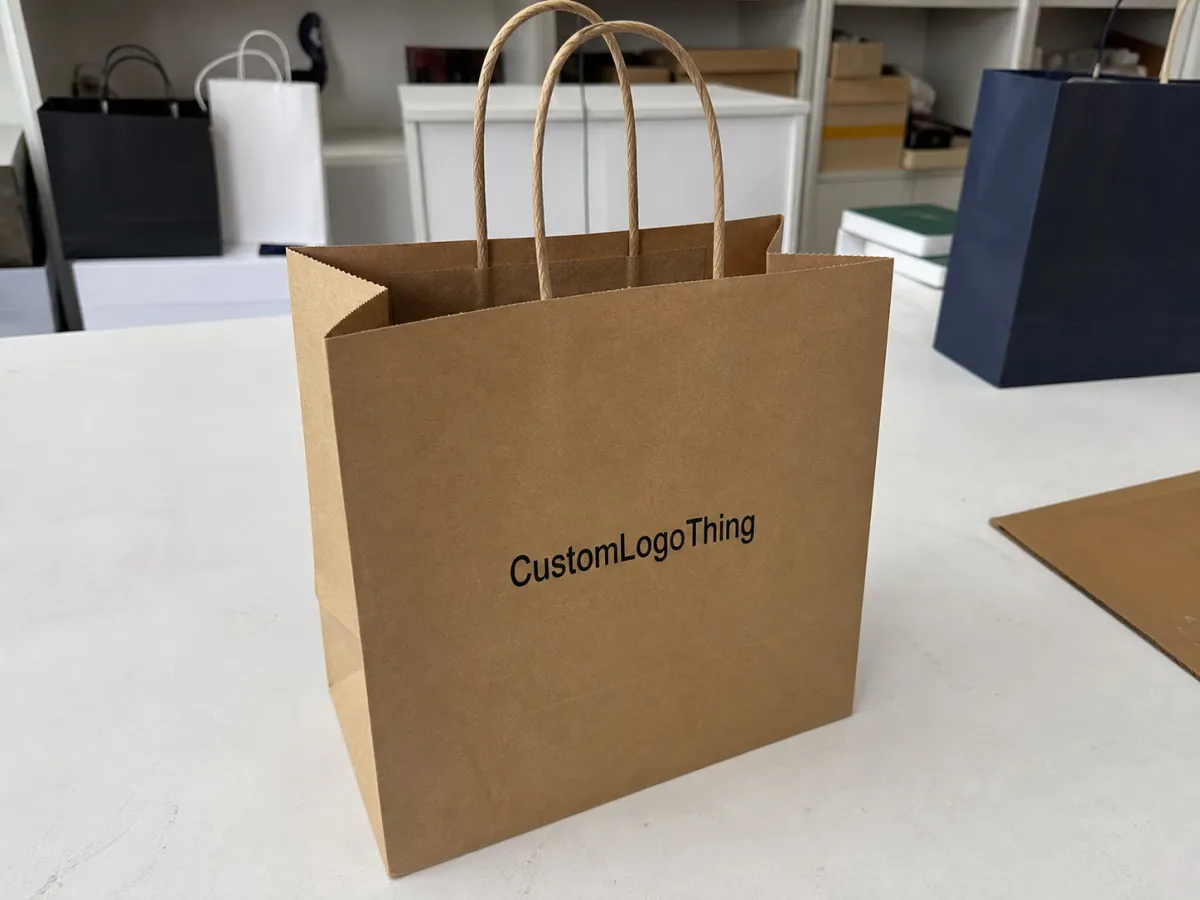
Restaurant takeaway is hard on packaging. Bags are lifted fast, stacked unevenly, and sometimes carried by one handle while a customer holds a phone or keys in the other hand. A good-looking carrier that tears after one block of walking is expensive litter. Twisted-handle bags hold up better because the handle shape spreads load across a wider anchor area, and the paper body usually has more structure than thin flat-handle alternatives.
The weak points are familiar. The base sags under stacked containers. Grease softens the bottom panel. Handles pull through when a courier lifts a heavy combo order one-handed. The bag tilts because a drink cup sits higher than the meal box. None of that is unusual; it is the normal stress pattern for takeaway and delivery.
That is why custom takeaway bags are usually treated as part of the operating system rather than an accessory. Staff pack faster when they trust the carrier. Drivers spend less time balancing orders. Customers receive food that looks like it was packed with some care, which matters even before they notice the branding.
Branding still matters, but it should be honest about its role. It signals care and consistency. It does not compensate for poor structure. A well-printed bag that fails under load sends the opposite message from what most restaurant packaging programs are trying to communicate.
For operators with high takeaway volume, the bag also affects labor. If staff do not trust the carrier, they double-bag more often, move slower, and spend time checking whether the bottom is holding. Stronger construction removes a small but constant source of friction. Across a busy lunch rush, that difference is real.
There is also a practical size issue. A bag that is too narrow forces the top to pinch, which can crush lids. One that is too tall without enough base support can sway. The best-performing carrier matches the actual order mix: one or two meal boxes, maybe a sauce pack, maybe one or two drinks, plus a little room for steam and movement. If the orders are heavier than that, the spec has to move up accordingly.
A bag should survive the order first and carry the branding second. Structure earns the space on the front panel.
What to specify before you request a quote
If the request is vague, the quote will be vague too. That is how buyers end up comparing a few similar-looking bags that are actually built very differently. A solid brief should describe the real meal load, not just the finished dimensions on paper.
Start with the order profile. Measure the widest container first, then note the tallest item and the usual combination of items in a standard takeaway order. A burger box, fries, and a drink need a different footprint from a curry tray, rice box, and dessert cup. If the bag needs extra headroom for steam or a fold-over closure, say so early. It saves time and avoids redesign later.
Next, choose the paper format. Kraft is the common choice when you want a natural, sturdy look with decent stiffness. White paper gives brighter print reproduction and works better for cleaner, more minimal branded packaging. Treated or coated options become useful when grease resistance is a genuine concern, but the exact coating and finish should be confirmed, not assumed. Some surfaces print well but behave differently once they meet heat, condensation, or oil.
Handle and reinforcement details should be spelled out clearly. Twisted paper handles are standard for this kind of bag, but handle color, bond method, top fold, gusset depth, and bottom board requirements should still be written into the specification. If your orders regularly include drinks or stacked containers, mention that. One sentence can change the whole construction.
Print requirements need the same level of precision. State whether you need one-color logo printing, full-panel artwork, inside printing, barcode space, or blank areas around glue seams. Artwork that crosses a fold or lands on a handle anchor often looks fine on a screen and poor on the finished bag. Packaging design is not a place for guesswork.
Useful spec-sheet items include:
- Bag size: width x gusset x height, plus internal clearance for lids and cup tops.
- Paper weight: target GSM or equivalent stock description.
- Handle style: twisted paper handles, handle color, and bond method.
- Print setup: number of colors, artwork coverage, and Pantone targets.
- Volume: monthly usage and first-order quantity.
- Delivery needs: warehouse, store, or regional distribution point.
That level of detail helps the factory quote faster and reduces the odds of small changes later. It also makes the bag feel like part of the menu operation, not a generic afterthought.
Paper, handles, and reinforcement details that affect performance
Paper weight is not a vanity metric. It affects load-bearing, stiffness, scuff resistance, and how the bag behaves once food settles into the bottom panel. Light-duty stock can work for dry bakery items or small lunch sets. Heavier takeaway orders need stronger stock and a more rigid base. That is the plain answer, and it is the one that saves the most trouble later.
For many restaurant programs, the useful range sits roughly between 100gsm and 180gsm, depending on bag size and load. Smaller bags for lighter meals may sit at the lower end. Larger takeaway carriers with stacked boxes and drinks often need thicker stock or a reinforced bottom board. Thickness helps, but it is not the whole story. A well-built midweight bag can outperform a poorly made heavy one if the folds, glue, and handle anchors are done properly.
Twisted handles are popular because they spread load better than flat ties and are comfortable enough for short carry distances. Still, handle bond strength matters as much as handle shape. A strong handle on a weak anchor point still fails. Buyers should ask how the handle is glued, how wide the anchor pad is, and whether the top fold adds extra holding strength.
Reinforcement is where many ordering mistakes happen. The top edge may need a double fold for stiffness. The bottom panel may need extra glue coverage or a pasted insert. Gusset depth affects how square the bag sits when packed. If your kitchen packs fast during lunch rush, the bag also needs to open cleanly and stay open long enough for staff to place containers without fighting the paper.
Here is a practical way to think about the load level:
- Light-duty: dry items, bakery, pastry, or single-container meals.
- Standard takeaway: one or two meal boxes, small sides, and lighter drinks.
- Heavy takeaway: stacked meals, multiple drinks, sauces, and delivery orders.
If you need proof standards, ask for load-testing references or request a sample run that matches your menu mix. For transit handling, a method inspired by ISTA testing is a sensible benchmark. For recycled or certified paper claims, FSC certification guidance is worth checking instead of trusting a vague label.
The goal is simple: the bag should match the service load, not the mood board. That is the difference between attractive packaging and packaging that earns its keep.
Pricing, MOQ, and unit cost: what drives the quote
The quote is driven by a handful of variables, most of them predictable. Size, paper grade, print colors, handle style, reinforcement level, and whether the bag uses standard tooling or a custom die-line all affect cost. The broader the spec, the more the price moves.
For restaurant takeaway bags, rough pricing often lands in these ranges at common order volumes:
| Spec level | Typical MOQ | Indicative unit price | What you are usually getting |
|---|---|---|---|
| Basic kraft, one-color print | 3,000-5,000 pcs | $0.18-$0.28 | Standard twisted handles, simple logo, basic bottom reinforcement |
| Mid-range branded carrier | 5,000-10,000 pcs | $0.24-$0.40 | Heavier paper, stronger glue zones, better print coverage, cleaner finish |
| Premium food-service bag | 10,000+ pcs | $0.35-$0.60 | Thicker stock, broader print coverage, custom sizing, extra reinforcement |
Those figures move with freight, paper markets, artwork complexity, and destination. Even so, they give buyers a workable starting point. If a quote lands far below that range, ask what has been cut. Usually it is paper weight, reinforcement, print quality, or all three. Cheap is only cheap if the bag survives service.
MOQ exists because setup work is fixed. Plate or print prep, die-line prep, machine setup, and first-run checks cost about the same whether you order 2,000 bags or 20,000. That is why larger runs usually bring the unit price down quickly. One-size orders are easier to produce than several SKUs, and one-color print is simpler than full-coverage art.
Watch the hidden costs too. Samples may be charged. Freight can swing a quote more than expected. Rush fees are common if the timeline is tight. Artwork revisions take time and can trigger another proof cycle. Regional shipping can erase a very low factory price, which is why landed cost matters more than the number on the first line of the quotation.
From a buyer’s point of view, the smartest comparison is the full system: factory price, freight, packing format, carton count, and re-order terms. That is how branded packaging stays workable instead of becoming a procurement problem.
Process, lead time, and delivery workflow after approval
A clean approval path saves money. A messy one burns it. The normal workflow is straightforward: inquiry, quote, spec confirmation, artwork check, sample sign-off, production, inspection, packing, and shipping. Each step matters because small misunderstandings compound quickly once the order enters production.
Lead time is usually a range, not a promise carved in stone. Samples often take a few working days if the specification is simple and the line is not backed up. Standard production commonly takes a few weeks after artwork approval. Rush work is possible in some cases, but it usually narrows paper choices, print options, or finishing flexibility.
Three things slow orders down more than anything else:
- Missing dielines or unclear artwork files.
- Unconfirmed Pantone targets and color expectations.
- Last-minute size changes after the proof stage.
There is a reason packaging teams push for one final proof. Too many opinions create delay, then someone asks for a change that resets the schedule. One confirmed artwork file, one carton count, and one shipping window are usually enough. More than that, and the timeline starts drifting.
For food-service buyers, the schedule also has to fit store openings, menu launches, and seasonal demand. If the bag is part of a new rollout, order the sample early enough to test it with real containers. A photo proof is useful. A packed sample is better. A loaded sample is the only version that tells the truth.
Most suppliers can explain the production sequence clearly if you ask for it. If they cannot, that is a warning sign. The process should include incoming paper checks, print verification, handle bonding checks, and carton inspection before dispatch. You are buying finished packaging, not hopeful paper.
Print quality, sustainability, and food-service testing
Print quality is not only about sharp logos. It is about scuff resistance, color consistency, alignment, and whether the printed surface still looks decent after the bag has been handled by a cashier, a driver, and a customer with one hand full of keys. If the logo smears, rubs off, or lands crooked across a fold, the bag loses value fast.
Color control matters more than many buyers expect. One production run can look bright and clean, while another comes out a little dull if the paper stock changes or the print setup drifts. If brand consistency matters, ask for Pantone matching, target tolerances, and a pre-production proof. That is basic packaging discipline, not extra fuss.
Sustainability claims need the same level of scrutiny. Recycled content helps, but only if the bag still performs under real restaurant loads. A bag that uses greener paper but fails on hot sauce containers and wet bottoms is not an improvement. Food-service packaging should balance material choice, strength, and practical recovery options.
Buyers should also think about the service environment. Hot containers create steam. Cold drinks create condensation. Courier stacking adds pressure on the handles and top fold. If the bag handles all three conditions, it is doing the job. If it only works in a showroom, the spec is too soft.
Useful quality checks include:
- Handle pull testing for bond strength and anchor durability.
- Base load testing with the actual containers your kitchen uses.
- Adhesive inspection on the bottom seam and side gussets.
- Visual review under warehouse lighting, not only on a screen.
Odor is another detail that gets missed until it becomes a complaint. Some inks and coatings are fine in the factory but noticeable in a closed car with hot food. If the bags are for direct takeaway, ask about low-odor inks or finishing notes. That sort of issue never appears in the artwork file, but customers notice it quickly.
For buyers comparing bags with custom printed boxes as part of a broader packaging program, consistency matters more than novelty. The bag should support the same brand promise as the box: sturdy, clean, and easy to trust. If one item feels premium and the other feels thin, the customer notices the mismatch immediately.
How to request samples, compare quotes, and place an order
Start with a tight spec sheet. Give the supplier the bag size, paper weight, handle color, print count, estimated monthly volume, and delivery location. If you know the meal mix, include that too. A supplier can quote faster and more accurately when the order is described like a real operation instead of a wish list.
Request samples or a pre-production proof before you commit. Then test the bag with your actual containers. Put in the largest box, the drink, and the awkward add-on item that always causes trouble. That is the version that matters. A generic sample photo tells you very little about how the bag behaves in your service line.
When comparing quotes, look at the full landed cost. Unit price matters, but freight, packing, and re-order terms matter too. A slightly higher factory price can still win if the carton count is better, the packing is cleaner, or the shipping lane is cheaper. Low quote, high freight, and slow delivery is a common trap.
Confirm the carton count before you place the order. It sounds basic because it is basic. Yet it is one of the easiest ways to avoid shortages, storage problems, and awkward partial shipments. Small checks up front save real money later.
A simple decision path usually works best:
- Pick the right size for the order mix.
- Choose paper weight based on actual load.
- Confirm handles and reinforcement.
- Approve artwork and proof.
- Test the sample with your food containers.
- Place the first run only after it passes handling checks.
If your business is scaling takeaway volume, this is the point to standardize. The right bag helps packing speed, improves delivery reliability, and supports package branding without turning procurement into a mess. That is exactly why custom twisted Handle Paper Bags for restaurant takeaway buyers are worth specifying properly instead of buying the cheapest carton on offer.
Once the spec is stable, repeat orders become easier to forecast. The factory knows the construction, staff know the pack-out, and customers keep getting food in a bag that actually earns the logo on it.
FAQ
What size custom twisted handle paper bags fit standard takeaway boxes?
Measure the widest container first, then add clearance so the lid does not scrape the sidewall or press into the handle area. Match bag depth to the tallest item in the order, not just the lunch box, because drinks and dessert cups usually create the sizing problem. Test the packed bag with the real order mix before placing a large run, especially if you sell combo meals or multi-item delivery packs.
How much weight can twisted-handle takeaway paper bags carry?
Safe capacity depends on paper weight, bottom reinforcement, handle bond, and how evenly the load sits inside the bag. Standard restaurant bags often handle moderate takeaway loads well, but heavier deliveries need thicker stock and stronger base construction. If you regularly ship liquids, stacked boxes, or shared meals, ask for load testing instead of relying on a generic weight claim.
What is the usual MOQ for custom twisted handle paper bags?
MOQ changes with size, print count, and paper spec, but custom runs usually start in the low thousands rather than carton quantities. Simple one-color orders are easier to batch than complex multicolor work, so they often allow lower entry quantities. If you need multiple sizes, ask for a combined MOQ strategy so you do not pay separate setup costs on every SKU.
How long does production take after artwork approval?
Samples typically move faster than mass production, but final timing depends on paper stock, print complexity, and the current factory queue. Once artwork is approved, standard production often takes a few weeks, then freight time is added on top of that. Rush orders can shorten the schedule, but they usually cost more and may limit finish choices or packaging options.
Can restaurant takeaway paper bags be printed on both sides?
Yes, if the artwork budget and order size justify it, but double-sided print increases setup and production cost. Keep important artwork away from handle glue zones and folds so the logo does not get cut off or distorted. If the bag is used for fast service, a clean front-panel print often gives better value than filling every surface.

