Custom Slider Lock Apparel Bags for Ecommerce Brands
With apparel packaging, the part customers touch first often leaves the strongest impression. Custom Slider Lock Clothing Bags for ecommerce apparel brands do that quietly and effectively. The closure gives a small but noticeable sense of order, and the clear film frames the garment before the customer ever opens the shipping carton. That matters for folded tees, matching sets, socks, loungewear, and accessories that need to look neat after packing and still arrive in usable shape.
A slider lock bag is more than a simple sleeve with a logo. It is a resealable poly bag with a track closure and a movable slider that makes sealing easier than a hand-pressed zipper strip. For apparel teams, that means less guesswork at the table, fewer open bags in transit, and a better chance that the product inside looks as intended on arrival. The format sits between basic overbagging and more formal retail packaging, which is why it fits ecommerce so well.
That middle ground is useful. The bag protects the fold, keeps bundled items together, and supports brand presentation without forcing the packing line to slow down. The tradeoff is that the bag has to be chosen carefully. Size, film gauge, closure type, and finish all influence how it performs in real use. A nice mockup can still fail if the bag is too loose, too stiff, or awkward for fulfillment staff.
Why the format works for apparel fulfillment
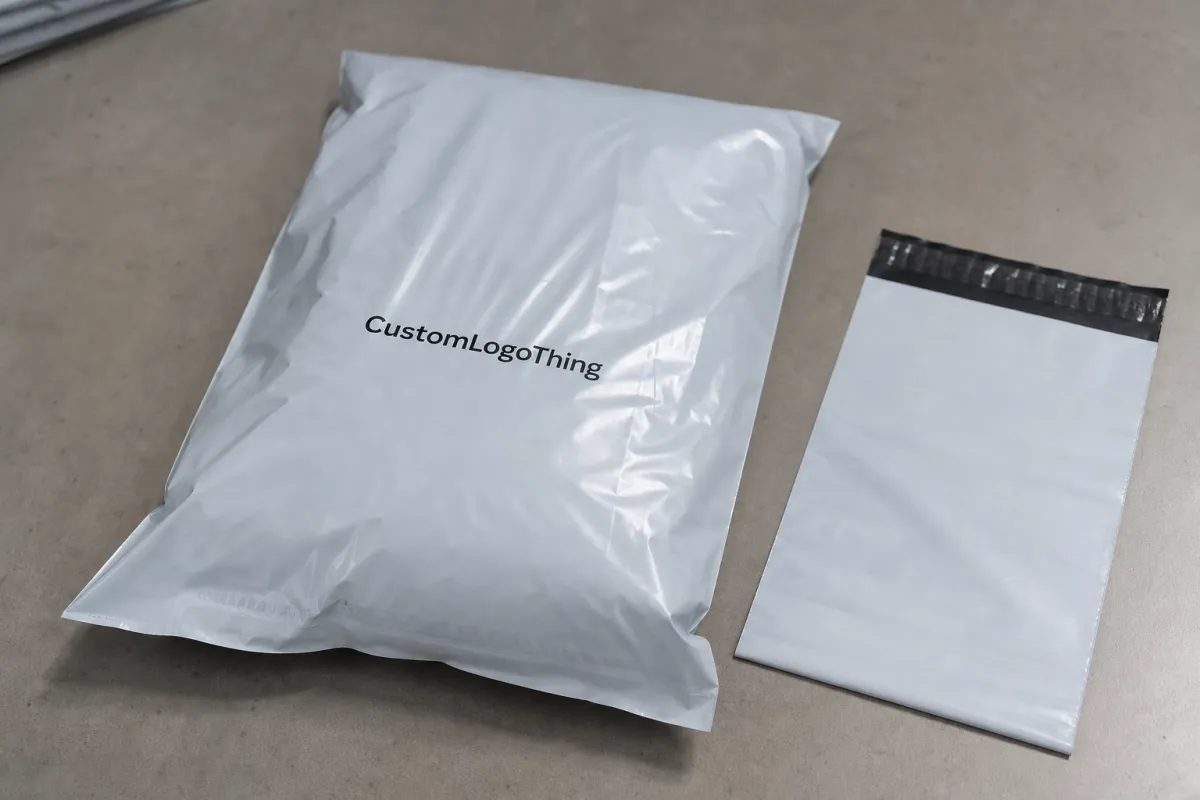
The strongest use case is simple: a garment needs to look tidy, stay grouped, and move quickly through packing. Slider lock bags are effective because they solve those three problems at once. The bag is easy to see through, the closure is straightforward to confirm, and the package stays compact inside a mailer or box. That makes it useful for ecommerce operations that want a cleaner presentation than a basic poly sleeve but do not need a rigid carton for every item.
Brands often use them for folded tees, joggers, light outerwear, underwear, socks, and product bundles that would otherwise shift around. They also help when a garment is folded with an insert card or size label that should stay aligned. For a customer, the result feels more deliberate. For a warehouse team, the result is easier handling and fewer repacks.
The best buyers treat the bag as part of the whole packaging system. If the outer mailer is plain, the slider bag can do some of the presentation work inside. If the outer box is already highly branded, the bag may need to stay cleaner and quieter so the product remains the focus. That balance matters more than adding extra print everywhere.
A closure the packer can feel and verify quickly often matters more than one more color on the film.
There is also a practical reason the format keeps showing up in ecommerce apparel. It is easy to inspect. Workers can see the garment, check the fold, close the bag, and spot a mistake before the order leaves the table. That reduces rework, which is usually the hidden cost in packaging programs. A bag that looks good but slows packing is not a good buy.
How the slider lock closure behaves on the packing line
The closure is the feature that gives the bag its value. The packer loads the garment, aligns the opening, and slides the closure across the track until the seal is complete. A well-made bag gives a smooth, controlled feel and a clear visual line when shut. That makes it easier to confirm closure on the first pass, especially in a busy fulfillment environment where speed and consistency matter.
Compared with a standard zipper strip, the slider helps guide the seal. That reduces the chance of a partial close, especially when the bag is slightly full or the garment has a thicker fold. It also tends to reopen and reclose more predictably, which helps with returns inspection, warehouse QC, and repacking. For apparel brands that want a bag customers can reuse, that repeatability is useful.
Slider lock closures are not the same as tamper-evident security features. They improve handling and presentation, but they do not make the bag tamper proof. That distinction matters for buyer expectations. If a product needs a sealed system for compliance or security reasons, a slider bag may still be part of the package, but it should not be treated as the only protection.
In daily use, the main question is whether the closure improves speed or creates friction. If workers can close each bag cleanly and the seal holds through packing and transit, the format earns its place. If the slider binds, the track feels loose, or the bag opens too easily when overfilled, the team will start avoiding it. That is usually the clearest signal that the spec is off.
For brands comparing closure styles, sample testing should happen with the actual folded SKU, not a generic garment substitute. The difference between a thin tee and a heavier sweatshirt changes how the track behaves and how much room the bag needs. A closure that works well on one item can feel awkward on another.
Film, thickness, and finish choices
Most slider lock apparel bags are made from LDPE or LLDPE. Both are common, but they behave differently. LDPE has a softer feel and a little more give. LLDPE usually offers better puncture resistance and a slightly tighter hand. For apparel, that shows up in how the bag handles repeated touching, folding, and carton loading. Neither resin is automatically better; the right choice depends on the garment weight, the desired presentation, and how much handling the bag will see.
Thickness has a direct impact on price and performance. For many ecommerce apparel uses, 2 to 3 mil works for tees, soft sets, and lighter items. A 3 to 4 mil film is often more suitable for heavier garments, premium presentation, or orders that will be handled several times before the customer sees them. Thicker film can feel more substantial and resist punctures better, but it also adds cost and can feel too stiff for light product lines.
Finish changes the visual tone. Clear film is the most direct option and keeps the garment fully visible. Frosted film softens glare and can make the bag feel more restrained or elevated. A light tint can create separation without blocking the product. For brands with a defined visual identity, the finish should support that identity rather than distract from it. If the line is clean and minimal, a heavy graphic treatment often works against the product.
Size is where many projects run into trouble. Measure the folded garment first, then allow enough room for the fabric, any insert card, and the closure track. Too much extra space creates a loose bag that shifts in transit and looks less intentional. Too little space compresses the garment, stresses the closure, and can make the fold look rushed. The ideal bag is usually the one that looks almost custom-fit without being tight.
Useful specs should include width, length, closure width, film gauge, and whether the body is flat or gusseted. Gussets help with bundled items and thicker folds. Flat bags are often enough for single tees and slimmer products. If a brand uses other branded packaging pieces, such as mailers or insert cards, the visual tone should stay aligned across the shipment so the full package feels coordinated.
Some suppliers test film properties in ways that track with ASTM-style methods, including tensile strength and seal performance. That does not replace real garment testing, but it helps establish a baseline. For apparel brands shipping through parcel networks, it is better to know how the film behaves under stress than to rely only on a sample photo.
For a broader view of parcel handling and drop testing, the ISTA test methods page is a useful reference point.
Pricing, MOQ, and quote basics
Pricing for custom Slider Lock Clothing Bags for ecommerce apparel brands usually moves with five variables: size, film thickness, print coverage, hardware style, and total quantity. Custom dimensions and heavier film increase cost. More colors or wider print coverage raise it again. Larger runs generally lower the per-unit cost because setup, proofing, and waste are spread across more bags.
MOQ is where newer buyers often get surprised. A 1,000-piece run usually costs more per bag than a 5,000- or 10,000-piece run, even if the bag itself is unchanged. That is normal in packaging production. Setup, film sourcing, and inspection are not free. The key is to judge the order on total usable value, not only the quote on paper.
| Option | Typical use | Indicative unit price at 5,000+ pcs | Notes |
|---|---|---|---|
| Stock clear slider bag | Basic tees and light accessories | $0.10-$0.16 | Fastest option if size and print are flexible |
| Custom-size unprinted bag | SKU-specific fit for apparel sets | $0.13-$0.22 | Cleaner fit and less wasted film |
| Custom printed bag | Visible branding and retail-ready presentation | $0.18-$0.32 | Coverage, color count, and registration affect cost |
| Heavy-gauge premium finish | Heavier garments and higher-touch presentation | $0.26-$0.45 | Useful for premium lines, not every SKU |
Those figures are directional. Resin pricing, freight, tooling, packing configuration, and supplier capacity all move them. A quote request should include the folded garment dimensions, quantity, print requirements, target ship date, and whether a pre-production sample is needed. If any of those details are missing, the price can look good while the production result misses the mark.
Total landed cost matters more than unit price alone. A bag that costs a few cents less but slows packing, creates fit issues, or arrives with inconsistent dimensions can cost more once labor is included. Buyers who look at the full system usually make better decisions than buyers focused only on the lowest line item.
If you are comparing bags with other ecommerce packaging, measure the value against the rest of the kit: outer mailer, insert card, and any branded packaging used at the point of delivery. The most expensive packaging is often the one that creates handling problems, not the one with the highest quote.
Production steps and lead time
A well-run order usually follows the same sequence: gather specifications, confirm dimensions, review artwork, approve a proof or sample, then begin manufacturing. The steps are straightforward, but delays usually start before production if the garment size is vague or the artwork file is not ready. A clean spec sheet saves more time than most buyers expect.
Lead time depends on complexity. A standard custom-size bag with simple print can move faster than a heavily printed bag with special film, a new closure setup, or a tight seasonal deadline. Supplier capacity and raw material availability also affect timing. A practical planning window for many standard custom runs is about 12 to 18 business days after proof approval, plus freight time. If sampling is required first, add more time.
Quality control deserves real attention. During production, the supplier should check film consistency, seal integrity, closure alignment, and print registration. During packing, bags should be boxed in a way that avoids heavy creasing before they reach the warehouse. A small defect rate can turn into a real problem if the bags are going through a high-volume fulfillment line.
Artwork approval also deserves discipline. Keep files clean, make sure fonts are outlined or embedded, and confirm placement before production begins. A proof is much easier to correct than a finished run. In apparel packaging, small artwork errors are rarely small once thousands of bags are involved.
For brands using these bags as part of a larger packaging rollout, it helps to review the packaging sequence as a whole. The bag should work with the fold, the outer carton or mailer, and any inserted materials. If one part of the package creates friction, the whole system feels off.
How ecommerce teams should choose a bag
Start with the SKU list. Not every garment needs the same packaging. Folded tees, bundled sets, and softer products are the most natural fit for custom slider lock bags, while bulkier outerwear or rigidly folded items may need a different approach. Separate the items that truly need a custom bag from the ones that can stay in a simpler format.
Measure the folded product, not the flat garment. A tee can look small on the table and still need more room once it is folded with a label card or packed as part of a bundle. Add enough clearance for the fabric to settle naturally. If the bag is oversized, the contents move around and the presentation feels loose. If it is undersized, the fold becomes compressed and the closure works harder than it should.
Next, decide how visible the bag should be. Clear film keeps the garment front and center. Frosted film softens the look and can be useful for lighter colorways. Printed film can support a launch or collection, but it should not overpower the product. The bag is there to frame the item, not compete with it.
- Match film thickness to the garment weight and handling load.
- Test the closure with the actual folded SKU.
- Keep artwork away from the seal path.
- Check that the bag fits into the mailer or box without forcing a second fold.
Sample testing should always include the fulfillment team. The people packing orders will notice friction that a digital proof will never show. They will see whether the slider is easy to use with gloves, whether the film catches on the table, and whether the bag closes cleanly after the garment is loaded. That feedback usually catches problems early.
If your operation already uses branded packaging across inserts, mailers, and outer cartons, keep the visual language aligned. The bag does not need to copy every element, but it should feel like part of the same system. That consistency helps the package read as intentional rather than assembled piece by piece.
Common mistakes and practical tips
The most common mistake is undersizing the bag. Buyers often measure too loosely, then find that the closure strains or the fold gets crushed. The second mistake is choosing a closure that slows the line. If the slider feels awkward or inconsistent, workers will compensate, and the bag stops doing its job.
Overprinting can be a problem too. A dense graphic may look polished on a screen and still work against the garment once it is folded inside the bag. In many cases, a restrained logo or a clean repeated element does more for package branding than a full-surface design. The packaging should support the item, not hide it.
Here are a few checks that are worth doing before a larger order:
- Keep the logo and print area clear of the closure track.
- Match film clarity to the garment color and fabric tone.
- Use a heavier gauge only where handling justifies it.
- Test the sample with the actual insert card, fold style, and mailer.
Cost control also benefits from a wider view. Compare the total landed cost, not just the bag quote. Freight, carton count, sample cycles, and rework time can change the real budget more than the unit price does. A slightly higher-priced bag that saves time on the line may be the better decision.
Keep sustainability claims accurate. If the bag is part of a broader responsible packaging program, make sure the materials and documentation support that claim. If the outer cartons or inserts use FSC-certified paper, the chain of materials should be clear and current. For reference, the FSC website is a straightforward place to verify certification language. Do not stretch the claim beyond what the packaging actually supports.
For ecommerce apparel brands, the best version of this bag is usually the one that fits the SKU cleanly, closes with little effort, and keeps the product looking cared for from pack-out to unboxing. That is the real value of custom Slider Lock Clothing Bags for ecommerce apparel brands: they do a practical job first and a branding job second, and both need to hold up under volume.
FAQ
How do slider lock clothing bags compare with standard zipper bags?
Slider lock bags are usually easier to close consistently because the slider guides the seal along the track. Standard zipper bags can work well for lighter use, but slider closures often feel cleaner and more premium for apparel that customers will handle and reuse.
What size should I choose for folded tees, hoodies, and sets?
Measure the folded garment first, then add only the space needed for the fabric, labels, and any insert card. Tees usually fit a compact flat bag, while hoodies and matching sets often need a wider body or gusseted format to keep the fold tidy.
What affects pricing the most?
Size, film thickness, print coverage, color count, order quantity, and whether the bag needs custom dimensions all move the price. Small orders cost more per unit because setup and waste are spread across fewer bags.
How long does production usually take after artwork approval?
Many standard custom runs can move in about 12 to 18 business days after proof approval, then freight time is added. Complex print, special film, or sample cycles can extend that schedule.
Can the bags be reused for returns or warehouse repacking?
Yes, many brands use them for repacking or returns inspection because the closure can be opened and resealed more cleanly than a one-time adhesive bag. Reuse works best when the film and size are chosen for handling, not just display.

