A beautiful sticker can fail before lunch if South Florida humidity, sunscreen, car heat, cooler condensation, or oily hands meet the wrong material. That is why custom stickers Coral Gables FL buyers order for retail packaging, food jars, boutique bags, event giveaways, real estate folders, salon products, school promotions, and local brand launches need more than a pretty file and hopeful adhesive.
Design gets attention. The construction keeps the sticker alive.
What custom stickers Coral Gables FL buyers actually need
Custom stickers are adhesive printed pieces built around a brand’s size, shape, finish, adhesive strength, and real use case. They are not just uploaded artwork slapped onto cheap paper. That is the difference between actual branding and craft-project chaos with a shipping label budget.
Most local sticker jobs are practical. Small-batch food brands need labels for jars, pouches, and bottles. Restaurants use QR code stickers for menus, pickup shelves, packaging, and events. Boutiques add die-cut logo stickers to shopping bags and tissue wraps. Realtors use branded seals for folders and mailers. Schools and nonprofits need giveaway Stickers That Survive backpacks, laptops, water bottles, and one very aggressive week of handling.
Stickers and labels overlap, but they are not always bought the same way. A sticker is often promotional, decorative, or brand-building. A label usually carries product information, compliance details, barcode data, ingredients, warnings, batch numbers, or directions. Same adhesive family. Different priorities.
If your packaging needs legal copy, scannable barcodes, nutrition details, warnings, batch codes, or food-safe handling considerations, treat it like a label project. Not a cute freebie.
That distinction changes the buying process. A giveaway sticker is judged by color, shape, and whether people want to keep it. A product label is judged by adhesion, readability, moisture resistance, application speed, shelf appearance, and whether the barcode scans at checkout. Fun, yes. Also unforgiving.
Anyone comparing sticker options near Coral Gables should expect to discuss materials, artwork setup, pricing variables, production timeline, surface testing, and proof details. A useful quote needs real specs. “How much for stickers?” is not a spec. It is a trap door.
How sticker materials, adhesives, and finishes work
A sticker has five basic parts: face stock, adhesive, liner, ink, and optional coating. The face stock is the printable material. The adhesive decides how it bonds. The liner is the backing you peel away. Ink creates the artwork. Coating or lamination protects the print from scuffs, moisture, UV exposure, and handling.
Buyers do not need to become print engineers. Mercifully. But you do need to know which layer affects performance. If a sticker peels from a cold bottle, the issue may be adhesive. If it smears or scratches, the issue may be coating. If it wrinkles on a curved tube, the face stock may be too stiff. One failure can have three different causes.
| Material or Finish | Best Use | Typical Tradeoff |
|---|---|---|
| Paper sticker stock | Dry indoor packaging, envelopes, short-term promotions | Low cost, but weak around water, oils, and heavy handling |
| White BOPP film | Jars, bottles, cosmetics, refrigerated products | Moisture resistant, usually higher cost than paper |
| Clear BOPP or clear film | Glass jars, candles, bottles, no-label look | Needs careful artwork setup and often white ink backing |
| White vinyl | Outdoor promos, laptops, water bottles, car windows | Durable, but not always needed for basic indoor packaging |
| Matte laminate | Boutique skincare, candles, premium retail packaging | Elegant look, slightly softer color pop than gloss |
| Gloss laminate | Bold graphics, food labels, high-touch stickers | Bright color, but can show glare under strong light |
Paper works for dry, short-term, indoor jobs: bakery boxes, thank-you seals, boutique bags, mailing inserts, quick product tests. White vinyl or BOPP is better for moisture resistance. Clear film gives glass jars and bottles that clean “printed-on” look, but the artwork has to be built correctly. Foil and specialty stocks can help premium retail packaging, though they add cost and may raise minimum quantities.
Adhesive choice matters more than most first-time buyers expect. Permanent adhesive suits packaging, product labels, and long-term branding. Removable adhesive is better for temporary campaigns, windows, mirrors, folders, or items where residue is a problem. Freezer-grade adhesive is built for cold storage and refrigerated handling. High-tack adhesive helps with textured, low-energy, or difficult surfaces, including some plastics and rough kraft packaging.
Finishes change appearance and durability. Matte feels calm and premium. Gloss gives stronger color punch and easier wipe-down. Soft-touch feels upscale, especially on cosmetics, candles, and gift packaging. Lamination gives better protection than a basic coating when the sticker will be rubbed, tossed in a bag, handled by staff, or exposed to light moisture. UV coating can help with scuffs and added surface protection.
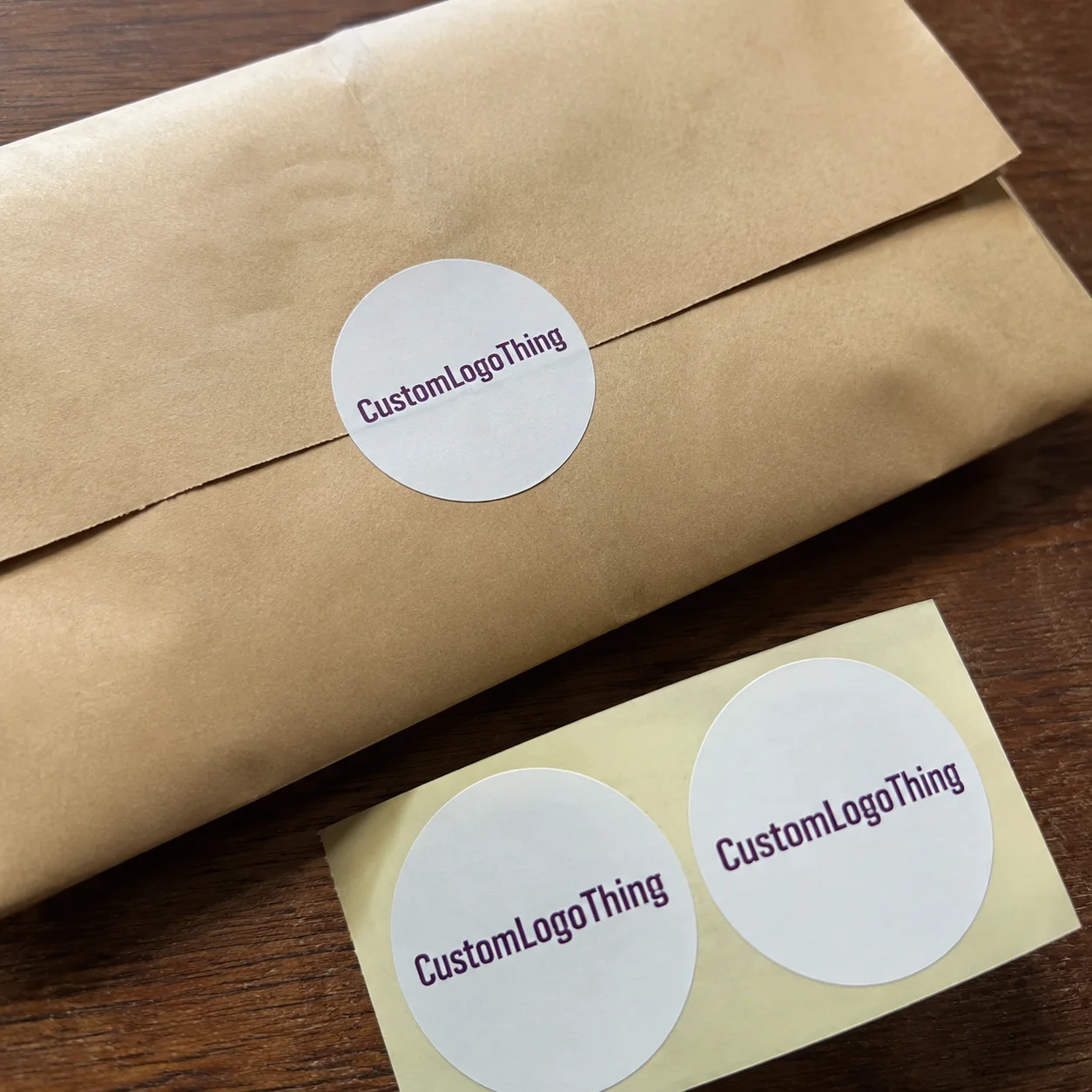
Shape affects price and usability. Standard circles, squares, and rectangles are usually cheaper and faster because they cut efficiently. Die-cut stickers follow the outside contour of a logo, mascot, or custom shape and feel more polished as giveaways. Kiss-cut stickers stay on a larger backing sheet, making them easier to peel and hand out. For product packaging, roll labels are often faster to apply than singles or sheets.
Surface compatibility is the quiet killer. Glass jars, plastic bottles, paper bags, cardboard mailers, laptops, water bottles, car windows, squeeze tubes, and textured boxes all behave differently. A sticker that works beautifully on a candle jar may curl on a cooler, wrinkle on a flexible pouch, or refuse to grip rough kraft. Test the real surface if the order matters. The sample sitting flat on a desk is not the full story.
Pricing, MOQ, and unit cost for local sticker orders
Sticker pricing is not one-size-fits-all. Anyone giving a serious price without size, quantity, material, shape, finish, artwork condition, and delivery needs is guessing. Cute, but not useful.
The biggest cost drivers are sticker size, order quantity, material type, number of versions, finish, die-cut complexity, lamination, roll versus sheet format, proofing needs, and shipping or pickup logistics. A 2-inch paper circle is a different job from a 4-inch laminated die-cut vinyl sticker. Same word. Different bill.
For rough planning, small short-run paper stickers may land around $0.25 to $0.75 per piece, depending on size and quantity. Durable vinyl or BOPP stickers in modest quantities may range from $0.35 to $1.25 per piece. Larger bulk runs can drop sharply, sometimes into the $0.08 to $0.25 per piece range for simpler formats at higher volumes. Specialty foil, clear film with white ink, custom roll labels, variable data, or complex die-cuts can push pricing higher.
Those are planning ranges, not promises. Material availability, print coverage, order quantity, finishing method, and rush timing can swing the number. Build your packaging budget around a real quote, not a number someone tossed out in a DM.
MOQ means minimum order quantity. Digital printing can support smaller runs, which helps startups, event tests, seasonal campaigns, and early product packaging. Specialty finishes, custom dies, foil effects, spot coatings, or certain roll-label setups may require higher minimums because setup time and materials need to make economic sense. Machines do not care that you only need 37 stickers by Friday.
Cheap stickers are fine for one-day events, internal sorting, basic giveaways, temporary packaging tests, or short-lived promos. Cheap becomes expensive for retail products, refrigerated goods, luxury packaging, outdoor use, cosmetic containers, and anything exposed to moisture. If a label fails on a shelf-ready product, you are not just replacing stickers. You are relabeling inventory, delaying shipments, and making the brand look careless.
For custom stickers Coral Gables FL quotes, send the final size, quantity, shape, material preference, intended surface, indoor or outdoor use, finish, deadline, and artwork files. That information prevents the classic pricing circus where every revision changes the number. Nobody enjoys that circus. Not even the clown.
Buying tip: If the sticker touches moisture, cold, heat, oil, sunscreen, or sunlight, do not price it like a dry paper seal. Ask for the material and adhesive recommendation first, then compare pricing.
Process and timeline from artwork to finished stickers
The normal sticker process is straightforward: request a quote, confirm specs, submit artwork, receive a digital proof, approve or request edits, print, cut, inspect, pack, and ship. Not glamorous. Very important.
Simple digital sticker orders can often move quickly once artwork is print-ready. A basic circle, square, or rectangle may be faster than a complex die-cut shape. Add specialty materials, laminates, foil effects, roll formatting, multiple versions, or high quantities, and the timeline stretches.
For many small to mid-size jobs, plan for 3 to 7 business days after proof approval for simpler work and 7 to 15 business days for more involved specs. Rush options may exist, but rush fees are not a personality flaw. They are what happens when production schedules get squeezed.
The clock usually starts after proof approval, not when a buyer first sends a blurry logo from a phone screenshot. This is where many deadlines go to die. If your file is low resolution, missing fonts, missing bleed, or unclear on cut shape, production pauses until the artwork is fixed or approved as-is.
A digital proof should check size, layout, cut line, bleed, color expectations, spelling, QR code placement, material notes, finish, and quantity. It is not the time to redesign the entire brand unless everyone enjoys delays. Proof approval means the printer is cleared to produce what is shown, so slow down for five minutes and read it.
Artwork matters. Vector files such as AI, EPS, or editable PDF are ideal for logos and cut lines. High-resolution raster files may work for photos or complex graphics, usually at 300 DPI at final print size. Fonts should be outlined. Bleed is commonly 0.0625 to 0.125 inch, depending on the printer’s setup. Safe margins should keep important text and logos away from the trim edge.
QR codes need enough size and contrast to scan reliably. Tiny codes over busy artwork are a waste of ink. Test them with more than one phone, on the actual proof size, before approving the order.
Color deserves realistic expectations too. Digital screens glow. Printed ink does not. If color matching is critical for package branding, ask about a printed sample or color proof. For regulated packaging or retail programs, consistency may also connect to broader packaging standards and handling requirements. Groups such as ISTA publish testing resources for packaged-product distribution, and organizations such as FSC provide guidance around responsible paper sourcing when that matters to your material choices.
Local deadline planning matters for Coral Gables buyers. Event dates, retail launch windows, university campaigns, restaurant openings, wedding welcome bags, and seasonal promotions all need buffer. Build in extra days for proofing, corrections, and delivery. Miracles are not a production method.
Step-by-step guide to ordering the right stickers
Ordering Custom Stickers Coral Gables FL brands can actually use starts with a boring question: what is the sticker supposed to do? Boring questions save money. Fancy guesses do not.
- Define the job. Decide whether the sticker is for packaging, resale, giveaways, instructions, sealing, compliance, QR codes, decoration, or shipping support. A sticker cannot be correctly specified until its real job is clear.
- Identify the surface and environment. Note whether it goes on glass, plastic, cardboard, metal, kraft paper, a laptop, a bottle, a pouch, or a car window. Then list exposure: moisture, heat, cold, oils, sunscreen, refrigeration, handling, or outdoor use.
- Choose size and shape based on use. Small 1.5-inch to 2.5-inch logo stickers work well for bags, mailers, and inserts. Larger 3-inch to 5-inch die-cut designs are better for giveaways. Roll labels suit faster product application and larger batches.
- Pick material and finish. Match paper, vinyl, BOPP, clear film, matte, gloss, or laminate to the environment and brand position. Premium products should not look like they were labeled in a basement.
- Prepare print-ready artwork. Include bleed, safe margins, outlined fonts, high-resolution images, and a clear cut path for custom shapes. Test QR codes before sending files.
- Review the proof carefully. Confirm spelling, color notes, dimensions, orientation, finish, quantity, and delivery details. Approving a proof with a typo is still approving a typo.
- Order a practical quantity. Include launch stock, sampling, damaged pieces, future reorders, and application testing. Running out halfway through a packaging batch is the kind of fun nobody asked for.
If the sticker is part of a larger branded packaging system, keep it coordinated with bags, boxes, tissue, mailers, inserts, and labels. Custom Logo Things offers related Custom Labels & Tags and broader Custom Packaging Products for brands trying to keep package branding consistent instead of piecing together five slightly different whites from five vendors. Yes, customers notice.
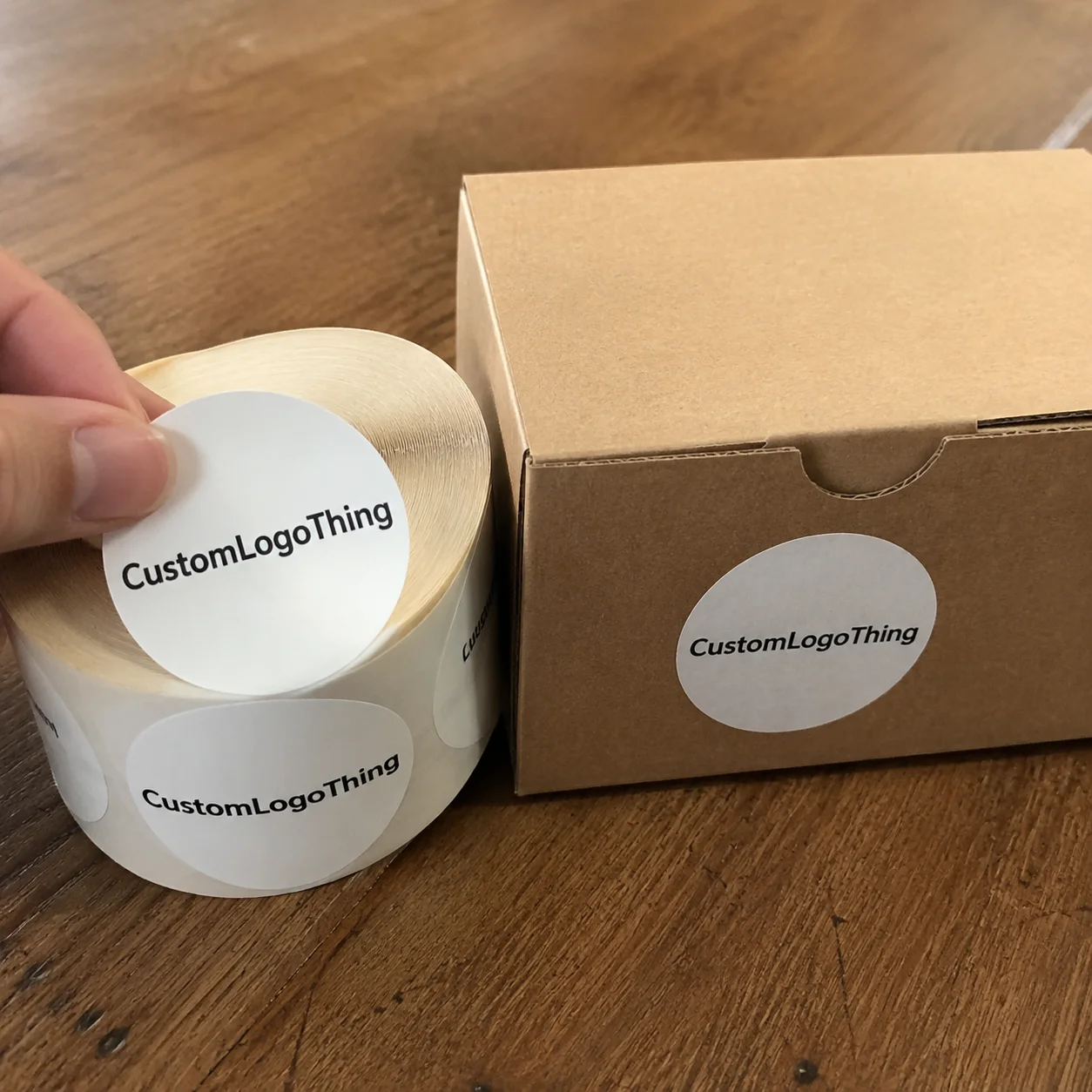
Application format also matters. Sheets work well for hand application, especially for small teams. Singles feel better for event handouts, merch inserts, and welcome kits. Rolls are usually better for product packaging because they can be applied faster by hand or with a label dispenser. If staff will label 2,000 jars, do not make them peel tiny die-cut singles all day unless you enjoy workplace resentment.
Think about storage before the order arrives. Stickers should usually be kept clean, dry, and away from extreme heat until application. Adhesive performance can suffer if rolls sit in a hot car, sheets get bent, or boxes absorb humidity before use. Production quality matters, but storage and application can still ruin a perfectly good sticker. Annoying, but true.
Common mistakes that make stickers peel, fade, or look cheap
Most sticker failures are not mysterious. They come from picking the wrong material, ignoring the surface, rushing artwork, or chasing the lowest unit price until the product looks cheaper than intended.
- Choosing paper for wet, oily, refrigerated, or outdoor use. Paper has its place, but that place is not sweating on a cold drink bottle unless the construction is properly specified.
- Ordering only by lowest unit price. Low price can mean thin material, weak adhesive, no laminate, poor color control, or a finish that fights the product’s positioning.
- Ignoring the application surface. Textured kraft, curved bottles, oily containers, flexible pouches, and powder-coated surfaces can all challenge adhesion. Testing matters, especially for product packaging.
- Using low-resolution artwork. A pixelated logo does not become premium because it is printed on a sticker. It becomes a pixelated logo with adhesive.
- Making QR codes too small. If the code does not scan quickly from a normal distance, it is decoration, not function. Keep contrast high and avoid busy backgrounds.
- Forgetting bleed and safe zones. Important text or design elements too close to the edge can get trimmed awkwardly, especially on custom shapes.
- Skipping samples or small test runs. If the sticker is going on retail packaging, refrigerated products, outdoor gear, or high-volume mailers, test before committing to thousands.
Another common mistake is forgetting the handling path. A label may look perfect on a sample jar sitting on a desk. Then it goes through packing, cartons, delivery, shelf stocking, customer handling, condensation, and a ride in a hot car. That is the real test. Packaging design should account for the life of the product, not just the product photo.
Application conditions matter too. Surfaces should be clean, dry, and free of dust, oil, lotion, wax, or product residue. Cold containers can sweat as they warm up, which weakens adhesion. Freshly filled bottles may have moisture around the cap or shoulder. Flexible pouches can wrinkle if the label stock is too rigid. These are not design problems. They are use-case problems.
If sustainability matters to your brand, ask about paper stocks, liner waste, film options, and whether FSC-certified paper is available for the job. Not every eco claim is meaningful, and not every recyclable-looking material performs in wet environments. Balance the claim with the use case. A compostable-looking sticker peeling off a refrigerated jar is not a win.
Expert tips before you request a quote
Before requesting pricing for custom stickers Coral Gables FL projects, build a clean pre-quote checklist. Include quantity, exact size, shape, surface, use environment, material preference, finish, artwork format, deadline, and delivery location. Send those details together. It makes the quote faster and more accurate.
Group versions when possible. If a brand needs the same size and material across several scents, flavors, shades, or seasonal designs, ask whether they can be produced together. Sometimes it helps pricing because setup, material, or finishing can be combined. Sometimes it does not because each version still requires separate handling. Worth asking. Not magic.
Order for the application method. Hand-applied stickers can work well on sheets or kiss-cut formats. Product lines often benefit from roll labels, especially if staff apply hundreds at a time. Event handouts may be better as die-cut singles because they feel finished and are easier to distribute. Retail packaging may need a balance: attractive enough to sell, durable enough to survive handling, and efficient enough to apply without turning production into punishment.
Think about brand position before choosing a finish. Matte white can fit boutique skincare, wellness products, candles, and minimalist food packaging. Gloss vinyl suits bold promo stickers, outdoor decals, sports brands, and high-color designs. Clear film works on glass jars when the product color is part of the look. Foil accents can suit premium gift packaging, but only if the rest of the design supports it. Foil on messy artwork is still messy artwork, now shinier.
Ask for help choosing specs if you are dealing with uncertain surfaces, outdoor exposure, refrigerated items, luxury packaging, curved containers, squeeze tubes, or strict launch dates. Guessing is cheaper for five minutes and expensive later. If the sticker is part of a larger retail packaging program with custom printed boxes, inserts, labels, and mailers, keep the specs coordinated so the whole package feels intentional.
Before ordering, send the printer your artwork, surface photo, size target, quantity range, finish preference, and deadline so the recommendation is based on the real job, not wishful thinking. Good stickers are not complicated, but they are specific.
FAQ
What are the best custom stickers for Coral Gables FL product packaging?
For dry indoor packaging, paper stickers can be cost-effective and attractive. For candles, jars, bottles, cosmetics, refrigerated items, or anything exposed to moisture, white BOPP, clear BOPP, or vinyl is usually safer. For premium retail packaging, consider matte laminate, soft-touch finish, clear film, or foil accents depending on the brand look. Always match the adhesive to the container surface before ordering in bulk.
How much do custom logo stickers in Coral Gables usually cost?
Cost depends on size, quantity, material, shape, finish, and whether the order needs specialty cutting or lamination. Small runs usually have a higher unit cost because setup and proofing are spread across fewer stickers. Bulk orders generally reduce unit cost, but specialty materials or finishes can raise the total. The fastest accurate quote comes from sending artwork, dimensions, quantity, surface type, and deadline together.
How long does it take to print custom stickers near Coral Gables?
Simple digital sticker orders can often move quickly after proof approval, sometimes within a few business days depending on capacity and specs. Custom shapes, roll labels, specialty finishes, high quantities, or artwork fixes can add production time. The timeline usually starts after the proof is approved, not when the first inquiry is sent. For events or product launches, build in extra days for proofing, shipping, and unexpected file corrections.
Should I order die-cut stickers or sticker sheets for my business?
Die-cut stickers are best for polished giveaways, logo stickers, merch inserts, and branded handouts. Sticker sheets work well when you need multiple designs, small labels, or easy peeling for hand application. Roll labels are better for faster application on product packaging or larger batches. Choose the format based on how the sticker will be used, stored, handed out, or applied.
Can custom stickers handle Miami-area heat, humidity, and outdoor use?
Yes, but only if the material, adhesive, ink, and finish are chosen for that environment. Vinyl or durable film with laminate is usually better for outdoor, wet, or high-touch use. Paper stickers are usually better for short-term indoor packaging and dry surfaces. For outdoor or moisture-heavy applications, test the sticker on the real surface before placing a large order.