The Embroidered Baseball Caps embroidery cost guide starts with one simple correction: the blank cap is usually not the biggest expense. Digitizing, stitch count, placement, proof revisions, and how much labor the logo demands tend to move the price more than the cap body itself. That is why two orders that look almost identical on a spreadsheet can land in very different price bands once the artwork is translated into thread.
Embroidery stays popular for a reason. It looks finished, holds up well through wear, and keeps a promotional cap from looking disposable after a few weeks of use. Teams, retailers, and uniforms all benefit from the same basic advantage: stitched decoration reads as permanent. It is not fragile in the way some print methods can be, and it usually keeps its shape better after repeated handling.
There is another angle buyers miss. A stronger cap structure can lower production risk. If the crown supports the logo, the machine can stitch cleaner, the backing is less likely to show through, and the sample has a better chance of matching the approved proof. That does not mean buying the most expensive blank. It means matching the cap build to the logo and the way the caps will be used.
Embroidery Cost Guide: What Drives Value
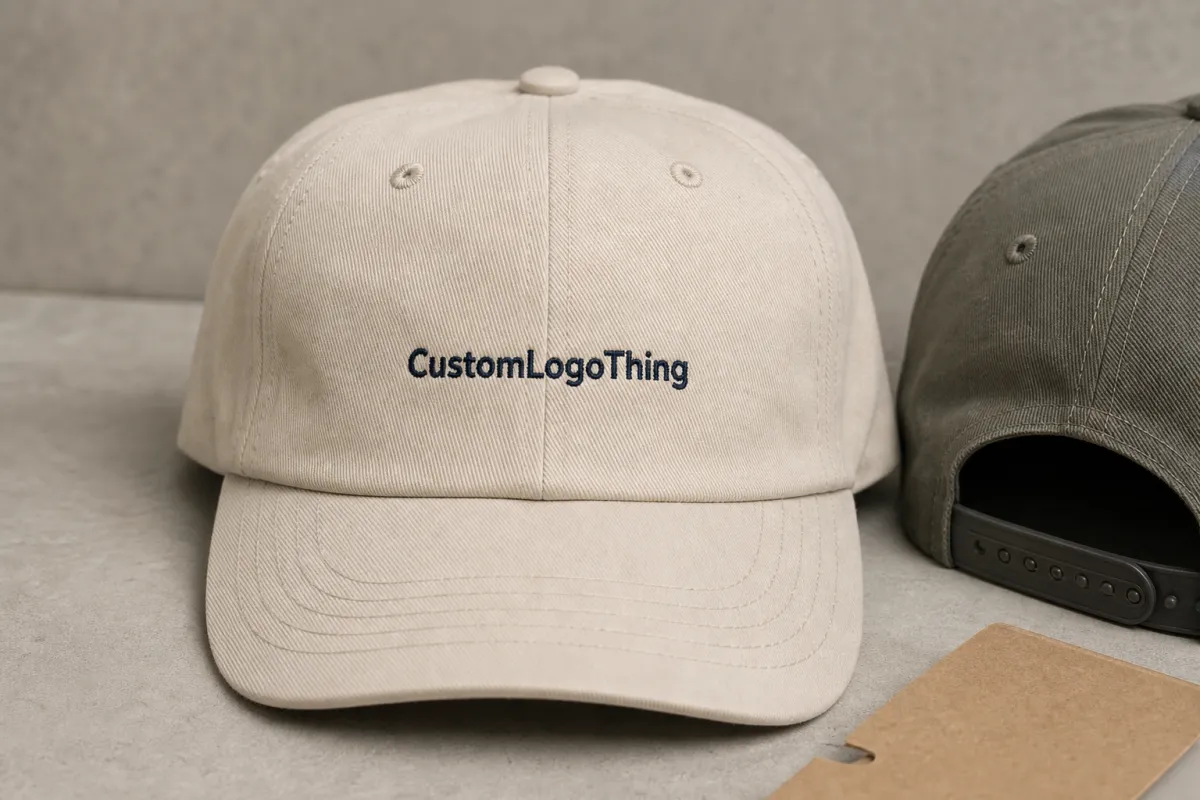
Most embroidered cap quotes are built from a small set of variables: the blank cap, digitizing, setup, decoration labor, and any special handling around the artwork. Once you know those pieces, the price begins to make more sense. A simple front wordmark on a structured cotton cap is one thing. A dense badge on a low-profile mesh-back style is another.
Digitizing is often the first fixed cost. That is the process of converting the logo into stitch instructions the machine can read. Some suppliers include it, others quote it separately, and complex artwork usually costs more than clean text or a simple icon. For many buyers, digitizing is the fee that feels invisible until the first quote arrives. It matters most on smaller runs because it is spread across fewer units.
Stitch count is the next major driver. More stitches take more machine time. A logo with tight fill areas, thin lettering, gradients translated into thread, or multiple small elements will usually cost more than a broad, simple mark. There is a practical limit too. Once a design gets too fine, the embroidery stops looking crisp and starts looking crowded. At that point, the issue is not just price. It is legibility.
The blank cap matters, but mostly in a supporting role. A standard wholesale cap body might sit in the low single digits at higher quantities, while embroidery labor and setup can exceed that quickly on small orders. Structured fronts, better panels, and cleaner fabrics usually reduce the risk of rework. That lower risk can be worth more than saving a few cents on the blank.
For repeat orders, embroidery is especially efficient because the file already exists. Once the stitch map is approved and saved, the next run often needs less handling. That is one reason buyers like embroidered caps for uniform programs and replenishment orders. The second order is usually easier than the first.
Used properly, this Embroidered Baseball Caps embroidery cost guide is not just about shopping for the cheapest quote. It is about reading the quote correctly. If one supplier includes digitizing and another separates it, the blended number can hide the real difference. If one quote assumes a simple front logo and another prices for a larger stitch field, those numbers are not comparable either.
Packaging, inserts, and shipment standards can also affect the final order cost. If your program includes retail hangtags, barcode stickers, individual polybags, or cartons that need special labeling, those details should be treated as part of the job rather than an afterthought. For transit planning and carton performance, organizations such as the International Safe Transit Association are useful references. If paper components are part of the order, the Forest Stewardship Council is a relevant reference for certified fiber.
Cap Construction, Fabrics, and Decoration Placement
Cap construction changes the final result more than many buyers expect. A structured crown supports the front panel and usually gives the cleanest embroidery surface. An unstructured cap feels softer and more relaxed, but the front can shift during stitching. That matters if the artwork is wide, dense, or placed close to the center seam.
Panel count also matters. A six-panel cap is common and works well for many logo placements, but the seams can cut into the usable decoration area. A five-panel cap gives a larger uninterrupted front panel, which is useful for broader designs and some retail styles. The difference is small until the logo is too big for the available space. Then the seam becomes the story.
Fabric choice affects both look and stitch behavior. Cotton twill is a dependable standard because it accepts embroidery cleanly and gives the thread a stable base. Washed cotton has a softer finish, but it usually needs more care with stabilizer because the fabric itself is less rigid. Polyester is common for activewear and promotional programs; it tends to hold a neat surface and handles moisture better than cotton. Mesh-back caps can work well outdoors, though the transition between the front panel and mesh can create tension points that need careful digitizing.
Placement determines both cost and appearance. Front-center embroidery is the easiest to price because the machine works on the largest flat area of the cap. Side embroidery, back marks, and small location logos can be useful, but they often require separate hooping decisions and tighter layout control. If you want a crest on the side panel and a second mark on the back, expect the quote to reflect that extra handling.
There is a line where a design stops fitting the cap cleanly. Buyers often want oversized logos, then wonder why the proof changes or the quote increases. The reason is mechanical, not arbitrary. Once the stitch area crosses into a seam, curves, or edge tension, the decoration becomes harder to control. A good supplier will point that out early instead of pretending the cap can absorb anything.
Closures affect both wearability and inventory planning. Snapback caps are flexible and easy to distribute across mixed-size groups. Strapback and buckle closures can feel more polished and work well for premium merch. Fitted caps look clean but add size complexity, which raises the risk of uneven stock if the caps are being bought for a broad audience. For events, staff programs, and wholesale orders, adjustable closures usually keep the order simpler.
Specs Buyers Should Lock In Before Requesting a Quote
Fast quotes come from precise specs. If the supplier has to guess, the number they send back will be less useful. A solid order packet should include the logo file, cap style, cap color, exact placement, thread colors, quantity breaks, and the shipping deadline that actually matters. If any of those details are still undecided, say so. A placeholder quote is fine for early comparison, but it should not be treated as a final price.
Vector artwork is best because it gives the digitizing team a clean base. If vector art is not available, send the highest-quality file you have and be direct about the intended decoration size. Small text, thin lines, and tiny details need special attention on embroidery because thread does not behave like ink. A design that looks elegant on a screen can lose clarity on a curved cap if the lettering is too fine.
Stitch count should be discussed before approval, not after. The number is one of the clearest signals of how complex the job really is. A three-word wordmark with clean strokes is a lighter ask than a badge packed with shading, outlines, and layered text. When a supplier gives a stitch count or a stitch range, that is a useful clue about why the price sits where it does.
Thread matching deserves a separate conversation. Pantone references help, but embroidery thread is not ink. The closest catalog color usually gets you very near the target, yet the final look still depends on lighting, texture, and stitch direction. That is normal. Buyers who expect a perfect ink-style match are setting themselves up for disappointment. A good proof should show the nearest thread option and confirm it before production starts.
Backing or stabilizer choice matters as well. Lightweight backing can work for simple, low-density designs, but denser logos usually need more support to hold the shape and reduce puckering. If the design sits near an edge, a seam, or a crown curve, the support choice becomes even more important. That is one of those production details that sounds minor until the sample starts pulling fabric in the wrong direction.
Do not leave packaging out of the spec sheet. Individual bags, insert cards, size tickets, carton marks, and barcode labels all affect labor and timing. They also affect the final unit cost more than buyers often expect. The earlier they are defined, the fewer surprises show up during the last mile of production.
Embroidery Pricing, MOQ, and Unit Cost Drivers
Pricing usually breaks into a few familiar buckets: digitizing, proofing, setup, embroidery labor, and the cap itself. The more units in the order, the easier it is to spread the fixed costs across the run. That is why MOQ matters so much. A 50-piece order can cost a lot more per cap than a 500-piece order even if the logo is identical.
Many suppliers quote minimums in the 24- to 100-piece range depending on the cap type, the decoration method, and whether the artwork is already digitized. Simple front embroidery tends to support smaller minimums. Multi-location decoration, 3D puff, appliqué patches, or very detailed crests usually push the minimum higher. The production line has to be worth the setup time.
As a working range, a straightforward decorated cap can often land in the mid-single digits to low double digits per piece once quantity is large enough to spread setup fees. Smaller runs tend to sit higher. A new logo, a complex badge, or a rush timeline can move the price upward faster than a buyer expects. Digitizing alone is often priced separately at roughly $20 to $60 per logo in many markets, with higher numbers for exceptionally detailed artwork. That fee is usually reasonable; it is the file that determines whether the machine stitches cleanly.
3D puff embroidery changes the math again. It uses foam under the stitches to create raised lettering or a raised logo, which adds material and handling. It can look strong on the right cap, especially on bold front marks, but it is not a universal upgrade. Thin lines, tiny text, and intricate shapes usually do not benefit from puff. They look heavier, not better.
| Order profile | Typical cost drivers | Buyer takeaway |
|---|---|---|
| Small run, simple front logo | Digitizing, setup, limited spread of fixed costs | Higher unit cost, useful for testing a design |
| Mid-size run, standard embroidery | Better spread of setup fees, steadier machine time | Often the strongest balance of price and flexibility |
| Large run, repeat artwork | Lower per-cap labor, reusable stitch file, cleaner bulk pricing | Best for replenishment, uniforms, and resale |
| Complex logo or special finish | Extra stitch count, more thread changes, slower handling, puff or patch work | Expect the price to climb quickly |
There are a few sensible ways to keep the order efficient. Keep the placement consistent across the run. Use one production file instead of multiple near-identical versions. Pick standard cap colors when possible, because rare seasonal blanks can create supply delays. If the logo can be simplified without losing brand recognition, ask for a revised version. The cleaner stitch path often lowers the risk of slowing the line later.
A low-priced blank cap is not a savings if the crown distorts under stitch tension and the sample has to be rebuilt.
If you are comparing quotes, ask every supplier to break out the same items: digitizing, setup, cap body, embroidery location, and any added handling. Otherwise, the numbers are not telling the same story. That is the easiest way to misread a quote, and the easiest way to think one supplier is cheaper when the scope is simply different.
Proofing, Production Steps, and Turnaround Time
Good cap orders follow a predictable sequence. Artwork review comes first, where the supplier checks file quality, design size, and stitch feasibility. Then the logo is digitized. After that, a proof or sample is created so the buyer can confirm placement, thread color, and overall appearance. Once approved, the order moves into production, then inspection, packing, and shipment. The process is simple on paper. Delays usually come from one weak handoff.
Proofing is the step that protects the rest of the order. A logo that looks balanced on a flat art file can sit too low or too wide on a curved cap. Seams, crown height, and panel shaping all affect the final result. The proof should show exactly where the embroidery sits, not just what the embroidery looks like in isolation. That distinction saves time and prevents expensive surprises later.
Turnaround depends on the state of the artwork and the size of the run. Repeat orders with approved digitizing are usually faster. In many cases, production after proof confirmation can fall in the 7 to 12 business day range for simple reorders, though quantity and workload still matter. New artwork, sample requests, or more complex decoration often push timelines into the 12 to 15 business day range or beyond. Rush production is possible, but it usually carries a premium because the job has to cut ahead of other scheduled work.
Shipping should be treated separately from production. That sounds obvious, yet it is one of the most common mistakes on launch-driven orders. A cap that leaves the factory on time is not automatically an on-time delivery. Transit time, receiving windows, and carton labeling all matter. If the order is going to a warehouse, a retail program, or an event site, carton counts and labeling should be fixed before the run starts.
Inspection should not be a vague promise. Thread tension, backing trim, placement accuracy, and color consistency all need to be checked before packing. Small issues are easier to catch at the end of the line than after the cartons are shipped. For larger programs, a clear receiving plan is part of quality control too. It is hard to call an order successful if the caps arrive correctly stitched but impossible to sort on site.
What a Reliable Cap Supplier Verifies Before Launch
A dependable supplier does more than accept a logo and send a price. They check whether the artwork can be digitized cleanly, whether the stitch density fits the cap fabric, and whether the crown shape will distort the mark. They also watch for thread break risk, seam conflicts, and backing visibility. Those checks are practical, not decorative. They determine whether the cap looks sharp or slightly off.
Communication is where good suppliers separate themselves. If the logo needs simplification, they should say it early and explain why. If the design sits too close to a seam, that risk should be flagged before approval. Hiding issues until production rarely helps anyone. It usually leads to delays, resamples, or compromises that could have been avoided.
Consistency matters most on reorders. If a team, retailer, or staff program needs the same cap again next month, the original stitch file, thread callout, and placement note should be ready to go. That is the kind of control buyers remember. It reduces back-and-forth, keeps the finished product aligned from run to run, and makes the supplier easier to trust.
Packaging and documentation also belong in the launch checklist. If the order includes inserts, sustainability messaging, or retail tags, those details should be defined before production begins. Paper specs can be useful for this kind of coordination, especially if the program uses certified fiber or tracked packaging materials. Small details add up. They are often the difference between a clean receiving process and a labor-heavy one.
What to Send for a Fast Quote and Order Next Steps
Fast quotes depend on clean inputs. Send the strongest artwork file you have, the cap style, the cap color, the quantity breakpoints, the exact embroidery placement, thread color requests, shipping destination, and the date that actually matters. If the order is still in comparison mode, ask for multiple cap styles side by side so the quote shows how the blank choice affects MOQ and cost per piece.
- Confirm the cap model and closure first so the supplier prices the correct blank.
- Review the digitized proof and check placement, size, and thread color before approval.
- Approve any sample or pre-production detail before the run starts.
- Lock the production quantity and ship date once the proof is correct.
If your logo exists in more than one version, pick the production version early. Mixed files create confusion, especially when one version has slightly different proportions or color treatment. If alternate colorways are needed, note them clearly so the supplier knows whether the job is one master file or multiple SKUs. That small bit of discipline keeps the quote accurate and keeps the timeline from slipping.
The best order process feels calm because the hard choices were made at the beginning. Once the artwork is clean, the placement is realistic, and the quantity is fixed, the rest of the job becomes a matter of execution. Used that way, the Embroidered Baseball Caps embroidery cost guide is not a slogan. It is a decision tool. It helps buyers compare quotes honestly, Choose the Right cap body, and avoid the kind of production surprises that usually show up after approval.
What affects embroidered baseball caps embroidery cost the most?
Stitch count, placement size, and the number of thread colors usually move the price more than the blank cap body. Digitizing and setup matter most on smaller orders because those fixed costs are spread across fewer units. Rush timing, 3D puff, and specialty patches can raise the per-cap price quickly.
What is a typical MOQ for embroidered baseball caps?
MOQ varies by cap style and decoration complexity, but many suppliers quote minimums somewhere between 24 and 100 pieces. Simple front embroidery usually supports lower minimums than multi-location decoration or patch work. Ask for pricing at several quantity tiers so you can see where the unit cost changes.
How long does embroidered cap turnaround usually take?
Repeat orders can move faster because the artwork is already digitized and approved. New artwork, sample requests, or larger runs add time for proofing and scheduling. Production after proof approval often falls around 7 to 12 business days for straightforward reorders, while more complex jobs can take 12 to 15 business days or longer. Shipping time should always be added separately.
Can brand colors be matched closely on embroidered baseball caps?
Thread colors can be matched closely, but embroidery uses thread catalogs rather than ink formulas. Pantone references help, yet lighting, fiber texture, and stitch direction can affect the final appearance. A proof should confirm the closest available thread match before production begins.
What artwork do you need for an accurate embroidery quote?
Vector files are best because they let the digitizing team build clean stitch paths and estimate complexity accurately. If vector art is not available, send the cleanest high-resolution file you have and include the intended cap placement. Add quantity, cap style, thread colors, and delivery date so the quote reflects the real order.

