Embroidered Baseball Caps Private Label Order: Buyer's Guide
A cap is one of the few promo items people wear in public, which is why an embroidered baseball Caps Private Label order can outperform a plain stock hat without asking for a larger media budget. The logo gets seen on sidewalks, at games, in warehouses, at trade shows, and in checkout lines. That is a lot of impressions for a product that can usually ship in a small carton.
Embroidery changes the equation. Compared with print, it reads as more finished, more durable, and usually more premium, even when the base cap is a standard cotton twill blank. That matters if the product is going into retail, gift bundles, team merch, or an e-commerce drop. The embroidery, label, and packaging do most of the perceived-value work before the buyer ever handles the hat.
"If the front logo looks cheap, the cap looks cheap. Buyers forgive a lot. They do not forgive sloppy embroidery."
Why Private Label Caps Sell Faster Than Plain Stock
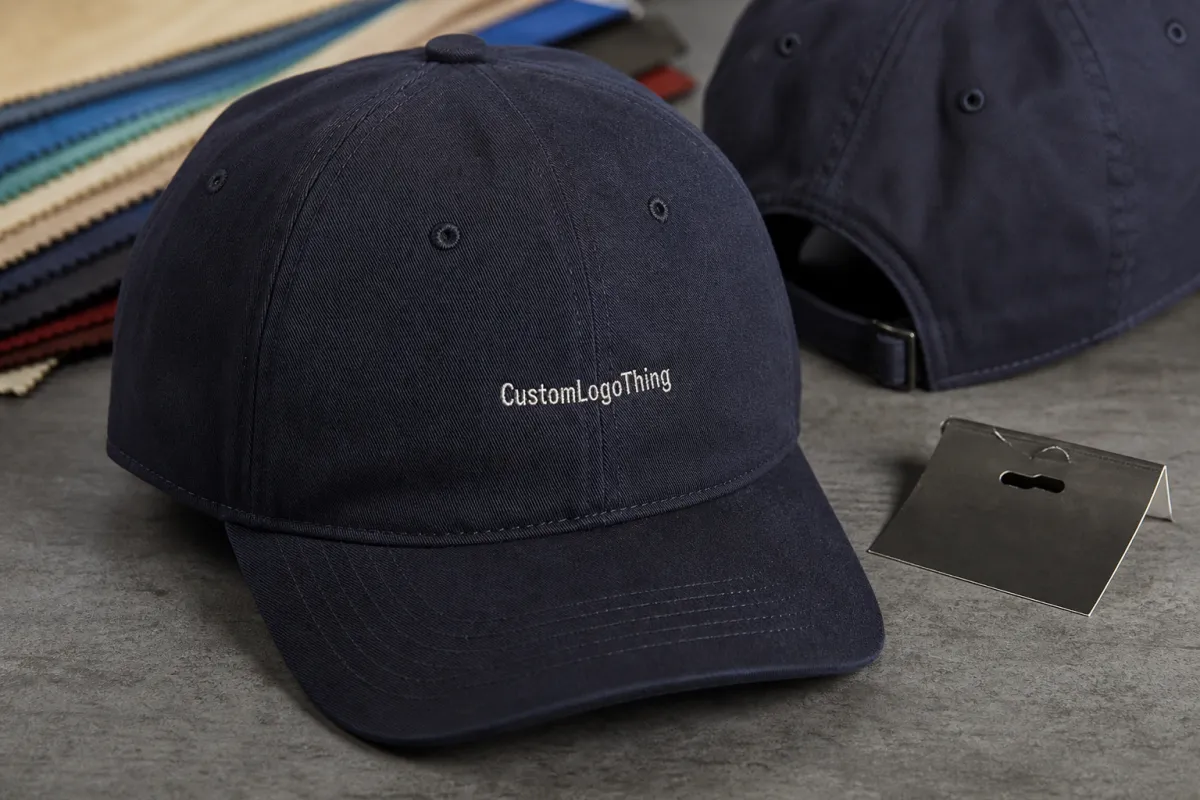
Private label works because it removes the generic-wholesale feeling. A blank cap can sit in inventory for months. The same cap with the right embroidery, woven label, and packaging can move because it feels like a finished product, not a supply item. That difference matters for e-commerce brands, merch programs, event resale, gift boxes, and retail line extensions.
From a buyer's point of view, caps are one of the least risky branded products to test. One size fits most. Shipping is manageable. Returns are usually lower than fit-sensitive apparel. And the setup is simpler than full cut-and-sew headwear, which keeps the first order closer to a controlled experiment than a long-term commitment.
There is also a pricing psychology effect that is easy to miss. A cap with clean embroidery often looks more expensive than it is. A tidy front hit, a balanced crown, and a closure that does not feel flimsy can move a product from budget to mid-tier without changing the entire factory setup. Small changes, real impact. Headwear buyers see that immediately.
That is why the first decision in an embroidered baseball Caps Private Label order is not thread color. It is positioning. Decide whether the cap should feel budget, mid-tier, or premium from a distance. That answer controls the blank, the decoration method, the label work, and the packaging. Skip that step and the sample review turns into a comparison of unrelated products.
For most private label programs, the cap needs to do at least one of these jobs:
- Support a retail price point with enough visual polish to justify it.
- Carry a team, club, or brand mark without looking like giveaway stock.
- Match a packaging bundle where the hat is one part of a larger set.
- Hold up across reorders without drifting in color, fit, or stitch quality.
That last point is where many programs quietly fail. A one-off sample can look excellent. A repeat run with weaker control can become a different product in the customer's hands. On headwear, repeatability is not a nice-to-have; it is the business model.
What Actually Drives Perceived Value
Buyers usually notice three things first: the crown shape, the brim curve, and the size of the front embroidery area. That sounds basic because it is, but basic choices are where caps start to feel retail-ready or bargain-bin. A low crown reads sportier and more casual. A structured high crown reads sharper and more streetwear-oriented. A curved brim feels classic; a flat brim feels more fashion-forward. Those signals are fast and surprisingly stubborn.
Panel count matters too. A 6-panel cap is the standard because it gives a familiar baseball shape and a generous front area for decoration. A 5-panel cap has a flatter front and usually reads more contemporary. The difference is not cosmetic only. A 5-panel can make a small logo feel cleaner, while a 6-panel often suits curved-letter embroidery and larger marks better.
Decoration choice is the next lever. Flat embroidery is the safest option for clean logos, text, and icons. 3D puff embroidery adds depth and can look strong on bold marks, but it punishes small detail and fine lettering. Side hits and back hits are useful for secondary branding, while woven labels and patches help if the front logo needs to stay simple. On some programs, a woven patch actually survives a better than a crowded direct-embroidered front panel because it gives more room for fine detail.
Fabric changes the result more than most buyers expect. Cotton twill is the usual starting point because it is stable and easy to sew. Brushed cotton feels softer but can vary more in surface texture. Polyester gives a cleaner, more uniform look, and performance blends help when the cap is meant for active wear or hotter climates. None of those fabrics is automatically better. They solve different problems.
Closure style changes fit range and cost. Snapback is common for retail and resale. Strapback feels a bit more elevated if the hardware is chosen well. Velcro is practical, but it can lower the perceived value unless the cap is clearly sports or utility driven. Buckle closures sit in the middle. Fitted styles are the least flexible and often work best when size consistency matters more than broad fit coverage.
Then there is the part buyers discover too late: artwork that looks fine on screen can fail in embroidery. Thin strokes, tiny type, gradients, and tightly packed details force stitch simplification. A good supplier should flag that early. If they do not, they are quoting hope, not production. Clean embroidery is as much about restraint as it is about design.
A useful rule: if a logo needs to be understood from three feet away, keep the stitch structure simple. If it needs to be read from across a room, simplify it further.
Specs to Lock Before Requesting Samples
If you want a quote that means something, lock the spec first. Otherwise every supplier will quote a slightly different cap and you will spend days comparing apples to oranges. For an Embroidered Baseball Caps private label order, the minimum spec sheet should include cap style, panel count, crown height, brim shape, fabric weight, closure type, lining, and sweatband preference.
That spec should also define the decoration clearly. Front center embroidery is the standard, but offset front placement, side panel branding, back arch text, and under-brim detail all change production time and cost. If the cap needs a woven label, patch, hangtag, or custom inner tape, decide where it goes before sample approval. Moving labels later usually means new tooling, new proofing, or both.
Artwork is another place where buyers make expensive assumptions. Send vector files, not screenshots. Include thread color references if you already have them. Ask for stitch count limits if the logo has small detail. As a practical benchmark, tiny text below about 5 to 6 mm in height is risky in embroidery unless the design is exceptionally clean. Even then, the result depends on fabric stability and thread density.
Fit data matters more than the phrase “one size fits most” suggests. Ask for the head circumference range, the closure adjustment range, and whether the crown is soft, semi-structured, or fully structured. Those details do not just help fit. They tell you how consistent the cap will be across a run. If the crown wobbles in sample photos, expect that wobble to show up again in bulk.
If the cap is going into retail, confirm finish details early:
- Care label language and placement.
- Country-of-origin marking.
- Barcode or UPC label needs.
- Individual polybag or bulk pack.
- Carton count and carton dimensions.
Private label also extends beyond the front logo. Inside labels, size stickers, hangtags, and carton markings all shape how the product is judged. If you need those pieces, custom branding support like Custom Labels & Tags can keep the whole package aligned instead of treating the cap and the packaging as separate projects.
Pricing, MOQ, and Unit Cost Breakpoints
Pricing is where buyers lose time by asking the wrong question. The useful question is not, “What is the cheapest cap?” It is, “What is the cost for this exact spec at this exact quantity?” An Embroidered Baseball Caps private label order can swing sharply depending on blank quality, stitch count, thread colors, labeling, and packaging.
MOQ usually follows setup complexity. Simple caps with standard embroidery can start lower. Add custom labels, special packout, or unusual closures and the minimum usually climbs. Lower minimums often cost more per unit because the factory has less volume to spread out setup work. Higher volumes reduce unit cost, but now you are carrying inventory risk. There is no way around that tradeoff.
| Order tier | Typical MOQ | Unit cost range | Usually included | Best fit |
|---|---|---|---|---|
| Sample / prototype | 1-3 pcs | $25-$60 each plus shipping | Basic decoration proof, one logo placement | Artwork approval and fit check |
| Pilot run | 100-300 pcs | $5.50-$8.50 each | Standard embroidery, basic label work | Testing demand with less inventory |
| Core production | 500-1,000 pcs | $3.60-$5.90 each | Better price spread, more spec control | Retail, merch, repeat wholesale orders |
| Large run | 3,000-5,000+ pcs | $2.80-$4.20 each | Lowest unit cost, tighter factory planning | Established sell-through and reorder planning |
Use the table as a frame, not a promise. A 3D puff logo, woven side label, individual polybag, hangtag, or custom carton marking can add $0.20 to $0.90 per unit, sometimes more if the artwork is busy. Thread color changes are usually cheap by themselves, but once they create extra machine time or a new setup, the cost climbs faster than expected. That is why two quotes can look very different even when both suppliers say “embroidered cap.”
For a fair comparison, match the same cap construction across suppliers and compare landed unit cost, not just factory price. Add shipping, duty, sample charges, and packaging. A lower ex-factory quote can become a worse deal once the boxes leave the port.
Digitizing fees are another small line item that can matter on a tight budget. Many embroidery programs charge a one-time fee to convert artwork into a stitch file. It may only be $20 to $60, but if the supplier bundles it into the quote, ask whether it is reusable on future orders. That is the difference between a setup cost and a one-time expense.
If the project is still being shaped, a pilot run is often the smarter buy. It tells you whether the cap sells before you sit on excess stock. For larger programs, Wholesale Programs can help set expectations around pricing tiers and reorder logic without forcing the buyer to guess where the breakpoints begin.
For shipping discipline, it helps to think about carton behavior and transit stress the way packaging teams do. Resources like ISTA are useful for testing practices, and FSC matters if your labels, inserts, or hangtags need credible paper-sourcing claims. Those details rarely sell the cap by themselves, but they do matter in retail channels where packaging gets audited.
Production Process, Lead Time, and Quality Checks
The workflow is usually straightforward: inquiry, spec confirmation, artwork review, sample or digital proof, bulk approval, production, inspection, and shipment. It sounds boring because it should be. Most delays come from missing decisions, not from some mysterious factory issue. Headwear production is repeat work. Ambiguity slows repeat work down.
Artwork changes are the biggest time sink. So is unclear logo sizing. So are label revisions after sampling. If you want the fastest path, lock the front embroidery, label text, closure style, and packaging before the first proof is approved. Half-decided projects age badly and tend to cost more than expected.
Timing depends on the season and the factory load, but a clean project often moves faster than people expect. Sample approval may take a few days to a week. Bulk production for a standard run often lands in the 12-20 business day range after approval, though busy periods, fabric shortages, or special labeling can stretch that. Add a buffer. It is cheaper than air-freighting panic.
A useful approval trail includes these checkpoints:
- Digital proof of logo placement and size.
- Thread color confirmation, ideally with reference codes.
- Photo proof or physical sample review.
- Bulk pre-production signoff.
- Final carton and packing confirmation before shipment.
Quality review should not be vague. Check thread tension, logo alignment, stitch coverage, crown symmetry, closure function, and label accuracy. If the cap has multiple brand marks, verify every placement. A clean front logo does not rescue a crooked side label or an off-center back hit. Those errors are small in isolation and obvious on the shelf.
One practical note: if you need special packaging, ask for it early. Individual polybags, barcode stickers, and carton markings can be added smoothly when planned. They become irritating when the caps are already on the line and the factory has to stop to rework packout instructions.
During inspection, compare the production batch against the approved sample, not against memory. Human memory is a poor quality-control tool. Photos help, but a real sample is better. On embroidered caps, the main failure points are usually predictable: loose thread ends, inconsistent panel structure, poor logo centering, and closure hardware that feels lighter than the sample looked in photos.
Supplier Judgment and Reorder Risk
Good suppliers reduce error, and error is expensive. Rework costs money. Delays cost money. Brand inconsistency costs trust, which is harder to measure and often more expensive than the freight bill. In private label cap work, a reliable supplier is the one that catches problems before they become inventory.
Look for a factory or vendor that gives clear spec sheets, realistic lead times, and useful proofing. They should understand embroidery, not just say they do. They should be able to explain stitch limits, fabric behavior, and packaging options without reading from a script. That matters because the margin on headwear often depends on clean execution more than on squeezing the lowest quote.
The better supplier asks the right questions before pricing: Where will the caps be sold? What price band do you need? Do you want retail packaging or bulk pack? Is this a one-time campaign or a reorderable program? If they skip that and only send a number, they are selling a line item, not a working product.
Consistency on reorders is another tell. One sample can look sharp. The next run should look the same. If the logo shifts position, the crown shape changes, or the thread color drifts, the supplier has not controlled the process well enough. Reorders are where many programs reveal whether the original quality was real or just sample-room luck.
Use a practical trust check before balance payment:
- Ask for pre-shipment photos of the actual order.
- Confirm carton count and packing method.
- Verify trims, labels, and barcode placement.
- Match production photos against the approved sample.
That sounds basic because it is. Basic checks prevent dumb losses. If your order needs private label details at scale, the supplier should make those details boring. That is the job. The best outcome is a cap that arrives looking exactly like the approved reference, not one that requires a meeting to explain why the front panel changed shape.
There is one more buyer habit worth changing: do not assume the cheapest embroidery count is the best deal. Lower stitch density can save a little money and create a flatter look, but it can also make logos feel thin. On the other hand, overspecifying dense embroidery can raise cost and make the front panel buckle. The right answer sits in the middle and depends on fabric, logo shape, and how polished the cap needs to feel in hand.
FAQ
What do I need ready for an embroidered baseball caps private label order?
Have a vector logo, target quantity, preferred cap style, closure type, label requirements, and delivery country before requesting a quote. If you want accurate pricing, include embroidery placement and whether you need retail packaging or just bulk packed caps. The more complete the spec, the less guessing on both sides.
What is the usual MOQ for private label embroidered caps?
MOQ depends on cap construction, embroidery complexity, and label work, but lower minimums usually cost more per unit. Simple programs may start at a small pilot quantity, while custom labeling and packaging often push the minimum higher. A pilot run is usually the safest way to test demand without overcommitting inventory.
How long does production usually take?
Lead time depends on sample approval, artwork changes, and current factory load, so the fastest quote is not always the fastest delivery. Budget extra time if you need custom labels, special packaging, or multiple logo placements. For a standard run, production often falls in the 12-20 business day range after approval.
Can I use small text or fine details in embroidery?
Small text and thin lines often need simplification because thread has limits that print files do not. A good supplier will flag weak artwork before production so you do not pay for a cap that looks fuzzy. As a rule, tiny type below about 5 to 6 mm in height is risky unless the design is exceptionally clean.
How do I compare two quotes fairly?
Match the same cap style, embroidery setup, label work, and packaging on both quotes before comparing unit cost. Include shipping, duty, and sample charges so the cheapest factory price does not hide the real landed cost. If one quote includes digitizing or packout and the other does not, normalize those line items first.
What quality issues show up most often?
The usual problems are logo misalignment, loose thread ends, uneven crown structure, weak closure hardware, and labels placed in the wrong position. These are all preventable if the sample and bulk approval steps are documented clearly. Pre-shipment photo checks catch a lot of mistakes before cartons leave the factory.


