Order Embroidered Cuff Beanies: Lead Time and MOQ
The merch calendar always looks fine until someone counts backward. A winter launch gets approved, the logo is “almost final,” and suddenly embroidered cuff Beanies Lead Time and MOQ are not boring production details. They are the reason the order either lands before the cold-weather campaign or shows up after everyone has already taken the staff photo.
Beanies look simple. That is part of the trap. A cuffed knit cap with a stitched logo only stays simple when the artwork, quantity, blank color, packaging, and delivery date are locked early. Leave those pieces fuzzy, and the quote becomes a polite guess wearing a spreadsheet costume.
Embroidered Cuff Beanies Lead Time and MOQ: What Buyers Need to Know
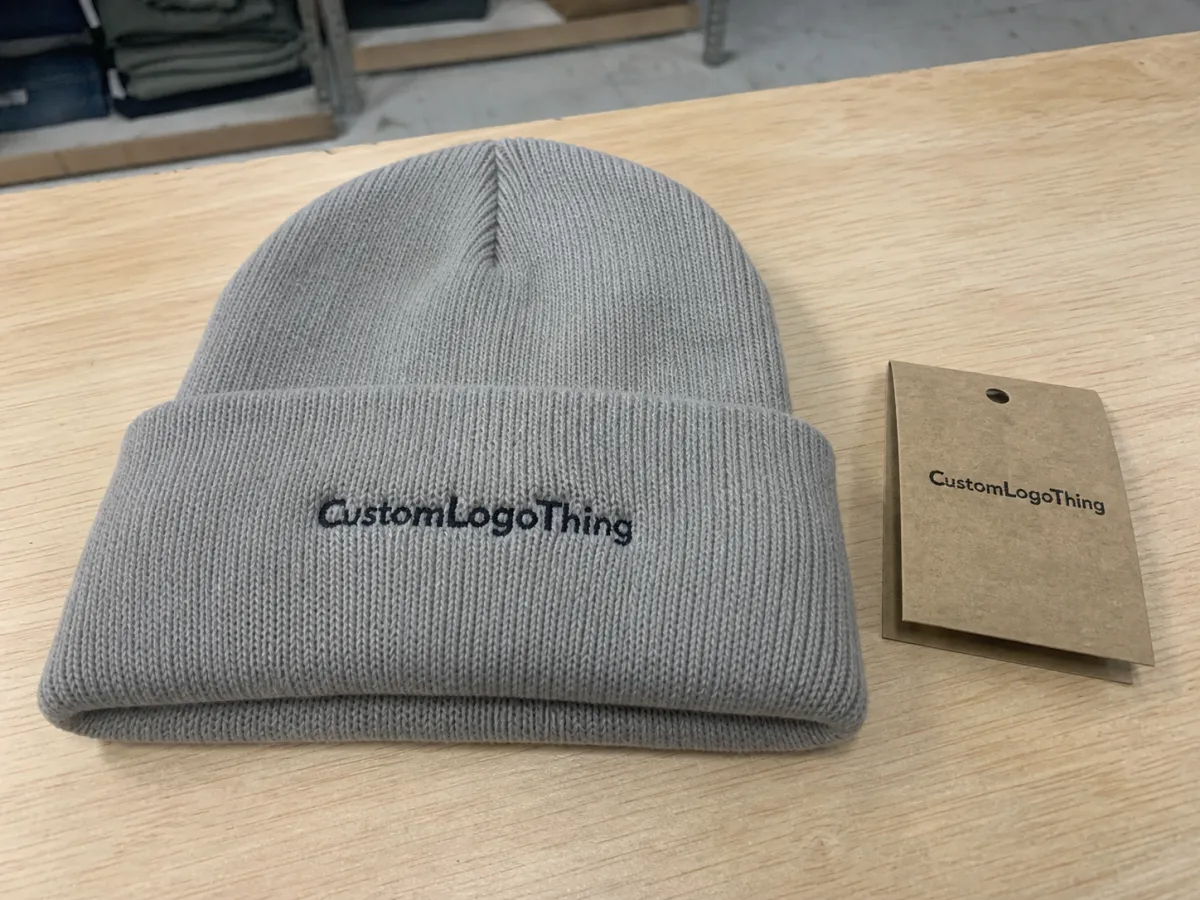
Embroidered cuff beanies are popular for good reasons. They give brands a visible cold-weather item without the sizing mess of jackets, hoodies, or uniforms. One adult size covers most wearers. The cuff creates a clean branding panel. The product works for employee gear, retail merch, outdoor teams, event giveaways, campus programs, subscription boxes, and seasonal kits.
The two numbers buyers ask for first are usually minimum order quantity and turnaround. Fair. But those numbers are connected. Quantity affects blank allocation, embroidery machine scheduling, thread setup, inspection labor, packing time, carton planning, and freight. A 96-piece staff order and a 2,500-piece retail run may use the same logo file. They do not create the same workload.
For small runs, setup and digitizing costs are spread across fewer units. That can make the unit price feel rude. For larger runs, the per-piece price may improve, but other risks become louder: stock availability, shade consistency across cartons, embroidery hours, rework exposure, and freight capacity. Nobody loves discovering freight is the budget problem after the product is already produced.
Buyer reality: the visible beanie is only part of the purchase. You are also buying scheduling accuracy, communication discipline, and defect control.
A useful quote is built from actual order conditions, not a catalog fantasy. The supplier needs artwork, target quantity, delivery location, required in-hand date, packaging needs, and reorder expectations before anyone should pretend the timeline is firm.
Product Details That Affect the Final Beanie Order
A standard embroidered cuff beanie starts with a knit cap, usually acrylic or an acrylic blend, with a folded cuff that accepts decoration. Common options include rib knit, double-layer knit, heavyweight cold-weather styles, recycled yarn blends, wool blends, and softer retail-grade acrylics. Those choices change cost, feel, warmth, and lead time.
A lightweight promotional beanie can be perfectly fine for a one-day event. A thicker rib knit usually makes more sense for employee uniforms, winter field teams, or paid merchandise. If the beanie will be sold, customers will judge the hand feel before they admire the logo. Brutal, but true.
The cuff matters because it creates a predictable logo zone. It keeps the brand mark visible when worn and avoids the size-ratio headache found in apparel programs. That means fewer internal debates, fewer fit complaints, and simpler reorders.
Stock blank beanies with embroidery usually move faster and carry lower minimums. Fully custom production, such as special yarn colors, knit-in patterns, private labels, pom styles, or nonstandard cuff dimensions, requires more planning and often a higher MOQ. Custom is not the problem. Pretending custom behaves like stocked inventory is the problem.
| Beanie Path | Best Fit | Typical Buyer Trade-Off |
|---|---|---|
| Stock cuff beanie with embroidery | Events, staff gear, quick merch, moderate quantities | Faster production, fewer color and construction choices |
| Premium blank with embroidery and label | Retail merch, VIP gifts, onboarding kits | Better perceived value, more approval points |
| Fully custom knit beanie | Seasonal brand programs and planned reorders | Higher MOQ, longer planning window, stronger brand control |
Before requesting pricing, define the job the beanie needs to do. Is it sold or given away? Does warmth matter more than softness? Is exact brand color more important than speed? Will the same style be reordered next winter? These answers shape embroidered cuff beanies Lead Time and MOQ more than most buyers expect.
Logo, Embroidery, and Cuff Specifications to Confirm Before Quoting
Embroidery is physical. Every extra stitch uses machine time, thread, backing, and inspection attention. The main technical variables are logo size, stitch count, thread colors, placement, backing material, hooping method, and whether the cuff needs any handling after decoration.
Stitch count is the quiet cost driver. A clean 2.5-inch wordmark may run efficiently. A dense mascot logo with small lettering, outlines, shadows, and tiny color breaks can multiply machine time and increase puckering risk on ribbed knit. Knit fabric moves. Dense stitching resists movement. That tension is why a logo that looks beautiful on a PDF can look heavy or distorted on a cuff.
Vector artwork is preferred: AI, EPS, or editable PDF. A high-resolution PNG may be enough for review, but embroidery still requires digitizing. The machine does not read a picture. It needs stitch instructions: thread paths, stitch types, densities, angles, trims, and color stops. That digitized file becomes the production map.
Thread colors can approximate Pantone targets, but thread is not ink. Lighting, yarn shade, rib texture, and thread sheen all change perceived contrast. White thread on a black cuff reads differently than cream thread on charcoal. Tonal embroidery can look expensive or invisible. Sometimes both, depending on the lighting. For retail or brand-sensitive orders, a physical sample is often worth the added time.
Logo sizing also needs restraint. A cuff gives a good branding area, not unlimited real estate. Very tall artwork can fight the cuff fold. Very small text can close up after stitching. Thin lines, gradients, distress effects, and tiny registration marks usually need simplification. If the design depends on details smaller than the thread can hold, the design needs editing, not optimism.
Inspection should be discussed before production. Check logo position consistency, loose thread trimming, cuff alignment, stitch density, puckering, shade consistency across the batch, carton counts, and packaging condition. Standards bodies such as ISTA focus on transport testing and packaged-product performance; the practical lesson applies here too. A good product can still become a bad order if packing and transit assumptions are weak.
MOQ, Pricing, and Unit Cost Drivers for Bulk Orders
MOQ is not just a supplier being difficult for sport. Embroidery setup, digitizing review, thread preparation, machine scheduling, packing, and administrative handling all need to be absorbed by the order. A 48-piece run may be possible in some programs, but the unit cost usually carries more of those fixed steps. A 500-piece run gives the math room to breathe.
Pricing depends on blank beanie quality, order quantity, stitch count, embroidery locations, thread colors, labels, packaging, sampling, rush handling, and freight method. Standard embroidery usually does not require expensive tooling, but setup charges and digitizing can still affect the first order. Reorders may price better if the same approved embroidery file, beanie style, thread colors, and placement are used.
Ask for tiered quotes. Compare the planned quantity against the next logical breaks, such as 144, 288, and 576 pieces. Sometimes adding units drops the per-piece price enough to make sense. Other times it just creates boxes of extra inventory nobody asked for. The spreadsheet will be less sentimental than the meeting.
| Cost Driver | How It Affects Cost Per Piece | Buyer Checkpoint |
|---|---|---|
| Stitch count | Higher stitch counts increase machine time and thread use | Ask whether the quote assumes a stitch range |
| Order quantity | Higher quantities often reduce unit cost | Compare at least three quantity breaks |
| Beanie construction | Premium yarns and double-layer knits raise base cost | Confirm material, weight, and cuff style |
| Packaging | Hang tags, sleeves, labels, and kitting add labor | Separate product cost from pack-out cost |
| Freight | Carton volume can change shipping method and landed cost | Quote against a real destination, not a generic estimate |
For basic stock beanies with one embroidery location, buyers may see lower minimums and faster quoting. Add custom yarn, private labels, retail belly bands, barcode stickers, individual poly bags, or split shipments, and the order gets more expensive to manage. Not impossible. Just not the same quote.
A promotional giveaway may prioritize speed and price. A retail order may need better yarn, tighter QC, hang tags, barcode labels, carton marks, and FSC-certified paperboard inserts if packaging claims matter. The Forest Stewardship Council is a useful reference for paper-based packaging claims, though certification depends on the specific material and supply chain.
Custom Logo Things can quote from real variables: artwork, target quantity, delivery location, required in-hand date, and packaging details. Vague catalog pricing rarely survives stitch count, freight, and pack-out requirements.
Lead Time, Production Steps, and Turnaround Risks
The production calendar has more steps than buyers usually see. A responsible order moves through inquiry, artwork review, digitizing, proof approval, blank allocation, sample approval if required, embroidery production, trimming, quality control, packing, freight booking, and final delivery. Each step depends on the one before it.
The clock usually starts after approvals are complete, not when the first email is sent. Missing logo files, late proof feedback, quantity changes, new packaging requests, or a corrected ship-to address can reset parts of the schedule. That is why embroidered cuff beanies Lead Time and MOQ belong in the first planning conversation, not in a rush email after purchasing gets involved.
Typical risk points include stock color shortages, complex stitch files, holiday freight congestion, delayed sample approvals, unclear delivery addresses, and last-minute packaging add-ons. A simple one-location logo on available stock can often move quickly. A dense logo, private label, belly band, and split shipment to five offices needs a different plan.
Rush production may be possible for simple logos, available blanks, and modest quantities. It is not magic. Rush handling cannot remove freight transit, skip sample approval for a retail-critical order, or create inventory that is already gone. If the order has an event date, work backward from the in-hand date and add a receiving buffer for internal distribution, staff sorting, kitting, or event setup.
Lead time also changes by season. Cold-weather accessories tend to bunch up in late summer, fall, and pre-holiday ordering windows. Freight networks can get tighter before major retail peaks. If the beanies need to arrive before a winter campaign, waiting until the first cold week to order is not a strategy. It is weather-based gambling.
The best timeline is quoted against a real design, real quantity, and real destination. A generic production estimate may sound comforting. It does not protect a launch date.
How to Compare Suppliers Without Getting Fooled by Low Quotes
A low quote is evidence, not proof of savings. It may hide setup charges, limited thread colors, lighter knit weight, weak inspection, longer freight, no sample approval, or a production window vague enough to park a truck in it. The first-line number matters. The missing lines matter more.
Compare quotes side by side: beanie material, cuff style, embroidery size, stitch count assumption, MOQ, setup charges, proofing process, sample cost, production lead time, shipping terms, and payment terms. If a quote does not state embroidery size or stitch count assumptions, the final price can move once the artwork is reviewed.
Supplier reliability matters more when the order has a fixed launch date. A late beanie order can disrupt uniforms, subscription boxes, influencer seeding, campus events, retail floor sets, or onboarding kits. One delayed pallet can create work for five departments. None of them will care that the quote looked cheap.
Ask operational questions. What happens if the selected blank color is unavailable? How are artwork problems handled? What triggers a failed sample? Can carton labels show department, location, or kit number? How are shade variations documented? Who approves the embroidery proof? The answers reveal whether the supplier is managing production or just forwarding a price.
Custom Logo Things is built for buyers who want direct feasibility answers. If the logo is too dense, say it early. If the MOQ pushes the project into a better price tier, show the math. If freight is the risk, address it before approval. That is how production planning stops being a late-stage surprise.
For process questions that do not need a full email chain, buyers can review the Custom Logo Things FAQ before requesting a quote.
Customization Options That Change Buyer Perception
Small specification choices can change how a beanie feels in the hand. A thicker rib knit, cleaner cuff fold, premium thread finish, or private label can make the same logo feel more retail-ready. That matters if the item is sold, gifted to VIPs, or used for employee onboarding.
Common add-ons include woven labels, leatherette patches, hang tags, belly bands, poly bags, carton labeling, retail stickers, and bundled kit packaging. Each add-on adds an approval point. Some add cost per piece. Some add labor more than material. A belly band looks simple until someone has to approve artwork, print it, fold it, apply it, keep it straight, and pack it consistently.
Packaging changes the product experience. A beanie handed out loose at an outdoor event performs differently than one packed with a thank-you card, branded sleeve, or kit insert. If sustainability claims are used, be specific. Recycled yarn, FSC paper, and reduced plastic packaging are material claims, not mood words.
Keep the order simple when the deadline is tight. One available beanie color, one embroidery location, one approved logo size, and standard carton packing can protect turnaround. Add complexity where the channel justifies it. Retail merch needs shelf presence. Staff uniforms need durability and repeatability. Event giveaways need predictable delivery and easy distribution.
The practical rule is channel alignment. Do not pay for retail packaging if the beanies will be handed out from a bulk carton in a parking lot. Do not under-spec the beanie if it will sit next to paid apparel in a merch store.
Action Steps Before You Request a Beanie Quote
A strong quote starts with a tight brief. Before contacting Custom Logo Things, gather the target quantity, desired beanie color, logo file, approximate embroidery size, delivery ZIP or country, required in-hand date, packaging needs, and sample requirements. If the order is retail-facing, include labeling, barcode, carton, and presentation details.
Rank priorities before asking for pricing. Lowest unit cost, fastest delivery, premium feel, exact brand colors, retail packaging, and reorder consistency are different goals. Trying to optimize all of them at once usually creates quote drift.
- Confirm the target quantity and ask for two nearby quantity breaks.
- Send the best available logo file, preferably vector artwork.
- State the embroidery size range, even if it is approximate.
- Provide the delivery location and required in-hand date.
- List packaging needs, including hang tags, labels, sleeves, or kitting.
- Decide whether a physical sample is required before production.
Every missing detail becomes either a delay or an assumption. Ask for proofing steps, production calendar, freight estimate, and the backup plan if the selected blank color is unavailable. Before deposit, run one internal checkpoint: artwork, spelling, logo placement, quantity, ship-to address, and required delivery date.
For general ordering questions, the Custom Logo Things FAQ can help buyers prepare the basics before a formal quote request.
Embroidered cuff beanies Lead Time and MOQ should be decided together. The smartest order is not always the smallest one or the fastest one. It is the order that arrives correctly, on budget, and ready to distribute.
FAQ
What is the typical MOQ for embroidered cuff beanies?
MOQ depends on blank availability, embroidery setup, logo complexity, and customization level. Lower MOQs are usually easier with stock cuff beanies and one-location embroidery. Higher minimums often apply for custom yarn colors, private labels, special packaging, or fully custom knit production.
How long is the lead time for custom embroidered beanies?
Lead time depends on artwork readiness, proof approval, stock allocation, embroidery workload, inspection, packing, and freight. The production clock usually begins after artwork and order details are approved. Rush options may be possible for simple logos and available blanks, but shipping time still has to be included.
What information do I need for an embroidered cuff beanies quote?
Provide quantity, logo file, beanie color, embroidery size, delivery location, in-hand date, and packaging requirements. If the order is retail or employee-facing, include quality expectations such as yarn weight, labeling, and carton needs. Request quantity breaks so you can compare the planned order against the next pricing tier.
Can embroidered cuff beanies have multiple logo locations?
Yes, but each embroidery location can add setup time, machine time, inspection steps, and cost. Most buyers place the main logo on the cuff because it stays visible when worn. For tight deadlines, one clean cuff embroidery is usually safer than multiple decoration points.
How can I reduce embroidered beanie lead time without hurting quality?
Choose available stock beanies, use a simple embroidery design, approve proofs quickly, and avoid late specification changes. Send usable artwork at the start of the quote process to reduce back-and-forth. Confirm the delivery address and in-hand date early so production and freight can be planned together.

