Order Unstructured Dad Hats: Lead Time, MOQ, and Production Facts
Unstructured dad hats look easy. Soft crown, curved visor, small logo, adjustable strap. Done, right?
Not quite. The relaxed shape is exactly why Lead Time and MOQ can shift so much from one order to the next. A cap with stock cotton twill and simple front embroidery is a different production job from a custom-dyed corduroy cap with a woven patch, back embroidery, retail tags, and barcode labels. They may both be “dad hats” on the invoice. The factory does not treat them the same.
Buyers usually want four answers quickly: how many pieces they need to order, how long production takes, what drives the price, and what artwork or spec details are required before quoting. Fair questions. The honest answer is that unstructured dad hats Lead Time and MOQ depend on materials, decoration, sampling, packing, and freight. Ignore any one of those and the quote starts looking suspiciously optimistic.
Custom Logo Things helps buyers sort those details before pricing is built. That matters because a soft-crown cap is not just a blank commodity with a logo slapped on it. The cap body, logo size, stitch density, closure, and packaging all affect how the finished order looks, feels, ships, and costs.
Soft-Crown Caps Sell Because They Feel Broken In
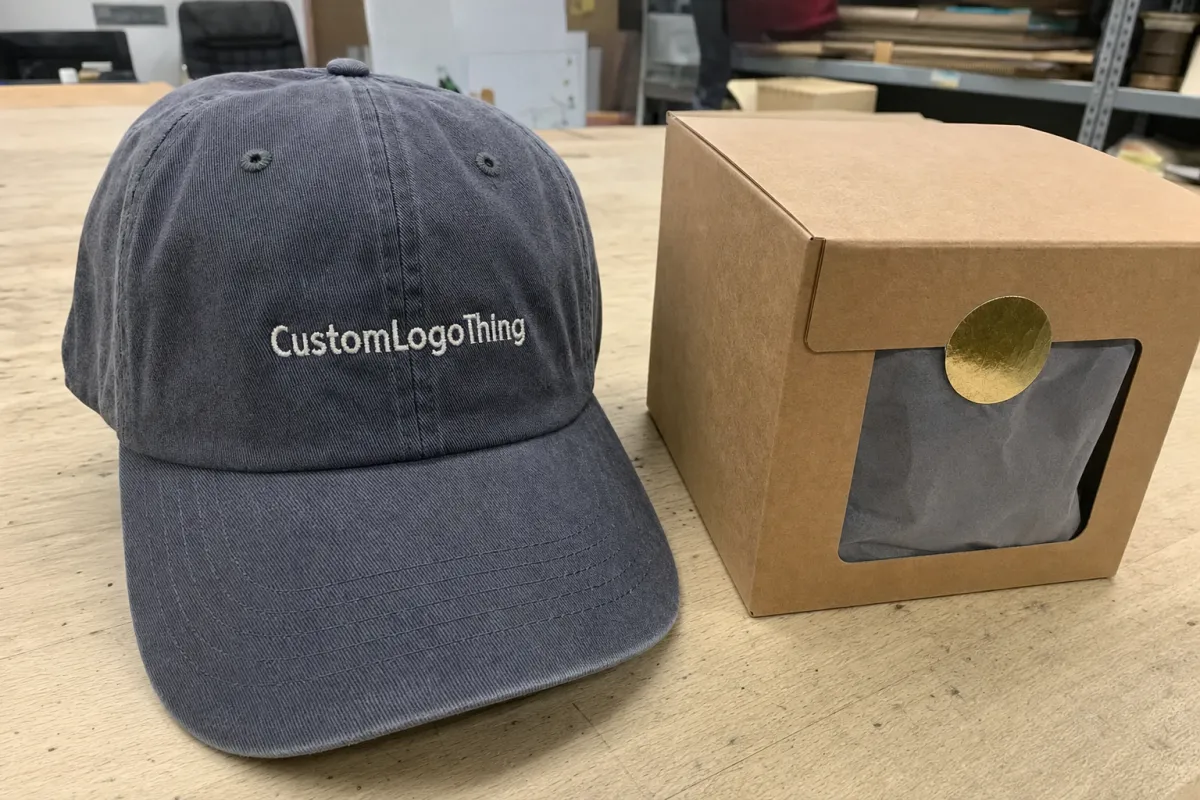
An unstructured dad hat has little or no stiff buckram in the front panels. The crown sits lower and softer than a structured promotional cap. It bends with the head instead of standing upright like a billboard. That is the appeal.
It is also the production challenge. A relaxed crown does not hide much. If the embroidery is too dense, the front panel can pucker. If the logo is too tall, it can fight the crown shape. If the fabric is too flimsy, the cap may collapse in a way that looks cheap instead of casual. There is a difference. A big one.
Soft caps tend to work well for retail merch, outdoor programs, employee uniforms, subscription boxes, festival merchandise, and brand giveaways that need to feel wearable after the event is over. People keep the cap because it feels like something they chose, not something they were handed at a booth and forgot in the car.
The best versions feel broken in without looking tired. The crown falls naturally. The visor holds its curve. The strap adjusts cleanly. The logo sits where it should, at a size the fabric can actually support.
That last part matters more than buyers expect. A design that looks sharp on a screen can turn messy in thread. Small type fills in. Gradients disappear. Fine linework gets swallowed. A soft cap can handle decoration beautifully, but it rewards restraint. Not every logo needs to be four inches wide and stitched like body armor.
Product Details That Change the Final Cap
The cap body drives the whole order. Fabric, panel count, crown height, visor shape, sweatband, inside taping, closure, and decoration all change the final result. They also change MOQ and timing.
Fabric choice is usually the first fork in the road. Washed cotton twill gives the familiar vintage look with a softer hand. Standard cotton twill is clean, flexible, and easier to quote. Canvas feels sturdier and can read more premium, especially for outdoor or workwear-adjacent brands. Corduroy adds texture and a more fashion-forward profile. Performance blends make sense for golf, resort, fitness, or outdoor programs where moisture handling matters more than a broken-in cotton finish.
None of those choices are automatically better. They just behave differently.
A washed cotton cap may feel great but show shade variation more clearly. Corduroy can look excellent with a patch, but embroidery across the ribs needs careful planning. A lightweight fabric may be comfortable, while a slightly heavier twill may hold embroidery with less puckering. If the logo is dense, the fabric needs enough body to support it.
Construction matters too. A 6-panel dad hat has a different front seam than a 5-panel cap, which affects logo placement. Low crowns sit closer to the head and leave less vertical room for decoration. Mid crowns give a little more space but may feel less classic if the buyer wants the old-school dad hat profile. Visor stitching, eyelets, sweatband material, and inside taping all contribute to how finished the cap feels.
Closure choice is not just a small trim decision. A self-fabric strap with a metal buckle gives the most traditional look. Hook-and-loop works for some uniform programs but can feel less retail. Plastic snapbacks are adjustable and efficient, though they shift the style away from the classic dad hat. Elastic fit removes the strap but adds sizing decisions. Each choice affects cost, availability, and packing.
Decoration is the other major variable. Embroidery is the standard because it wears well and looks natural on cotton caps. Woven patches handle small details better than direct embroidery. Leather and faux leather patches add structure and a premium feel. Printed patches and heat transfers can solve certain artwork problems, especially for color blends or fine graphics, but they add their own setup steps.
A lower-cost cap can still look expensive if the spec is disciplined. A premium cap can look awkward if the logo is oversized, the patch is poorly scaled, or the closure feels like an afterthought. The cap does not care what the deck said. It only reflects the choices that made it into production.
Specs to Confirm Before Requesting a Factory Quote
A clean quote starts with clean inputs. Send the quantity, fabric type, cap color, panel count, crown height, visor style, closure type, logo size, decoration method, number of logo locations, packaging preference, destination, and required in-hand date. Yes, that is a lot. It is also how you avoid a quote that changes the second production gets real.
Cap color deserves more attention than it usually gets. Stock colors are faster and usually support lower minimums because the material already exists. Custom-dyed fabric adds lab dip approval, material scheduling, shade control, and more risk. If the buyer needs a close brand match, a well-chosen stock color may be smarter than chasing a perfect custom shade on a small order.
Artwork should be sent in vector format whenever possible. Embroidery needs digitizing, and clean artwork gives the digitizer something useful to work with. Tiny text may need to be enlarged or removed. Thin strokes may need to be thickened. Gradients do not translate into thread in any magical way. If someone promises otherwise, ask to see the stitch sample.
Logo size should be confirmed in inches or millimeters, not just “center front.” On low-profile dad hats, front embroidery often works best when it stays modest. A common front logo range is roughly 2.25 to 3.5 inches wide, depending on the artwork and crown. Taller logos need extra caution because the crown curve can distort them.
Placement gets tricky around seams and closures. Front embroidery has to work with the crown shape and center seam. Side embroidery has less room and usually needs simpler artwork. Back embroidery can fight the strap opening or buckle. Patch corners need enough clearance so they do not lift or pucker after sewing.
Packaging belongs in the spec from the beginning. Bulk packing is the lowest-cost route and usually the fastest. Individual polybags, hang tags, barcode labels, size stickers, tissue, inner cartons, and branded cartons all add labor. They may be worth it for retail, fulfillment, or kitted programs, but they are not free and they do not happen instantly.
For retail-packed or parcel-shipped cap programs, carton strength and packing method should match the delivery path. Guidance from ISTA can help buyers think through transit testing, and paper-based packaging claims should be checked against sourcing standards such as FSC when those claims are part of the product promise.
“The fastest quote is not always the best quote. The best quote already accounts for the cap construction, artwork method, and delivery path you actually need.”
Unstructured Dad Hats Lead Time and MOQ Basics
Unstructured dad Hats Lead Time and MOQ are tied together because factories schedule around materials, decoration setup, sampling, sewing capacity, packing labor, and freight. A small stock-based order can move quickly. A fully custom program needs more runway.
There is no honest universal MOQ for every dad hat. Stock blanks or stock fabric may support lower quantities, often starting around 50 to 100 pieces for simple decorated orders. Semi-custom caps using stock fabric, standard trims, and one decoration method may land closer to 100 to 300 pieces. Custom-dyed fabric, private labels, special closures, custom trims, or multiple logo locations often push minimums into the 300 to 500 piece range or higher.
Those are practical ranges, not commandments carved into stone. The final number depends on the factory route, decoration method, and material availability.
Lead time follows a chain: quote approval, artwork review, digitizing or patch setup, sample production if required, sample approval, bulk material preparation, cutting and sewing or blank allocation, decoration, finishing, inspection, packing, and freight. A simple domestic stock-cap order with embroidery may take a couple of weeks after approvals. A custom overseas order with sampling, dyeing, patches, private labels, and ocean freight can take several months.
The trouble usually starts with small delays. The logo file is low resolution. The buyer changes the thread color after digitizing. The delivery address is missing. The packaging spec arrives late. Someone adds side embroidery after the quote is approved. Nobody approves the sample for a week, then everyone is shocked that the ship date moved. Classic.
The fastest workable route is simple: give the quantity, deadline, logo, cap style, and packaging needs up front. That lets Custom Logo Things identify whether the order belongs on a stock, semi-custom, or fully custom path. The wrong path creates either a bad price or a bad timeline. Sometimes both.
Pricing, MOQ, and Unit Cost Drivers
Unit cost is built from more than the blank cap. Fabric, construction, closure, decoration setup, stitch count, patch type, labels, packaging, inspection, cartonization, and freight all sit inside the final landed number. Buyers who only compare the decoration charge are missing half the math.
Setup costs matter most on smaller orders. Embroidery digitizing, patch setup, woven label setup, sample charges, custom color development, and sample shipping do not shrink just because the order is modest. Spread those costs across 50 pieces and the unit price feels high. Spread them across 500 and the math improves.
MOQ changes the cost structure, but savings are not always linear. Premium fabrics, high stitch counts, complex patches, individual packaging, and multi-location decoration can keep the price from dropping as quickly as expected. A 1,000-piece order may be a better value than 500 pieces, but only if the buyer can handle storage, cash flow, and demand. Cheap inventory sitting in boxes is not a win. It is just inventory with a better unit cost.
The table below gives directional ranges. Actual pricing depends on fabric, order route, logo coverage, packaging, inspection requirements, and freight.
| Cap Route | Typical MOQ | Typical Cost Per Piece | Best For | Notes |
|---|---|---|---|---|
| Stock cap + simple front embroidery | 50-100 pieces | $3.80-$6.50 | Small team orders, fast giveaways, basic merch | Lowest setup burden; simple logos work best |
| Stock fabric + woven patch | 100-300 pieces | $4.80-$8.20 | Retail feel, cleaner small details | Patch production adds setup and approval time |
| Custom-dyed fabric + embroidery | 300-500 pieces | $6.20-$10.50 | Brand-matched programs | Lab dips and color approval can extend timing |
| Premium fabric + multi-location decoration | 500+ pieces | $8.50-$14.00 | Retail drops, premium merch, private label | More handling, inspection, and delay risk |
Decoration choice changes price fast. Simple front embroidery is usually efficient. Dense embroidery costs more, takes longer to run, and can stiffen a soft crown. Woven patches keep small details cleaner but require patch production and sewing. Leather or faux leather patches add material cost and a different brand feel. Side or back embroidery adds handling because each cap must be positioned and checked again.
Packaging can quietly raise the total. A bulk-packed giveaway cap and a retail-ready cap with hang tag, barcode, inner bag, and SKU separation are not the same job. Fulfillment-friendly packing may save time later, but it should be priced honestly at the start.
If the budget is tight, ask for quantity breaks and spec alternatives. Compare a lean launch quantity, a standard reorder quantity, and a larger retail-ready quantity. Also compare decoration routes. A dense embroidered logo may be better as a woven patch. A custom fabric color may be replaced by a close stock shade. A second logo location may not be worth the cost if the front design already does the work.
Production Steps and Timeline From Artwork to Delivery
The production path starts with spec confirmation and artwork review. Then comes quote approval, payment terms, setup, sampling when needed, sample approval, bulk production, inspection, packing, and shipping. It is not complicated, but it is unforgiving. Every unclear handoff costs time.
A digital mockup may be enough for a repeat order or a simple logo on a known cap body. A physical pre-production sample is smarter for new construction, custom fabric colors, patch programs, retail packaging, or logos where stitch density and crown shape need to be judged by hand. A sample adds time. It also catches problems before 500 pieces exist with the same problem. Annoying, yes. Cheaper than regret.
Embroidery orders need digitizing, thread selection, and sometimes a stitch-out review. Patch orders need patch production before sewing can begin. Heat transfer decoration needs transfer setup and press testing. Multi-location decoration creates extra handling and extra inspection. These steps are normal, but they should be included in the timeline instead of treated like minor admin work.
Freight should be separated from production time. Air freight is faster and more expensive. Ocean freight is more economical for larger orders but requires a longer planning window and more tolerance for schedule movement. Domestic delivery still depends on carton count, carrier capacity, destination, and receiving hours. A low unit price is not helpful if the freight plan misses the event date.
Approvals protect the schedule. Confirm the final mockup. Approve logo size and placement. Sign off on Pantone, thread, or material references. Verify the ship-to address, delivery contact, and packing instructions. Once bulk materials are cut or caps are decorated, changes get expensive fast.
This is especially true for unstructured caps because small shifts are visible. A slight change in stitch density can alter how the crown sits. A patch placed a little too high can look strange on a low-profile cap. A back logo can interfere with the strap. The margin for “we’ll fix it later” is thin.
Quality Checks That Protect the Order
Quality control for soft caps is not limited to checking whether the logo is centered. That is the obvious part. The less obvious checks are crown symmetry, visor curve, seam alignment, panel puckering, thread tension, closure function, sweatband cleanliness, inside taping, color consistency, and packing shape.
A cap can look fine from six feet away and still feel wrong on the head. A rough inner seam can irritate the wearer. A weak visor curve can make the cap look unfinished. A loose strap buckle can make the whole product feel cheap. Retail buyers notice. Employees notice too, even if they are polite about it.
Decoration checks should match the method. Embroidery needs clean edges, stable stitching, and no excessive thread nesting. Patch stitching should be even around the border. Woven patch details should remain readable at normal viewing distance. Leather or faux leather patches should sit flat without rippling. Heat transfers should be tested for adhesion and edge lift.
Fit and feel deserve their own review. The crown should relax without looking crushed. The visor should hold its intended curve. The closure should adjust smoothly. The cap should sit comfortably without a sharp internal edge or bulky seam fighting the forehead.
Color consistency is another practical issue. Washed fabrics can show natural variation, and that may be acceptable if it is part of the look. Custom-dyed programs need tighter shade control. If a buyer expects every cap to match a brand color exactly, that expectation has to be built into the spec and approval process. Hope is not a color standard.
Packaging inspection protects the finished work. Caps should be packed to reduce deformation, especially when the crown is soft. Cartons should be labeled clearly. Individual bags, hang tags, barcode labels, and SKU splits should match the approved instructions. If packing is rushed, the caps may arrive technically correct but visually disappointing. That is a miserable way to finish an otherwise good order.
Next Steps to Get an Accurate Cap Quote
Before requesting pricing, gather the logo file, target quantity, cap color, fabric preference, closure style, decoration locations, packaging needs, destination, and in-hand date. Those details allow the quote to reflect the real production path.
Use the order purpose to shape the spec. A retail drop may justify premium fabric, a custom patch, and private labeling. An employee uniform may need comfort, reorder consistency, and durable embroidery. An event giveaway may need a faster stock-based option with a lower MOQ. Different jobs. Different caps.
If the first price is over budget, ask for useful alternatives. Reduce stitch count. Switch from direct embroidery to a woven patch. Use a stock fabric color. Remove a second decoration location. Simplify packaging. Small changes can improve cost or timing without making the cap feel watered down.
For the cleanest buying process, ask for unstructured dad hats Lead Time and MOQ guidance with artwork and delivery date included. A quote without those details is a placeholder. Sometimes a friendly one. Still a placeholder.
The FAQ covers common questions about ordering, sampling, artwork, and shipping. It is worth reviewing before files start moving between teams, especially if several people need to approve the cap before production.
A good dad hat order is not built on guesswork. It is built on a clear spec, realistic timing, and decoration that respects the soft crown. Keep those pieces aligned and the final cap has a much better chance of being worn, reordered, and not quietly buried in a supply closet.
What is the typical MOQ for custom unstructured dad hats?
MOQ depends on whether the order uses stock blanks, stock fabric, or fully custom construction. Stock-based orders may start around 50 to 100 pieces. Semi-custom orders often fall around 100 to 300 pieces. Custom-dyed fabric, private labels, special trims, or multiple decoration locations usually require higher minimums, often 300 to 500 pieces or more.
How does embroidery affect unstructured dad hat lead time?
Embroidery adds time for artwork review, digitizing, thread selection, and stitch testing. Dense logos, small lettering, multiple thread colors, or decoration in more than one location can extend setup and inspection compared with a simple front logo.
Can stock cap colors lower MOQ?
Yes. Stock colors and standard materials often support lower MOQ because the factory does not need to dye fabric, source special trims, or schedule custom material preparation. Custom Pantone dyeing, uncommon fabrics, special closures, and private labeling usually increase both MOQ and lead time.
What details are needed to quote unstructured dad hats accurately?
Provide the order quantity, logo file, cap color, fabric preference, closure type, decoration method, logo size and placement, packaging needs, shipping destination, and required delivery date. If the decoration method is undecided, ask for options comparing embroidery, patches, and transfers.
Do samples affect custom dad hat lead time and MOQ?
A sample adds approval time, but it can reduce risk when the order uses a new logo, custom fabric, patch decoration, retail packaging, or a tight brand standard. For reorders or simple stock-based caps, a digital mockup may be enough. Physical samples are useful when fit, crown shape, logo texture, and fabric hand feel need approval before bulk production.

