Order Oval Stickers Custom for Labels That Sell Fast
A tiny label gets about three seconds to earn trust. Maybe less. That is why oval stickers custom buyers should treat the order like a packaging decision, not a quick print errand. On a candle jar, coffee bag, bakery box, kraft mailer, or subscription insert, an oval label can make the product feel softer, more finished, and more giftable before the customer reads a word.
The shape is only one variable. The real performance comes from five things working together: brand fit, legibility, adhesive behavior, finish, and application speed. Miss one, and the label may still “print fine” while making the product look cheaper than it is.
Why Oval Stickers Custom Orders Work Harder Than They Look
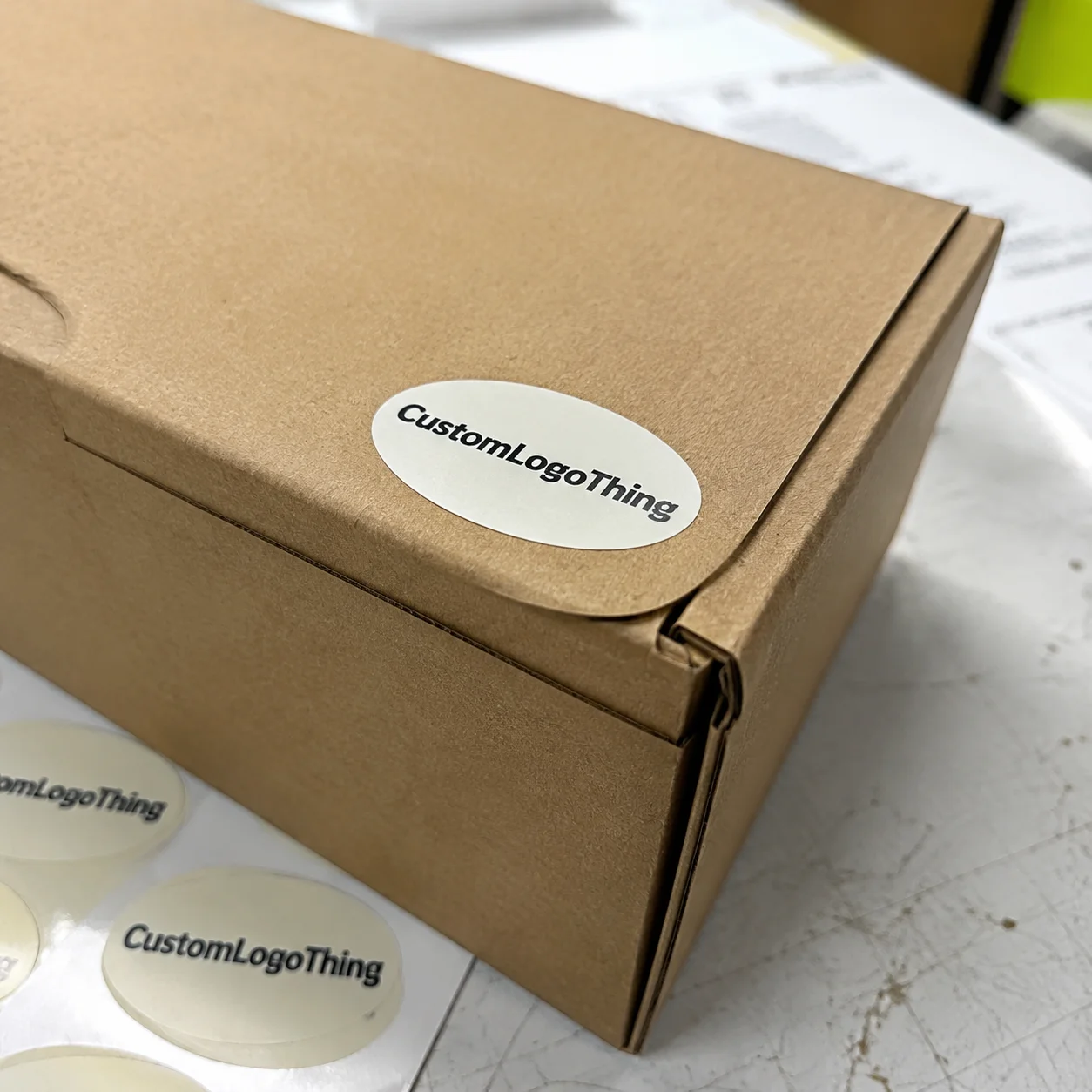
Oval labels sit in a useful middle ground. A rectangle gives you maximum layout efficiency, but it can feel rigid on small-batch retail packaging. A circle feels friendly, but it steals horizontal room from product names, taglines, and ingredient callouts. An oval keeps that warmer, boutique feel while giving designers enough width to keep text readable.
That balance explains why oval labels show up across so many packaging jobs: product seals, ingredient flags, thank-you labels, event favors, retail price tags, boutique mailer closures, and subscription box inserts. A 1.5-by-2.5 inch oval can work as a jar front label. A 1-by-2 inch oval can close tissue wrap. A 2-by-3.5 inch oval can carry a logo, scent name, and short claim without looking cramped.
From a packaging buyer’s point of view, the hard part is not finding someone who can print an oval. The hard part is deciding the correct size, material, finish, and order quantity before asking for a quote.
That early clarity prevents reprints, rushed art changes, and the expensive little failures that appear after labels arrive: poor adhesion, unreadable type, scuffed ink, or a border that looks slightly off-center on every jar.
Packaging reality check: a sticker is not just decoration. It is part of the product packaging system, and it has to survive the same handling, storage, and customer scrutiny as the box, pouch, bottle, or mailer beneath it.
If you are comparing options across Custom Labels & Tags or broader Custom Packaging Products, define the use case first. Is the label decorative, functional, compliant, removable, water-resistant, or part of a tamper-evident presentation? One oval can do several jobs. It just needs the right specification.
How Oval Sticker Materials, Adhesives, and Finishes Work
Every pressure-sensitive sticker has a basic stack: face stock, adhesive, liner, ink, and sometimes a coating or laminate. The face stock is the visible material. The adhesive does the work. The liner protects the adhesive until application. Ink builds the image. A coating or lamination adds scuff resistance, shine control, or moisture protection.
Paper is usually the economical choice for indoor packaging: bakery boxes, candle dust covers, soap wraps, hang tags, and short-life promotional labels. Film materials such as BOPP or vinyl cost more, but they handle refrigerated drinks, bathroom products, oily cosmetic jars, and giveaway stickers better than standard paper. Clear film creates a “no-label” look on glass or plastic, though it often needs white ink under light colors. Textured stocks can make premium package branding feel more tactile, especially on gift, wellness, and artisan food lines.
Adhesive selection matters more than many buyers expect. Permanent adhesive suits most product labels. Removable adhesive works for price tags, temporary promotions, and event labels. Freezer-grade adhesive is built for cold surfaces and condensation-prone storage. High-tack adhesive helps with textured kraft boxes, rough mailers, or low-energy plastics. Repositionable adhesive gives operators a brief correction window, which can reduce waste during hand application.
Finish changes both appearance and durability. Matte feels soft and premium, but it can show fingerprints on oily products. Gloss makes color pop and often suits bright retail packaging. Satin is the compromise: cleaner than matte, quieter than gloss. Foil adds shelf impact, especially for seals and limited-edition product packaging. UV coating can improve scuff resistance, although a laminate is usually stronger for wet or high-friction environments.
Die-cut precision is especially visible on oval stickers custom orders because curved borders reveal small shifts. A 1 mm trim variance may disappear on a rectangle. On an oval with a thin border, it can look like the artwork is drifting sideways. Safe zones and bleed are not design trivia; they are production controls.
| Material or Finish | Best Use | Watchout | Typical Cost Impact |
|---|---|---|---|
| Paper stock | Indoor boxes, bags, mailers, samples | Poor fit for water, ice, or heavy abrasion | Lowest baseline |
| BOPP film | Food jars, drinks, bath products | May need special adhesive for textured surfaces | Often 15% to 40% higher than paper |
| Clear film | Glass bottles, cosmetic jars, transparent pouches | White ink may be required for opacity | Moderate to high |
| Foil or spot UV | Premium seals, gift packaging, limited editions | Adds proofing and production time | Can add setup fees and higher unit cost |
| Roll format | Runs above a few hundred pieces, dispensers, hand labeling | Unwind direction must be confirmed | Efficient at scale |
Roll stickers usually beat sheet stickers for larger runs because operators can apply them faster, use dispensers, and keep labels organized by SKU. Sheets still make sense for small batches, event favors, samples, and low-volume branded packaging where flexibility matters more than speed.
Key Specs to Decide Before You Request Artwork Proofs
Start with size, not artwork. Measure the usable flat area on the actual package, then subtract breathing room for curves, seams, lids, folds, and hand placement. Small seals often land around 0.75-by-1.5 inches or 1-by-2 inches. Medium product labels commonly sit near 1.5-by-2.5 inches or 2-by-3 inches. Larger jar or pouch labels may use 2.5-by-4 inches or wider, depending on the front panel.
The oval’s ratio changes the design. A wider oval suits logos, product names, and short taglines. A taller oval works better for monograms, badge layouts, or vertical seals. If the label carries a barcode, QR code, net weight, scent name, and social handle, the larger size is not indulgent. It is risk control.
Artwork should be supplied as vector whenever possible: AI, EPS, or press-ready PDF files are common. Raster images should be 300 DPI at final print size. Fonts should be embedded or outlined. Text and key graphics should sit inside a safe zone, often at least 1/16 inch from the trim line, while bleed should extend beyond the cut line by roughly 1/16 to 1/8 inch. Minimum line thickness depends on the printer, material, and ink coverage, but ultra-thin hairlines are risky on small ovals.
Color needs a sober conversation. CMYK is the standard for many sticker runs. Pantone matching can help maintain brand consistency across custom printed boxes, labels, bags, and cards, but exact matches depend on material, coating, ink system, and viewing light. Screen color is not proof. A backlit phone makes colors brighter than ink on matte paper.
Clear and metallic materials add another layer: white ink. Without white ink under light colors, the artwork can look transparent, muddy, or low contrast. On silver or holographic stocks, white ink can block metallic shine in selected areas while leaving other areas reflective. That detail should be shown on the proof, not guessed after production.
Readability is brutal on small labels. Tiny serif fonts, curved text, weak contrast, and all-caps scripts fail quickly. Print a paper mockup at actual size, cut it roughly to shape, and place it on the real container. Then view it from arm’s length. If the product name cannot be read in two seconds, the design needs work.
Pricing, MOQ, and Unit Cost Drivers for Custom Oval Labels
Sticker pricing usually depends on size, material, finish, quantity, number of designs, die-cut complexity, and proofing needs. The setup work for the first few hundred labels can carry a lot of the cost. Once quantities move into the thousands, the order behaves more like a manufacturing run, and unit cost usually drops.
For basic paper oval labels, small-batch orders may land around $0.20 to $0.60 per sticker depending on size and quantity. Larger runs of simple labels can fall below $0.10 per piece. Waterproof film labels, specialty adhesives, foil stamping, spot UV, or multiple designs can push unit pricing higher. These are broad ranges, not guarantees, because freight, artwork condition, ink coverage, and finishing choices all change the math.
MOQ also shapes the decision. Low minimums are useful for launches, farmers market tests, holiday scents, and short-run retail packaging. Larger runs reduce unit cost because setup, press time, and material handling spread across more pieces. The tradeoff is storage and version risk. If your ingredients, UPC, scent name, or compliance copy might change, ordering 25,000 labels can create a different kind of waste.
Common cost adders include waterproof film, foil stamping, spot UV, specialty adhesives, custom roll cores, rush production, split shipments, multiple SKUs, white ink, and printed proofs. Hidden budget factors are less obvious: labels wasted during hand application, adhesive failure on textured boxes, relabeling after a copy change, and missed launch dates because proofs were approved late.
The cleanest quote request includes eight details: size, quantity, material preference, finish, intended surface, use environment, application method, and delivery deadline. If the label will go on a cold glass bottle, say that. If it will close a kraft mailer, say that too. Those are different adhesive jobs.
| Order Scenario | Likely Format | Typical Unit Range | Buyer Note |
|---|---|---|---|
| 250 paper event stickers | Sheets | $0.30 to $0.80 | Good for samples, favors, and short tests |
| 1,000 product labels | Sheets or rolls | $0.12 to $0.35 | Material choice starts to matter more |
| 5,000 film labels | Rolls | $0.06 to $0.18 | Useful for faster application and inventory planning |
| 10,000+ premium labels | Rolls | Varies widely | Foil, white ink, or specialty adhesives can dominate cost |
Compare total project cost, not just the sticker price. A label that costs two cents more but prevents peeling, smearing, or returns may be the cheaper choice. Packaging failures rarely stay isolated; they affect customer service, reviews, retailer confidence, and the perceived value of the product.
Process, Timeline, and Production Steps From File to Delivery
A typical order moves through quote request, artwork review, digital proof, approval, printing, cutting, quality check, packing, and shipping. Simple paper stickers may move through production in several business days after proof approval. More complex oval sticker jobs, such as clear film with white ink, foil details, or weather-resistant labels, can take longer because materials, finishing steps, and quality checks stack up.
Delays usually happen in predictable places. Low-resolution logos. Missing bleed. Unoutlined fonts. Late proof approval. Specialty material sourcing. Shipping constraints. None sound dramatic, yet each can turn a tidy launch calendar into a scramble.
Digital proofs are valuable, but they have limits. They confirm layout, size, spelling, trim line, orientation, and general color expectations. They do not perfectly simulate paper texture, foil reflection, adhesive behavior, or how matte ink looks on a curved amber bottle. If the label is central to the product launch, a sample or printed proof is often worth the extra time.
Lead Time Planning should include more than printing. Add time for sampling, product photography, fulfillment prep, retailer presentations, and backup inventory. If you need labels on finished goods by a Friday, the order should not be approved on Monday unless the supplier has confirmed production capacity and shipping method in writing.
Roll direction deserves special attention. For machine application or label dispensers, the unwind position controls whether the top, bottom, left, or right side of the oval feeds first. The wrong orientation can slow an operator, jam equipment, or force a roll to be rewound. That is a small specification with a large labor impact.
For broader shipping and handling assumptions, standards such as ISTA are useful reminders that packaging is tested as a system, not as isolated decoration. A sticker on a mailer may face compression, vibration, abrasion, humidity, and temperature changes before a customer ever sees it.
Approve artwork only after checking the sticker at real scale on the real container, especially for curved jars, bottles, tapered tubs, and flexible pouches. Ovals can look centered on screen and slightly tilted in use. The package geometry gets the final vote.
Common Ordering Mistakes That Make Oval Stickers Look Cheap
The most common mistake is guessing size. A buyer sees a 2-by-3 inch label online and assumes it will work. Then the label arrives and overlaps a jar shoulder, crosses a pouch crease, or fights with a lid seam. Measuring the usable flat area takes five minutes. Reprinting takes days and money.
Thin borders are the second trap. A fine oval outline looks elegant in a design file, but trimming tolerance can make it appear uneven after cutting. A thicker border, no border, or a design that allows for slight movement is safer. ASTM standards often focus on test methods and material behavior, but the broader lesson applies here: tolerances should be designed into the system, not wished away at inspection.
Overloaded copy also weakens packaging design. Ingredients, QR codes, slogans, social handles, batch numbers, claims, icons, and legal copy cannot all share a tiny oval without consequences. If compliance information is required, use a larger label, a secondary back label, a hang tag, or another panel of the package.
Adhesive mismatch is less visible at approval and more painful after packing. Standard paper labels on wet bottles may wrinkle. Weak adhesive on textured kraft may lift at the edges. Permanent adhesive on reusable containers may frustrate customers who expected removability. A label can be beautiful and still be wrong.
Finish mismatch creates another kind of cheapness. High gloss on rustic kraft packaging may feel inconsistent. Matte labels on oily cosmetics may show handling marks. Clear labels on cloudy plastic may look dull rather than premium. The finish should support the product’s price point, use environment, and retail setting.
Skipping samples is the mistake that often costs the most. Refrigeration, shipping abrasion, curved-surface application, bathroom humidity, freezer storage, and oily hands can expose problems that a screen proof cannot. For food, cosmetic, supplement, safety, or regulated product labels, design teams should verify required information before print. The U.S. Environmental Protection Agency offers useful packaging and waste context through EPA resources, but compliance details vary by product category and market.
Actionable Next Steps Before You Place the Sticker Order
Before ordering, build a short pre-flight checklist. Measure the package. Confirm the surface texture. Decide whether the label needs indoor paper, water-resistant film, freezer adhesive, or high-tack adhesive. Choose sheets for flexibility or rolls for speed. If the sticker will be applied by hand, ask how many labels an operator can apply cleanly in 10 minutes; that small test can reveal whether roll format will pay for itself.
- Measure: record width, height, curve, seam, lid, and usable flat area.
- Test: print two or three paper mockups at actual size and place them on the product.
- Prepare files: send vector artwork, include bleed, outline fonts, and provide brand color references.
- Ask targeted questions: confirm adhesive, lead time, MOQ breaks, roll direction, finish durability, and sample availability.
- Add waste: include launch inventory, application errors, retailer samples, photo shoot needs, and a reorder buffer.
- Inspect the proof: check spelling, QR scan, barcode readability, trim line, logo position, color notes, and delivery address.
Quantity planning deserves discipline. If you need 1,000 finished units, ordering exactly 1,000 labels is optimistic. Hand application waste of 2% to 5% is common on small teams, and more can disappear into photography, samples, damaged inventory, or retailer requests. For a 1,000-unit launch, 1,100 to 1,250 stickers may be the more realistic buy, depending on budget and reorder timing.
The best oval sticker orders start with the package, not the sticker. The container tells you the size. The storage environment tells you the material. The surface tells you the adhesive. The brand position tells you the finish. The launch date tells you how much proofing risk you can afford.
If you are building a larger branded packaging system with mailers, inserts, sleeves, or custom printed boxes, keep the sticker in the same visual family. A label that matches the color, typography, and finish of the rest of the package makes the whole presentation feel more intentional.
Final takeaway: oval stickers custom orders perform best when buyers define the package, environment, artwork, budget, and deadline before production begins. Do that homework early, and the label can do more than stick. It can sell.
FAQ
What size should I choose for custom oval stickers?
Measure the flat area of the package first, then leave breathing room around edges, curves, seams, and lids. Wider ovals usually work better for logos, product names, and taglines, while taller ovals suit seals, badges, and monogram-style branding. Print a paper mockup at actual size and place it on the product before approving final dimensions.
Are oval stickers custom printed on rolls or sheets?
Both formats are possible. Rolls are usually better for larger quantities, faster hand application, dispensers, or machine labeling. Sheets are practical for small batches, events, samples, and low-volume product packaging. If you choose rolls, confirm the unwind direction so the label feeds in the correct orientation.
How much do custom oval labels usually cost?
Cost depends on size, quantity, material, adhesive, finish, number of designs, and special effects such as foil or spot UV. Higher quantities usually reduce unit cost because setup and production time are spread across more stickers. For a cleaner quote, provide the intended surface, use environment, delivery deadline, and artwork file details.
What material is best for waterproof oval stickers?
BOPP, vinyl, or similar film materials are typically better than standard paper for moisture, refrigeration, and frequent handling. A protective gloss, satin, or matte laminate can improve scuff and water resistance. Test the adhesive on the actual bottle, jar, or pouch if the product will be cold, wet, oily, or handled often.
How long does it take to produce oval stickers custom orders?
Timeline depends on artwork readiness, proof approval, material availability, finish complexity, quantity, and shipping method. Simple paper stickers can often move faster than foil, clear film with white ink, or weather-resistant labels. Approve proofs early and build in buffer time for sampling, launch photography, fulfillment, and retailer deadlines.