If you need to order printed labels for clothing, the mistake that causes the most friction is treating them like a minor accessory. They are small, but they sit in the middle of garment production, packaging, compliance, and brand presentation. The wrong material, fold, or file setup can slow sewing, increase rework, or leave you with labels that look fine in a proof and fail in the wash.
From a buyer’s point of view, labels do several jobs at once. They carry the brand mark, size, care instructions, fiber content, and sometimes the only visible sign that the product was finished with care. If the spec is right, labels become invisible in the best possible way. They do their job, match the garment, and stop demanding attention. If the spec is wrong, the label becomes a problem that repeats on every unit.
The decision starts with use, not appearance. A label that only needs to sit on a retail hanger has different demands from one sewn into a tee, washed repeatedly, and worn against skin. That distinction changes the material, the finish, the copy, and sometimes the price by more than buyers expect. If you order printed labels without defining the job they have to do, you end up choosing on instinct instead of production reality.
Why printed clothing labels outperform loose tags
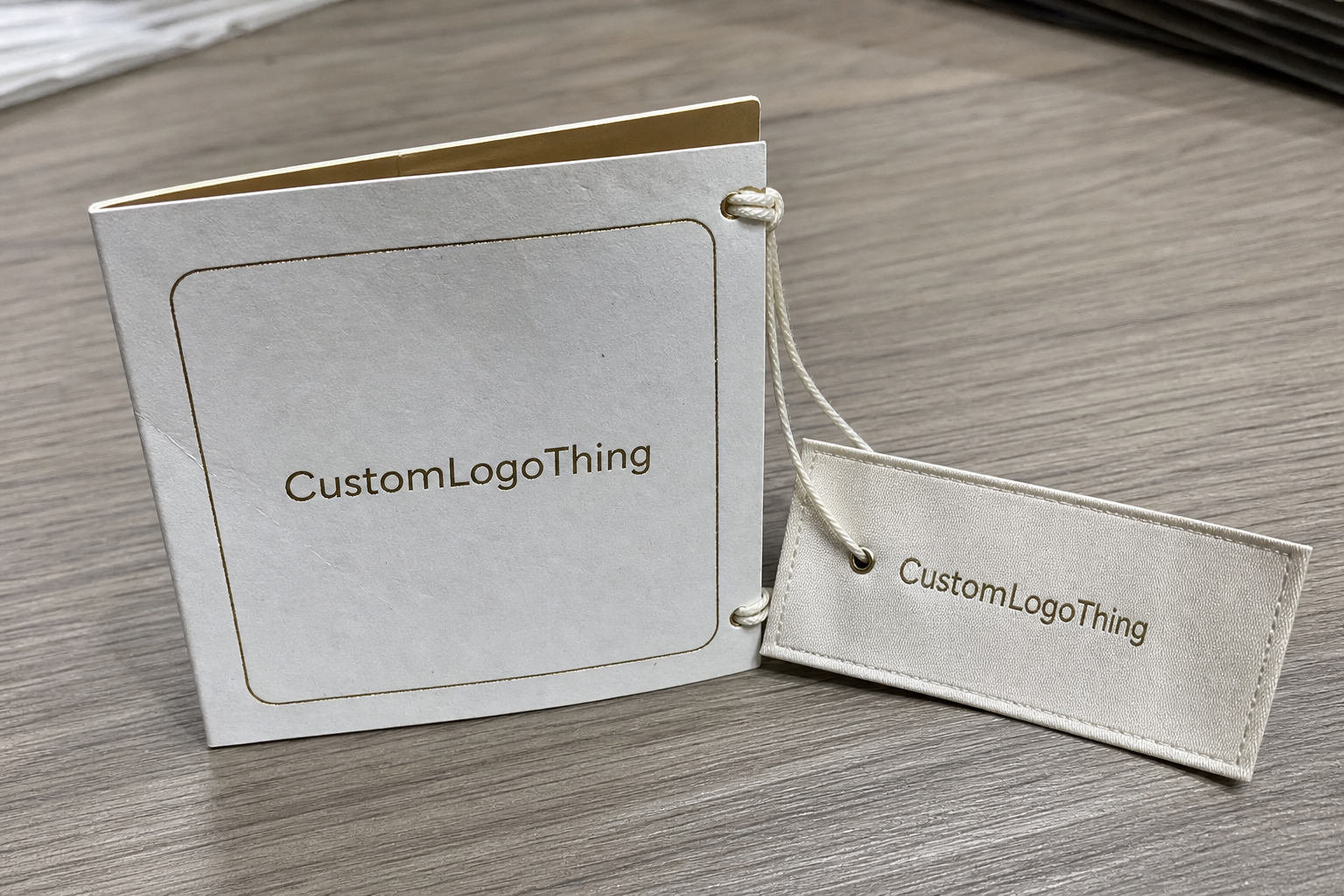
A hangtag is temporary. A clothing label is part of the garment. Once the item is folded, boxed, hung in retail, or worn into the real world, the label is still there doing its work. That is the main reason many brands prefer printed labels for core apparel lines: they reduce one extra handling step and create a more permanent branded finish.
Loose tags require manual attachment. Someone has to align them, tie them, staple them, or thread them through the right location, and that takes time. On a small run, the labor may be manageable. On a larger run, those extra touches add up quickly. Printed labels move that work upstream into production, which is where most teams would rather handle it.
They also help with consistency. Loose tags are easier to misplace, damage, or substitute with the wrong batch if multiple styles are moving at once. Printed labels reduce that variability because the branding is already built into the garment. For buyers managing colorways, size breakdowns, and mixed replenishment orders, that consistency is worth more than it looks on a quote sheet.
Durability is the other reason. A label inside a tee or sweatshirt has to survive abrasion, folding, laundering, and body heat. A good printed label should hold up to the real use case, not just look sharp on day one. If the garment is promotional and short-lived, the spec can be lighter. If it is a core style that needs to survive a season or more, the label needs a more demanding finish.
Practical rule: choose the label by wear conditions first, then by visual preference. Comfort, wash durability, and production speed rarely point to the same answer, so the garment’s actual use has to drive the spec.
For brands that care about version control, Printed Clothing Labels also make repeat orders easier to manage. If the logo, color, or size copy changes by even a small amount, the difference shows up immediately when the next batch arrives. A clean specification sheet reduces that drift. So does a supplier that checks files carefully instead of guessing what the artwork was supposed to mean.
Material choices that affect wear, wash, and hand feel
Material choice is where many label programs become more expensive than they should be. Not because the base material is dramatically costly, but because the wrong choice creates complaints, returns, or rework. A label that feels soft on the bench can still irritate the neck seam. A label that looks premium in a sample can turn fuzzy or stiff after repeated washing. The tradeoff is usually comfort versus durability, with production speed and price sitting behind both.
Satin is one of the most common choices for labels that sit against skin. It has a smooth hand feel, takes print cleanly, and folds well into apparel applications such as tees, babywear, loungewear, and basic fashion programs. It is usually a good fit when the garment needs a softer finish and the label copy is not overloaded with tiny detail. Satin does have limits, though. Under heavy abrasion or repeated heat exposure, it can show wear sooner than tougher materials.
Woven labels are a strong choice for brands that want a more substantial, premium look. The texture reads as elevated, and the label usually feels more integrated into the garment. They tend to hold up well through handling and laundering. The caution is detail resolution. Very thin lines, small copy, or complex logos can lose clarity if the weave cannot support the artwork. That is a design problem, not a manufacturing flaw.
Printed synthetic labels are useful for size tabs, care labels, private label programs, and any project that needs repeatability and fast setup. The print method and coating matter here more than buyers sometimes realize. Good ink retention helps with wash performance. Clean cut edges help the label sit properly. If the label is going into a seam or another high-friction area, edge stability becomes part of the quality conversation, not a minor finish detail.
Skin contact changes the material choice fast. Outside a garment, a bit of stiffness may be acceptable. Inside a tee, sweater, or baby romper, the buyer expects the label to stay soft and unobtrusive. A rough seam, scratchy backing, or stiff fold is often what makes a garment feel cheaper than it actually is.
Wash durability is not one feature. It is a combination of resistance to heat, detergent, agitation, folding, and abrasion. A label that survives a single wash is not useful for most apparel programs. For activewear, workwear, kids’ clothing, or any garment that gets frequent washing, ask for a durability target that matches the real use pattern. A label spec should be written for the garment’s life, not the sample’s first impression.
Here is a simple way to compare common options:
| Material | Best for | Typical strengths | Watch-outs |
|---|---|---|---|
| Satin | Babywear, tees, basics, softer apparel | Smooth hand feel, comfortable on skin, clean printed surface | Can show wear faster under heavy friction or rough laundering |
| Woven | Premium apparel, outerwear, elevated basics | Strong brand presence, good durability, higher perceived value | Fine text and thin graphics can blur if the design is too intricate |
| Printed synthetic | Size labels, care labels, private label runs | Fast production, clear copy, dependable repeatability | Finish quality and ink retention matter a lot for wash performance |
For packaging and fiber-related sourcing standards, many brands also review references from the Forest Stewardship Council as part of their broader materials policy. Labels are not paper boxes, but the same discipline applies: if the rest of the brand has a sourcing story, the label spec should not feel disconnected from it.
Artwork, size, and finish specs that prevent rework
Artwork mistakes are usually small and expensive. A logo file that is too low in resolution, a size label that is too dense with copy, or a layout that ignores the actual fold style can push a simple job into revisions. The common failure is not creative bad taste. It is trying to fit too much information into a label that was never large enough for it.
Start with physical size. Width and height should match the garment and the placement. A neck label on a men’s tee has different space constraints from a side-seam label on a fitted top. If the label is too small, the text becomes hard to read and the logo loses presence. If it is too large, it can distort the garment or create discomfort once sewn in.
Fold style changes the whole attachment process. Straight cut, center fold, end fold, loop fold, and mitre fold all affect how the label sits and how easily it can be sewn or inserted. Sewing teams notice this immediately. So should the buyer. A clean artwork file can still fail if the fold style fights the placement or forces awkward handling on the line.
Before you place an order, confirm these details:
- Logo version - one approved master file, not several slightly different variations
- Color reference - Pantone, CMYK, or a physical sample if that is the standard the supplier can match reliably
- Minimum line thickness - very fine lines disappear faster than most buyers expect
- Text size - especially for care copy, size marks, and legal information
- Placement - neck, side seam, hem, or external branding
- Attachment method - sewn, heat-applied, or inserted during another assembly step
Vector artwork is still the cleanest starting point. If the only file available is raster, it should be genuinely high resolution, not a blurry logo pulled from a social feed or a presentation slide. Outline fonts before sending the file. Check spelling. Check spacing. Check contrast. Then check it again at actual size. Most reprints happen because one of those basic checks was skipped.
Finishing is not decorative. It affects how the label behaves in production. Cut edges can fray if the material or seal is wrong. Backing affects how the label is attached. Heat-applied labels need a different setup from sewn labels, and the garment fabric matters too. A lightweight knit, for example, does not behave like a dense woven shell.
If there is any uncertainty, ask for a pre-production proof that shows the final size, fold, text layout, and color target. A proof should be read like a production document, not like a design mockup. It is the last chance to catch a mistake before it becomes inventory.
For brands that already work with formal packaging or logistics standards, guidance from the Institute of Packaging Professionals is useful as a process reference. A label is smaller than a carton, but the same rules still apply: clear spec, controlled approval, and repeatable output.
Cost, pricing, and MOQ for different run sizes
Label pricing is a stack of decisions, not a single line item. Material, print method, size, fold, quantity, packaging, and special finishing all affect the final quote. A simple one-color satin label is not priced like a multi-color woven label with custom folding, cut edge treatment, and individual bundling.
As a rough planning guide, a small custom label run can land in the low single cents per piece if the spec is simple and the volume is high enough to absorb setup. Once the order gets smaller, the price per label rises quickly. More complex woven or specialty labels can move into the mid- to high-cent range, especially on low quantities. That is normal. Setup costs have to go somewhere.
Smaller runs are useful when the design is still being tested or the style is seasonal and uncertain. Larger runs make more sense once the label spec is stable and reorders are likely. The cheapest unit cost is not always the smartest buying decision if it forces you to overbuy inventory that may not survive the next product update.
For planning, the pattern below is common:
| Run size | Typical use case | Unit price trend | Buying advice |
|---|---|---|---|
| 250-1,000 pcs | Sampling, launch tests, short seasonal runs | Highest per unit | Good when speed and flexibility matter more than savings |
| 1,000-5,000 pcs | Small apparel brands, core basics, repeat styles | Moderate per unit | Often the best balance between price and inventory risk |
| 5,000+ pcs | Established programs, wholesale lines, private label replenishment | Lower per unit | Best if the spec is stable and reorders are likely |
The pressure points are usually around the 1,000-piece and 5,000-piece marks. That is where setup dilution starts to matter, and buyers often start seeing meaningful drops in unit cost. Still, a quote that looks attractive at 10,000 pieces can become expensive if the label changes next season or the garment line does not sell through as expected.
A practical rule is to ask for pricing at the quantities you can actually use in one production cycle. Not the quantity that looks best on the quote. If your line moves 1,800 units, a 10,000-piece buy may look efficient on paper and turn into stored inventory in reality. The right quantity is the one that matches the product plan.
MOQ also depends on finishing. Extra folds, special cuts, multi-step printing, and custom backing usually push the minimum higher. If the supplier is quoting a surprisingly low MOQ, confirm whether the setup cost has simply been moved into the unit price. That is not a problem if it is clear. It is a problem if it is hidden.
Production steps, turnaround, and lead time after approval
The production flow should be predictable. If it is not, someone is improvising. The usual sequence is straightforward: Request a Quote, confirm the spec, approve the artwork, verify the quantity, and move into production. After that, the main variables are file quality, material availability, finishing complexity, and how fast the proof gets signed off.
Delays usually come from incomplete inputs. The wrong logo version. A color reference that is only described in words. Missing text for care instructions. Unclear size information. Vague notes about placement. Machines can run on schedule. People delay orders by changing the brief after the proof is already in motion.
For many custom label runs, standard production is often about 12-15 business days after proof approval. That number can shift with material choice, order size, and finishing complexity. A simple repeat order may move faster. A specialized woven label with extra finishing may take longer. Shipping time is separate from production time, so it should be planned separately every time.
A pre-production proof is not a formality. It is the last point where a mistake is cheap to fix. Review the color tone, logo placement, text sharpness, trim size, and fold behavior. Read the copy at actual size. Check that the label can be attached the way the garment is built. If the proof feels wrong, it usually is.
Some buyers also ask for a sample or strike-off before a full run, especially on new designs or higher-risk garments. That adds time, but it can save a project when the artwork is complex or the material is unfamiliar. A sample is not there to impress anyone. It exists to expose problems before the full order starts.
Transit planning matters too. If the labels are shipping with finished goods, the buyer should separate factory lead time from freight time and then build in a buffer for approval. The optimistic version of a schedule is rarely the accurate one. Working backward from the launch date gives a more honest picture of what can actually fit.
What reliable label sourcing should include
Reliable label sourcing is mostly about consistency. The right partner should be able to keep the spec stable across reorders, explain the tradeoffs in plain language, and flag problems before production starts. That sounds basic, but buyers know how often those basics are missing once orders get complicated.
The most useful support is practical rather than promotional. Clear file review. Proofs that actually reflect the final piece. Honest feedback if the copy is too small, the lines are too thin, or the chosen material will not carry the artwork well. A good supplier should be able to say, “This will not read well at that size,” instead of printing it anyway and hoping for the best.
Repeat orders should also move faster than first-time runs. If the spec is unchanged, the artwork should not need to be rebuilt from scratch every time. Keeping the previous proof, color reference, size note, and fold style on file reduces errors and shortens approvals. That matters for seasonal brands and private label programs that reorder on a fixed cadence.
Quality control should happen before the labels leave production, not after they arrive in the warehouse. The checks that matter most are simple: count accuracy, print registration, color consistency, fold alignment, cut quality, and legibility at actual size. For apparel that will be laundered often, a wash test is worth requesting on the first run or whenever a material changes.
There is also a quiet cost to bad communication. Every unclear approval creates a new round of emails, and every revision slows the line. Brands that keep one master file, one approved color target, and one version history usually spend less time fixing label problems than brands that manage artwork across several inboxes and partial notes.
If the order will scale later, ask early how the supplier handles reorder matching. Shade consistency, label stock continuity, and repeatability matter more than most first-time buyers expect. A label that looks fine in the first shipment but cannot be matched later creates a subtle brand inconsistency that shows up across seasons.
What to confirm before you order printed labels
Before you place the order, gather the garment type, label placement, material preference, size, fold style, quantity, and target delivery date. If any of those are missing, the order is not ready yet. “Close enough” is how reprints and delays happen.
Also collect the exact logo file, color references, and any required copy such as size, care instructions, fiber content, or brand line. If the product sits in a regulated category, legal text should be checked before production starts. It is a bad time to discover missing care information after the garments are already packed.
Approving the proof should feel like a production decision. Look at the label at real size, not just on a screen. Is the text readable? Does the contrast hold up? Does the fold help or complicate attachment? Does the label fit the way the garment is sewn or packaged? Those are the details that determine whether the run moves cleanly or becomes a cleanup job.
If you are comparing materials, put use case first and cost second. The cheapest option is not the winner if it scratches, fades, frays, or slows the sewing line. A solid label spec usually pays back in fewer revisions, cleaner packing, fewer consumer complaints, and a more consistent brand presentation. That is the kind of return buyers remember.
Once the spec is locked, send the artwork, confirm the MOQ, and order printed labels with the production plan already in view. Fewer surprises. Fewer revisions. Better output.
What do I need before I order printed labels for clothing?
Have the logo file ready, ideally as vector artwork or a clean high-resolution file. Know the garment type, label placement, and whether the label will be sewn, heat-applied, or attached another way. Confirm quantity, target ship date, and any required text such as size, care info, or brand line.
What MOQ should I expect for printed clothing labels?
MOQ depends on material, size, print method, and finishing, so there is no single number that fits every order. Smaller runs usually cost more per label but are better for testing a new collection or a short-season style. Larger runs usually lower unit cost, so ask for quotes at the quantities you can actually consume.
Which printed label material lasts best in the wash?
The best material depends on the garment and the way it will be used. Heavy wash cycles, skin contact, and abrasion all change the answer. Look for strong ink retention and edge stability if the label will be washed often or sewn into high-wear areas. If softness matters most, prioritize comfort first and confirm the durability target during proofing.
How long does production usually take after proof approval?
For many custom label orders, standard turnaround is around 12-15 business days after proof approval. More complex finishing, larger volumes, or special materials can extend that timeline. Shipping time is separate from production time, so ask for both numbers when you plan the launch.
Can I reorder the same printed labels without starting over?
Yes, if the specs, artwork, and material stay the same, reorders are usually much faster than first-time jobs. Keep the previous proof, size notes, and color references on file so the next run matches the first one. If anything changed on the garment or brand side, confirm that before reordering so the new run does not drift.